TL;DR / At a Glance: Which is better, the Redmi Book 2026 or the MacBook Neo? According to our Redmi Book 2026 vs MacBook Neo analysis, the Redmi Book wins on display technology with its 120Hz refresh rate and 500-nit brightness, compared to the Neo’s 60Hz panel. However, the MacBook Neo remains the “Buy Smart” king for price, starting at RM2,099, whereas the Redmi Book starts closer to RM3,400. Power users who prioritise repairability should skip both and look at the Framework Laptop 13 Pro instead.
The budget laptop market in 2026 has been defined by one device: the Apple MacBook Neo. By stripping away the “Pro” features and focusing on a $599 (RM2,099) price point, Apple effectively cornered the student and casual user market. However, Xiaomi has struck back. The launch of the Redmi Book 2026 in China wasn’t just a product release; it was a targeted assault on Apple’s compromises.
The 120Hz Advantage: Why 60Hz is No Longer Enough
In this Redmi Book 2026 vs MacBook Neo comparison, the conversation begins and ends with the display. Apple’s Neo uses a standard 60Hz Liquid Retina panel—a beautiful screen, but one that feels increasingly dated in a world of high-refresh-rate smartphones.
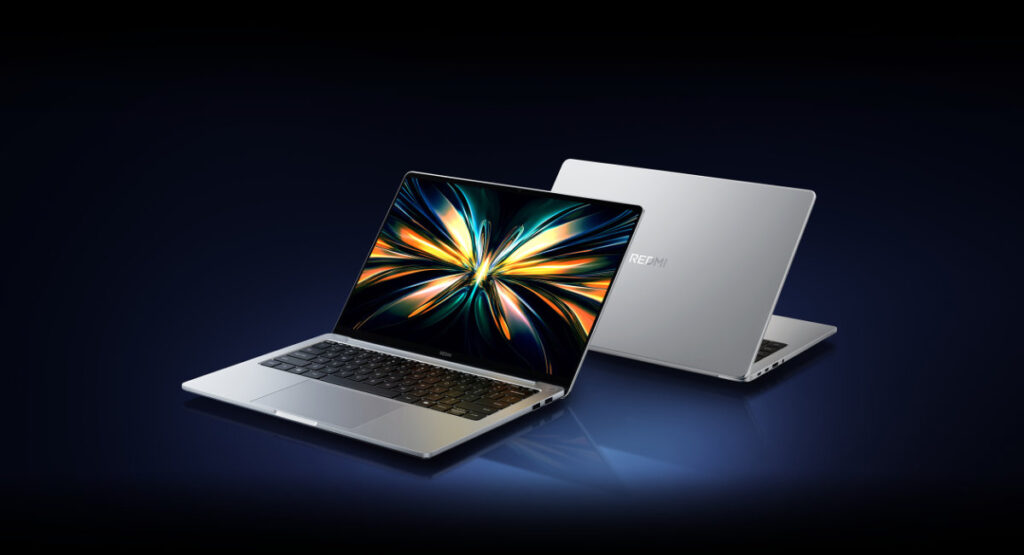
Xiaomi has equipped the Redmi Book 2026 with a 120Hz Pro-level display across the board. Whether you choose the 14-inch or 16-inch model, the fluidity of scrolling through documents, navigating macOS-like Windows 11 animations, and casual creative work is night and day.
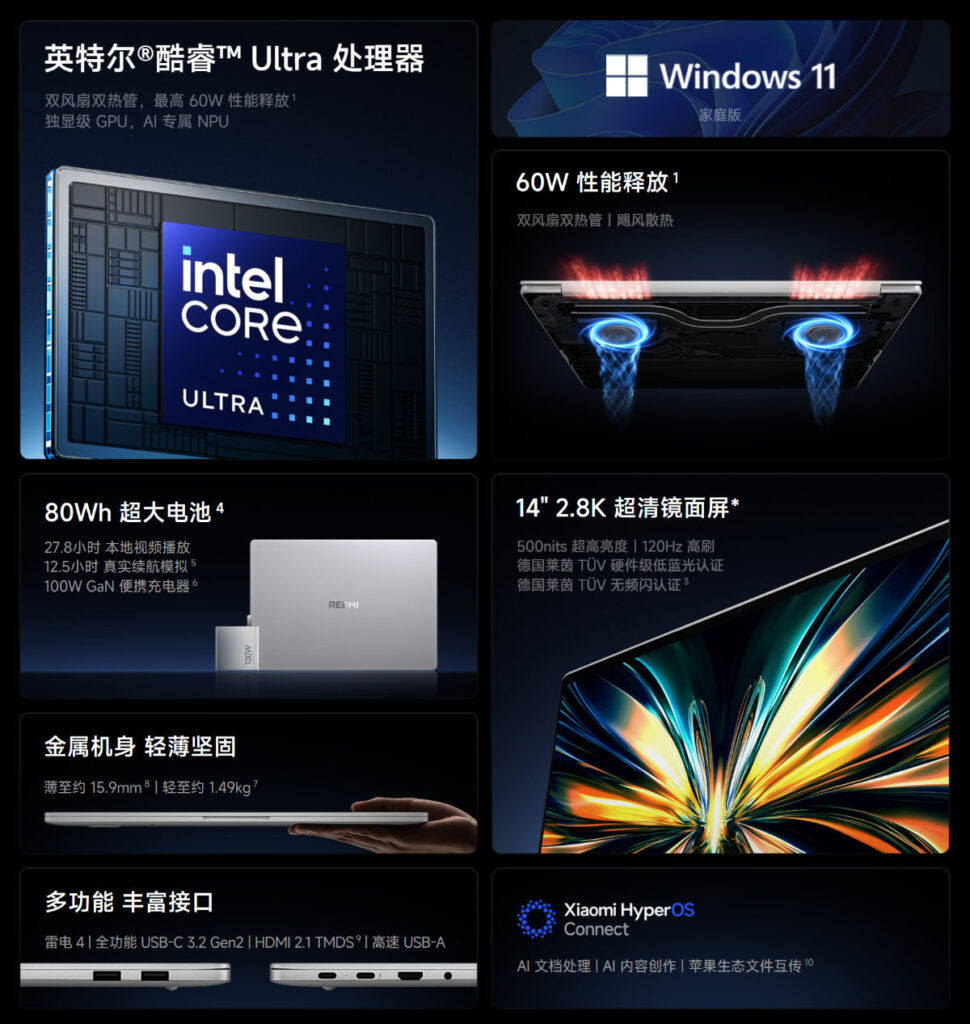
- Redmi Book 14 (2026): Features an 1800p resolution, 16:10 aspect ratio, and a peak brightness of 500 nits. It covers 100% sRGB and includes full DC dimming.
- Redmi Book 16 (2026): Offers a 1600p panel with 400 nits of brightness. While slightly less pixel-dense than the 14, the sheer real estate at 120Hz makes it a multitasking powerhouse.
Internal Specs: The Meteor Lake Choice
Under the hood, Xiaomi has made a conservative but tactical choice. Both models are powered by the Intel Core Ultra 5 125H (Meteor Lake).
Adam’s “Buy Smart” Critique: While it’s disappointing not to see the newer “Panther Lake” architecture here, the 125H remains a solid mid-range performer. It is paired with 16GB of LPDDR5X RAM running at a blistering 7,467MT/s and up to 1TB of PCIe 4.0 storage.
In contrast, the MacBook Neo relies on the A18 Pro chip. While the A18 Pro is an efficiency beast, the Redmi Book’s Intel-based architecture offers better compatibility for specialised software often required in Malaysian universities and workplaces.
MacBook Neo vs Redmi Book 14 (2026) Specs Comparison
| Feature | Apple MacBook Neo (2026) | Xiaomi Redmi Book 14 (2026) |
| Chipset | Apple A18 Pro (3nm) | Intel Core Ultra 5 125H (Meteor Lake) |
| Graphics | 5-Core Integrated GPU | Intel Arc Graphics |
| Display | 13.0″ Liquid Retina (IPS) | 14.0″ 2.8K Pro Display |
| Refresh Rate | 60Hz (Static) | 120Hz (Pro) |
| Brightness | 500 nits | 500 nits |
| RAM | 8GB Unified (Soldered) | 16GB LPDDR5X (7467MT/s) |
| Storage | 256GB / 512GB (Soldered) | 512GB / 1TB (M.2 Expandable) |
| Ports | 2x USB-C (1x USB 3.0, 1x USB 2.0) | Thunderbolt 4, USB-A, HDMI 2.1 |
| Battery | 36.5Wh (Up to 16h Video) | 80Wh (Up to 24h Video) |
| Charging | 20W+ USB-C | 100W GaN Fast Charging |
| Weight | 1.23 kg (Lighter) | 1.48 kg |
| Starting Price | RM2,099 (Official) | ~RM3,400 (Estimated Import) |
Design and Portability
Xiaomi has moved closer to the unibody aesthetic that makes MacBooks so desirable. The Redmi Book 14 weighs in at just 3.28 pounds (1.48kg), making it a viable travel companion.
- Ports: This is where Xiaomi wins. While the Neo limits you to two USB-C ports, the Redmi Book provides a full array, including HDMI 2.1 and USB-A, eliminating the need for the “dongle life” in 2026.
- Battery: Both models share an 80Wh battery with 100W GaN fast charging. Xiaomi claims local video playback can exceed 24 hours, though real-world “work” tests usually settle around the 12-hour mark.
The Price Gap: Is the Neo Still King?
The Redmi Book 2026 price starts at CNY 5,499 (~RM3,400). This makes it significantly more expensive than the base MacBook Neo. However, for that extra RM1,000, you are getting double the refresh rate, more ports, and a larger 14-inch canvas.
Verdict: If you are a student on a strict budget, the Neo is the winner. But if you value visual fluidity and a “Pro-sumer” port selection, the Redmi Book 2026 is the superior tool.