TL;DR / At a Glance: In a major joint announcement with PayNet, the Association of Banks in Malaysia (ABM), AIBIM, and ADFIM confirmed the permanent abolition of the RM1 interbank ATM cash withdrawal fee effective July 1, 2026. This policy applies nationwide across all 14,000+ local ATMs and Smart Recycler Machines (SRMs). To offset the lost multi-million ringgit revenue stream and high physical maintenance overheads, retail banks are accelerating their migration toward cashless merchant ecosystems and highly monetised in-app digital products.
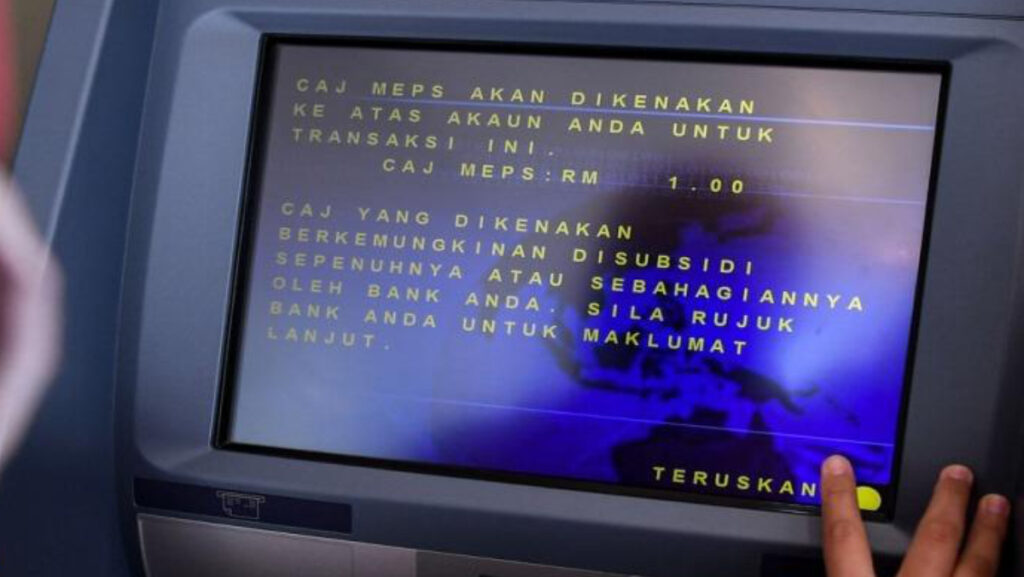
The era of the sneaky cash machine penalty is officially dead. On June 15, 2026, the Association of Banks in Malaysia (ABM), along with AIBIM and ADFIM, dropped a massive joint announcement in collaboration with PayNet. Starting July 1, 2026, the ubiquitous RM1 interbank ATM cash withdrawal fee will be permanently abolished nationwide across all 14,000 plus local ATMs and Smart Recycler Machines (SRMs).
The arrival of this cross-institutional banking update directly challenges historical consumer finance barriers in Malaysia, landing as an immediate win for everyday wallet convenience. For decades, the RM1 MEPS transaction fee acted as an invisible operational tax. Every time you used a competitor bank’s machine out of pure convenience, a shiny ringgit was sliced from your account balance. With that friction gone, cash access across the country becomes entirely borderless for all local debit cardholders.
But while national media outlets frame this purely as an absolute win for consumer convenience and inflation relief, they are completely missing the broader strategic play. Commercial banking institutions are not charities. Losing a multi-million ringgit passive cash-cow stream means local retail banks are already restructuring their digital infrastructure to reclaim that lost revenue through alternative backend channels.
The Financial Transition: Cash Networks vs. Digital Apps
| Financial Metric / Vector | Traditional ATM Cash Network | Modern Mobile App Ecosystem |
| Direct Consumer Friction | RM1 Interbank Fee (Abolished July 1, 2026) | 100% Free Peer-to-Peer DuitNow Transfers |
| Operational Unit Expense | High (Armoured transport, real estate, hardware repairs) | Ultra-Low (Cloud data scaling, API verification logs) |
| Primary Bank Revenue Engine | Direct transaction fee clipping | Merchant MDR fees, consumer micro-loans, ad clicks |
| Security Layer Protocol | Physical EMV card chips and 6-digit ATM PIN arrays | Biometric secure enclaves, device-bound token binding |
| User Lifetime Value (LTV) | Low (Strictly manual transaction interactions) | High (Continuous algorithmic cross-selling via notifications) |
| Regional Scale Footprint | ~14,000 Physical Terminal Units Nationwide | 20+ Million Active Local Smartphone Terminals |
Maintaining physical ATM vaults costs local banks millions annually when you factor in armoured transport logistics, security guards, hardware maintenance, real estate space, and insurance overhead. With the RM1 fee dead, banks can no longer directly subsidise the maintenance of physical cash endpoints. To offset these losses, retail giants like Maybank, CIMB, and Public Bank are rapidly accelerating their migration away from physical cards entirely, moving directly toward advanced digital token validation, proprietary lifestyle app containment, and QR cross-selling pipelines.
Here is what is important: if commercial banks are no longer making money when you slide your card into a competitor’s ATM, they have to ensure you rely less on physical cash altogether. The financial sector is nudging retail merchants toward unified cashless counters through Merchant Discount Rate (MDR) transaction percentages. Every time a consumer swipes a debit card or scans a DuitNow QR code instead of handing over a physical RM50 note, the bank clips an invisible merchant fee from the shop owner.
Other Little Things
When you use an ATM, the bank cannot pitch you a financial asset. But when the bank forces you inside their proprietary mobile app to check your balance or verify a transaction secure token, you enter a highly monetised ad environment. Local banking apps are heavily integrating targeted digital products, ranging from automated travel insurance pop-ups before your holiday to instant pre-approved micro-loans showing up on your transaction landing pages.
The revenue loss from legacy physical cash networks is also being absorbed into backend enterprise services, where corporate clients pay for instant secure user verification linked with national MyDigital ID integration layers. The baseline social experience of getting cash is free, but the banking app ecosystem has officially evolved into a premium cross-selling utility.
Adam Lobo’s Verdict
The termination of the RM1 interbank ATM fee is an undeniable win for day-to-day consumer convenience. It completely removes a recurring financial friction point for millions of Malaysians who rely on easy cash access in suburban and rural areas.
When you subject this infrastructure shift to our signature mamak test, evaluating real-world financial impact while sitting down at a local spot, the structural reality is clear. The banking sector is happily giving up the RM1 terminal fee because they want you to abandon physical wallets entirely. It is a calculated move to push you deeper into their software traps.
As your daily spending moves entirely into app interfaces, your biggest expense will no longer be a transparent RM1 ATM penalty. Instead, it will be the subtle, algorithmic push notifications designed to get you to sign up for credit lines, micro-insurance tiers, and high-margin digital payment products directly through your phone screen.
Are you guys planning to stick to physical cash withdrawals now that the MEPS fee is dead, or have you already completely transitioned to a cashless, app-only digital wallet layout? Tell me what you think in the comments below!