
Meta Looks to be Releasing their AR Glasses in September
Meta is preparing to launch its next-generation smart glasses, codenamed “Hypernova,” at a significantly lower-than-expected price of around USD800 (~RM3,378), according to a recent report from Bloomberg’s Mark Gurman. The move, which represents a strategic pivot to drive mainstream adoption, positions the glasses as a stepping stone toward a future of true augmented reality.
The announcement is expected at Meta’s annual Connect conference in September. This will be the first time Meta introduces smart glasses with a built-in display, moving beyond the camera and audio features of its existing Ray-Ban partnership. The company is reportedly willing to accept slimmer profit margins to make the device more accessible to consumers, a key lesson from the market’s tepid response to more expensive AR headsets.
Hypernova will feature a small, monocular display located in the right lens, which is visible only to the wearer. This heads-up display will show glanceable information such as notifications, navigation cues, and responses from Meta’s AI assistant. Unlike a full-fledged AR headset, the glasses will not have an app store and are intended to be a companion device to a smartphone.
A key component of the Hypernova experience will be a “neural” wristband that uses electromyography (EMG) to detect subtle hand and finger gestures. This allows users to control the glasses with intuitive movements, offering a hands-free interaction model that differentiates Hypernova from its competitors. Touch-sensitive temples will also provide an alternative control method.
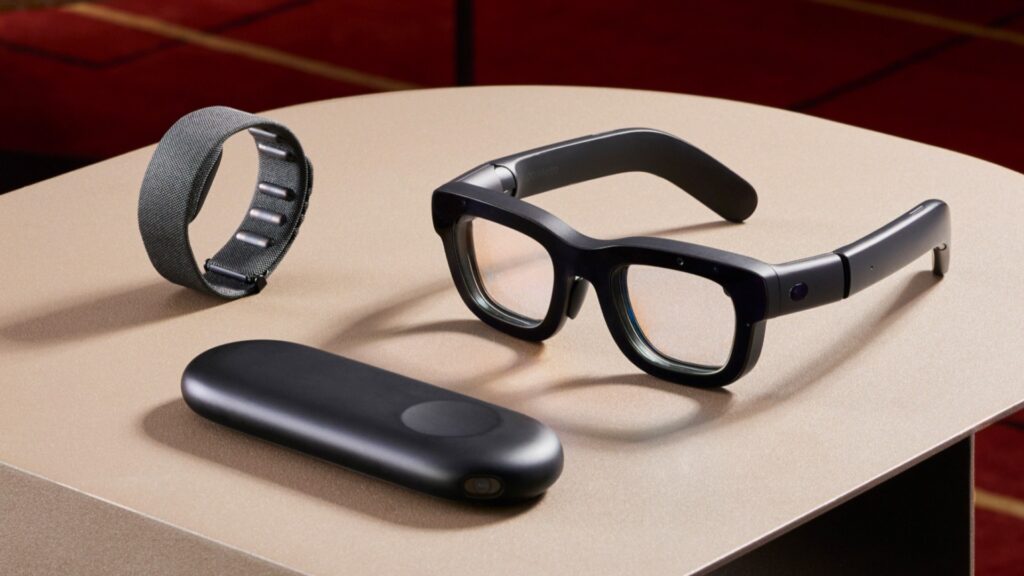
While Hypernova is poised to be the company’s most advanced consumer wearable to date, it is viewed as a bridge product. Gurman’s report indicates that a second-generation Hypernova with a binocular display is already in the works for a 2027 release. This will be a stepping stone to “Orion,” Meta’s long-term project for a full-featured, holographic augmented reality device.
The decision to price Hypernova at roughly the same level as a premium smartphone, like the iPhone 16, signals Meta’s intent to compete for a central place in the personal computing landscape. The success of this launch could determine whether the public is ready to embrace AR eyewear as an everyday technology.