
TL;DR / At a Glance
What are the 5G-Advanced technical specifications in Malaysia? The 2026 5G-Advanced (5.5G) standard in Malaysia utilises 3GPP Release 18, featuring 3CC Carrier Aggregation for 10Gbps speeds, Network Slicing for dedicated bandwidth, and a Standalone (SA) core that reduces latency to under 5ms.
Beyond the Marketing: What is “Real” 5.5G?
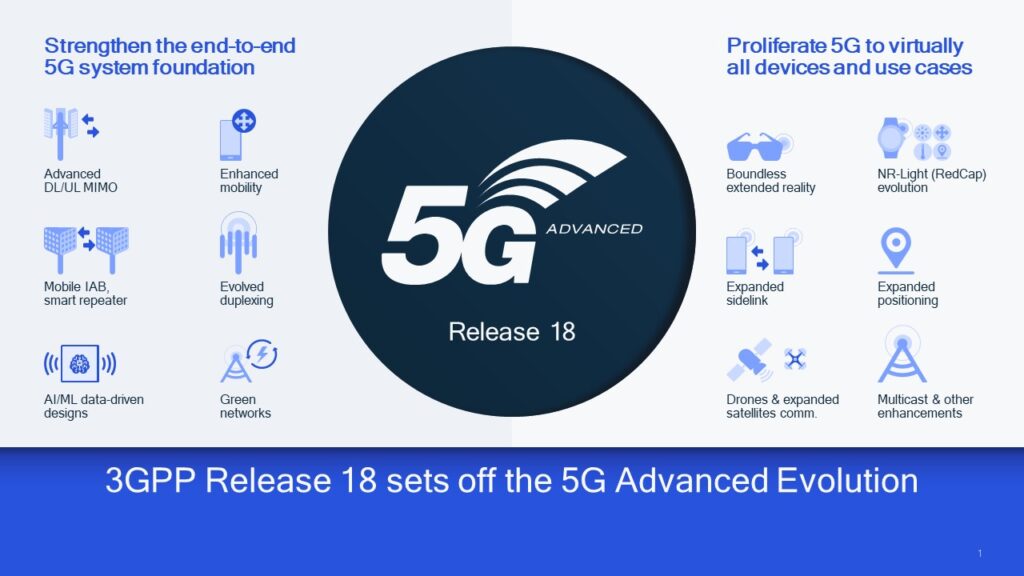
In the world of telecommunications, we often deal with “labels” like 4G+ or 5G Turbo. However, 5G-Advanced is a formalised global standard defined by 3GPP as Release 18. While the initial 5G rollout (Release 15/16) was about establishing a footprint, Release 18—commonly branded in Malaysia as 5.5G—is about industrial-grade performance.
If you’re a power user, here are the four technical pillars currently being deployed in the U Mobile ULTRA5G and DNB 5.5G cores that you need to know about.
1. 3CC Carrier Aggregation (The 10Gbps Engine)
The headline feature of 5G-Advanced is the 10Gbps downlink. This is achieved through 3CC (Three-Component Carrier) Aggregation.
- The Tech: Instead of your phone communicating with a tower on a single frequency, it “bonds” three different spectrum bands (typically a mix of 700MHz, 3.5GHz, and 26GHz mmWave) into a single, massive data pipe.
- The Result: This massive increase in bandwidth is what allows for 8K VR streaming and near-instantaneous large-file downloads. In recent 2026 urban trials, U Mobile and Huawei demonstrated a 5Gbps stable throughput using this exact setup in high-density areas.
2. Native 5G Standalone (SA) vs. NSA
Most of Malaysia’s early 5G was Non-Standalone (NSA), meaning the 5G radio still relied on a 4G core for signaling. It was like putting a Ferrari engine in a Kancil—fast, but limited by the old frame.
- The 2026 Shift: The second network is built on a native 5G Standalone (SA) core.
- No legacy anchor: SA removes the 4G anchor entirely. This slashes “ping” or latency from ~20ms to under 5ms. For cloud gamers or those using remote surgery tools, the lag is virtually imperceptible.
3. Network Slicing: The “VIP Lane”
This is the feature that likely convinced Telekom Malaysia (TM) to shift its wholesale traffic to the second network.
- The Concept: 5G-Advanced allows a telco to virtually “slice” the network. They can dedicate a specific “slice” of bandwidth to emergency services, a corporate office, or a gaming event.
- Why it matters: Even if 50,000 people at a stadium are uploading 4K TikToks, the “Gaming Slice” or “Enterprise Slice” remains unaffected, providing a guaranteed, low-latency connection that doesn’t compete with public traffic.
4. Passive IoT and RedCap (Release 18)
5G-Advanced introduces RedCap (Reduced Capacity) and Passive IoT.
- Passive IoT: Allows sensors to connect to the 5G network without a battery, harvesting energy from the radio waves themselves. This will revolutionise Smart City infrastructure in Malaysia.
- RedCap: This brings 5G-Advanced connectivity to mid-tier devices like smartwatches or AR glasses without the massive battery drain of a full 5G-Advanced modem.
The “Golden Thread” Verdict
The technical jump from 5G to 5.5G-Advanced is arguably larger than the jump from 4G to 5G. It isn’t just about faster YouTube. It’s about a network that is smart enough to prioritise your traffic and efficient enough to power devices without batteries. If you’re building a smart office or a high-end creative studio in 2026, 5G-Advanced is the infrastructure you’ve been waiting for.
Are you more interested in how 5.5G affects your mobile gaming latency, or how Passive IoT will change your smart home setup?
Looking for a comparison of the networks? Check out our DNB vs. U Mobile 5.5G Comparison.