Buying Tech for Parents and Non-Techy Family Members: A Survival Guide
Buying tech for yourself is fun. You read reviews, compare benchmarks, argue about chipsets, and maybe even enjoy setting everything up from scratch.
Buying tech for your parents or non-techy family members? That’s not fun. That’s a responsibility.

Because if you get this wrong, you don’t just waste money. You inherit a new role in life: full-time tech support, available 24/7 for emergencies like “why my phone suddenly quiet”, “eh, where my WhatsApp go”, or the classic “nothing wrong but I scared”.
Here’s the truth: the best device for them is almost always the one you personally find boring.
And that’s exactly why it works.
Let’s break this down properly, with real examples from 2025 and a Malaysian lens, so you don’t repeat the same mistakes everyone else does.
Reliability Is the Foundation. Everything Else Is Secondary.
Parents don’t describe tech problems the way reviewers do.
They don’t say “it stutters” or “thermal throttling”.
They say things like:
- “Sometimes it’s just slow”
- “Last time okay, now always weird”
- “I don’t know what I pressed”
That’s why reliability matters more than raw performance.
In 2025, this is where boring midrange devices shine.

Take something like the Samsung Galaxy A26 or the CMF Phone 2 Pro. On paper, they’re not the most exciting. But in daily use, they open WhatsApp, YouTube, Grab, banking apps, and the camera the same way every single day. No drama, no surprises.
Compare that to a cheaper, lesser-known brand that feels fast on day one but slowly becomes unpredictable after updates. For a tech-savvy user, that’s annoying. For a parent, that’s terrifying.
Reliability is about trust. Once that trust is broken, even small issues feel huge.
Software Updates Should Feel Like Nothing Happened
You might look forward to major updates. Parents don’t.
For non-techy users, the ideal software update experience is:
- It installs overnight
- The phone still looks the same
- All the apps are still where they were yesterday
This is where long-term software support matters more than flashy features.
In 2025:
- Samsung’s midrange phones now come with long update commitments, sometimes matching flagships. Other brands are also starting to follow suit.
- iPhones, like the current iPhone 17 lineup, continue to get years of updates with predictable behaviour.
The key thing to avoid is updates that suddenly rearrange menus, change icons, or introduce pop-ups asking questions the user doesn’t understand.
If an update causes them to say, “Eh, why everything different now?”, you’ve already lost.
Screen Size, Fonts, and Audio Are Daily Quality-of-Life Features
This is where a lot of people underestimate things.
Parents will insist they can see fine. Then they increase the font size to maximum and still hold the phone far away. Instead of fighting this, design around it.
Phones in 2025 with larger displays are genuinely easier to live with. Bigger text. Bigger buttons. Fewer mis-taps. Less frustration.
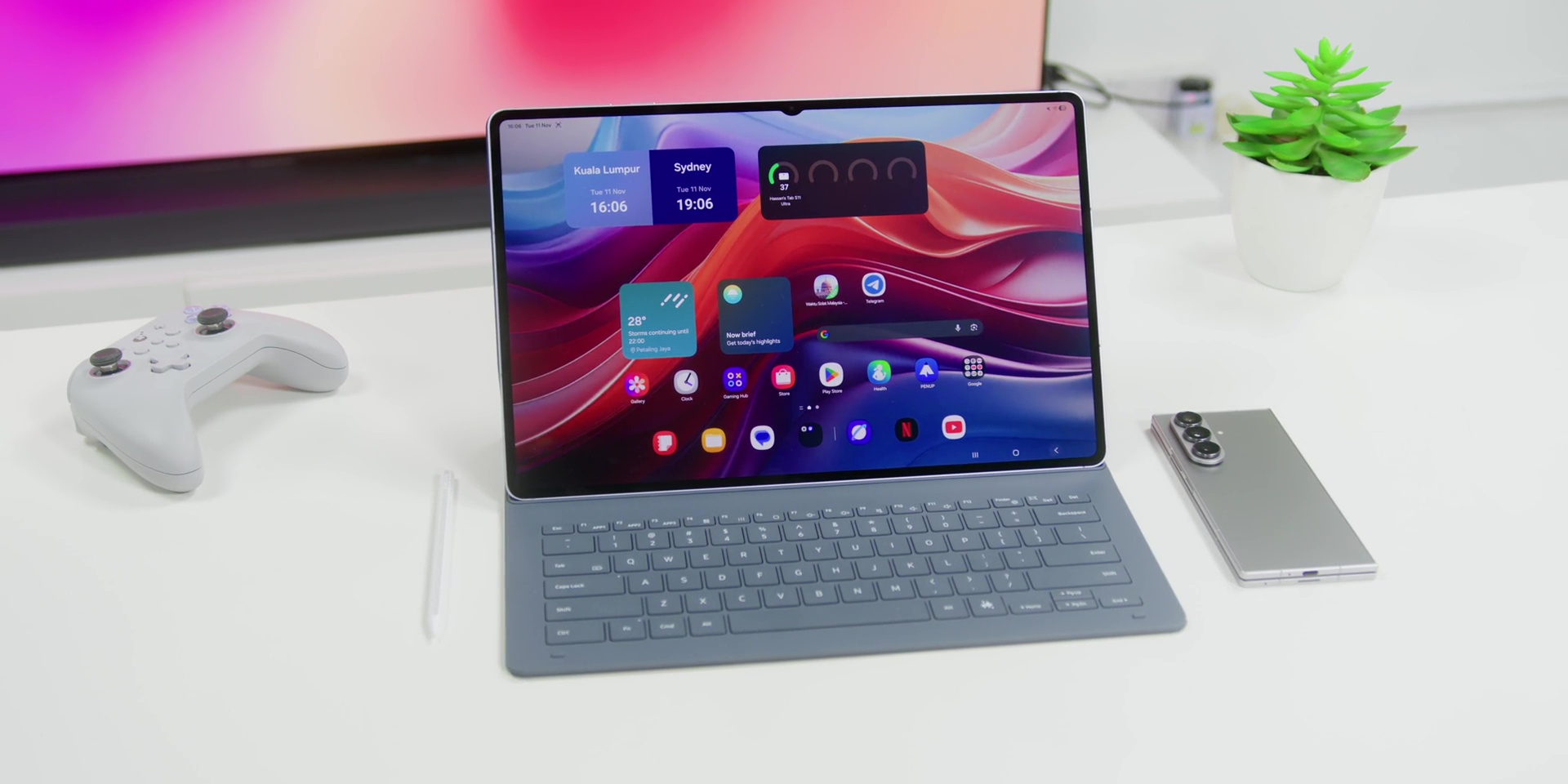
Tablets are also criminally underrated for parents. Reading messages, watching YouTube, or video calling grandchildren is simply better on a bigger screen. Everything feels calmer and clearer.
For laptops, avoid tiny displays unless eyesight is genuinely good. A 14- or 15-inch laptop with a decent screen is far more forgiving than a compact ultrabook.
And don’t forget speakers. If they can’t hear WhatsApp voice notes or video calls clearly, the device instantly feels broken, even if it’s not.
Battery Life Is About Reducing Anxiety, Not Maximising Numbers
You may track battery percentages like a game.
Parents don’t.
They want to leave the house and not think about charging until they come back. That’s why predictable battery behaviour matters more than fast charging speeds or how big the battery capacity is.
In 2025, many midrange phones with 5,000mAh batteries hit the sweet spot. They don’t necessarily charge the fastest, but they last the whole day without surprises.
For laptops, something like the MacBook Air with the M4 chip is a great example of boring excellence. Long battery life, minimal heat, no need to fiddle with power settings. It just lasts. Even the previous-generation MacBook Air is a good option, provided you can find one in good condition at a fair price.
The less they think about the battery, the more confident they feel using the device.
After-Sales Support Is a Make-or-Break Factor
This is where real life kicks in.
When something goes wrong, your parent is not:
- Emailing support
- Flashing firmware
- Shipping devices overseas
They want to walk into a shop and talk to a human.

That’s why brands with strong Malaysian service networks matter. Samsung, Apple, ASUS, Lenovo; these brands have physical stores, service centres, clear warranty processes, and staff used to dealing with non-techy customers.
A cheaper device with weak after-sales support can turn a small issue into weeks of stress.
In this context, familiarity isn’t just emotional. It’s practical.
Familiarity Reduces Panic
If your parent has used a certain type of phone with a certain type of software experience for the last 10 years, switching them to something completely different can be risky, even if the new device is “better”.
Muscle memory matters:
- Where the back button is
- How notifications look
- How calls are answered
This is why shiny new categories like foldables, even in 2025, are usually a bad idea for non-techy users. A Samsung Galaxy Z Flip7 might be cool, but the physical act of opening and closing a phone adds a layer of thinking they don’t need.
Comfort beats novelty every time.
Too Many Options Is a Hidden Problem
You might love customisation. Parents don’t see it as freedom. They see it as danger.
Too many settings mean:
- Accidental changes
- Things suddenly looking different
- Panic because they don’t know what they did
The best setup is:
- A clean home screen
- Essential apps on the first page
- Large text enabled
- Nothing fancy
If a device needs “a bit of tuning” to feel right, it’s already the wrong device.
Ask How They Live, Not What They Want
This is the step that saves you from regret.
Don’t ask: “What phone you want?”
Ask something like:
- Do you mostly read messages or watch videos?
- Do you bring it outside a lot?
- Do you forget to charge sometimes?
- Do you prefer calling or typing?
These answers tell you more than any spec sheet ever will. More often, parents ask for features they think they need, not what actually improves their day-to-day life.
The Bottom Line: Buy for Their Life, Not Your Tastes

Buying tech for parents and non-techy family members isn’t about finding the “best” device. It’s about finding the least stressful one.
The right choice:
- Doesn’t demand attention
- Doesn’t ask to be learned
- Doesn’t surprise them with weird behaviour
It fits into their routine quietly and stays there.
If you walk away feeling slightly underwhelmed by the specs, you probably made the right call. Because what excites tech enthusiasts often overwhelms everyone else.
So ignore the hype cycles, ignore the spec arms race, and ignore what you would want to use.
Buy the device that gives them confidence instead of anxiety. Buy the device that reduces questions instead of creating them. Buy the device that lets you go weeks without playing tech support.
That’s what good tech looks like when it’s bought with empathy.
And honestly? That’s a much harder (and more meaningful) thing to get right.