TL;DR / At a Glance: When will Apple Glasses be released? Current speculation from Bloomberg and supply chain analysts point to an announcement in late 2026, with a retail launch in early 2027. The glasses, codenamed N50, are expected to focus on AI “Visual Intelligence” rather than holographic displays, acting as a lightweight iPhone accessory priced between $499 and $699.
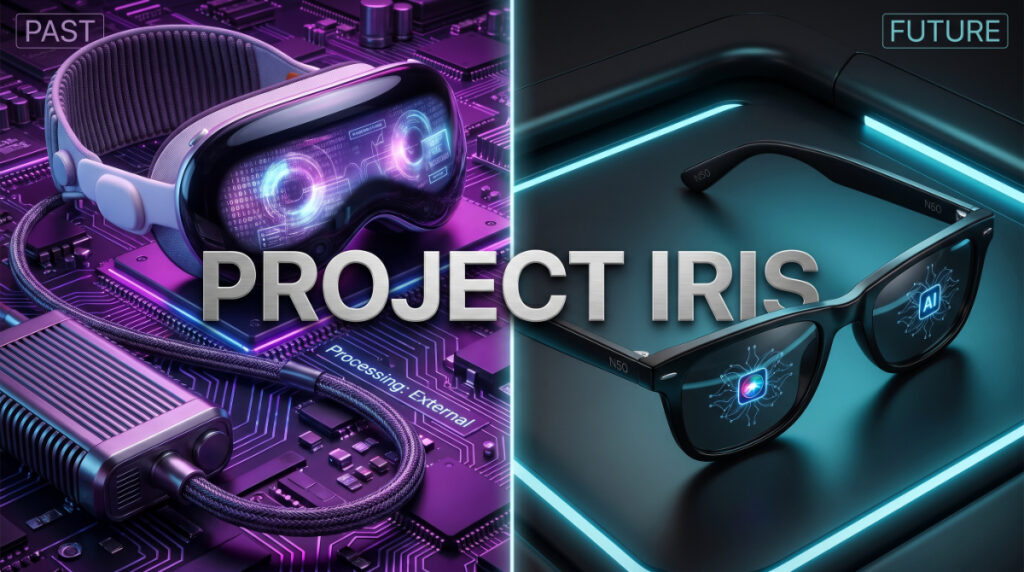
For years, Apple Glasses felt like tech-bro vapourware. But in 2026, the vapour is turning into glass. Following the unprecedented success of the Meta Ray-Bans (which tripled sales in 2025), Apple has reportedly accelerated Project Iris (Codename N50) for a late 2026 reveal.
According to Bloomberg’s Mark Gurman and supply chain reports from TechTimes, this isn’t a VR headset. It’s a pair of glasses that look like… well, glasses.
The Design: “Invisible” Technology
Apple’s primary goal is avoiding the “Glasshole” stigma of 2013. Recent patents and leaks suggest:
- Premium Materials: The frames are expected to use acetate or titanium, weighing under 50 grams—roughly the same as a standard pair of Wayfarers (TechTimes, Feb 2026).
- The Splay Hinge: A January 2026 patent reveals a bi-stable hinge that allows the arms to flex outward, adapting to different head shapes for all-day comfort (YMCinema, Jan 2026).
- Four Styles: Apple is reportedly testing four distinct frame designs: rectangular, oval, and circular; to ensure they fit into the fashion category, not just the tech category.

The Secret Weapon: Visual Intelligence
Unlike early speculation, the 2026 model will likely not have a display (MacRumors, April 2026). Instead, it uses Visual Intelligence to act as your “AI Co-pilot.”
- Dual Cameras: One high-res sensor for 1080p video/photos and a lower-res wide-angle lens specifically designed to read hand gestures and surroundings (MacRumors).
- The “Look and Ask” Siri: Using the Siri 2026 overhaul, you can point at a landmark, a menu in a foreign language, or even a car engine and ask, “What am I looking at?” or “How do I fix this?” * Privacy LEDs: To combat privacy concerns, built-in LEDs will signal when the cameras are active.
The “Brain” is in Your Pocket
To keep the glasses slim, Apple is offloading the heavy lifting.
- iPhone Pairing: The glasses will rely on your iPhone for 90% of the processing.
- The N401 Chip: Insiders suggest a custom low-power chip (based on Apple Watch architecture) will live in the glasses to handle “always-on” audio and camera triggers without overheating (Apple GadgetHacks, Dec 2025).
Why 2026? The Meta Factor
Apple didn’t want to rush this, but the market spoke. Meta’s Ray-Bans proved that people will wear cameras on their faces if the design is right. Apple is now pivoting its engineering talent away from the “Vision Air” headset to focus entirely on these glasses (PhoneArena, May 2026).