
TL;DR / At a Glance: Apple’s integration of Alibaba’s Qwen is a strategic necessity to bypass Chinese data restrictions while maintaining its “Private Cloud Compute” standard globally. This creates a dual-track AI ecosystem where local mastery meets global privacy.
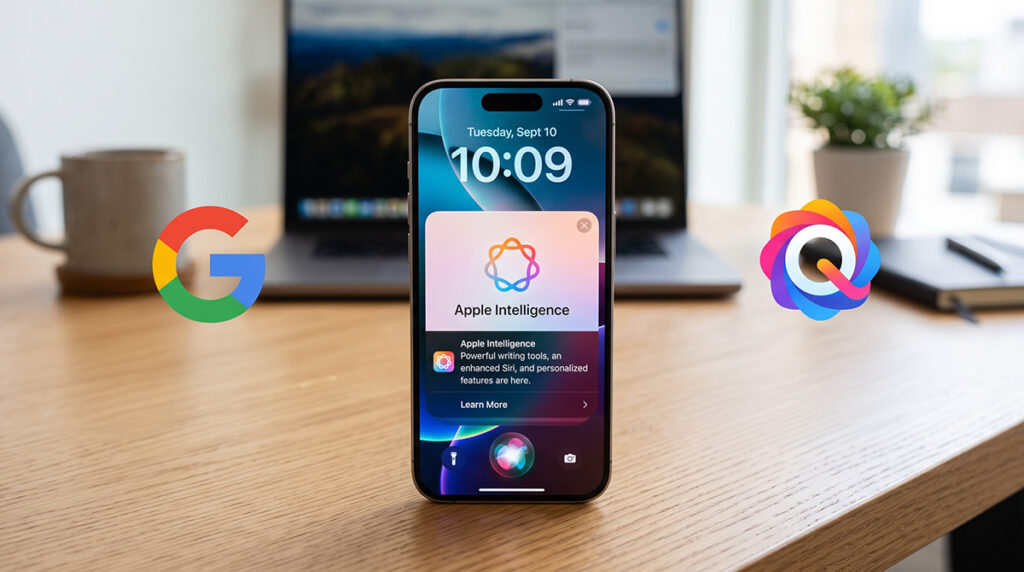
The Great Divide in the Silicon Era
The integration of Alibaba’s Qwen into Apple Intelligence isn’t just another tech partnership; it is an admission of geopolitical reality. For years, we have talked about unified software ecosystems. This move tells us that such a dream is being traded for regional survival.
By choosing Qwen as the backbone for Chinese markets, Apple acknowledges that local mastery beats global dominance when dealing with strict regulatory barriers. Here is the lowdown on why this matters for you, especially if you are navigating the tech landscape in Malaysia or Singapore.
The “Why” Behind the Partnership
Apple isn’t choosing Alibaba because they prefer their LLM. They are doing it because of compliance. To operate in mainland China, Apple must adhere to strict data sovereignty laws that make it nearly impossible to run a single, unified global AI model. By integrating Qwen, Apple ensures that Chinese users get local language nuances and high-quality Mandarin outputs without the data crossing borders into “forbidden” zones.
The Qwen Factor vs. The Global Giants
Qwen is not some low-tier alternative. It is Alibaba’s heavy hitter. In many metrics, specifically regarding Chinese cultural context and linguistic nuance, Qwen outperforms GPT-4o in localised tasks. For the global user, Apple continues to lean on its established partnerships with OpenAI and Google. This creates a “dual-track” system: your iPhone becomes a gateway to different AI brains depending on where it is activated.
Privacy as the Shield
The real win for the tech professional is how Apple handles this. They are not just handing over keys to Alibaba. They are wrapping these integrations in Private Cloud Compute. This ensures that even when a local model like Qwen is doing the heavy lifting, the personal identifiers of the user remain protected within a hardened environment. It’s a strategic move to maintain “Apple-level” trust while cooperating with “local-heavy” infrastructure.
The Regional Impact: Malaysia and Singapore
This is where it gets interesting for our local fans. There is a persistent fear of “region-locking.” Will my iPhone 17 Pro in KL be slower because it isn’t using the Qwen backbone? The answer is likely no, but we do see a shift in how features are rolled out. While Malaysia and Singapore will stay on the OpenAI/Google track, the existence of this dual-track means Apple has to maintain two distinct software pipelines.
We need to watch closely if certain “local” optimisations for Mandarin or regional dialects eventually trickle over into our region via firmware updates. For now, it serves as a blueprint: Apple is willing to fragment its code to keep its hardware in everyone’s hands.
Adam Lobo’s Take
The fact that Apple would rather fork their software and maintain two different AI backends than risk being blocked from the Chinese market is a massive win for technical diversity. It proves that “one size fits all” is a myth in the age of data sovereignty. For us in the MY/SG space, this means we get to keep our Western-centric tools while the global infrastructure remains stable. This isn’t just about a better chatbot; it’s about how a tech giant navigates the most complex geopolitical landscape in modern history. It passes the mamak test: it’s a practical, no-nonsense solution to a massive regulatory headache.
Other Little Things
The Data Sovereignty Play
Apple is using this partnership to prove that “Private Cloud Compute” can coexist with local requirements. By isolating the data paths for different regions, they protect their brand integrity while satisfying local laws. It’s a masterclass in high-stakes corporate navigation.
Qwen vs. The Field
While GPT-4o remains the gold standard for general purpose reasoning globally, Qwen is arguably the king of Chinese linguistic nuance. By integrating it, Apple ensures that its hardware doesn’t become obsolete in one of the world’s largest markets just because a US-based model couldn’t “speak” the local language perfectly.
The Hardware Connection
For those eyeing the next iPhone, these backend decisions impact your day-to-day experience. Whether it’s Qwen or GPT-4o, the goal is to make the AI feel invisible. You don’t need to know which model is responding; you just need it to work perfectly when you ask for a summary of that 20-page PDF during your morning commute.
| Feature | Apple (Global) | Alibaba Qwen (China) |
|---|---|---|
| Primary Partners | OpenAI, Google | Alibaba Group |
| Core Strength | General Logic, Global Context | Mandarin Nuance, Regional Scale |
| Data Framework | Private Cloud Compute | Localised & Compliant Gateways |
| Target Market | Worldwide (Excl. China) | Mainland China Focus |
Key Insight: This isn’t a “fallback” option for Apple; it’s a strategic engineering choice to bypass the Great Firewall while maintaining their premium “privacy-first” brand positioning.
Primary Source & Reports
- The Bloomberg Report (Mark Gurman): Apple is building its own AI tools for China, says Mark Gurman
Official Technical & Corporate Sources
- Apple Intelligence Overview: Apple Newsroom – Apple Intelligence
- Alibaba Qwen Model Information: Alibaba Cloud: Qwen Models Overview