TL;DR / At a Glance: Is Sodium-ion better than Lithium-ion? In 2026, Sodium-ion is considered a superior alternative to Lithium-ion for budget smartphones and urban EVs. While it has lower energy density, Sodium-ion is 30% cheaper to produce, safer due to lower thermal risk, and retains 90% of its capacity in cold weather. It also has a longer lifespan, often exceeding 3,000–6,000 charge cycles, making it more durable for long-term use.
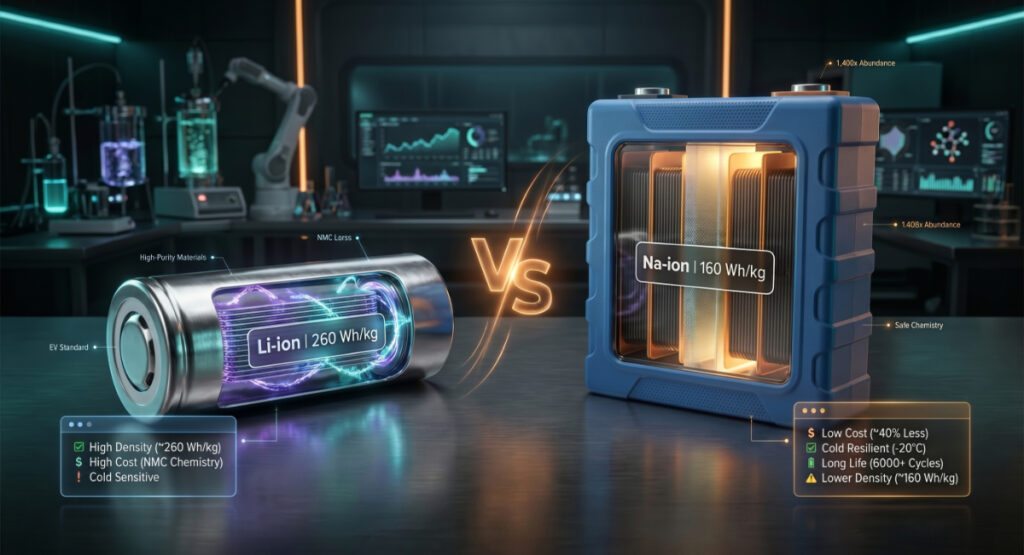
For the last decade, Lithium-ion (Li-ion) has been the undisputed king of the portable world. It powered the smartphone revolution and gave birth to the modern Electric Vehicle (EV). But in 2026, we are hitting a wall. Between the skyrocketing costs of high-end AI semiconductors and the environmental toll of lithium extraction, the industry is desperate for a plan B.
Enter Sodium-ion (Na-ion). Once a laboratory curiosity, sodium-ion technology has officially reached mass production, and it is set to redefine the “Buy Smart” hierarchy for every Malaysian consumer.
The Economic Catalyst: Why Lithium is Losing its Grip
The shift to sodium isn’t just about better chemistry; it’s about survival. As I’ve discussed in my reports on the $200B Memory Gamble, manufacturers are currently facing an AI Tax. To run local models like Gemini Nano, brands are being forced to pack more RAM into budget devices. To keep these phones under the RM1,000 mark, they have to find savings elsewhere.
Lithium is scarce and its pricing is volatile. Sodium, derived from common salt, is roughly 1,400 times more abundant. According to research from Ufine Battery, the production cost of sodium-ion cells is estimated at $40–$70/kWh, compared to $90–$120/kWh for standard Lithium Iron Phosphate (LFP) cells. By switching to sodium, a brand can effectively offset the cost of that extra 4GB of RAM needed for AI.
Technical Showdown: Sodium-Ion vs. Lithium-Ion
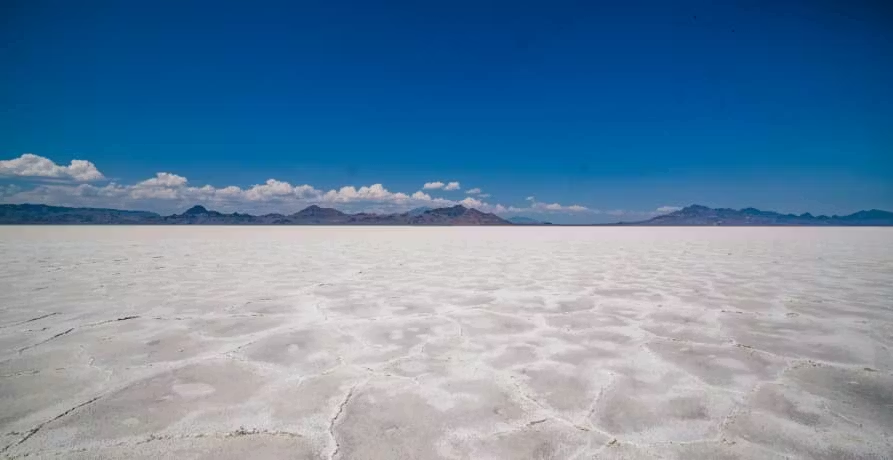
While Lithium still holds the crown for raw energy density (the amount of power packed into a specific weight), Sodium is winning in areas that matter for daily reliability.
| Metric | Na-ion Gen 2 (2026) | Li-ion LFP | Li-ion NMC |
|---|---|---|---|
| Energy Density (cell) | 160–175 Wh/kg | 160–180 Wh/kg | 250–280 Wh/kg |
| Cycle Life | 4,000–6,000 cycles | 3,000–4,000 cycles | 1,000–2,000 cycles |
| Fast Charge (to 80%) | 15 minutes | 30 minutes | 30–45 minutes |
| Low-Temp Performance (–20°C) | >90% capacity | 70–75% capacity | 60–70% capacity |
| Thermal Stability | Stable and non-flammable | Stable to 270°C | Risk above 180°C |
| Cost (2026, China) | $70/kWh | $40–45/kWh | $65–75/kWh |
| Raw Material Risk | Minimal (abundant Na) | Moderate (Li supply) | High (Co, Ni) |
| Environmetal Cost | 682x less water usage | 1.9M Litres of water per tonne | 1.9M Litres of water per tonne |
Data Sources: SNE Research, Greenly.earth
The May 2026 Milestone: CATL’s Naxtra
The theoretical debate ended this month with the mass-market debut of CATL’s Naxtra battery. Integrated into the Changan Nevo A06, this is the first time we’ve seen a mass-produced EV utilise sodium-ion to achieve a 400km range.
This is a breakthrough for urban drivers. Sodium batteries don’t just cost less; they are safer. They generate significantly less heat during rapid charging and can be discharged to zero volts for transport without damaging the cells—a feat that is physically impossible for lithium-ion.
Impact on Your Next Smartphone
You might be holding a sodium-powered phone sooner than you think. In 2026, we are seeing the first wave of Sodium-Edition mid-range devices.
- The Benefit: These batteries support ultrafast charging and boast a cycle life of 3,000 to 6,000 charges. This means your phone’s battery health could stay at 100% for nearly five years of daily use.
- The Trade-off: Because sodium is less energy-dense, these phones are approximately 10-15% thicker. However, for a device that charges in 15 minutes and lasts twice as many years, most consumers will find that a fair trade.
The Sustainability Reality
For the eco-conscious, the data is staggering. Lithium mining is a water-intensive process that often devastates local ecosystems. Eleven Energy reports that sodium extraction is not only localised—reducing the carbon footprint of shipping—but it avoids the geopolitical tensions surrounding the “Lithium Triangle.”
The “Adam Lobo” Final Word
We are entering an era of Energy Diversity. Lithium-ion will remain the choice for ultra-thin flagships and long-range performance EVs. But for the City EV that gets you to work, or the RM900 smartphone that needs to survive a three-year instalment plan, Sodium-ion is the new gold standard.
It’s safer, it’s more sustainable, and most importantly, it’s the only way to keep modern tech affordable in an AI-driven economy.