
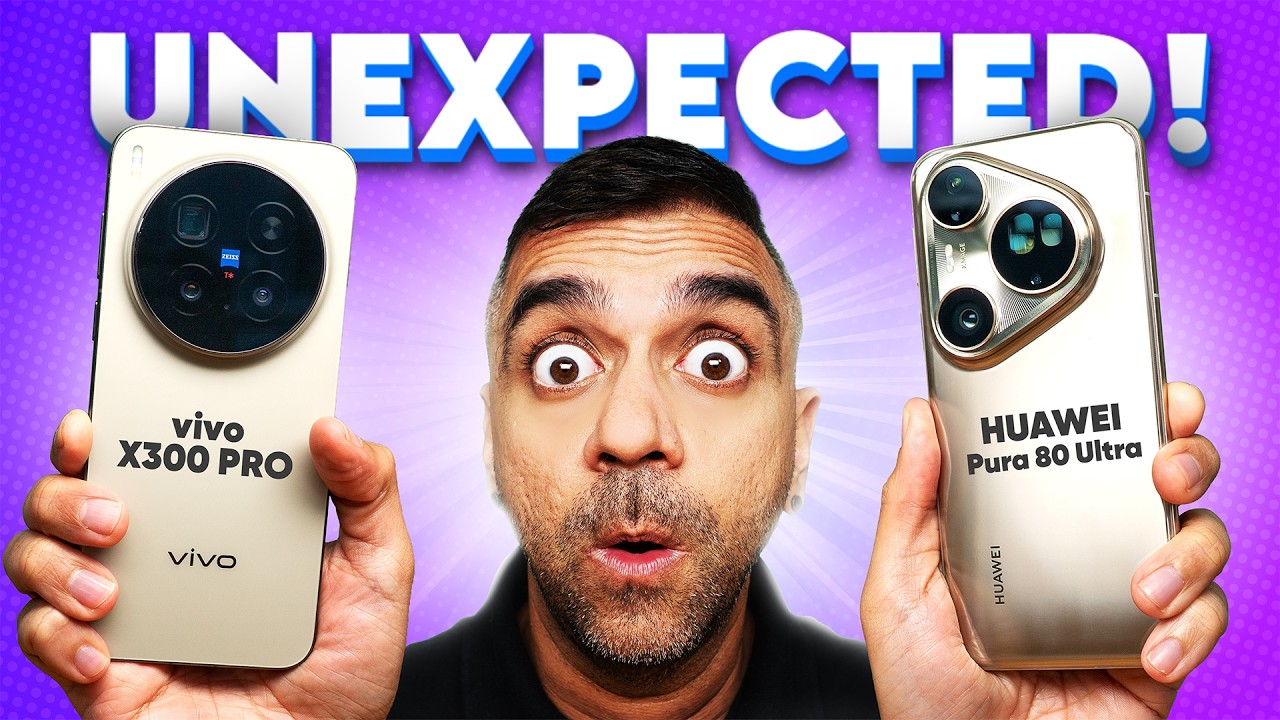
So, I was in China and I took this photo and I asked you guys which zoom looked better in a YouTube Shorts video and that video hit 1.2 million views (as of the timing of this article). Thank you very much and because of that, this in-depth camera comparison is for you. Is the HUAWEI Pura80 Ultra actually better than the vivo X300 Pro? Or are the results totally unexpected? Well, watch first and buy smart.
Specs
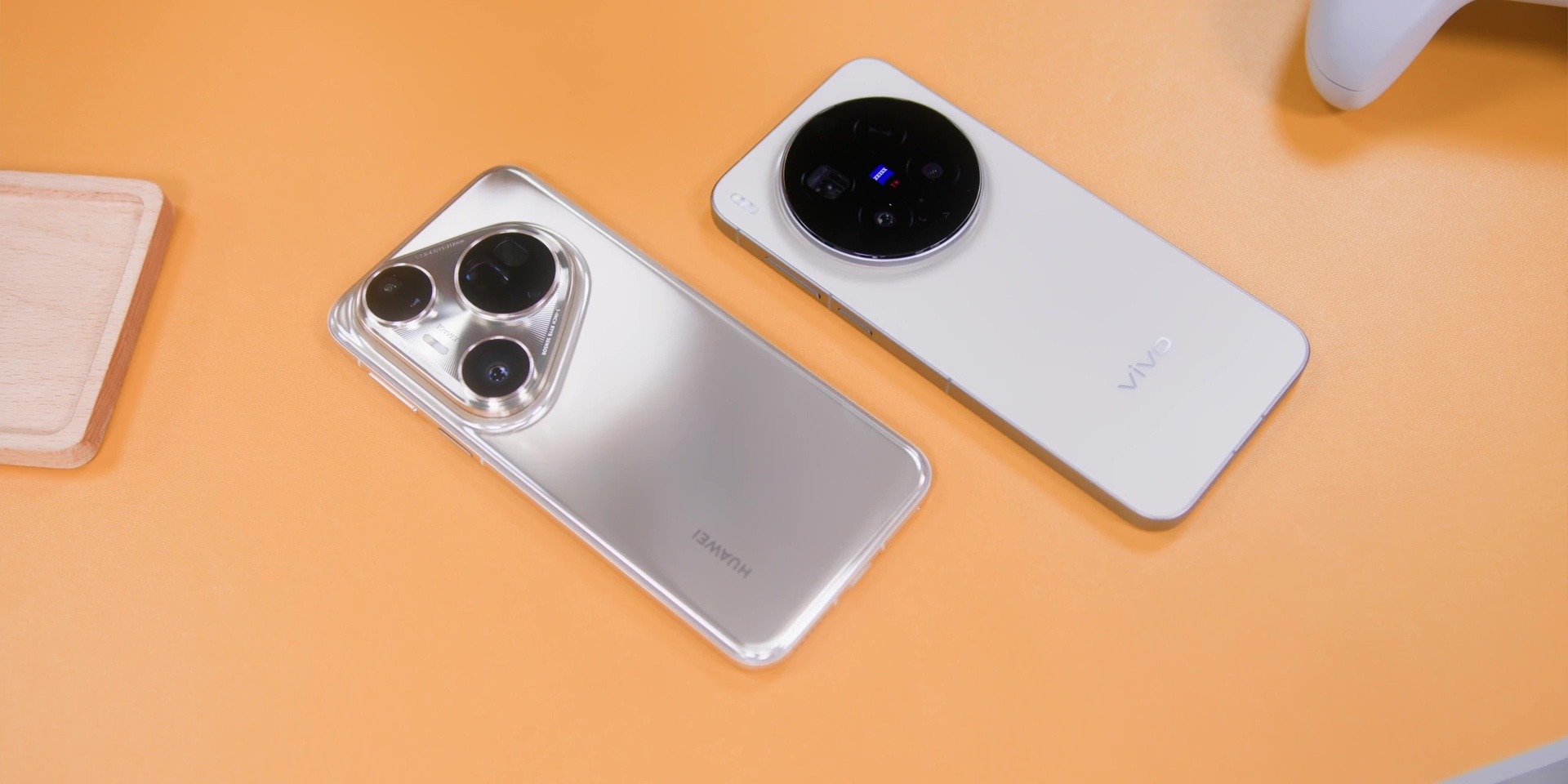
Just a recap of the specs. The vivo X300 Pro has three cameras:
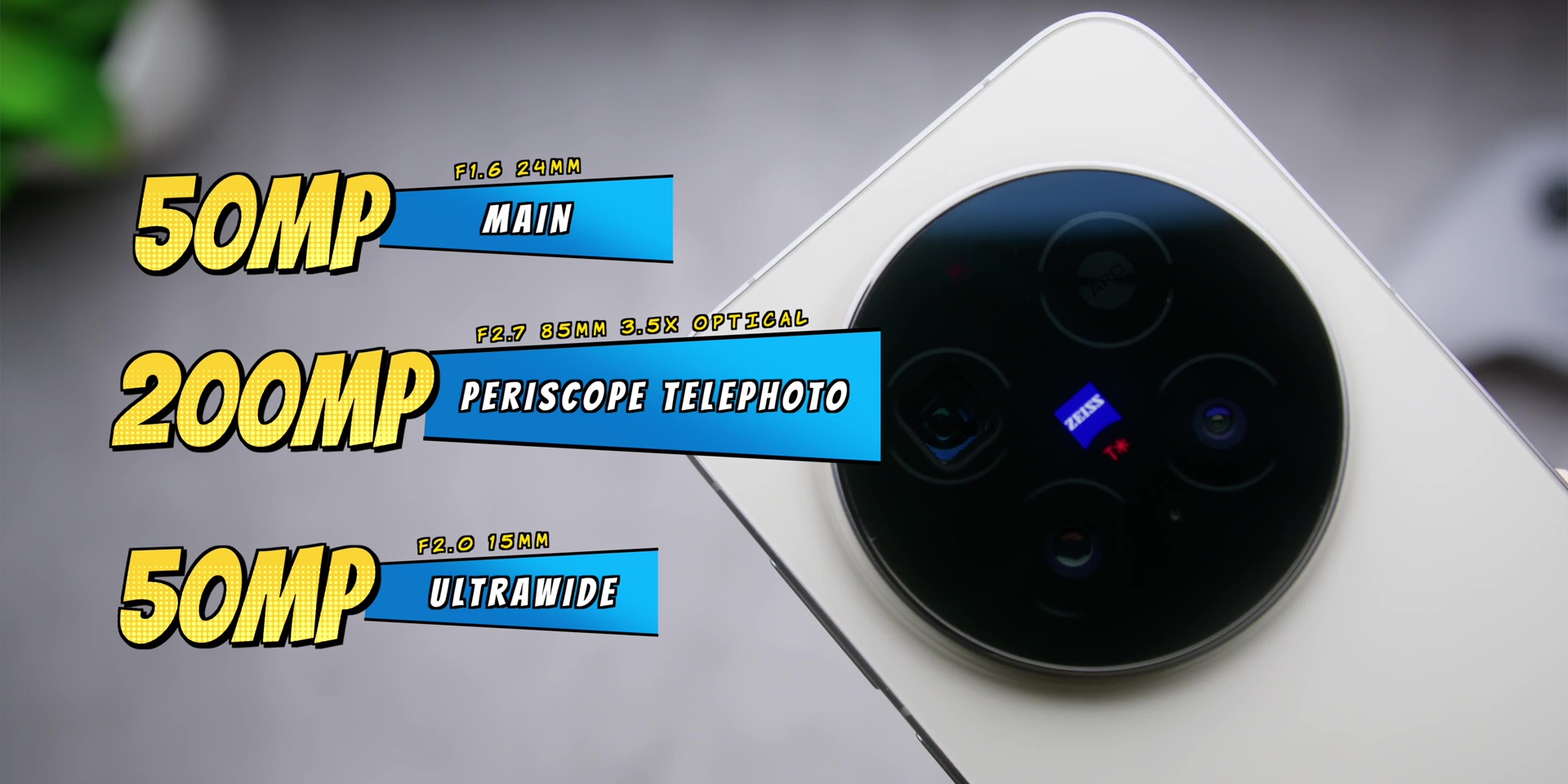
- a 50MP main camera with an aperture of f/1.6 and a 24mm lens,
- a massive 200MP f/2.7 85mm optical periscope telephoto lens, which is a 3.5x optical zoom, and;
- a 50MP f/2.0 15mm ultrawide camera.
However, the HUAWEI Pura80 Ultra has four cameras:
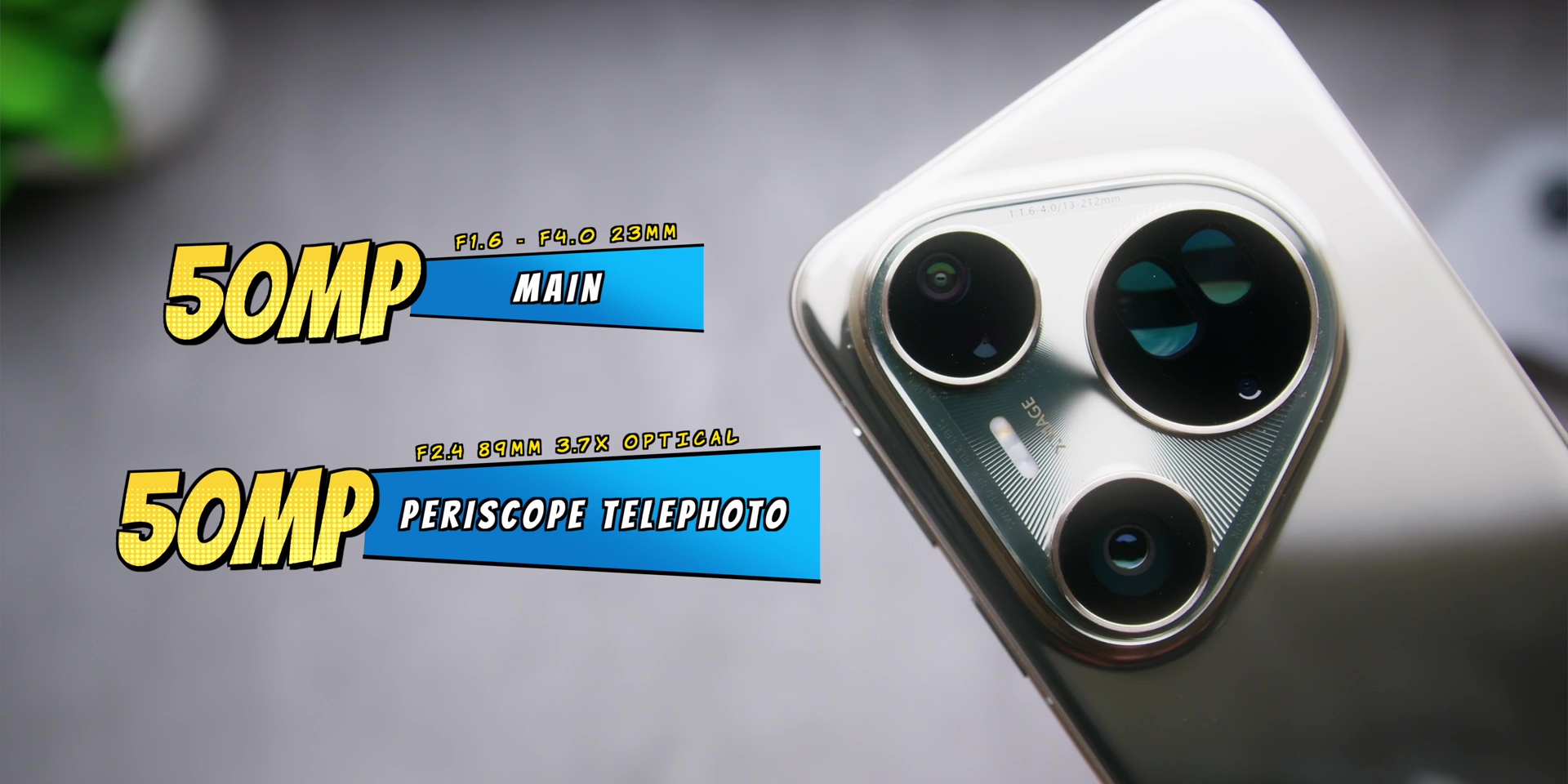
- the main camera is a 50MP physical variable aperture lens, ranging from f/1.6 to f/4.0 with a 23mm focal length
- another 50MP f/2.4 89mm optical periscope telephoto lens, which is a 3.7x optical zoom
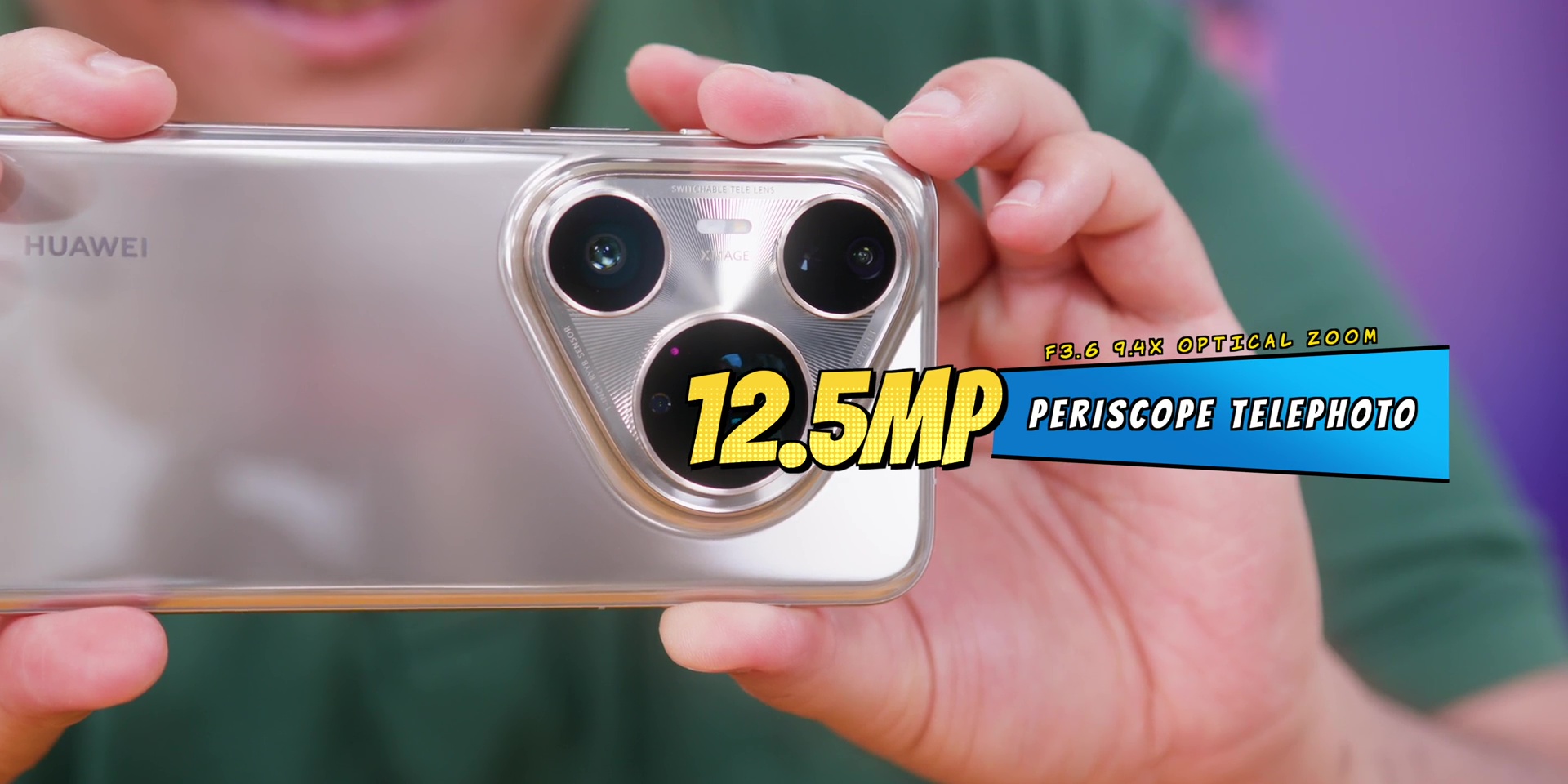
- Then there’s also another periscope telephoto lens, which is a 12.5MP f/3.6 aperture with a 9.4x optical zoom,
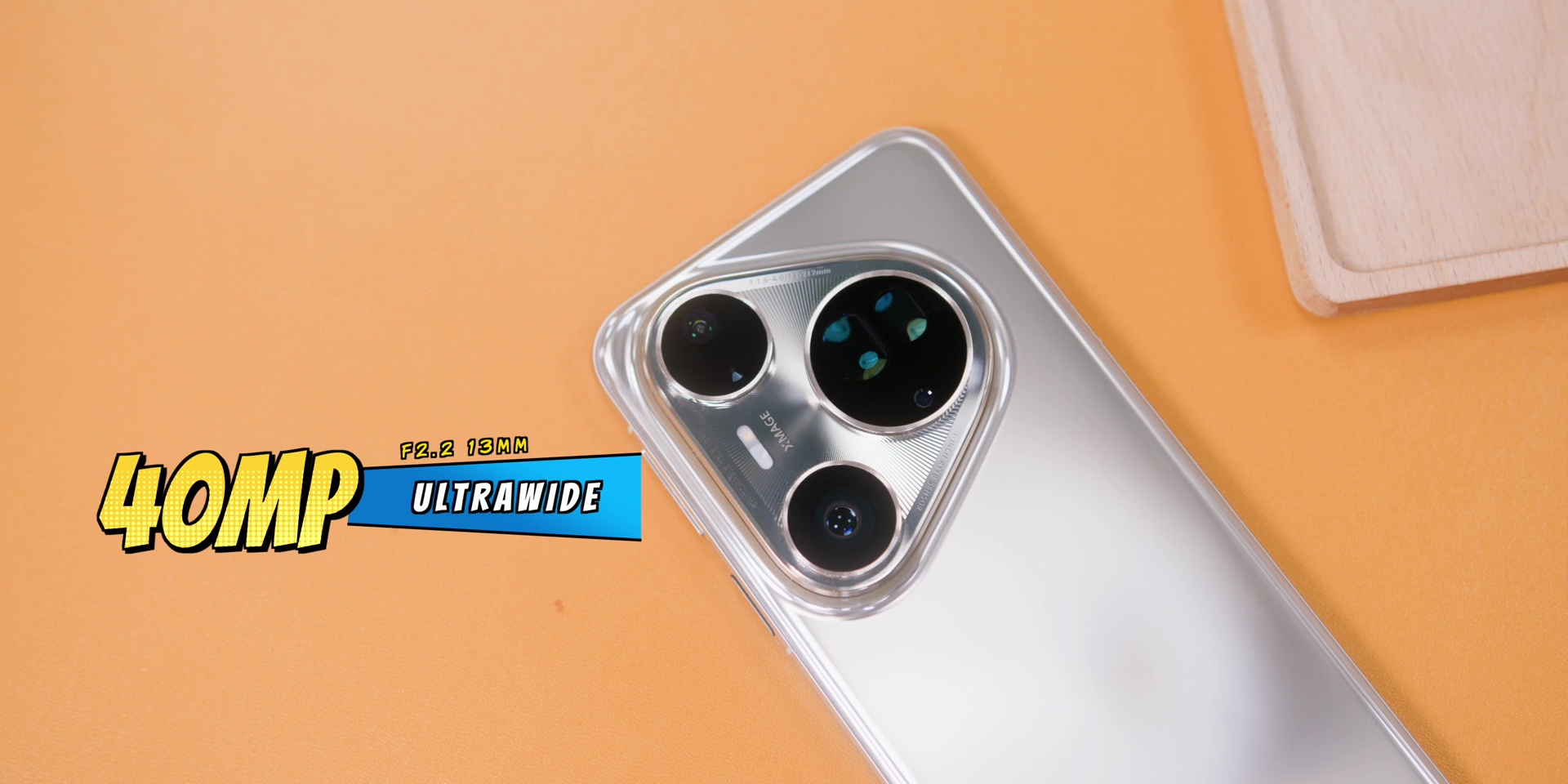
- and the ultrawide lens is a 40MP f/2.2 13mm ultrawide camera.
Okay, enough with all of the specs. It’s time for the photo comparison.
Ultrawide
Starting from the ultrawide lens, both look very similar in terms of the colors and the overall dynamic range. But there are two things to note. First is the fact that HUAWEI’s ultrawide focal length is at 13mm compared to 15mm on the vivo. So, the images that you get on the HUAWEI will naturally look wider than the vivo.
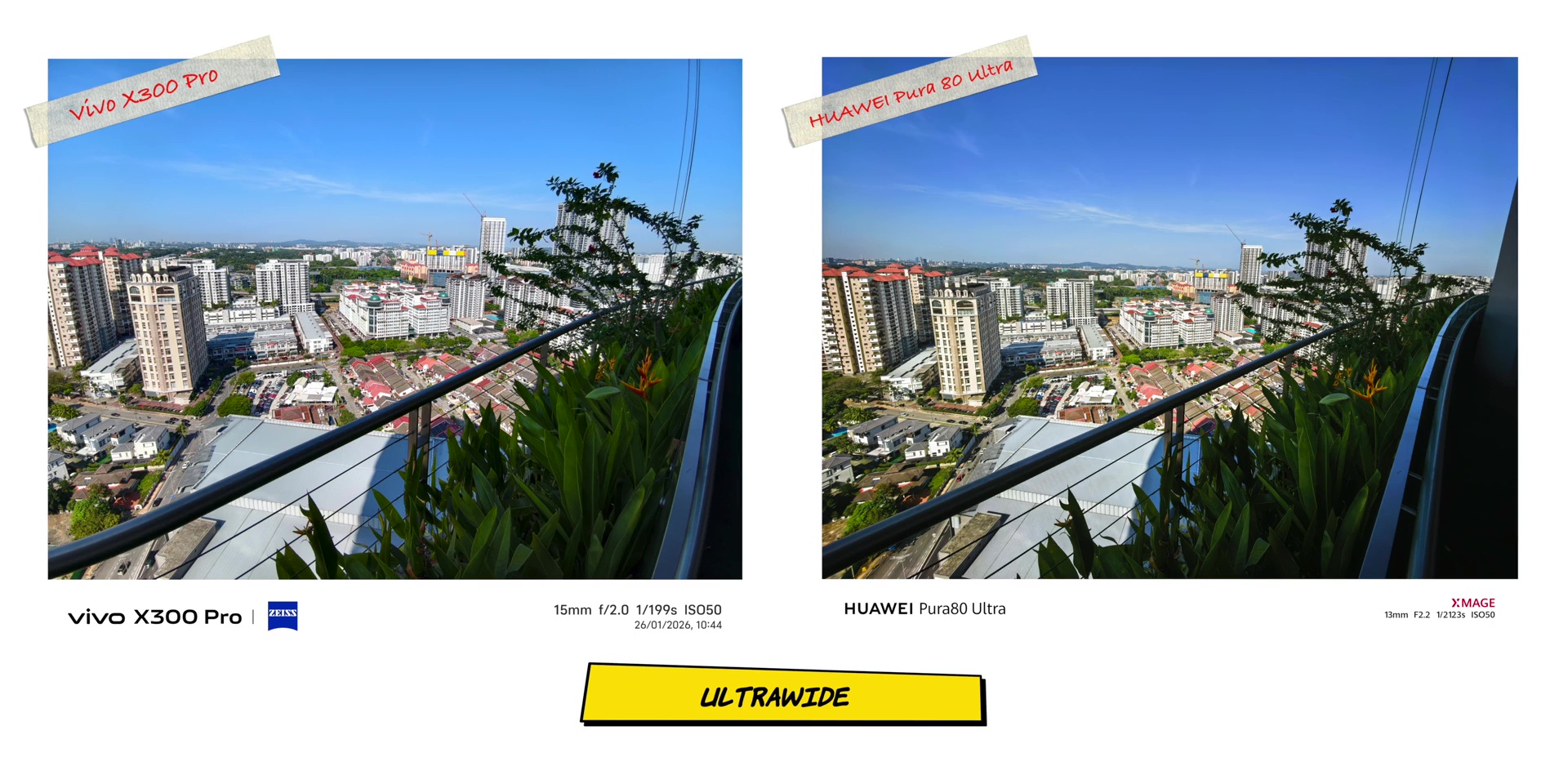
Then the second part which is probably a deal breaker for some of you is that based on this particular first image there is a barrel distortion towards the sides where you can see the rails at the bottom right and left are distorted compared to the HUAWEI. Even the wires at the top right are also distorted compared to the HUAWEI as seen.
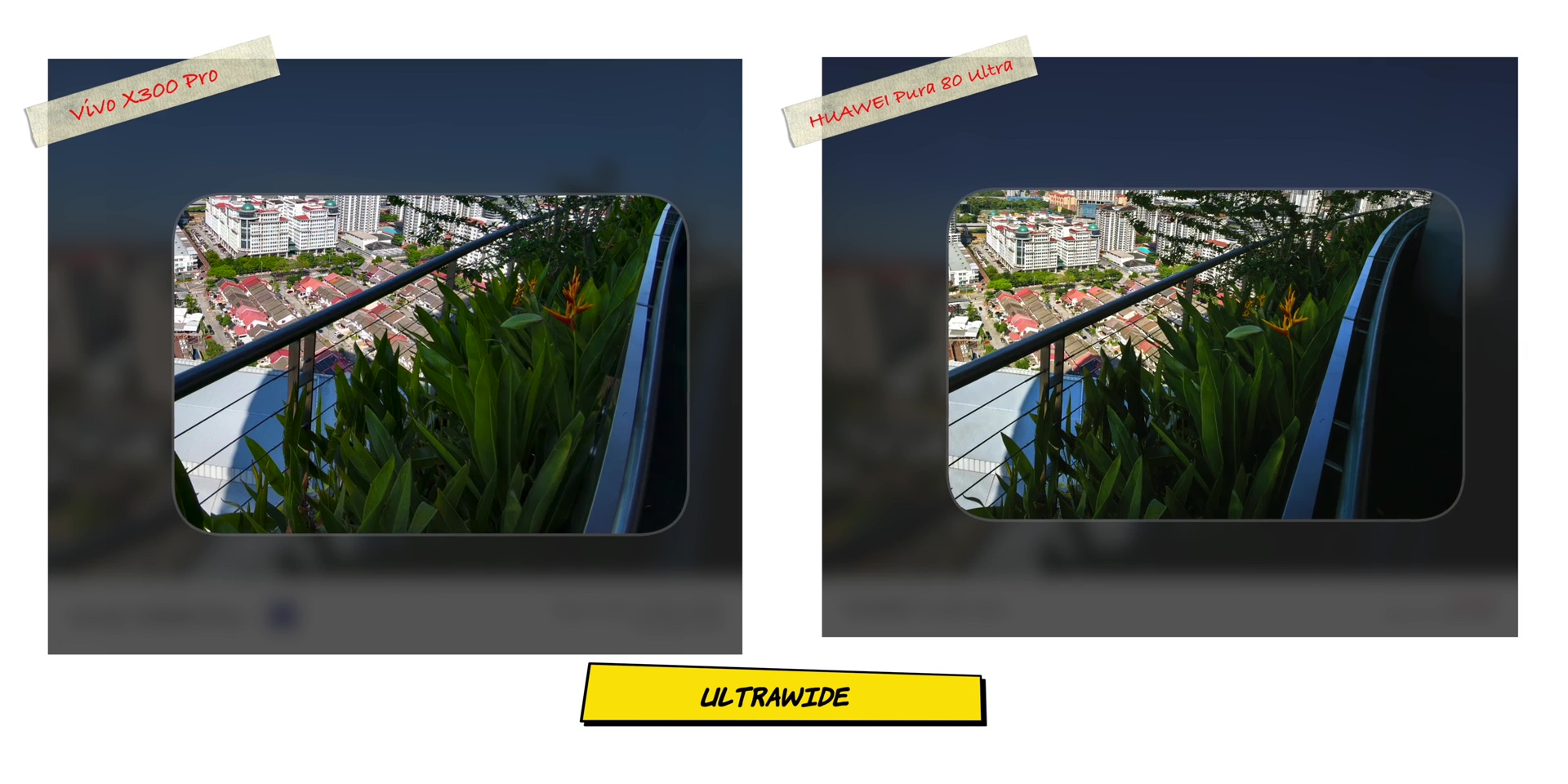
Then as for the second image while the bottom left and right and the top left were totally fine. The buildings towards the top right were once again slightly distorted on the vivo. And while the colors and the dynamic range are the same, I’m not a fan of how HUAWEI applies some sort of a vignette in the skies area, specifically on top.
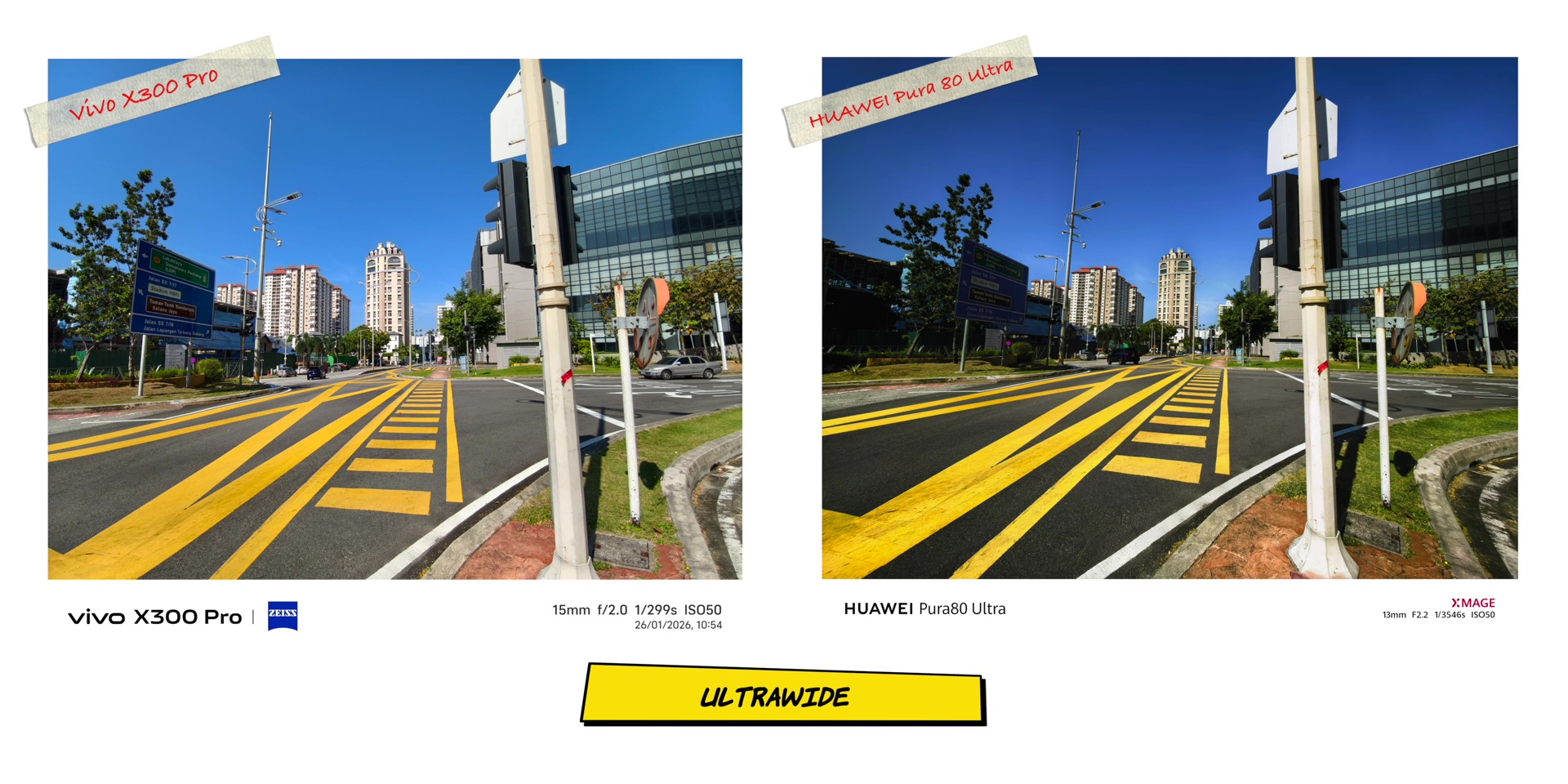
And the story was the same for this third image, not in terms of the vignetting this time around is the similar barrel distortion that you get on the vivo on the bottom right.
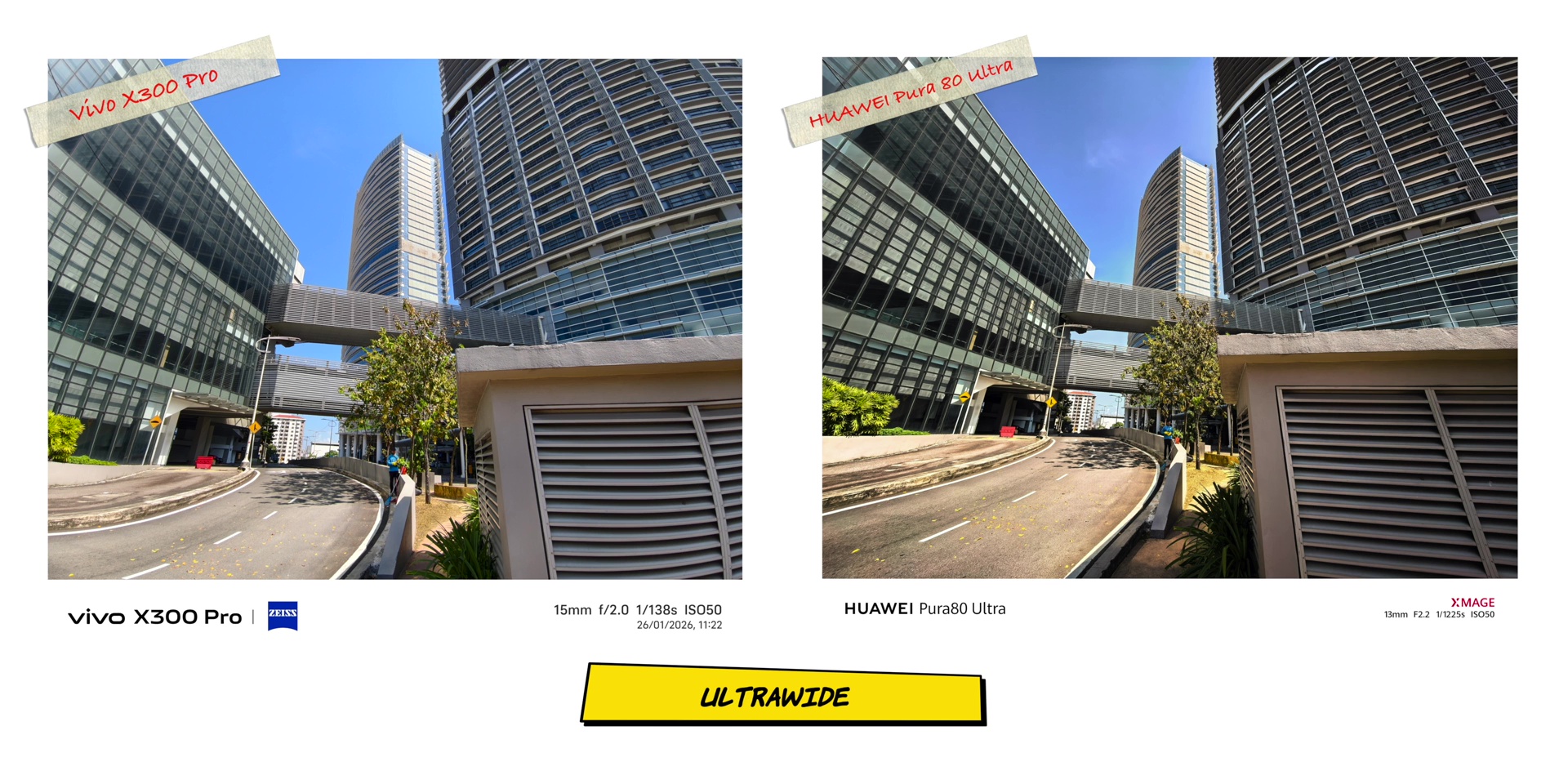
So yeah, this barrel distortion on a vivo phone was not something that I found it as prominent when I did my comparison video with other phones, but yeah, now that I have it side-by-side with the HUAWEI phone, it is very prominent indeed.
Main + Zoom
As for the main lens, both are the same 24mm focal length as mentioned. The default aperture on the HUAWEI’s f/2.0, so the image is slightly darker than vivo’s f/1.57 where vivo even boosts the overall ISO to make sure that the photo looks nicely bright overall.
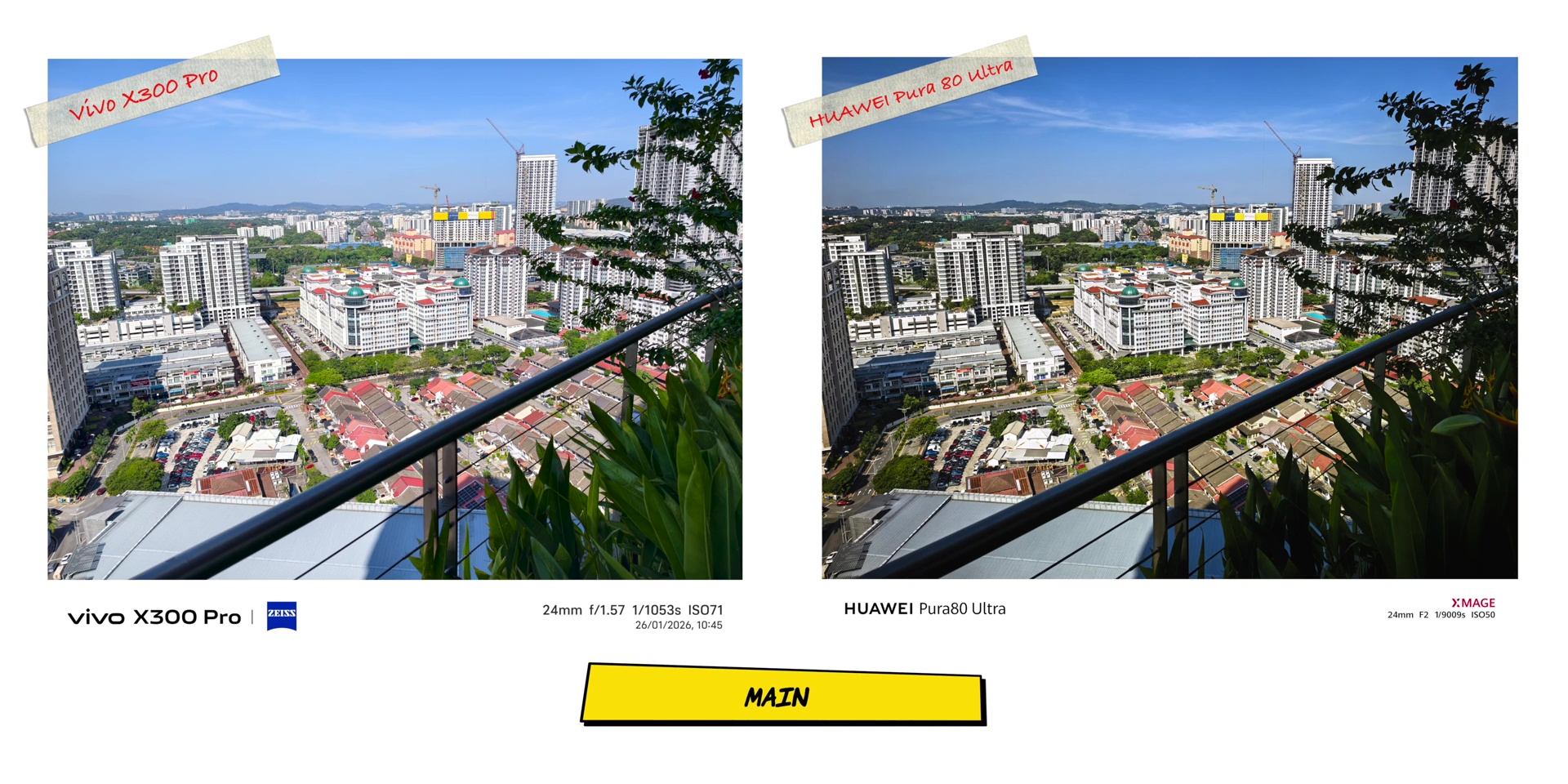
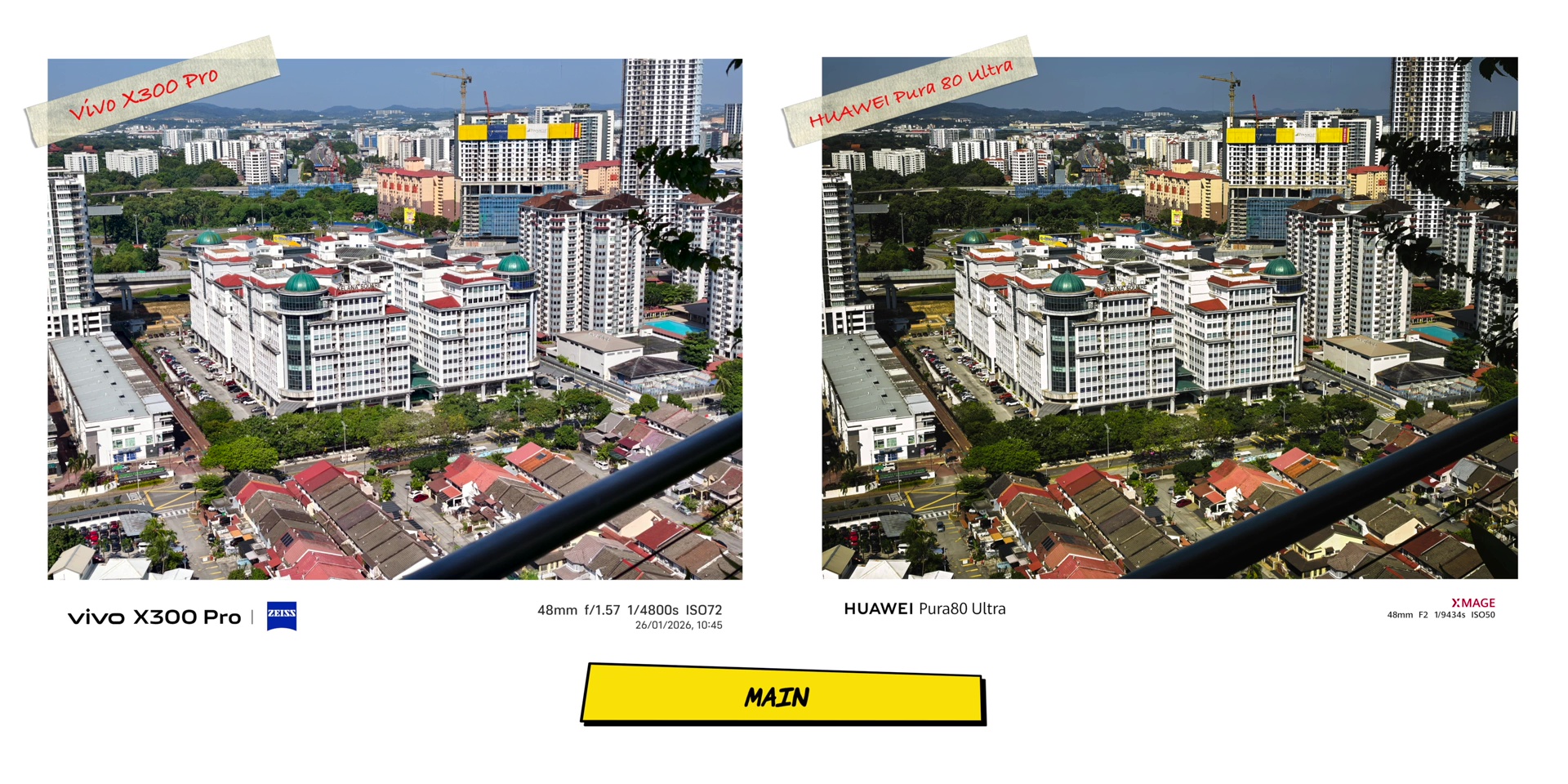
And for some reason the vignette is present in the skies area on the HUAWEI and it was the same story at the 2x mode which is at 48mm on both lenses.
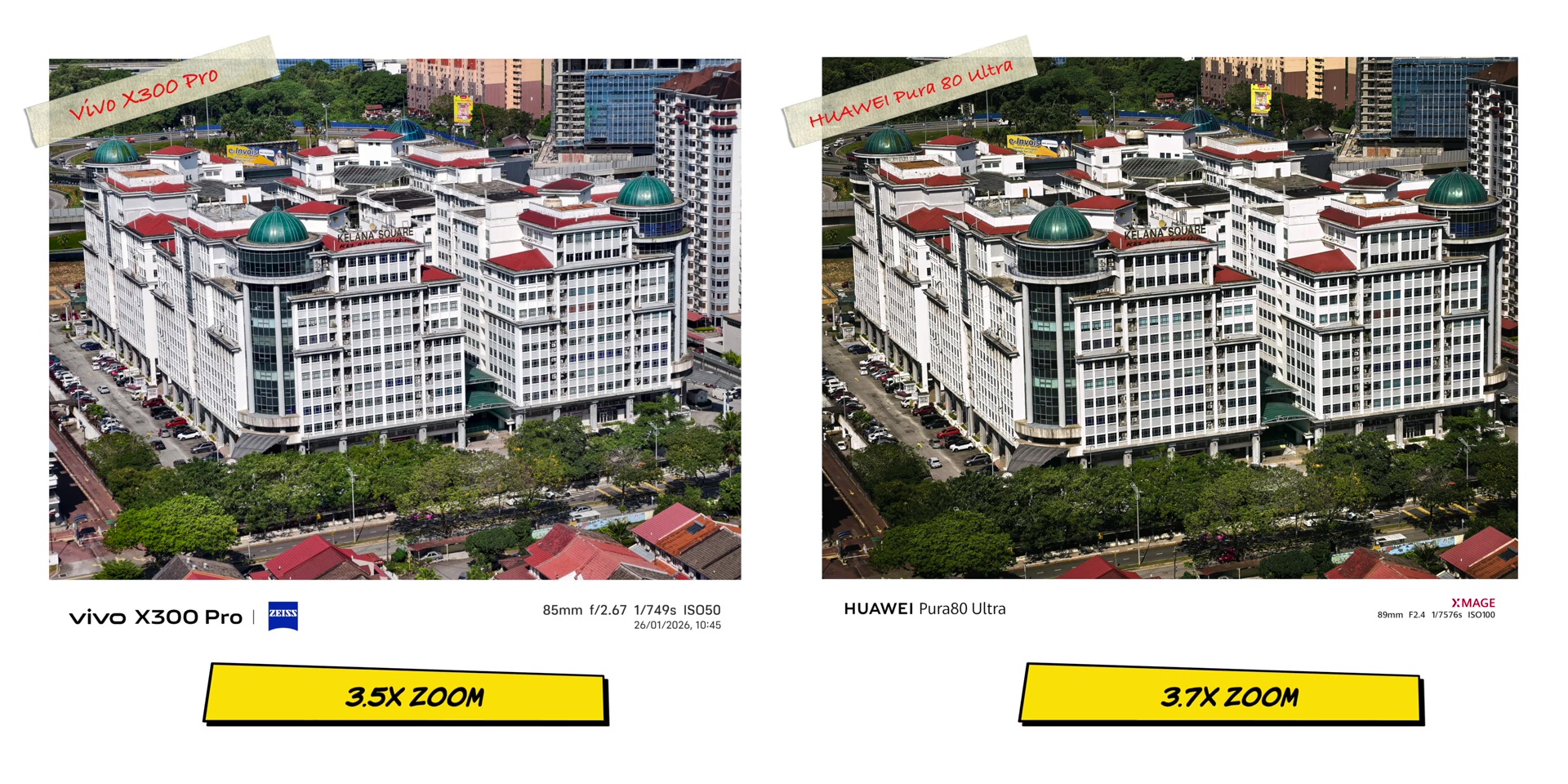
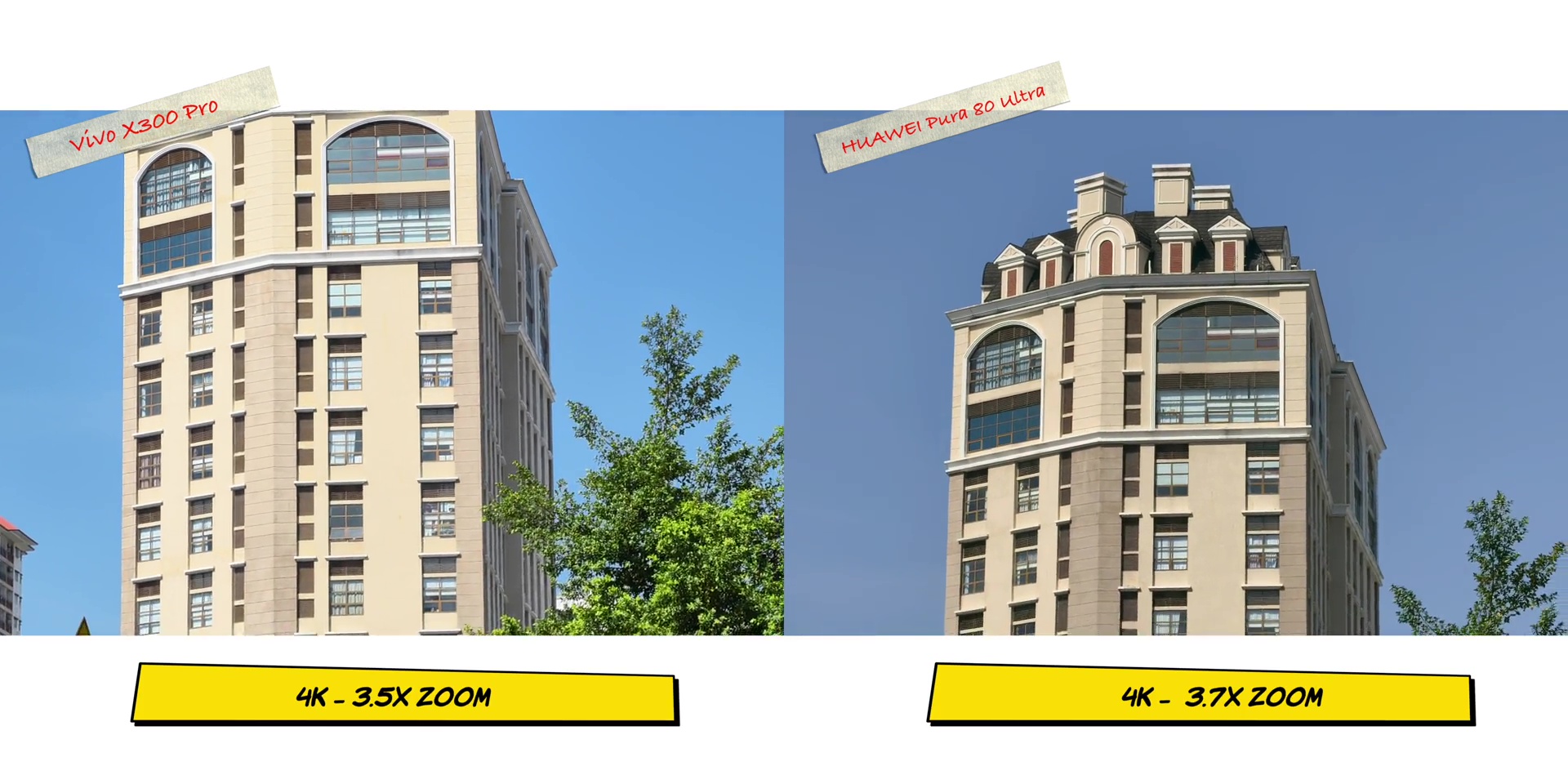
The vivo’s optical zoom periscope is at 3.5x compared to HUAWEI’s optical periscope at 3.7x as mentioned earlier. And while the image quality was once again similar, I do prefer the 85mm focal length as opposed to HUAWEI’s 89mm because it simply does not make such focal length sense. For example, you can easily find an 85mm lens for brands like Sigma or even Sony. But 89mm feels a little too tight.
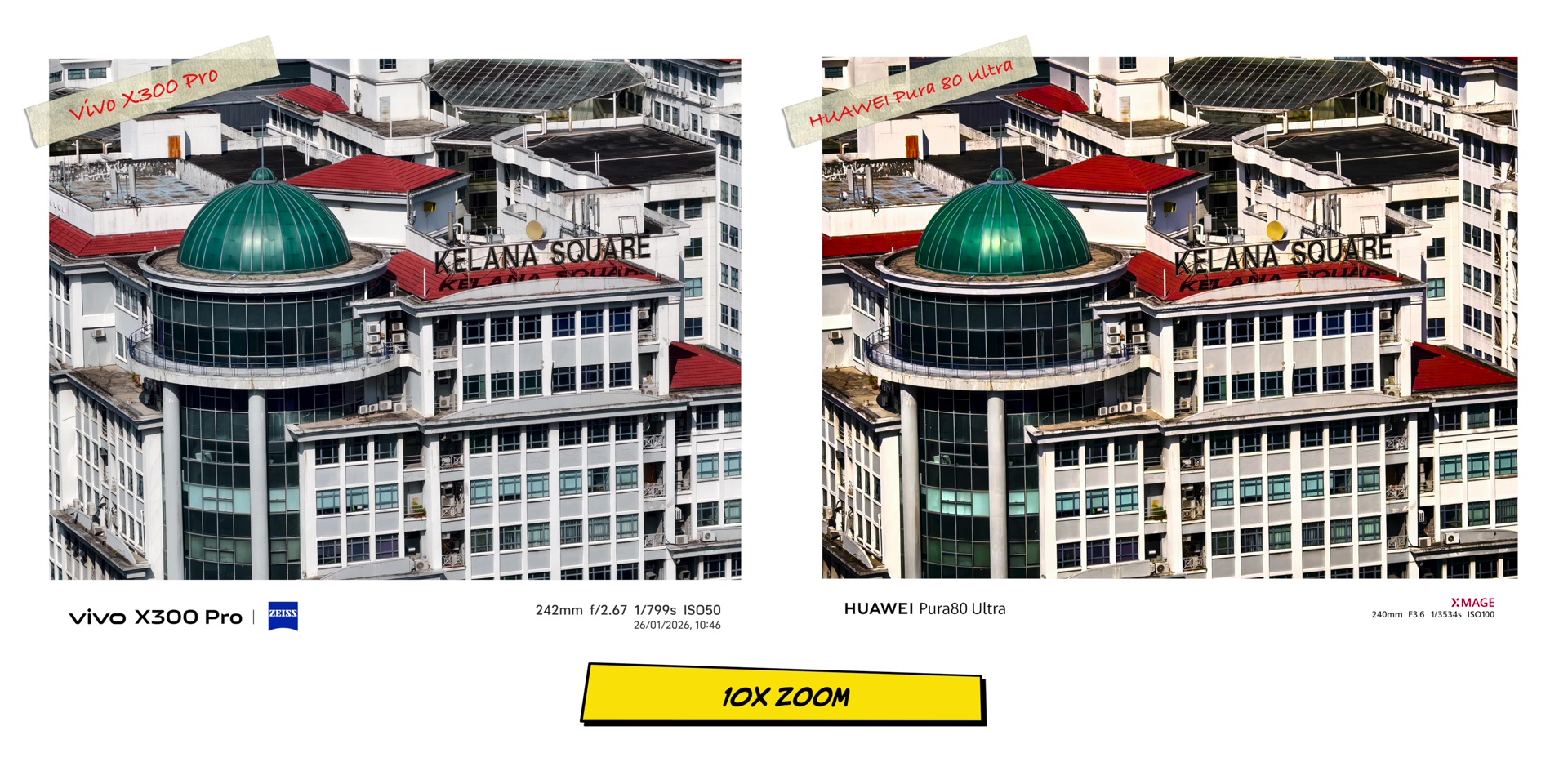
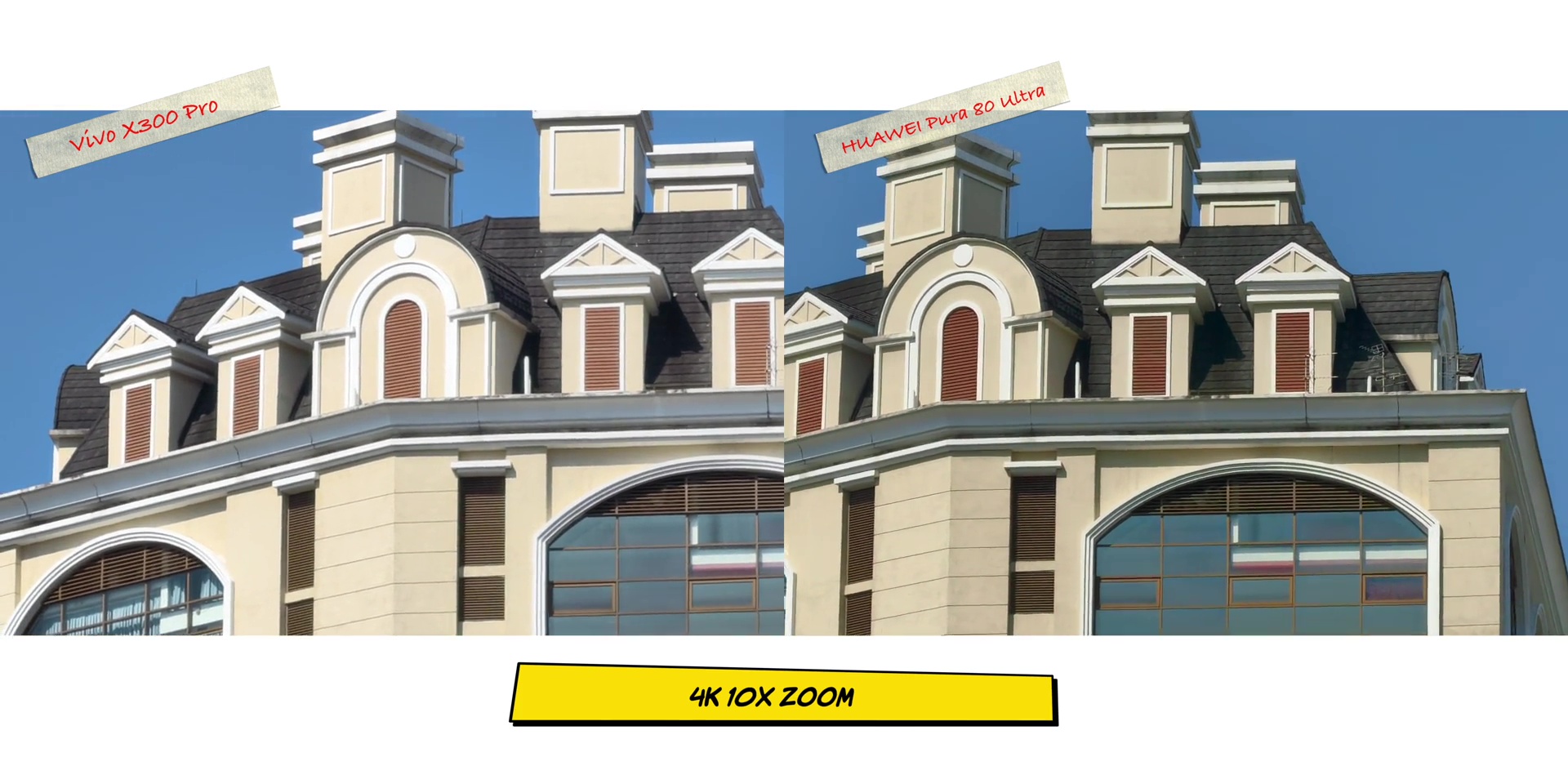
And while the 10x zoom only has a small 2mm difference, but you can once again see and expect the darker and the deeper shadows on the HUAWEI’s image, which is obviously something that you can brighten up after taking the photo. So this does come down to a personal preference.
Other than the colors, the image quality on both looks great at 20x, but at 50x zoom, you’ll start to notice a slight softness in the lines because vivo is using AI to sharpen the edges.
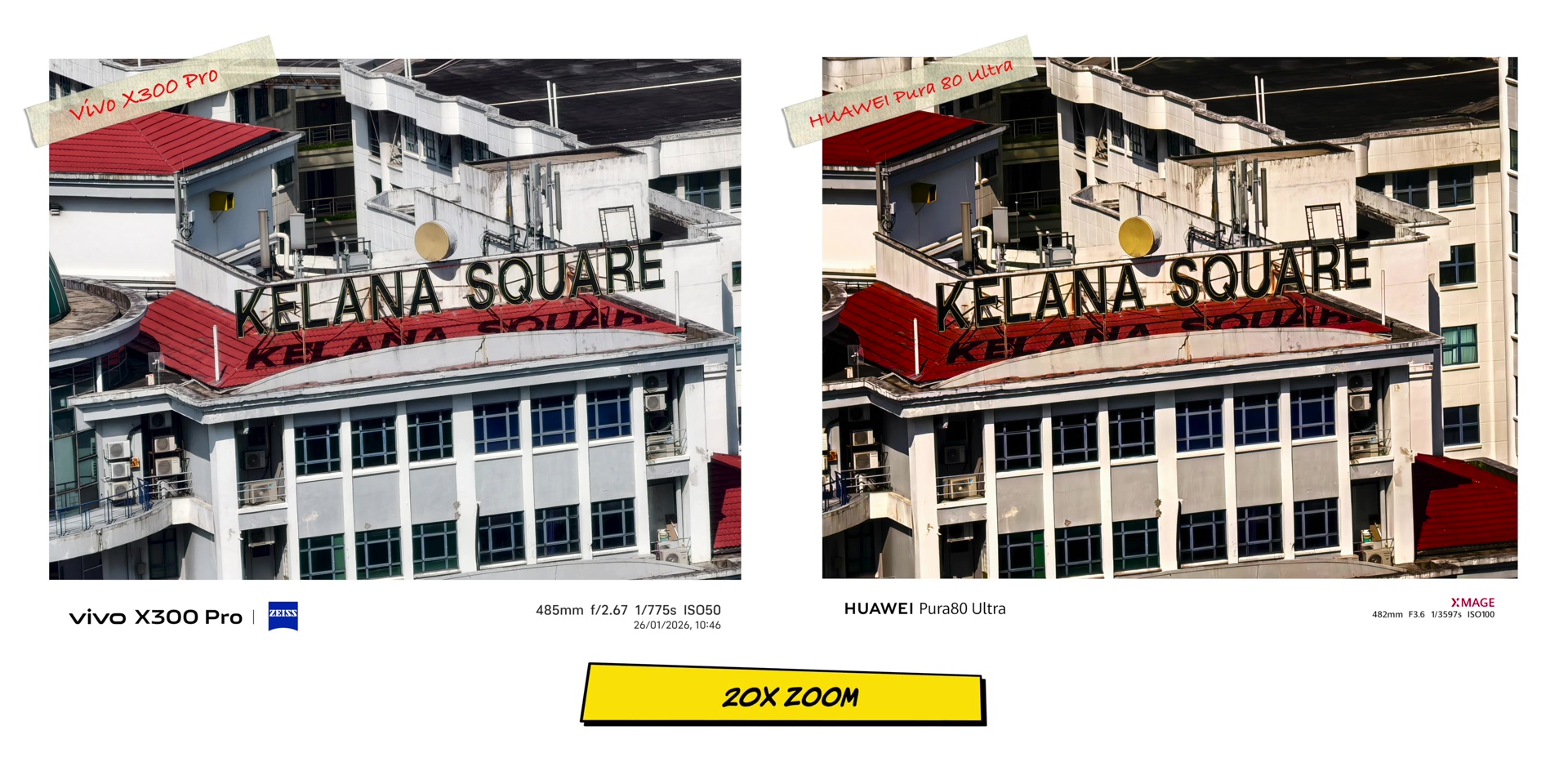
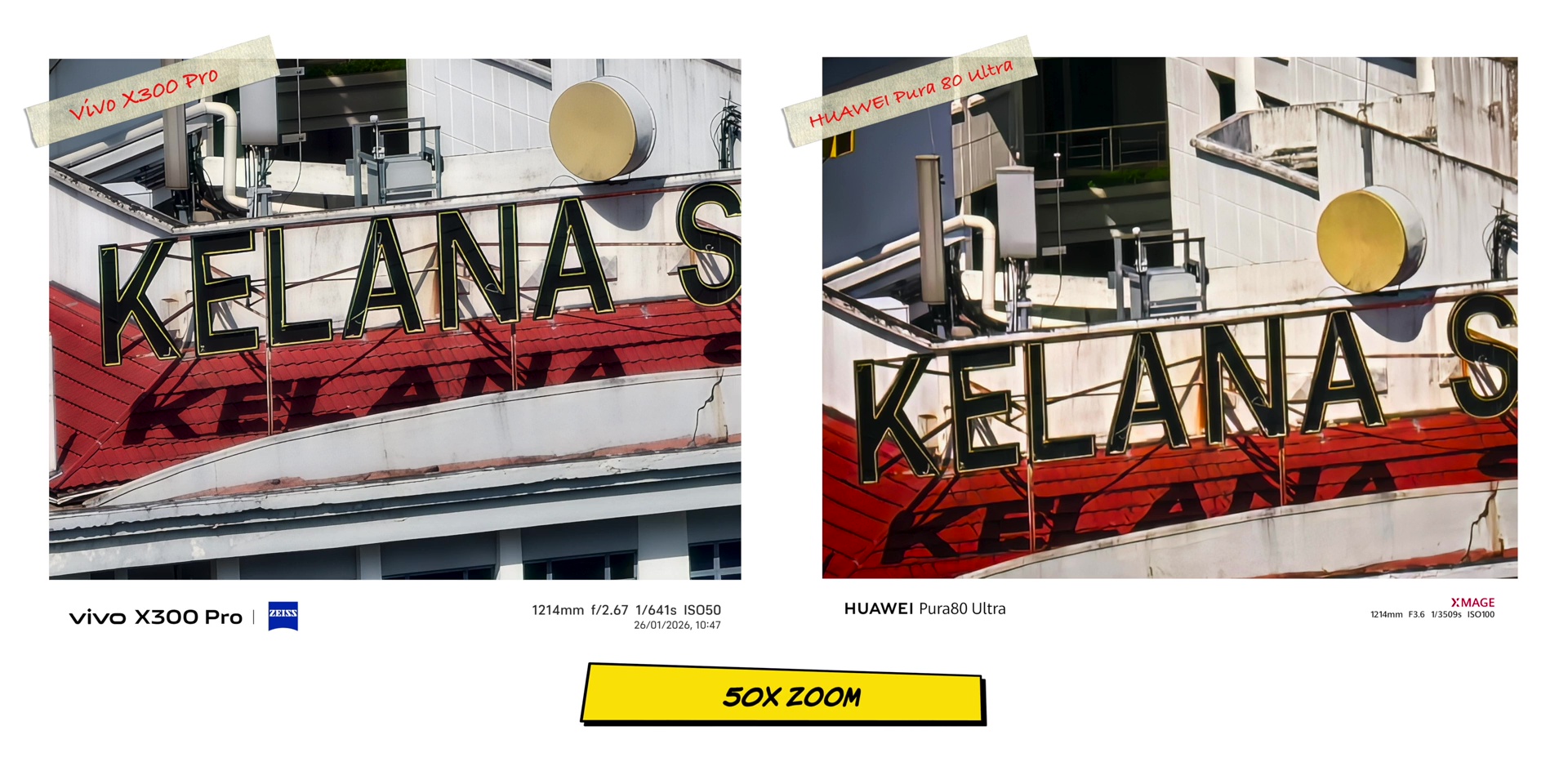
And when comparing the maximum zoom on both which is 100x once again the AI on the vivo makes the image look sharper.
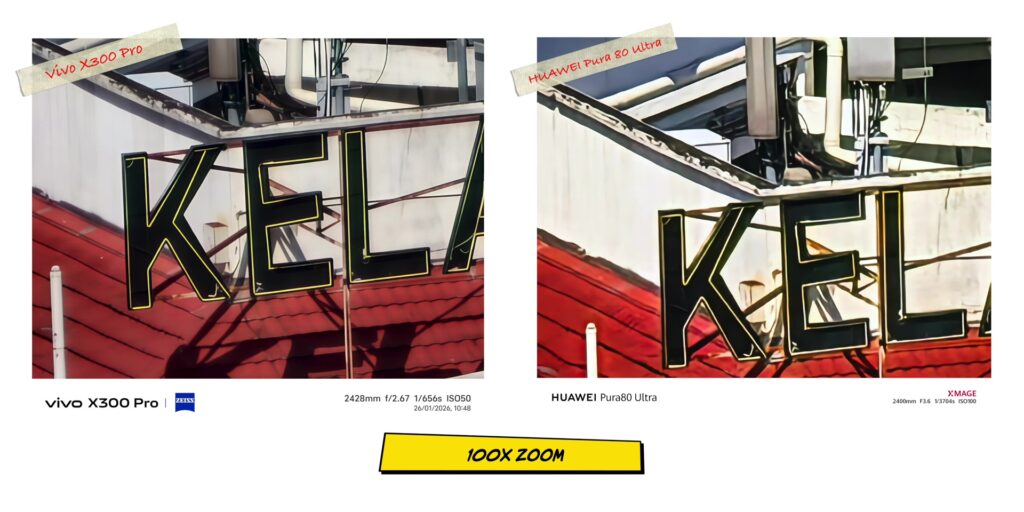
Then as for the next batch of images the vignetting is once again back on the HUAWEI on the main lenses but not as aggressive as before and besides the deeper shadows and the overall quality of the dynamic range those were great on both.
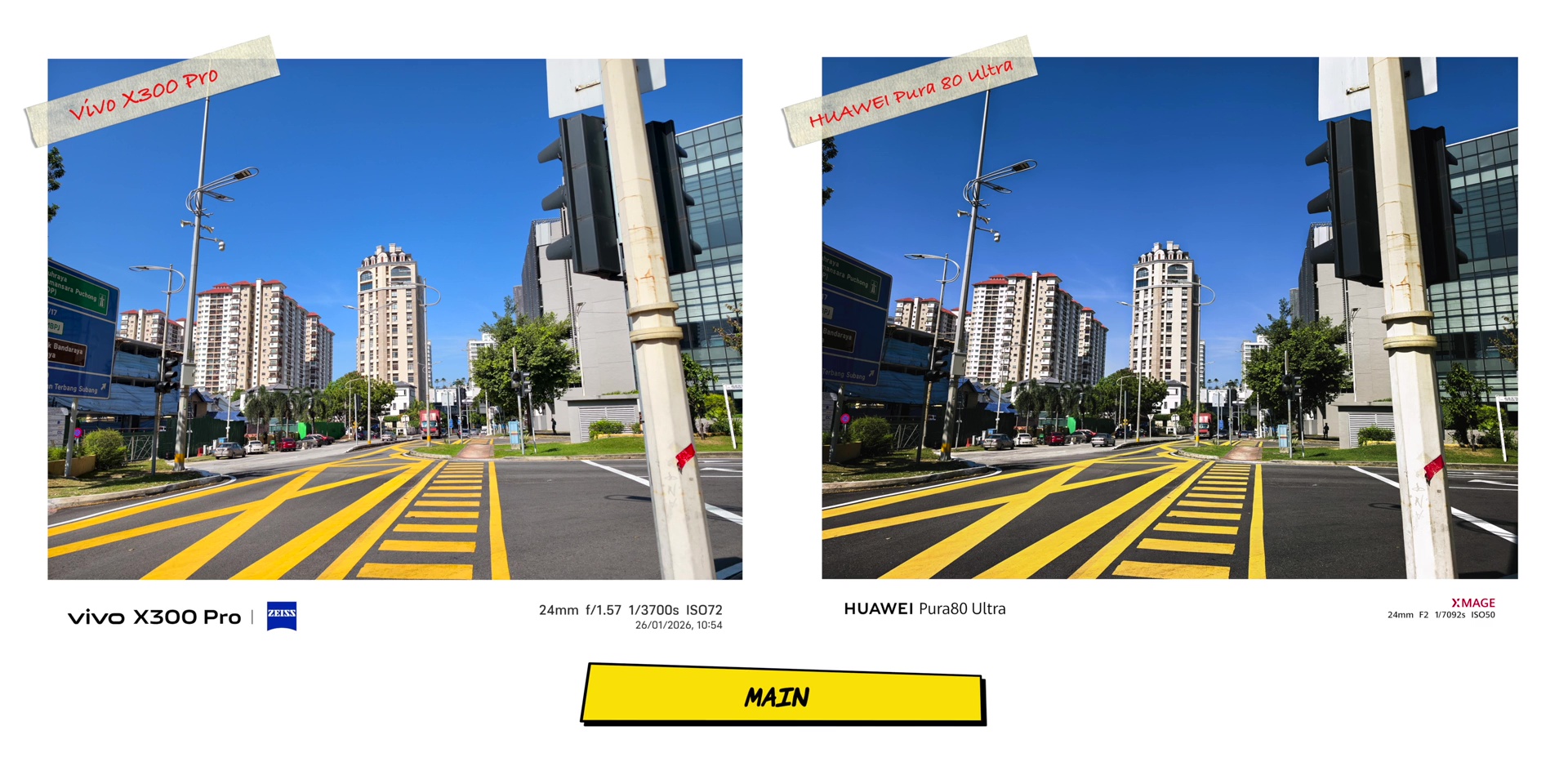
Then the story was the same again for the 48mm or the 2x mode. But once you switch to the optical periscope lenses, which are 3.5x on the vivo and 3.7x on the HUAWEI, you start to see the return of the vignette of the HUAWEI Pura80 Ultra.
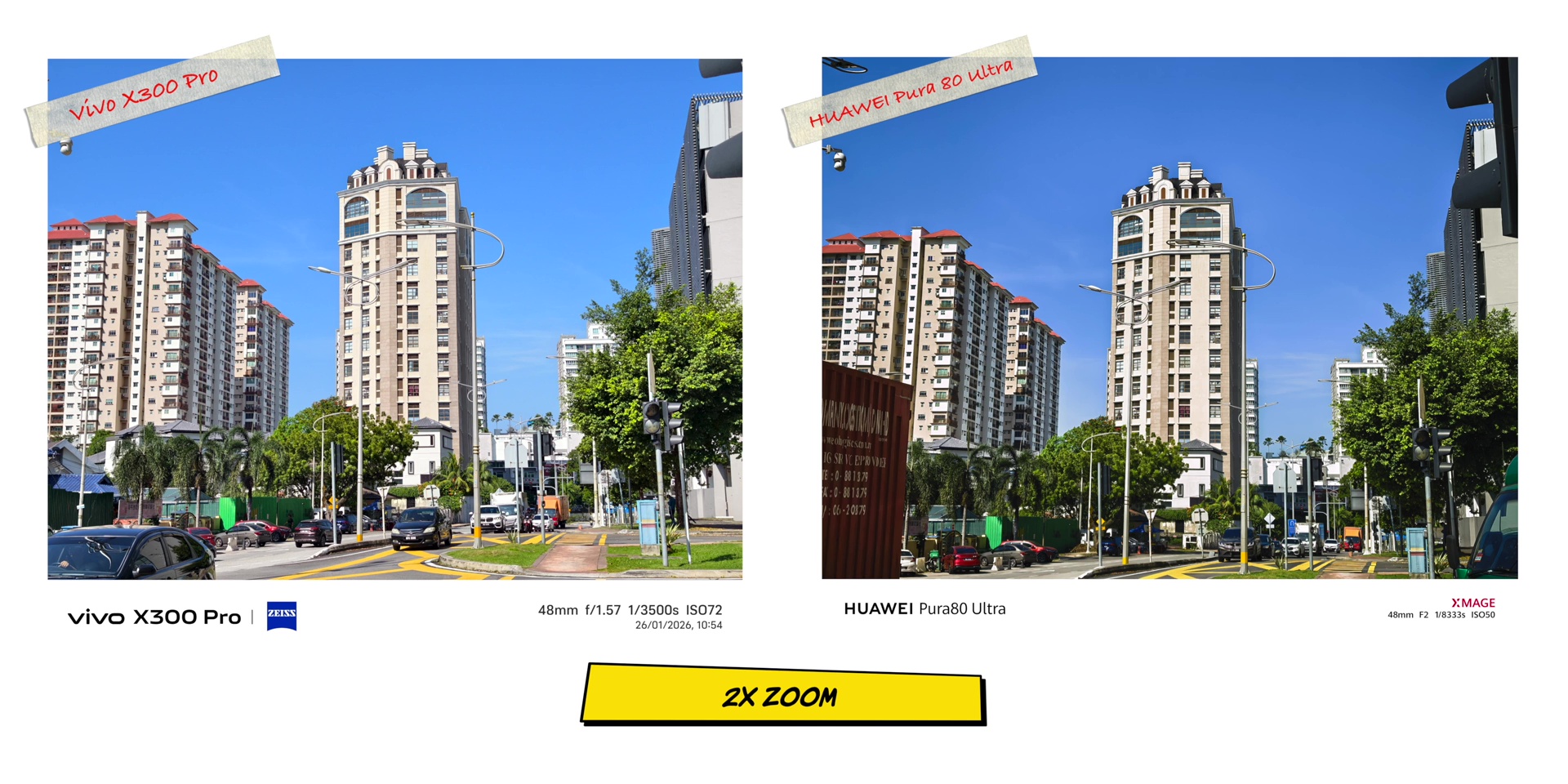
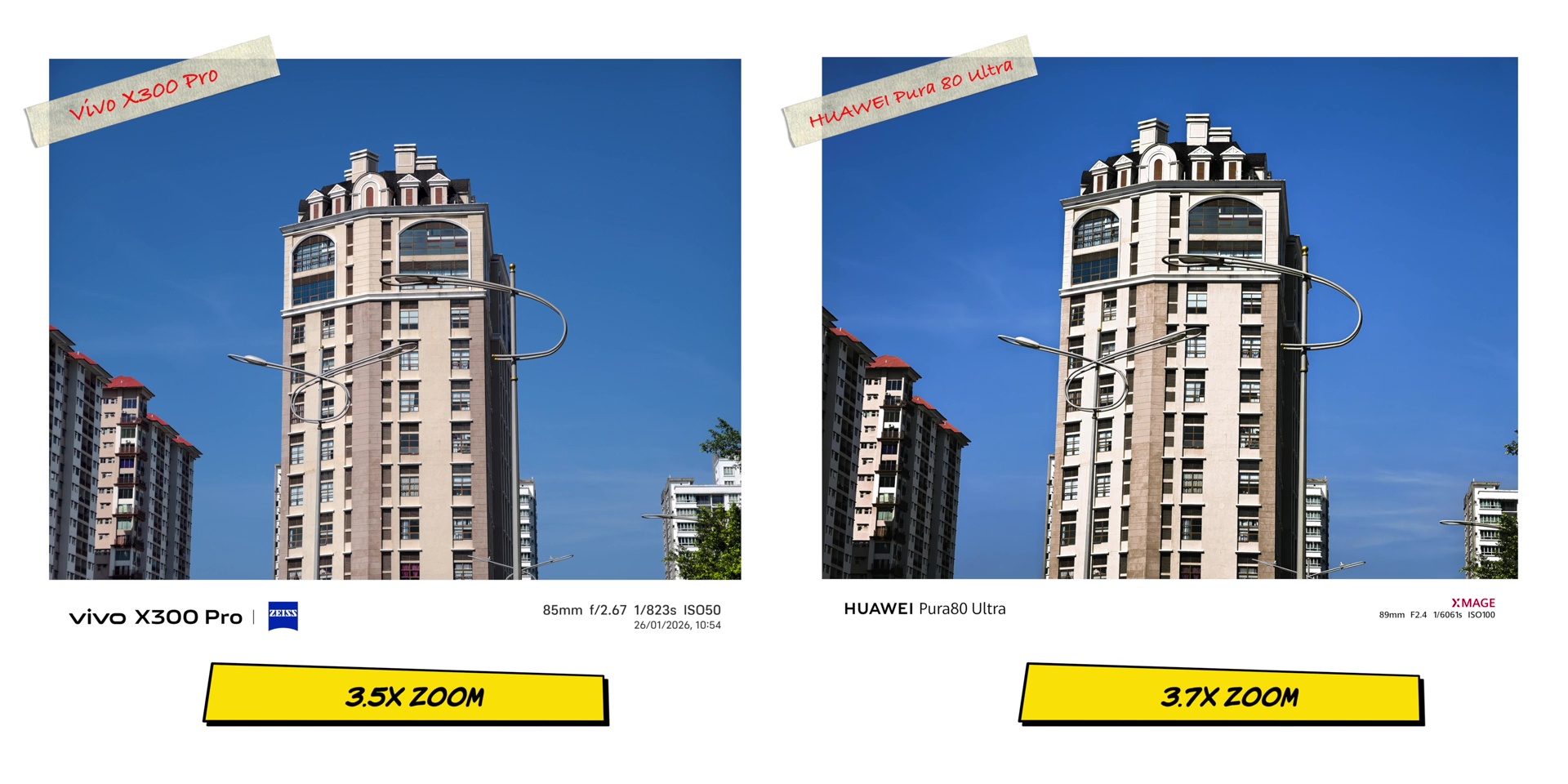
And again, I don’t know why HUAWEI actually applies this in their image processing because if I really wanted a vignette, I could always add it later, right? Then the 10x mode was still amazing on both and so was the 20x mode as well.
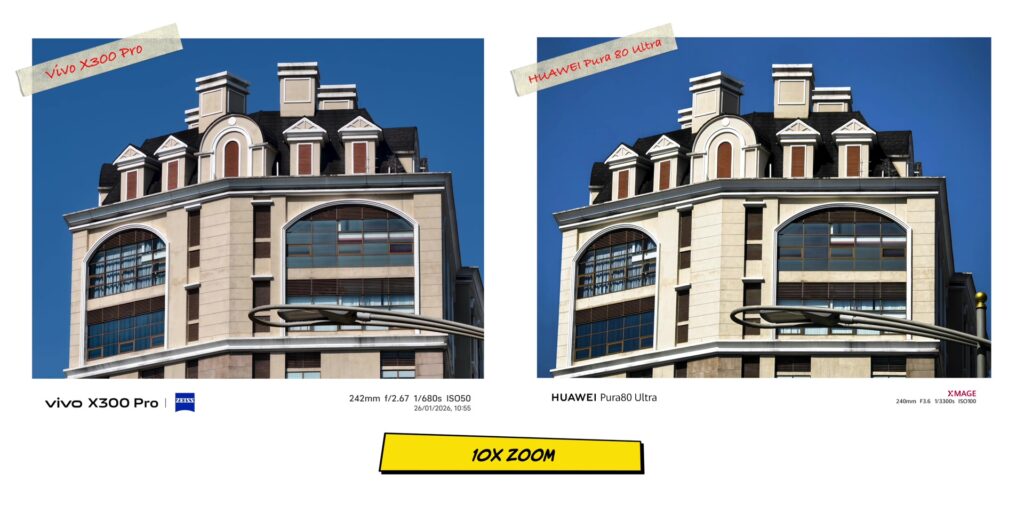
But unlike earlier, you can see more of the roof line details on the vivo compared to the HUAWEI where it looks more blacked out and everything looks more pastel-like on the 100x zoom on the HUAWEI compared to the vivo.
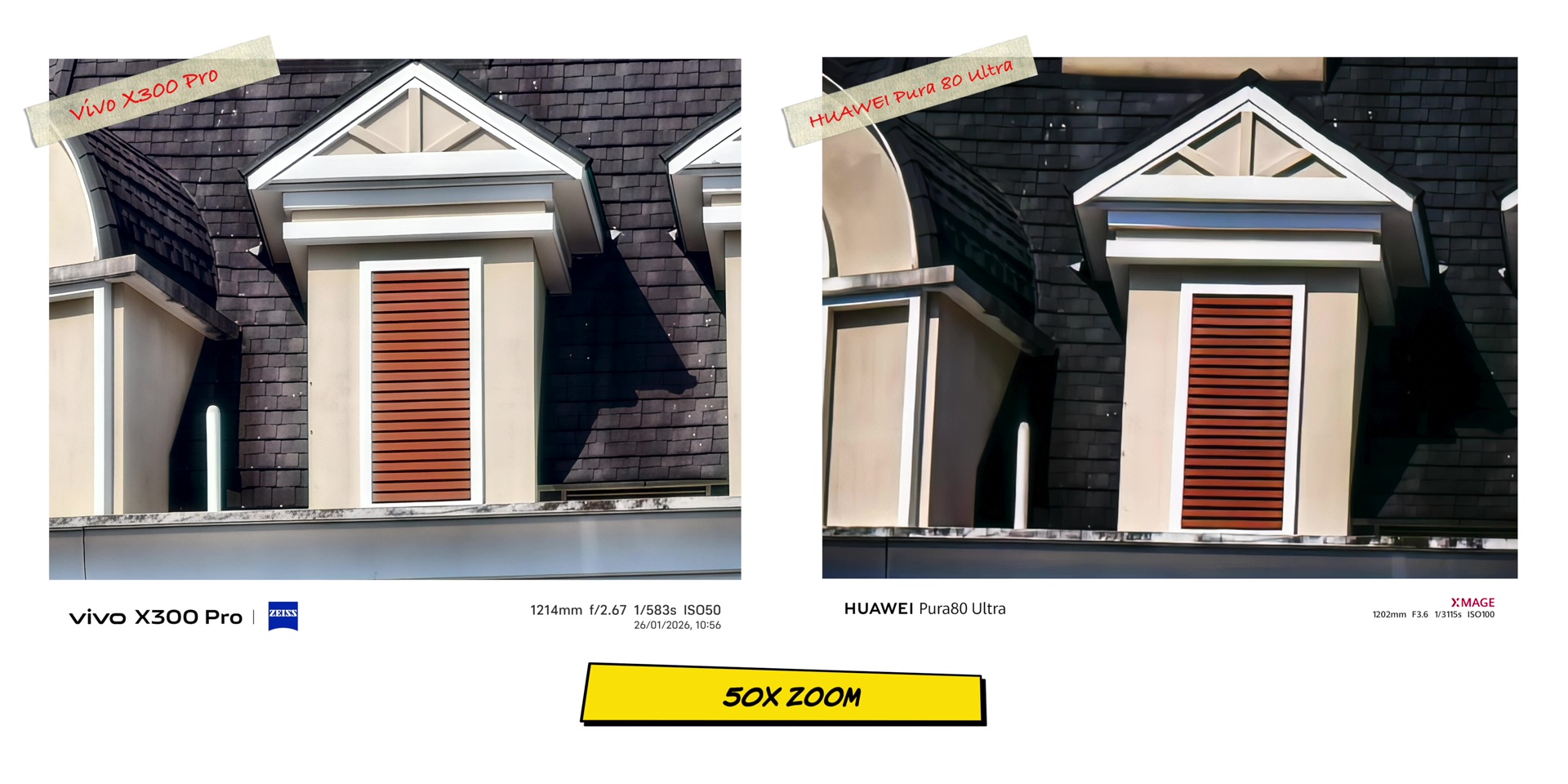
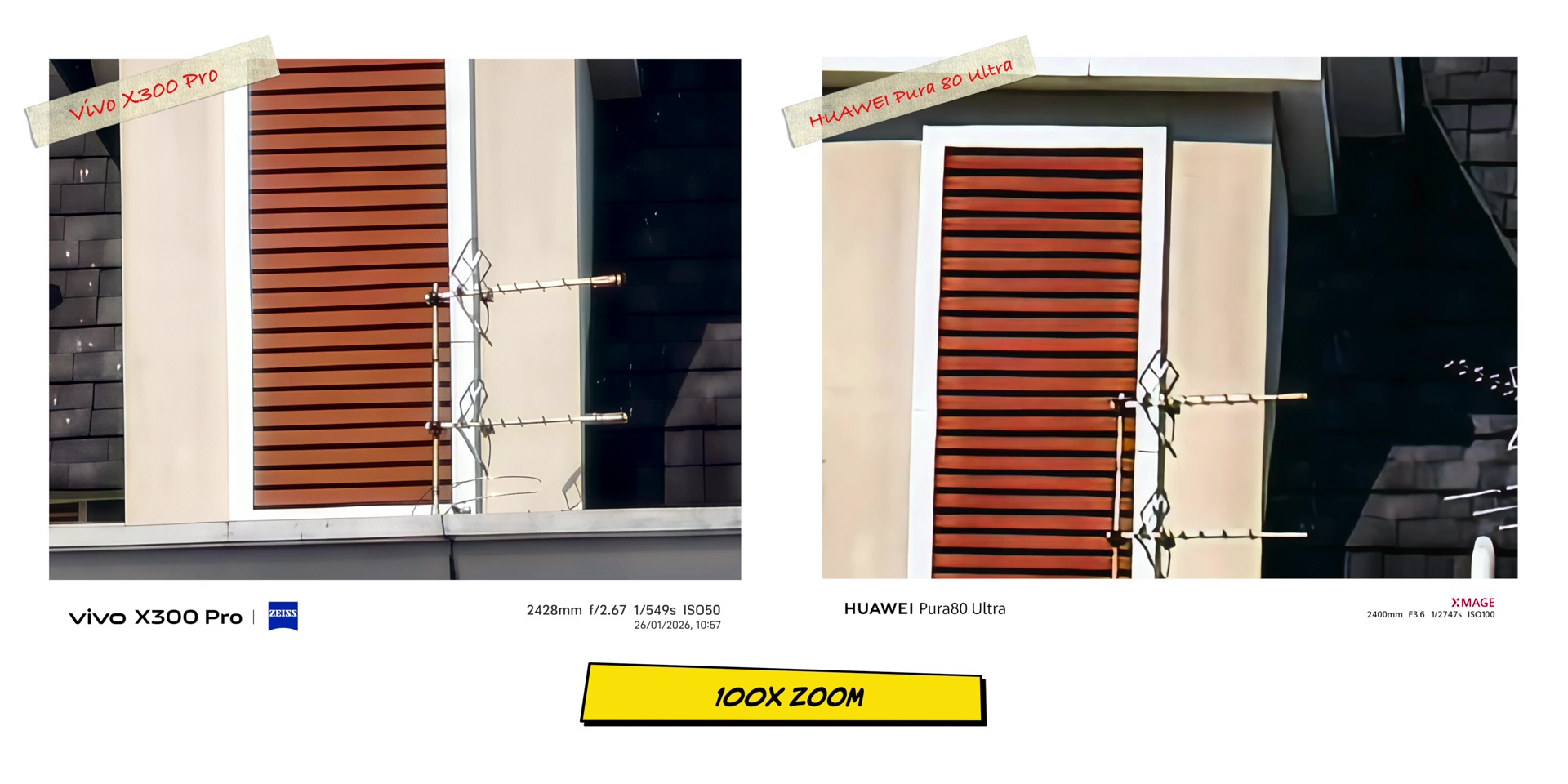
So, if you’re taking photos between 1x, 2x, and the optical lenses, even up to 10x zoom as well. You’ll get great results on both phones. So, it does come down to what types of highlights and shadows you prefer.
Portrait Mode
As for the portrait mode, yes, say hello to my son Mikael.
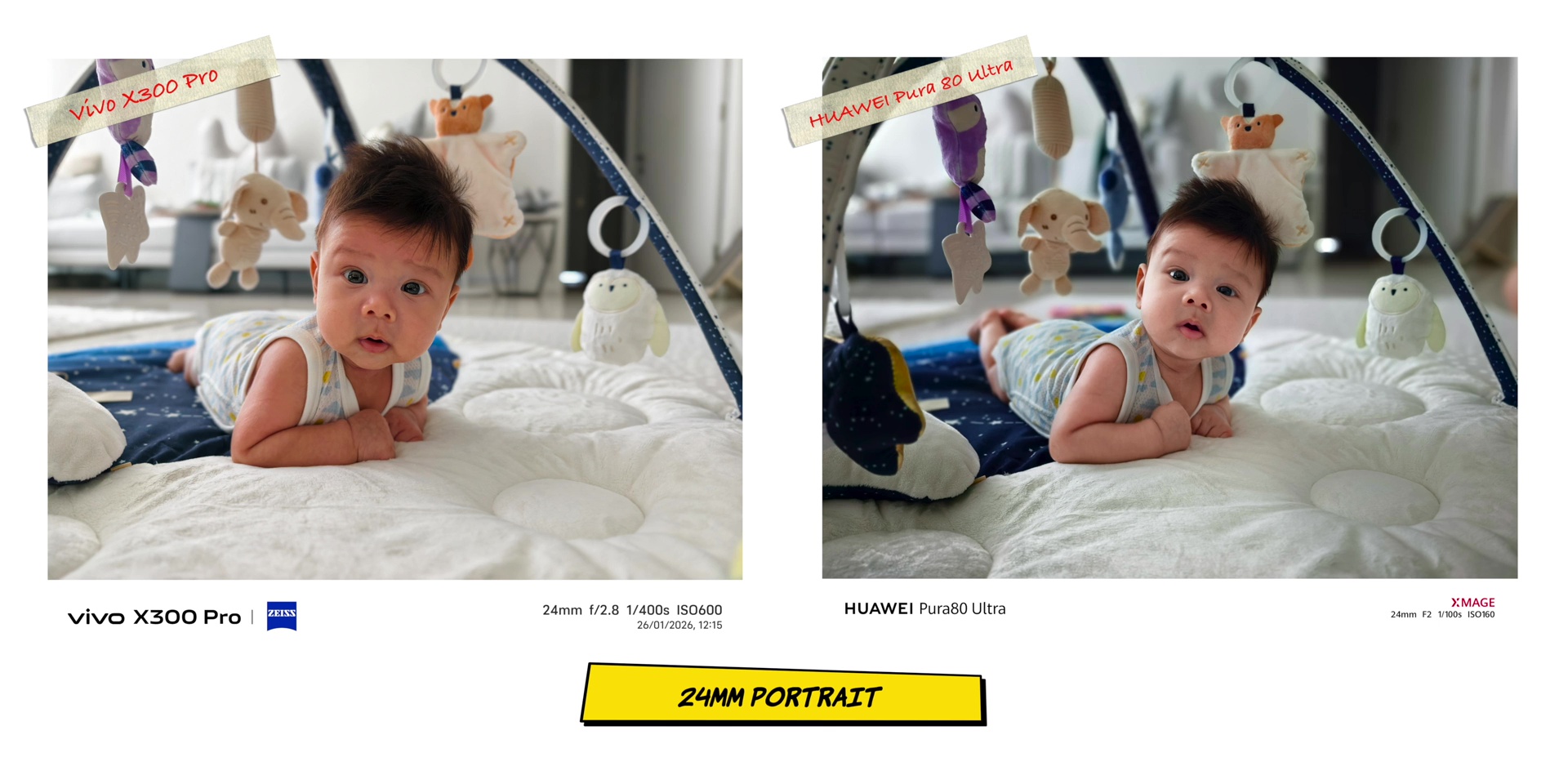
When comparing the 24mm portrait mode, the skin tones of my son look more true to life compared to vivo where it looks a little more saturated, but the edge detection on his hair was better on the vivo, where HUAWEI decided to keep the toy behind his hair in focus as well.
Then, as for the next portrait photo, the focal length changes, which is 35mm on the vivo and 48mm on the HUAWEI. This time around, vivo gets the skin tones better.
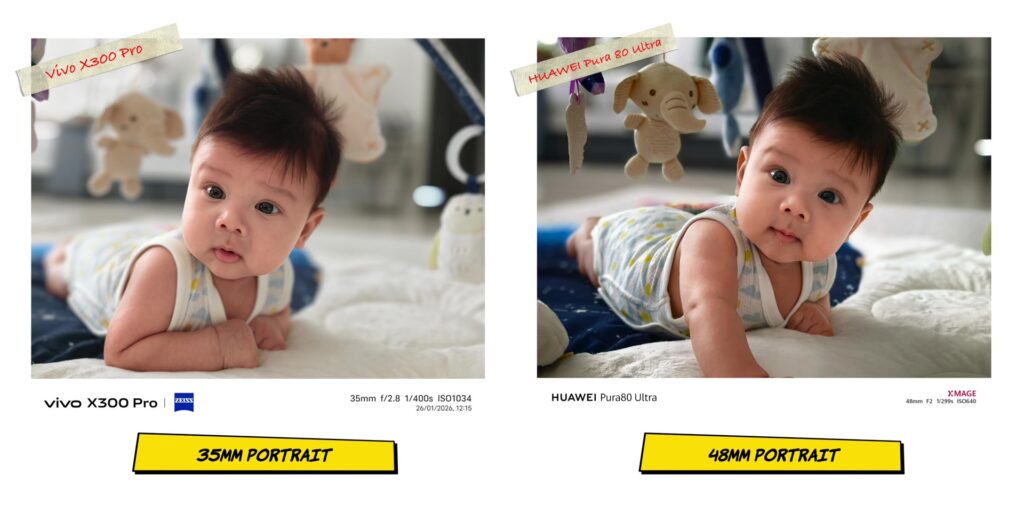
But HUAWEI not only gets the color consistency right, it also does a better job with the overall edge detection around the top part of his hair compared to the vivo.
Then as for the next portrait mode where vivo goes up to 50mm, which is a very nice focal length compared to HUAWEI where it jumps from 48mm all the way to 89mm. So yes, suddenly you need to readjust from taking a photo like this to quite far away when you’re taking a photo.

Then vivo also makes his skin tones brighter and less saturated than earlier’s 24mm shot. And the edge detection is also better, but HUAWEI maintains more consistent colors throughout looking closer on how his skin tones actually were. Although it loses out on the edge detection due to how punched in the overall focal length is.
And while vivos 85mm does look good from a focal length perspective, this is where the skin tones start to look even brighter compared to the HUAWEI, which maintains a better color consistency at HUAWEI’s 134mm.

But HUAWEI’s 240mm is honestly too much or too punched in for a portrait mode in my opinion. So you really need to stand way far back to get a nicely framed shot, especially when you’re taking photos of a baby who cannot stay still. So, this particular focal length feels more like it’s catered towards a niche or advanced photographer.

And while the 135mm on the vivo is still a nice focal length, it applies the same beauty processing on the skin tones even when I turn it off in the camera app. Something which was very prominent and seen on my other comparison videos.
Then, as for objects, looking at this first image, the focus here is the red unbloomed flower against the background. On the 24mm, the reason why I had to move closer to the HUAWEI was because it had trouble focusing properly. So I nailed the focus only when I moved nearer. So as you can see over here, compared to how easy it was to get the focus right on vivo at 24mm.
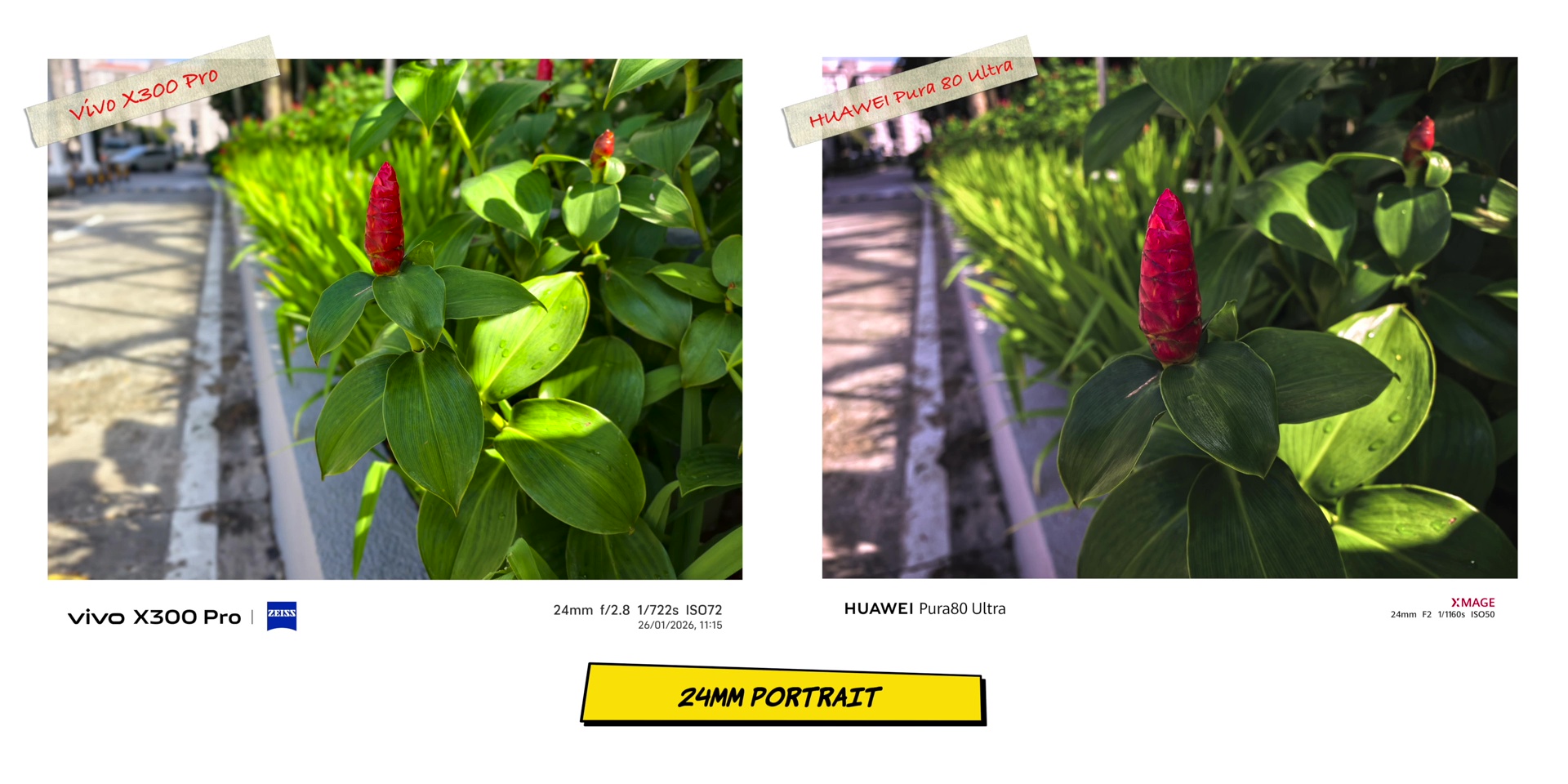
Now color-wise, the vivo delivers better color accuracy compared to a more maroon-looking color on the HUAWEI when you’re looking at this particular flower.
And while vivo has a 35mm portrait mode, I decided to compare to HUAWEI’s 48mm instead with vivo’s 50mm. The shallow depth of field was actually equally good. But once again, the color difference is very obvious.
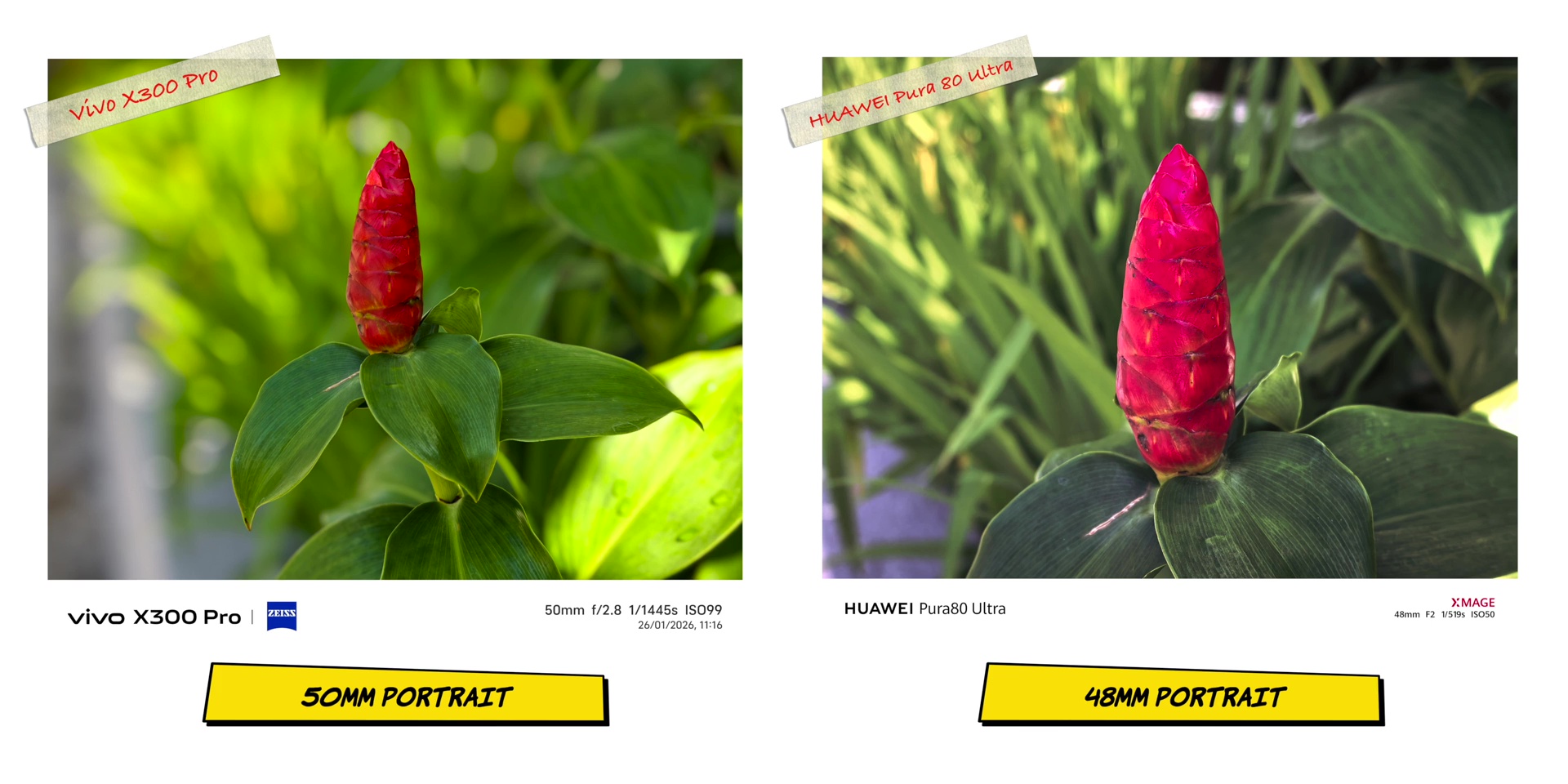
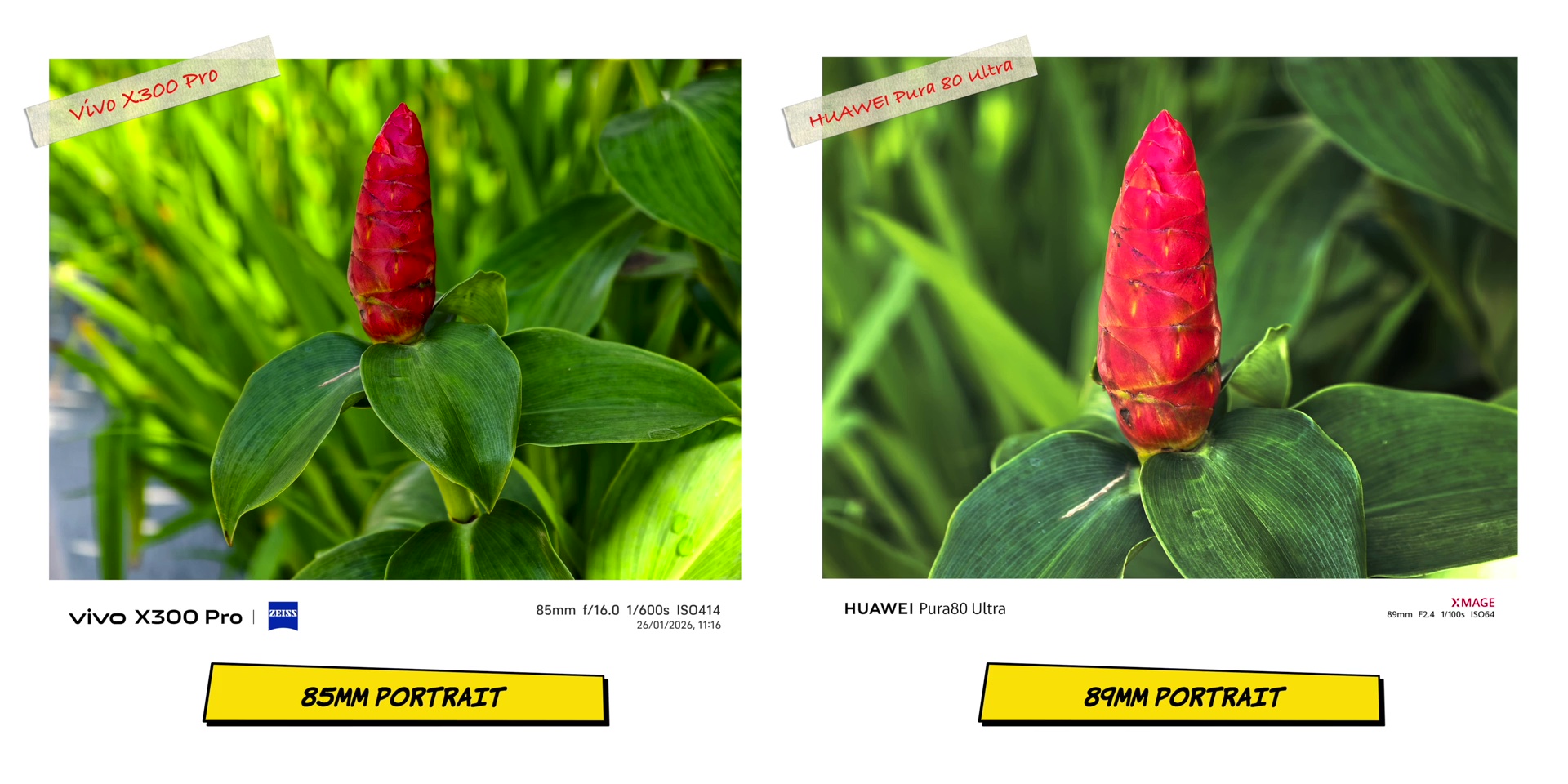
However, HUAWEI does better in the overall color accuracy in the 89mm, while vivo still being consistent in the focus, the subject separation, and also the color accuracy.
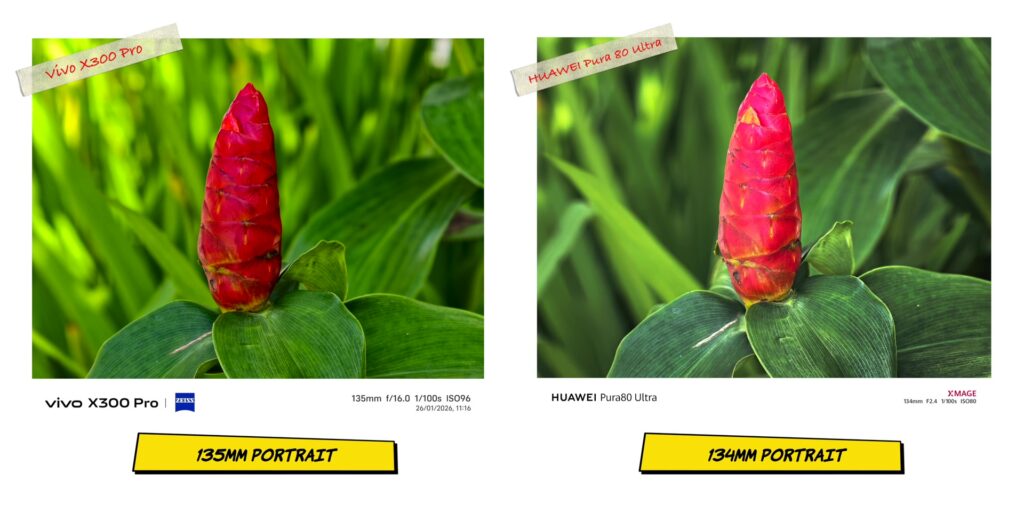
Then comparing it with HUAWEI’s 134mm against vivo’s 135mm. The overall image processing on HUAWEI once again makes the flower look brighter than before, but it does perform better at 240mm on the HUAWEI, while vivo maxes out at 135mm.
Then for a more complicated object, I took a photo of this fake plant and flower. And this time around, the HUAWEI did not have any issues with focusing at 24mm, probably because this particular shot was taken indoors.
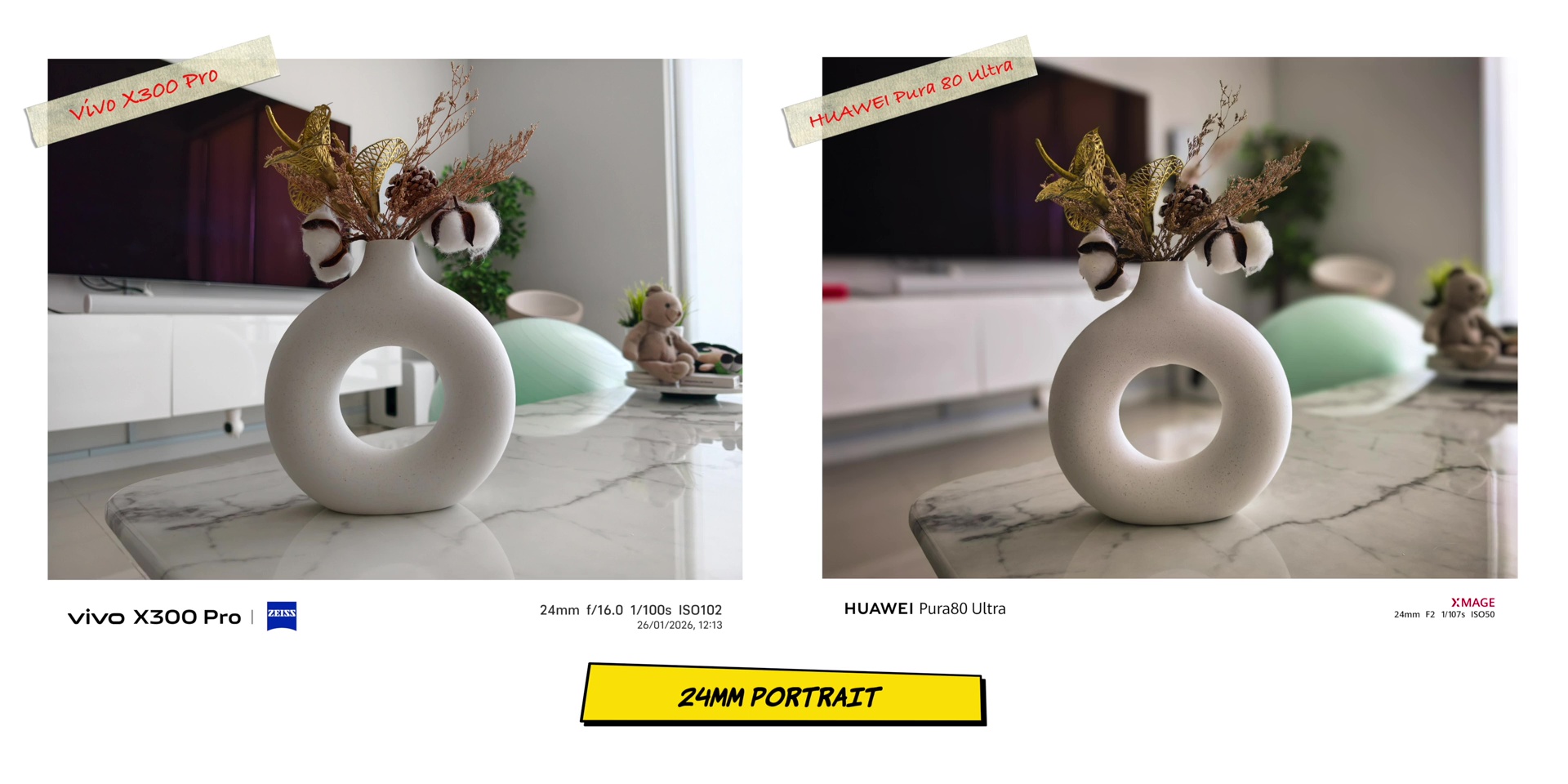
Now, the shallow depth of field was more prominent on the HUAWEI at 48mm compared to vivo’s 35mm. But of course, the vivo’s background blur looks more realistic.
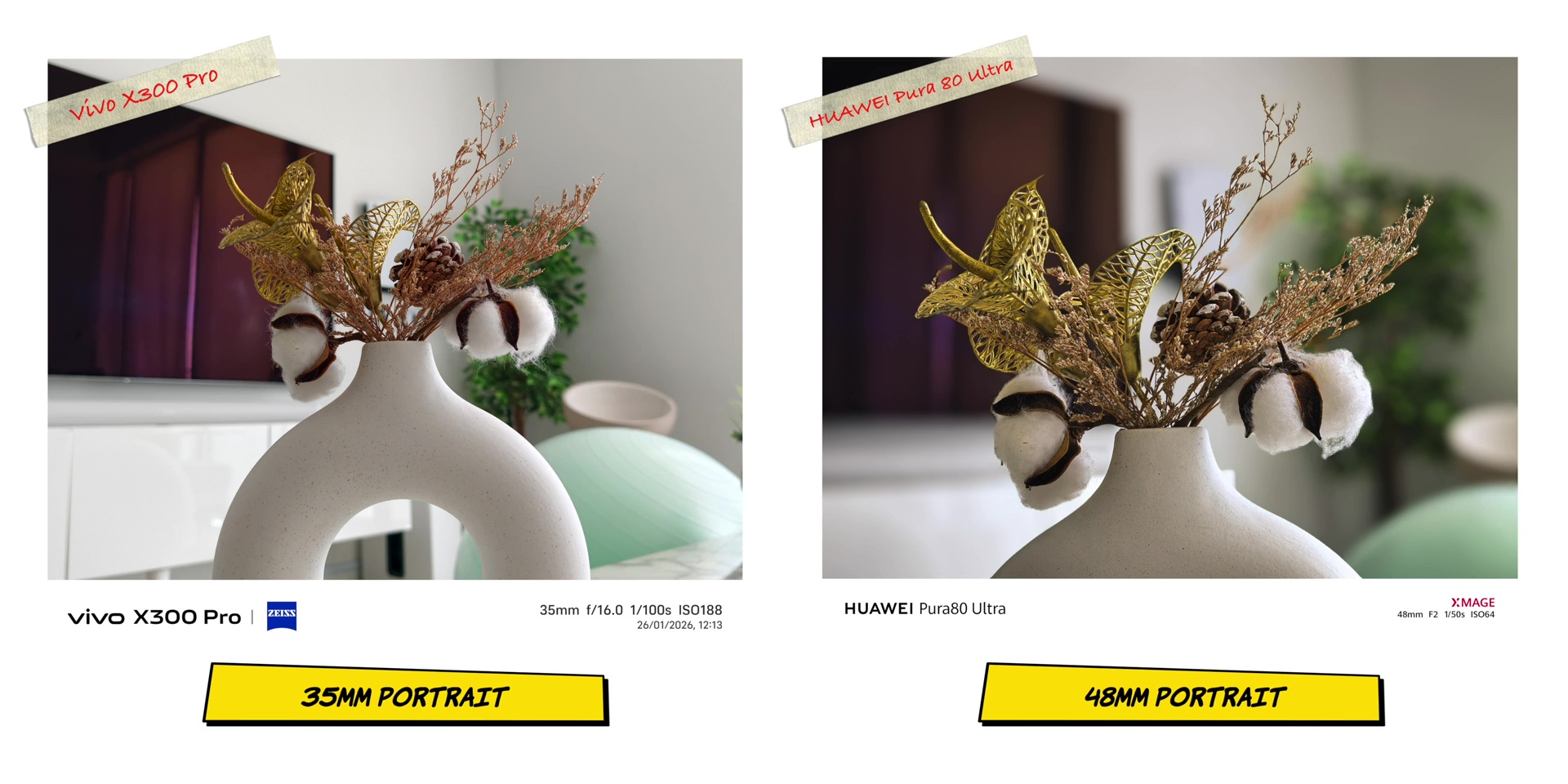

And while the 85mm on the vivo compared to the 89mm on the HUAWEI look very similar in terms of the edge detection, but that is of course except for the dried flowers towards the back on the right hand side.

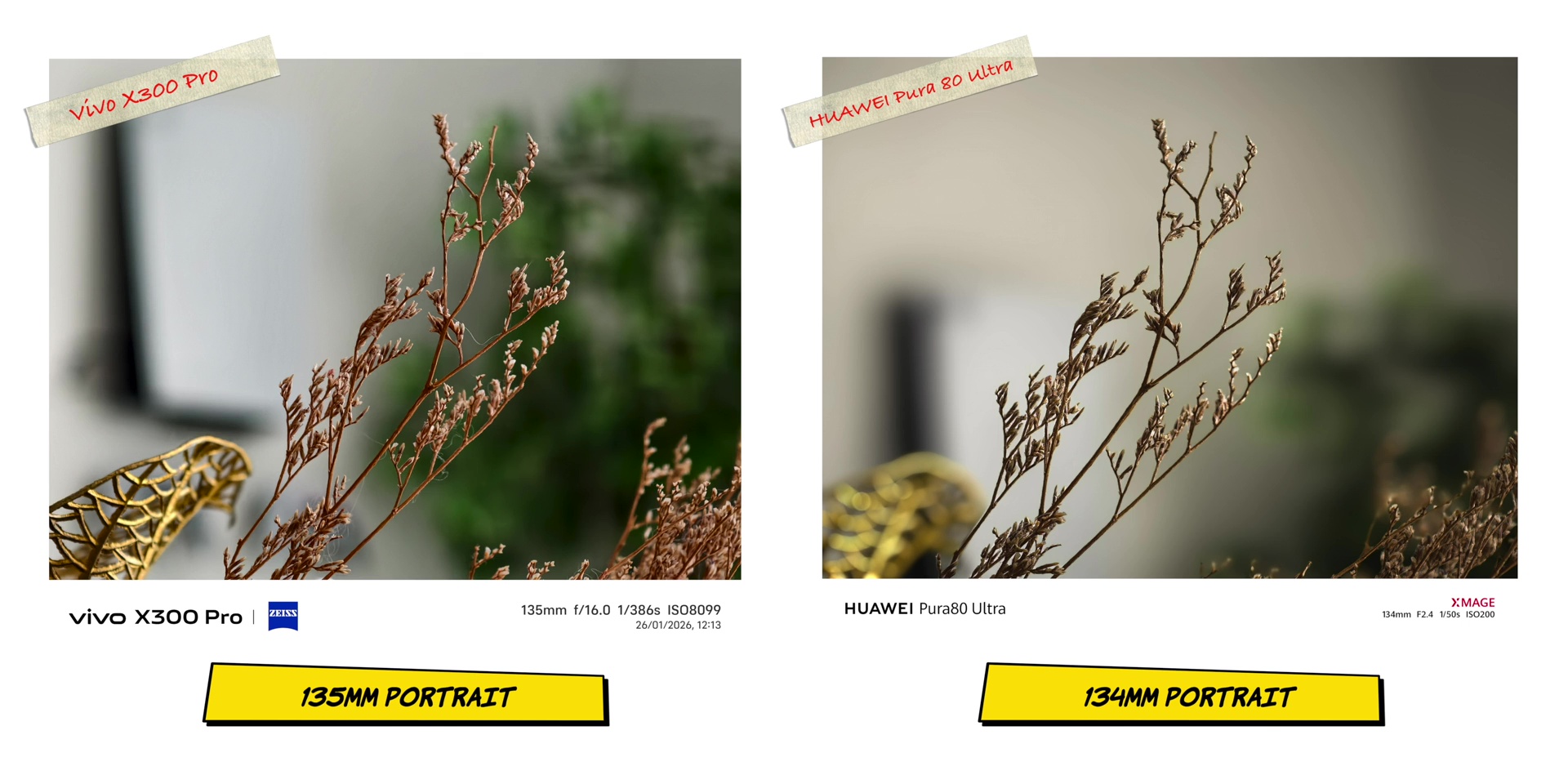
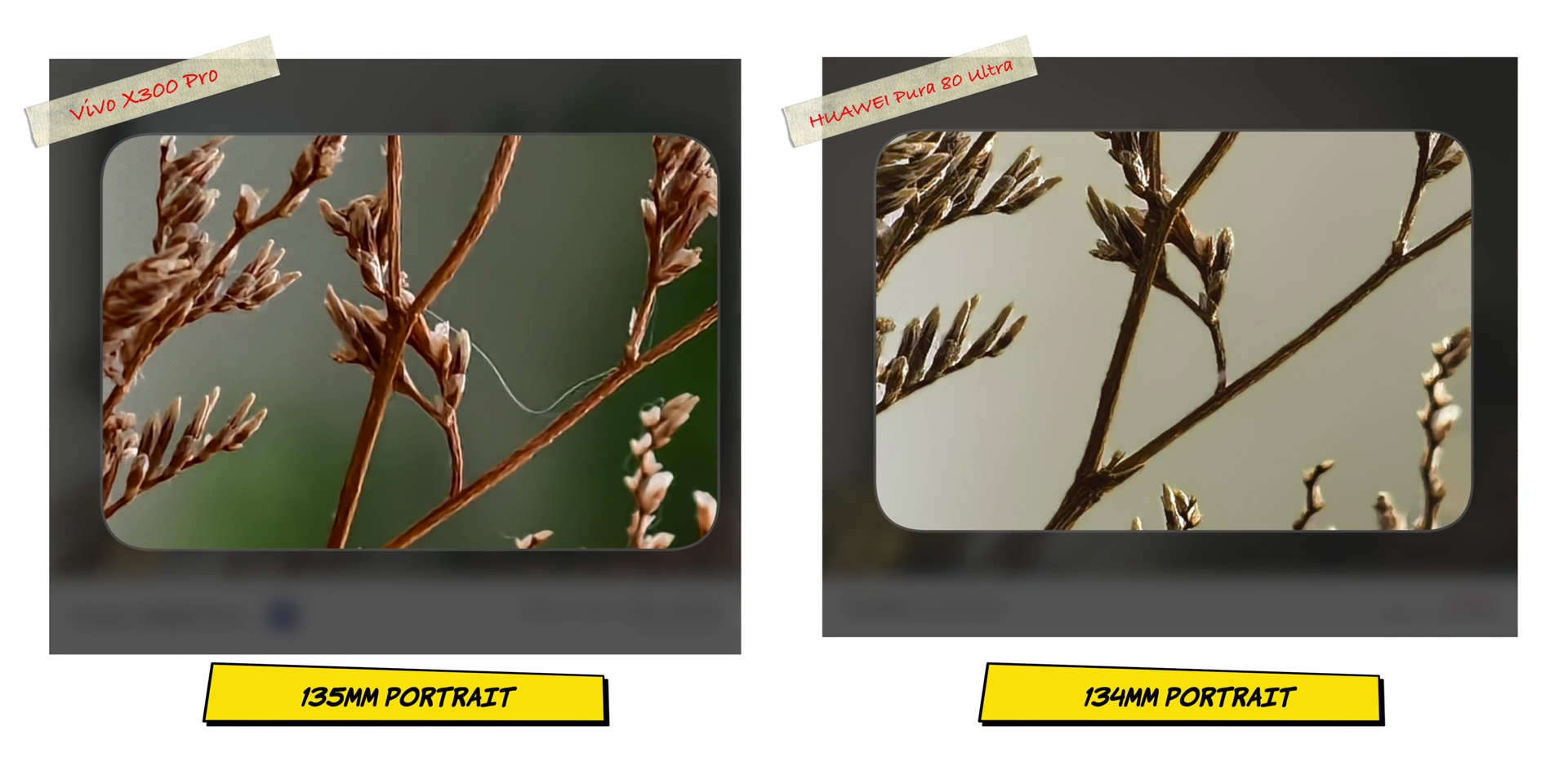
Now, I can also see better focus consistency at 135mm on vivo compared to HUAWEI’s 134mm, where I can still see my cat’s Luna’s fur around the flowers on the vivo compared to how it disappeared on the HUAWEI. Yep, if only it was that easy to remove Luna’s hair in real life.
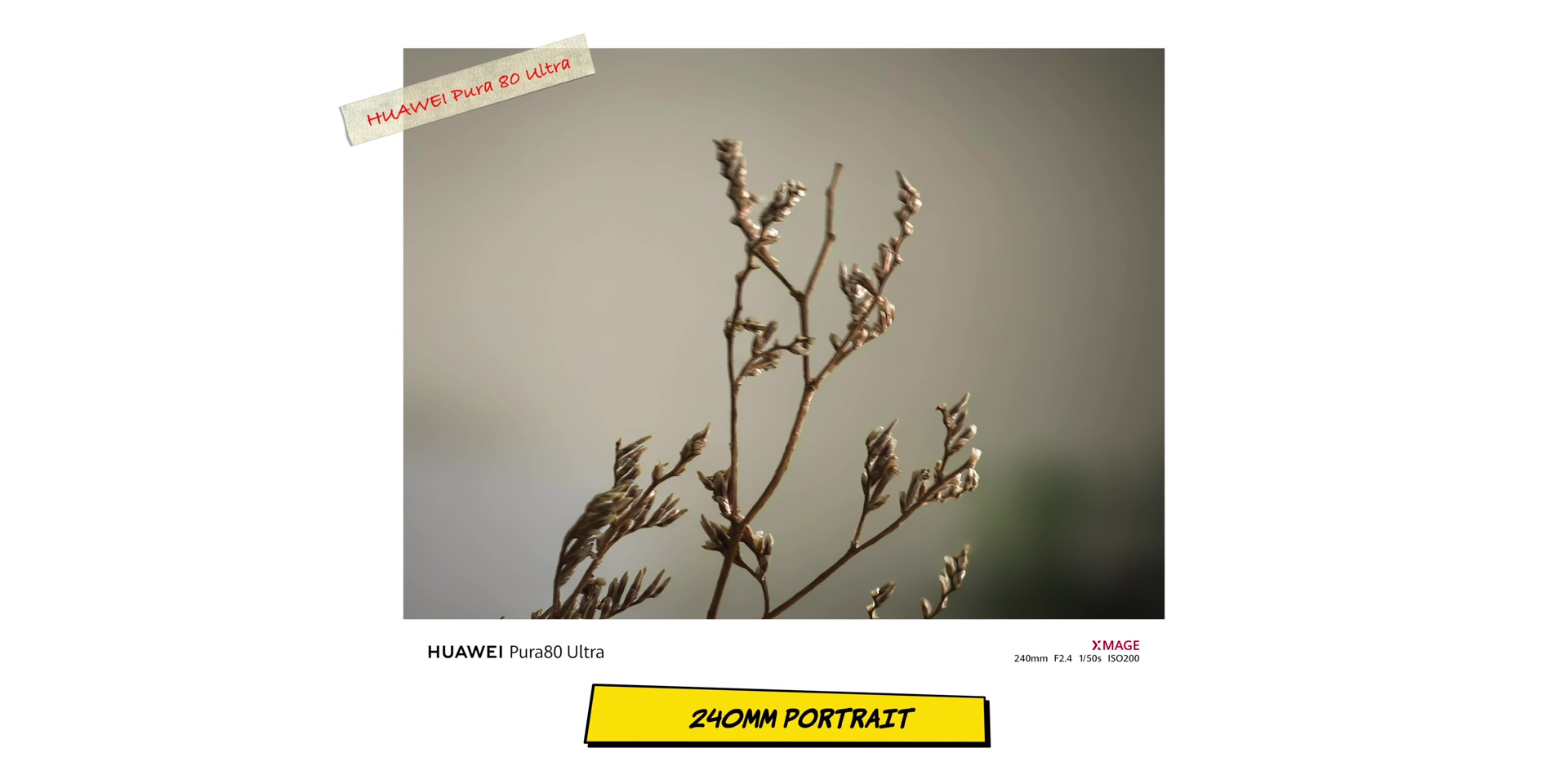
And of course, there’s also the 240mm portrait mode, which for some reason actually didn’t focus properly.
Macro
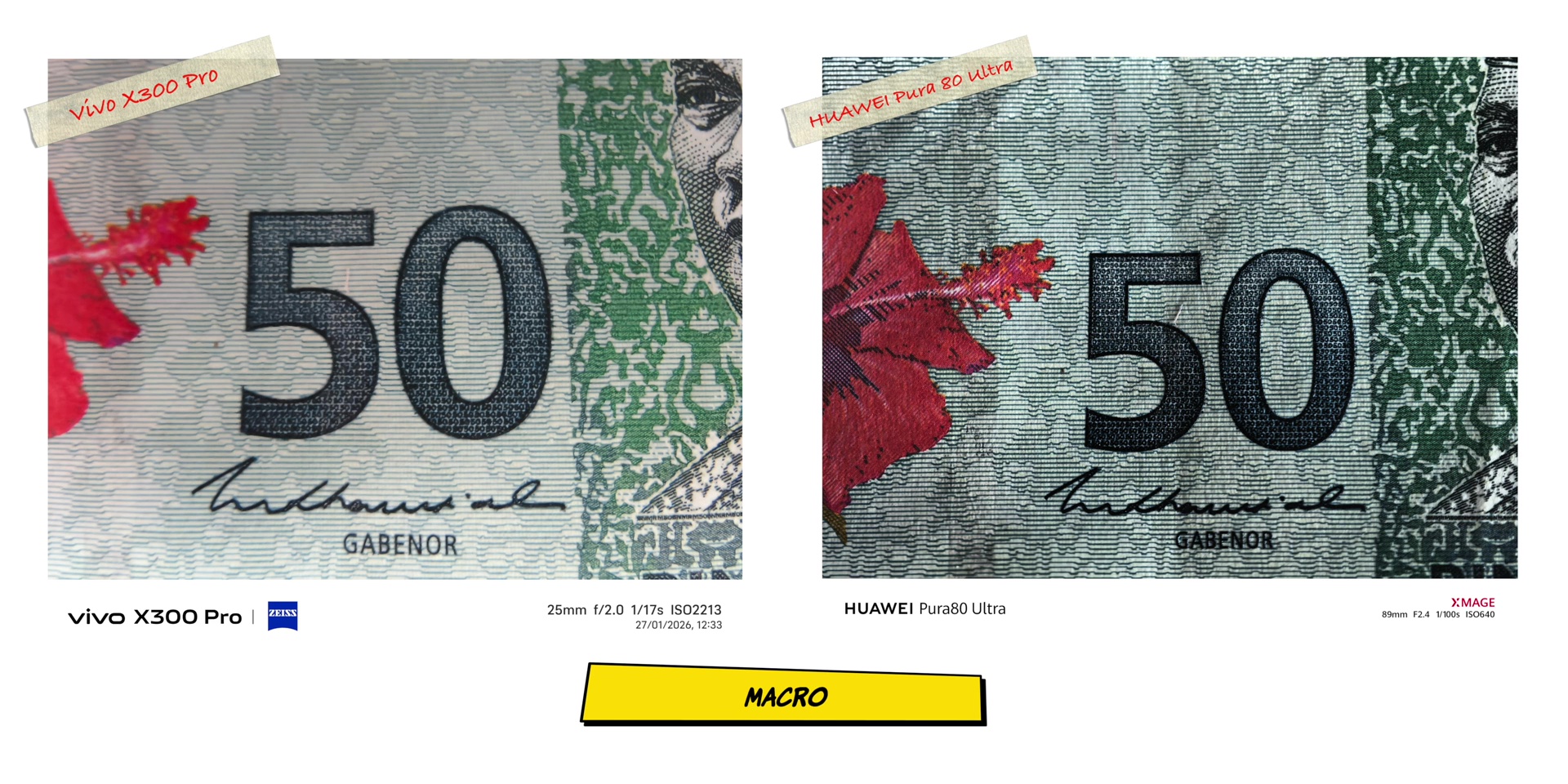
For you macro photographers out there, this one is for you because the clear winner over here is the vivo with better detail and brighter image of the single coffee bean.
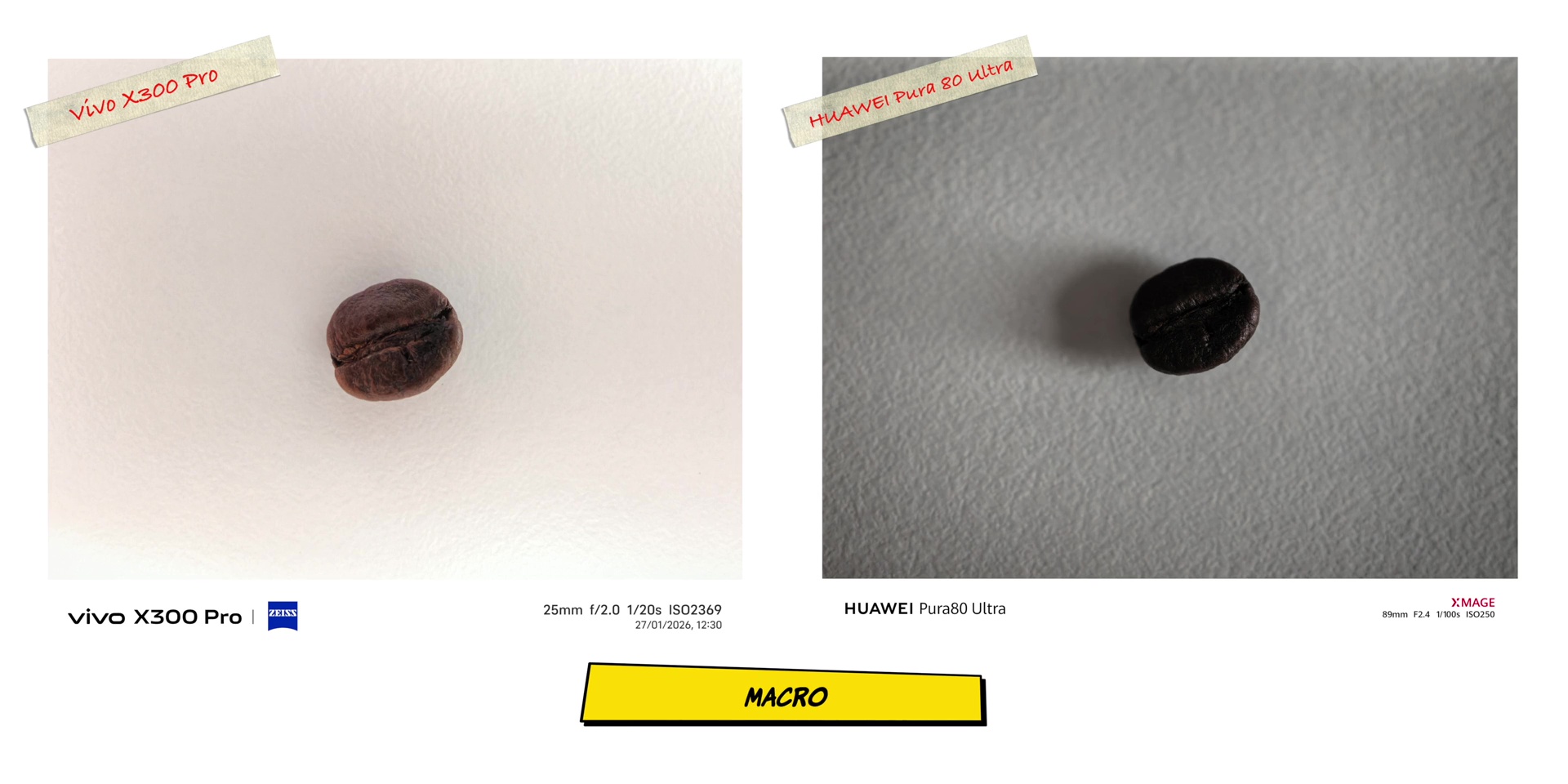
And what’s interesting is that even though that this is a dedicated macro mode on both phones, the macro mode on a vivo is at 25mm while HUAWEI uses 89mm. So 25mm does not sound like a macro shot, but whatever.
But when it comes to the focus consistency, when it comes to the entire image, HUAWEI does a better job than vivo, vivo’s focus was more concentrated towards the middle part of the image compared to HUAWEI where it got everything in focus in this particular macro mode.
Selfie Portrait
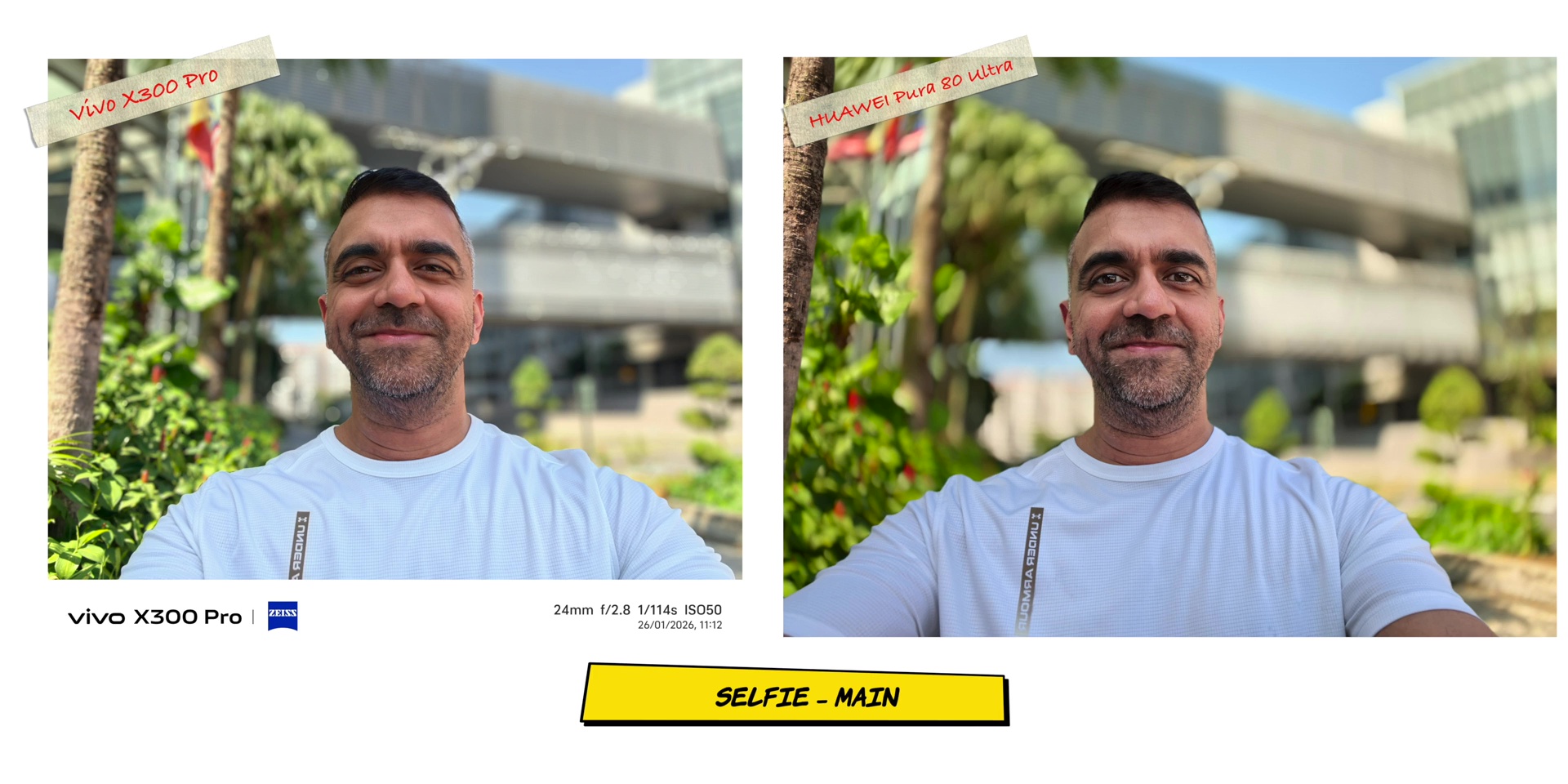
Selfie portraits on both phones have three options, an ultrawide, a 1x, and a 2x mode.
Now, starting from the ultrawide selfie, what’s strange over here is that there’s no way of getting a background blur on the HUAWEI Pura80 Ultra at this particular ultrawide focal length where the only option under the effects menu are Photo Booth and Stage Light as you can see in the camera app which is supposed to give that background blur look but not the proper portrait background blur.
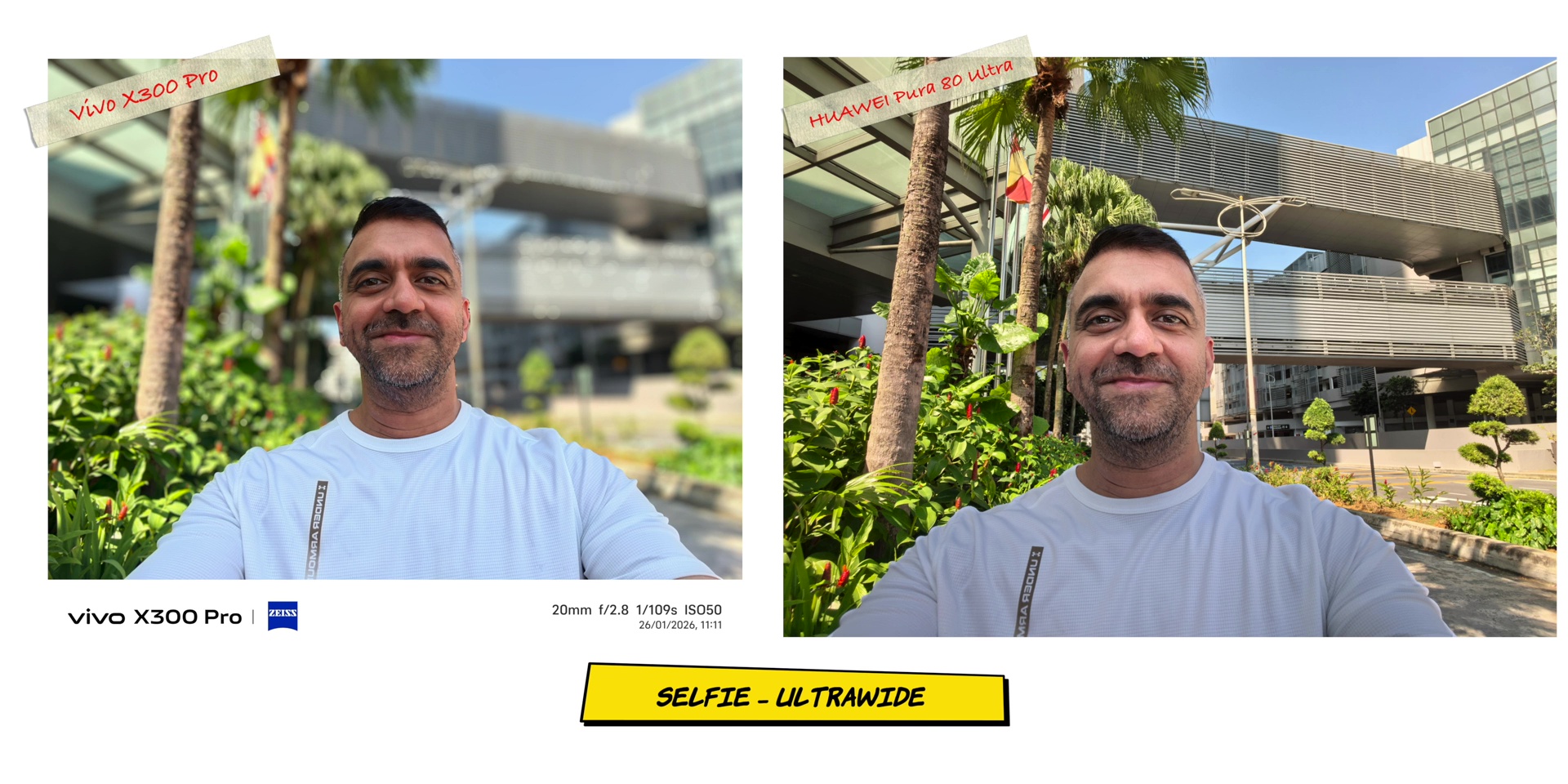
So, the option is only available on the vivo. And yes, it looked great. Not only because of the background blur, but also because the skin tones look better compared to the HUAWEI.
Now, things do improve on the 1x selfie on the HUAWEI, although it still maintains slightly different skin tones. So, this does come down to a personal preference, and the same can be said for the 2x selfie as well.
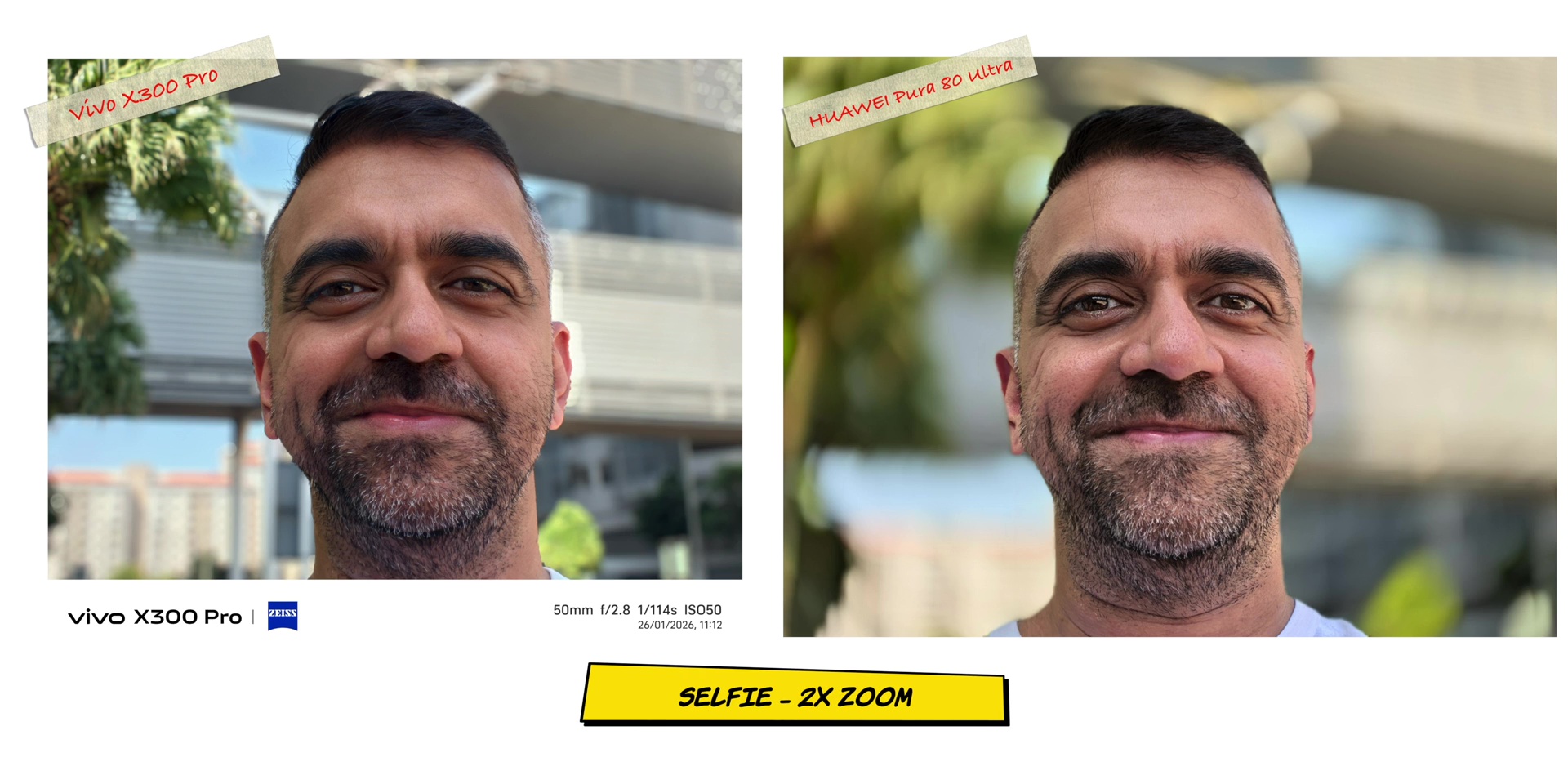
As usual, I also do the selfie photos test in a backlit situation to see how well the dynamic range performs on the phone. Ignoring the lack of background blur on the ultrawide selfie on the HUAWEI, since it cannot do it here, the face exposure was still good, even though the skin tones on the HUAWEI looked a little pale.
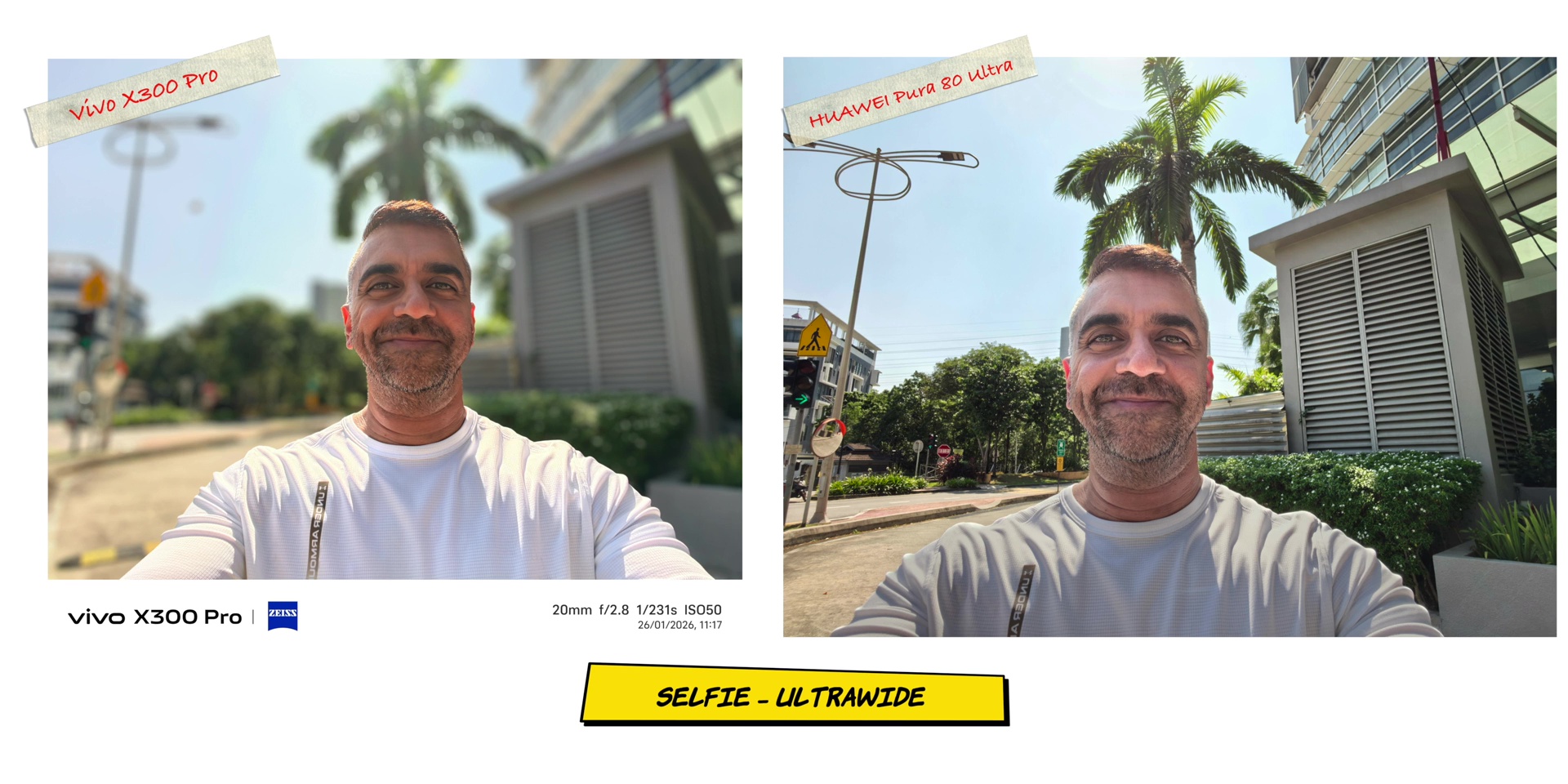
While background blur is available on the 1x selfie on the HUAWEI, the dynamic range remains great on both phones with both maintaining similar skin tones as before.
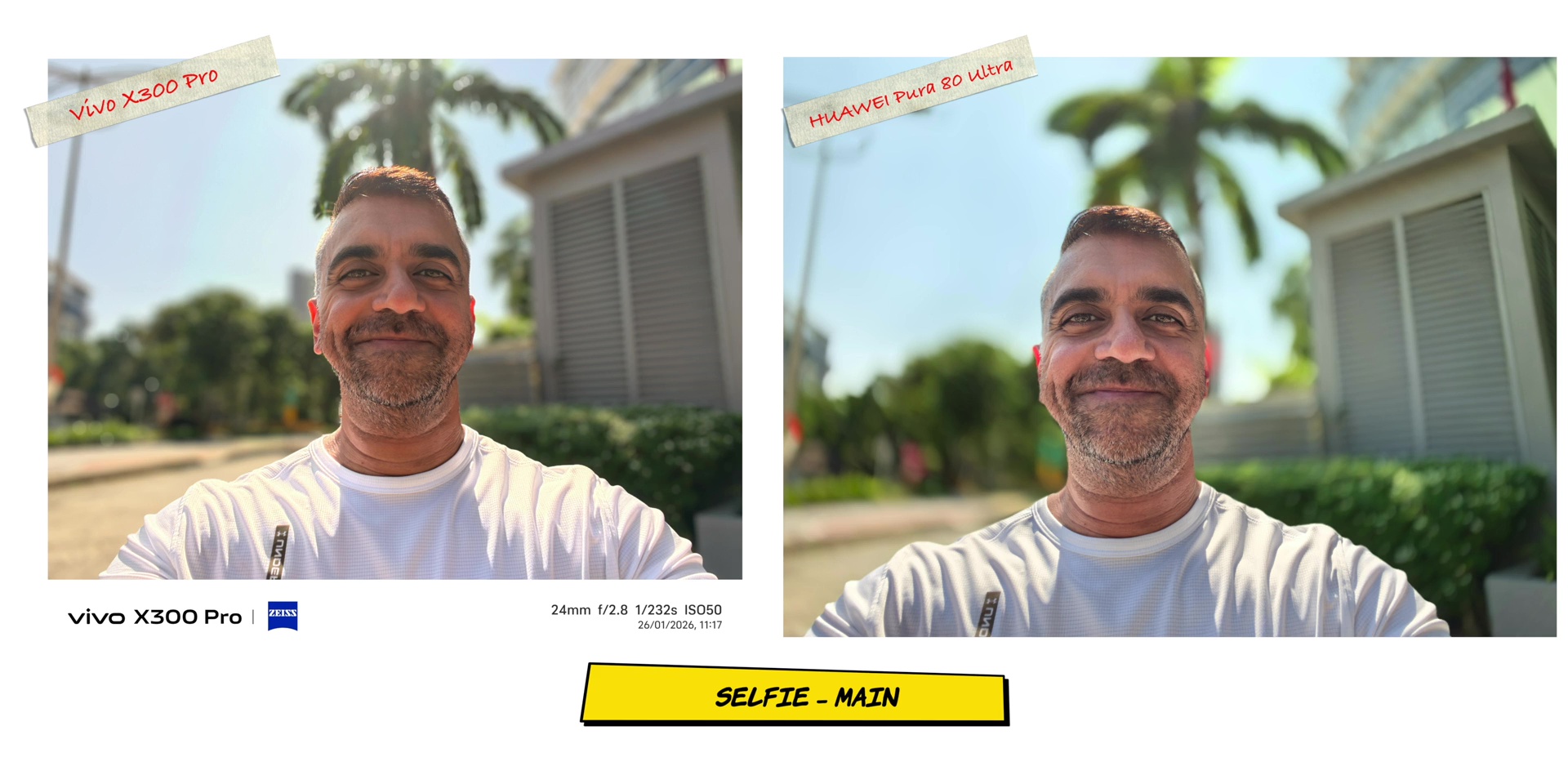
But at 2x in this backlit situation, you can clearly see how pale my skin tone were on the HUAWEI compared to looking more natural on the vivo.
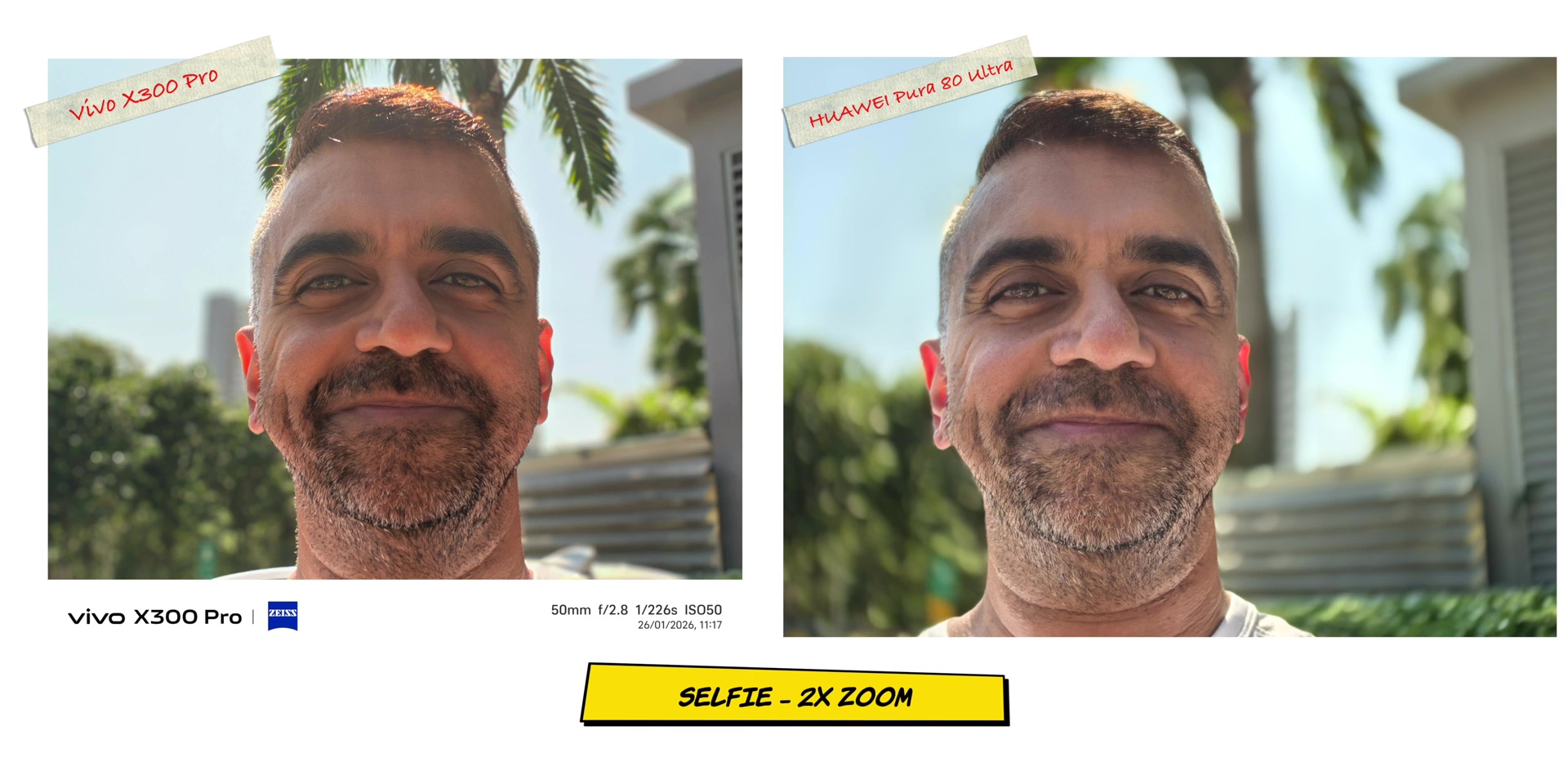
Then, in a scenario where there is pure backlight with no light hitting the face, the ultrawide selfie once again looks better on the vivo, especially when it comes to skin tones.
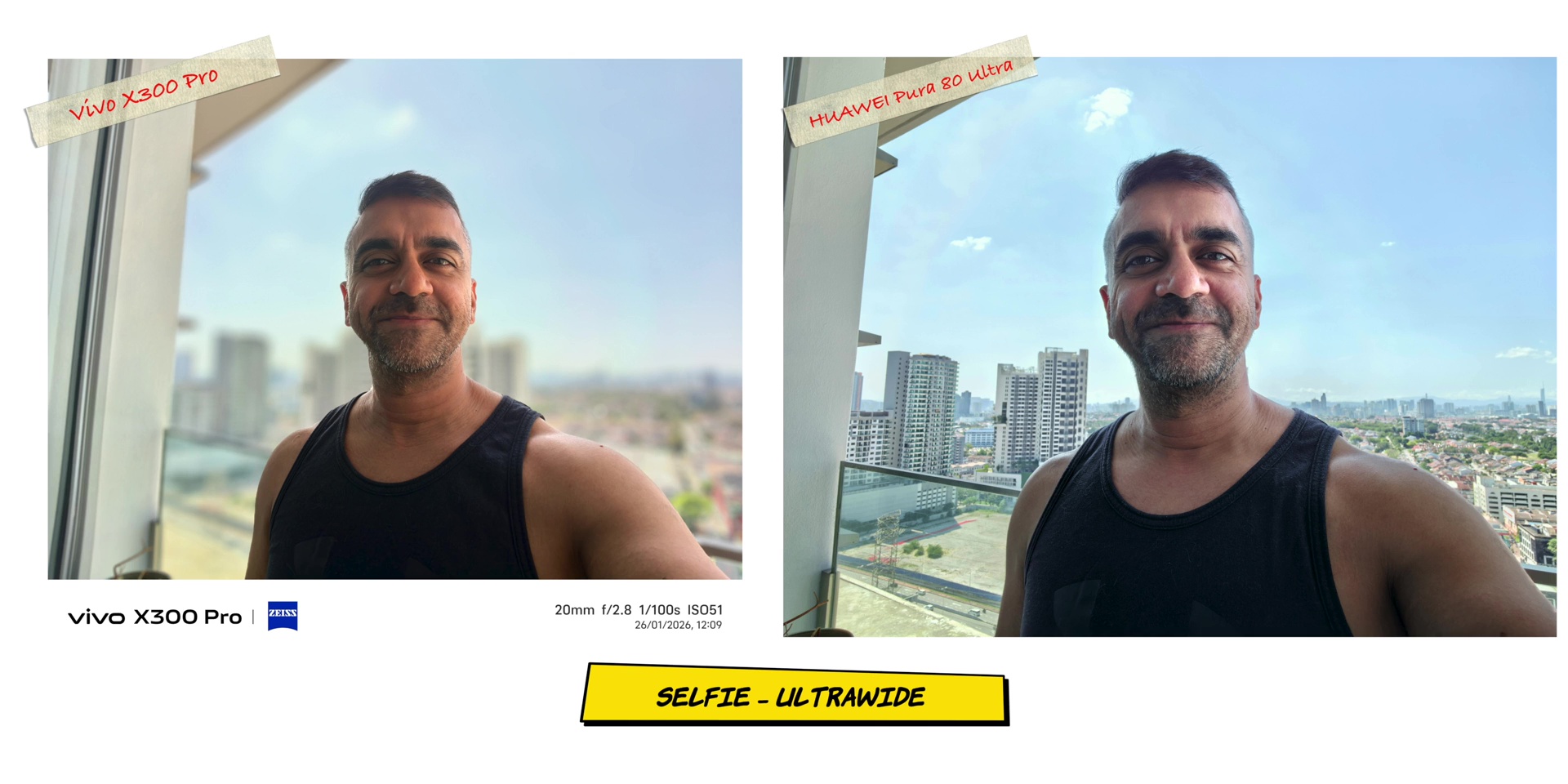
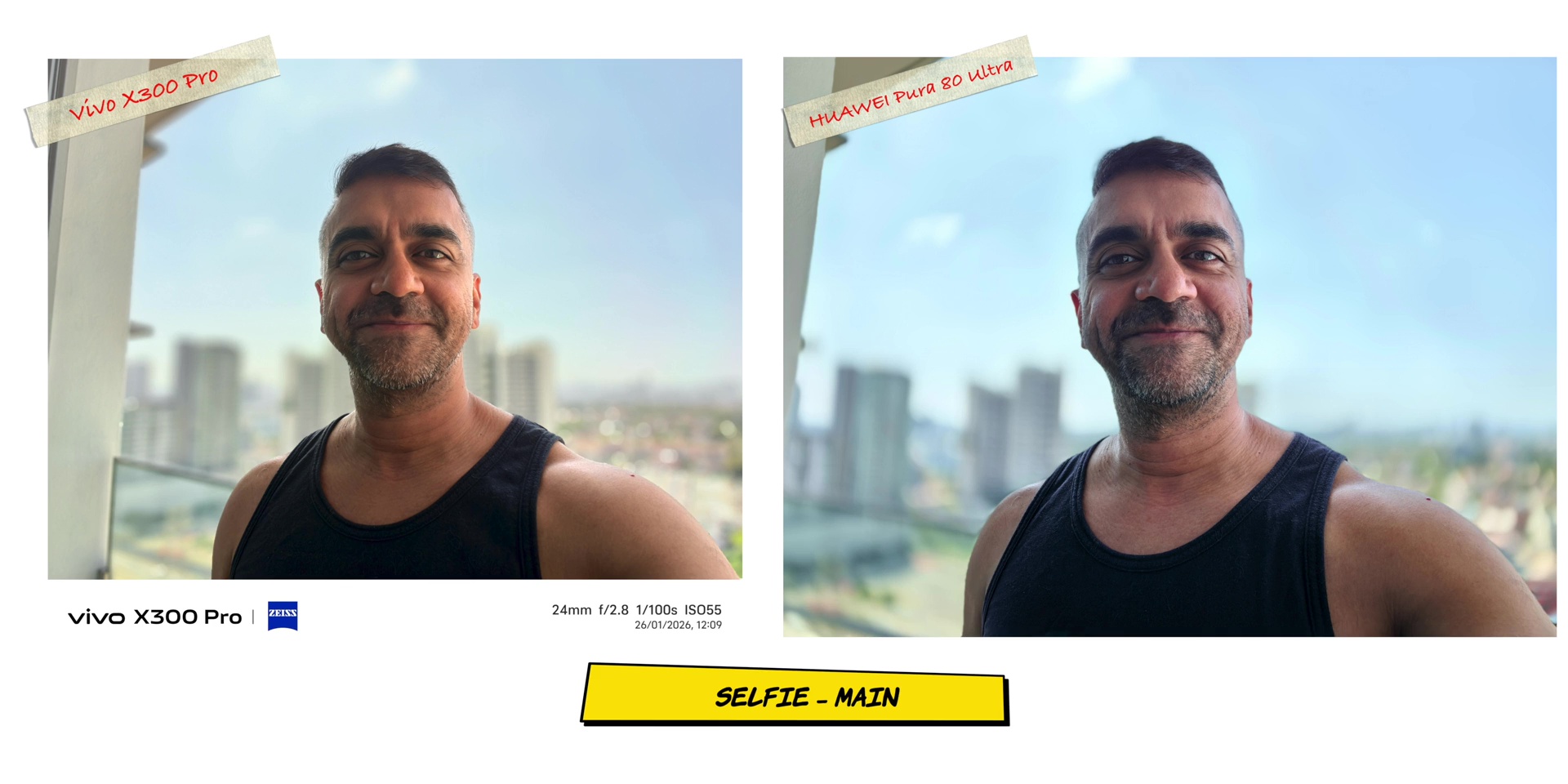
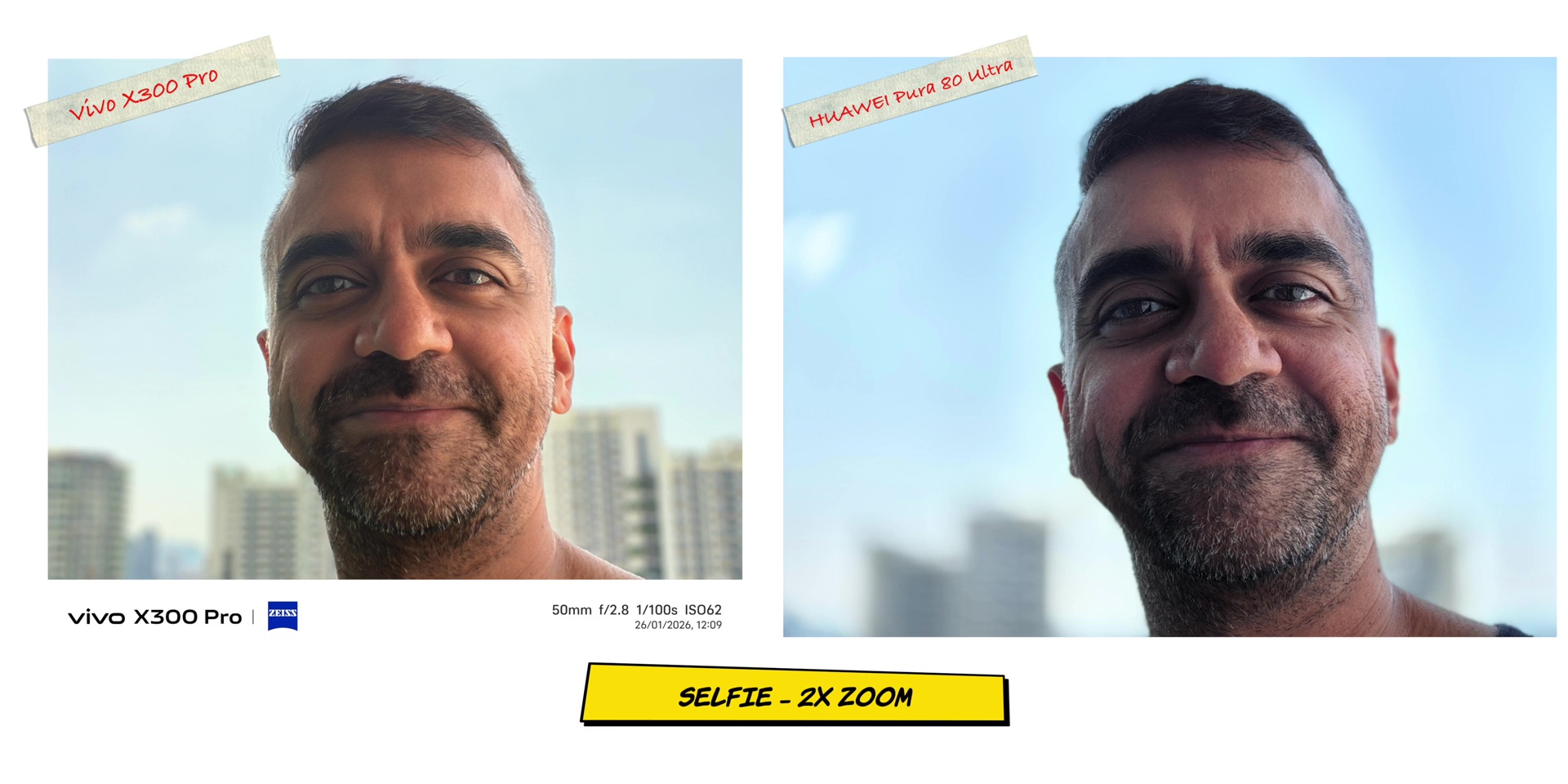
The 1x selfie looks slightly better on the HUAWEI but once again, the 2x selfie is better on the vivo, even capturing individual strands of my hair more accurately in this particular portrait mode shot.
Video (Day)
[Check out the YouTube video for the sample video footage]
Then moving on to the video, the vivo X300 Pro can record up to 8K 30fps. But since the HUAWEI Pura80 Ultra maxes out at 4K, let’s be fair and just compare at 4K.
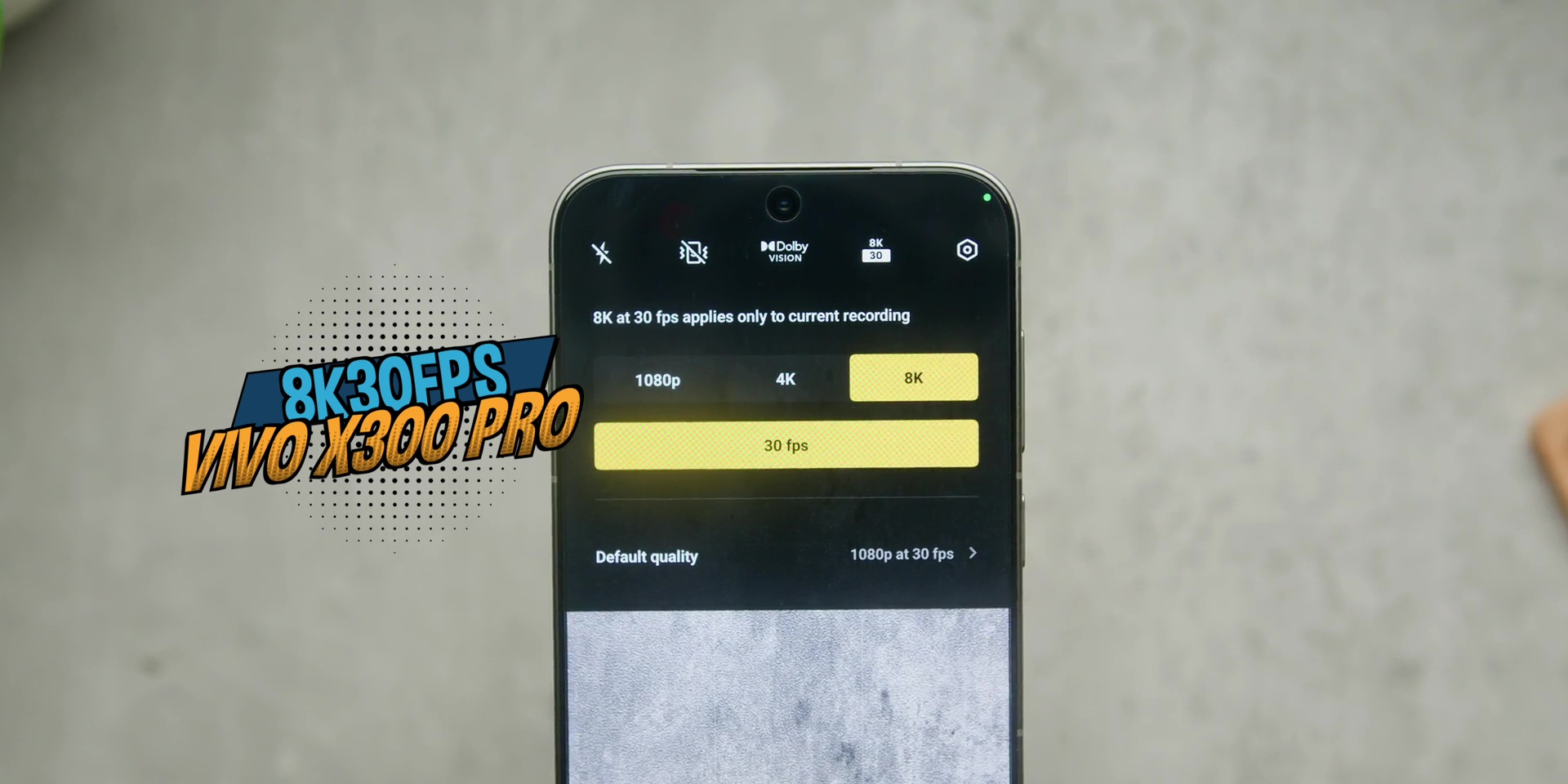
But before that, also worth mentioning is the fact that the vivo has LOG video recording, but HUAWEI does not. And vivo also has portrait video recording at 4K 60fps and this phone, the HUAWEI Pura80 Ultra does not too.
Anyway, the quality of the ultrawide video was equally as good. Nice dynamic range and great sharpness.

But this time around the HUAWEI footage was slightly brighter and the same was applied to the 1x video and even the 2x video as well.
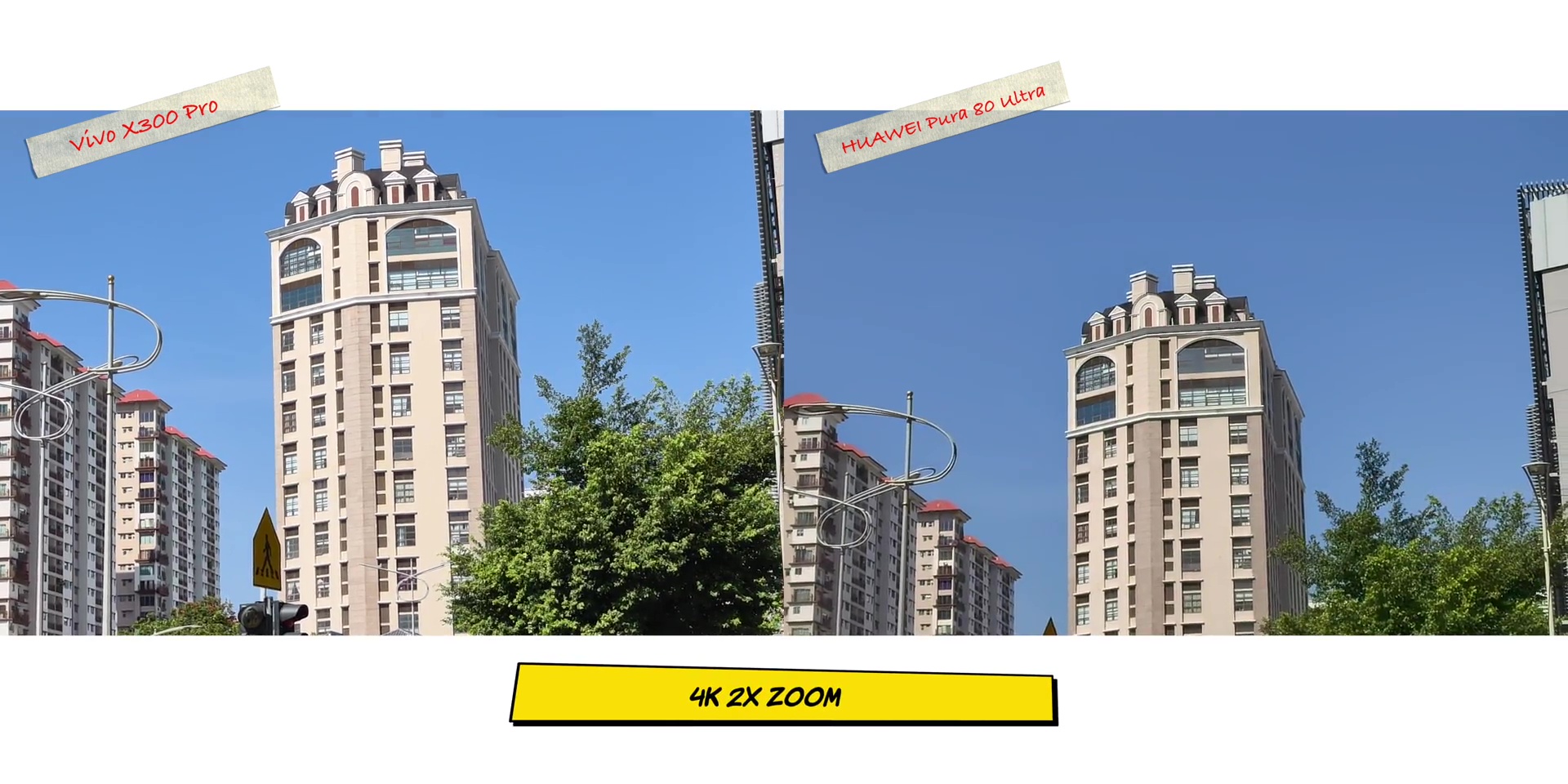
When it comes to comparing the video quality on the optical periscope lenses, the sharpness and the detail were once again very similar, but the 3.7x video on HUAWEI was a bit shaky compared to the 3.5x video on vivo, which was noticeably smoother in the camera movement.
And while the 10x video on the HUAWEI was slightly sharper than the vivo, the footage did not look very stable on the vivo compared to the HUAWEI on the camera app, but it turned out the other way around.
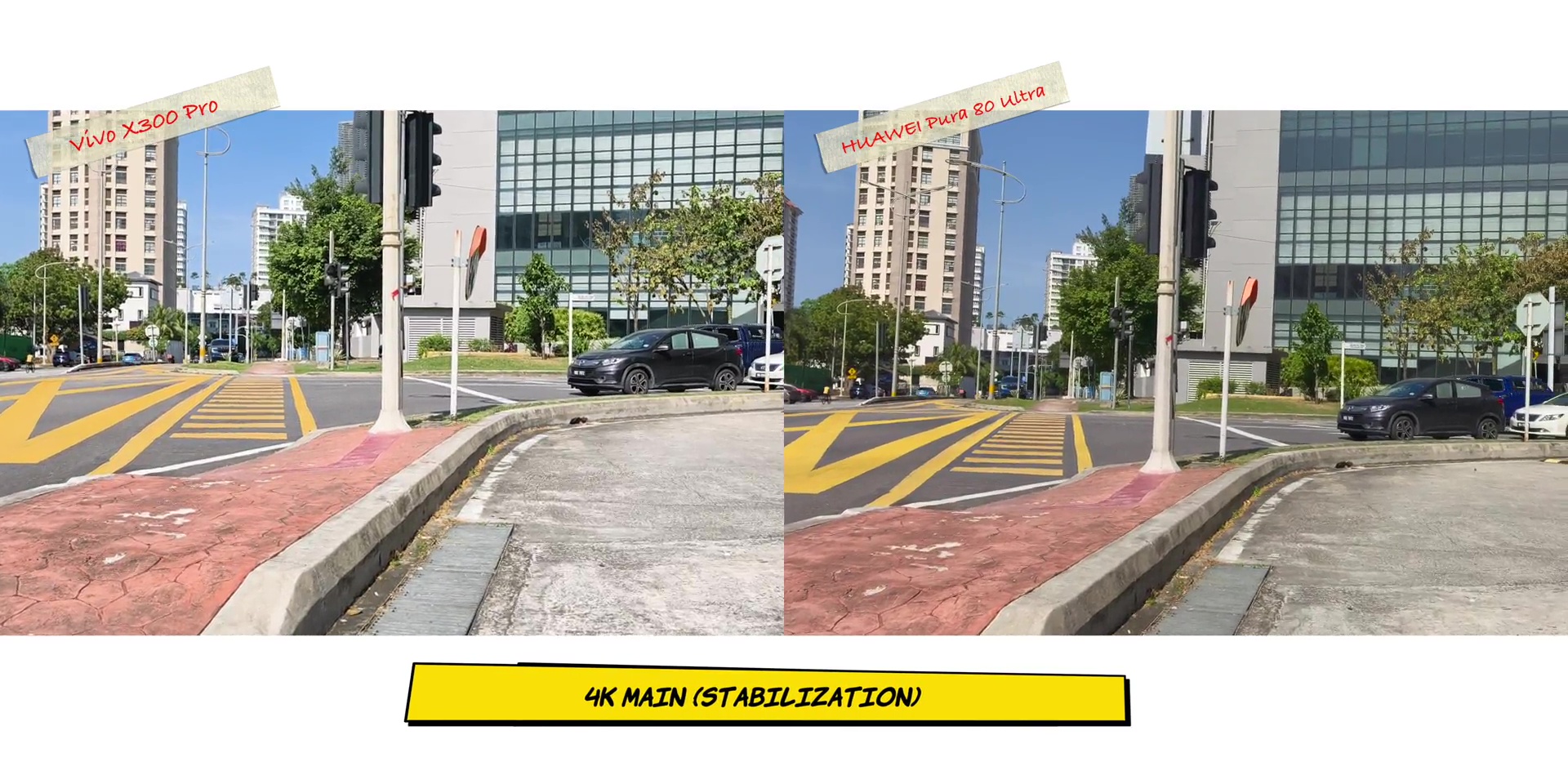
Then in terms of the stabilization, the ultrawide lenses on both phones performed very well, almost gimbal-like with HUAWEI looking a little floaty but still very usable. Then the floaty effect became more prominent on the HUAWEI at 1x and the same happened at 2x as well.
But what’s interesting is that when testing these optical periscope lenses, when you look through the phone screen once again, the view’s footage looks shaky and HUAWEI’s footage looks stable.
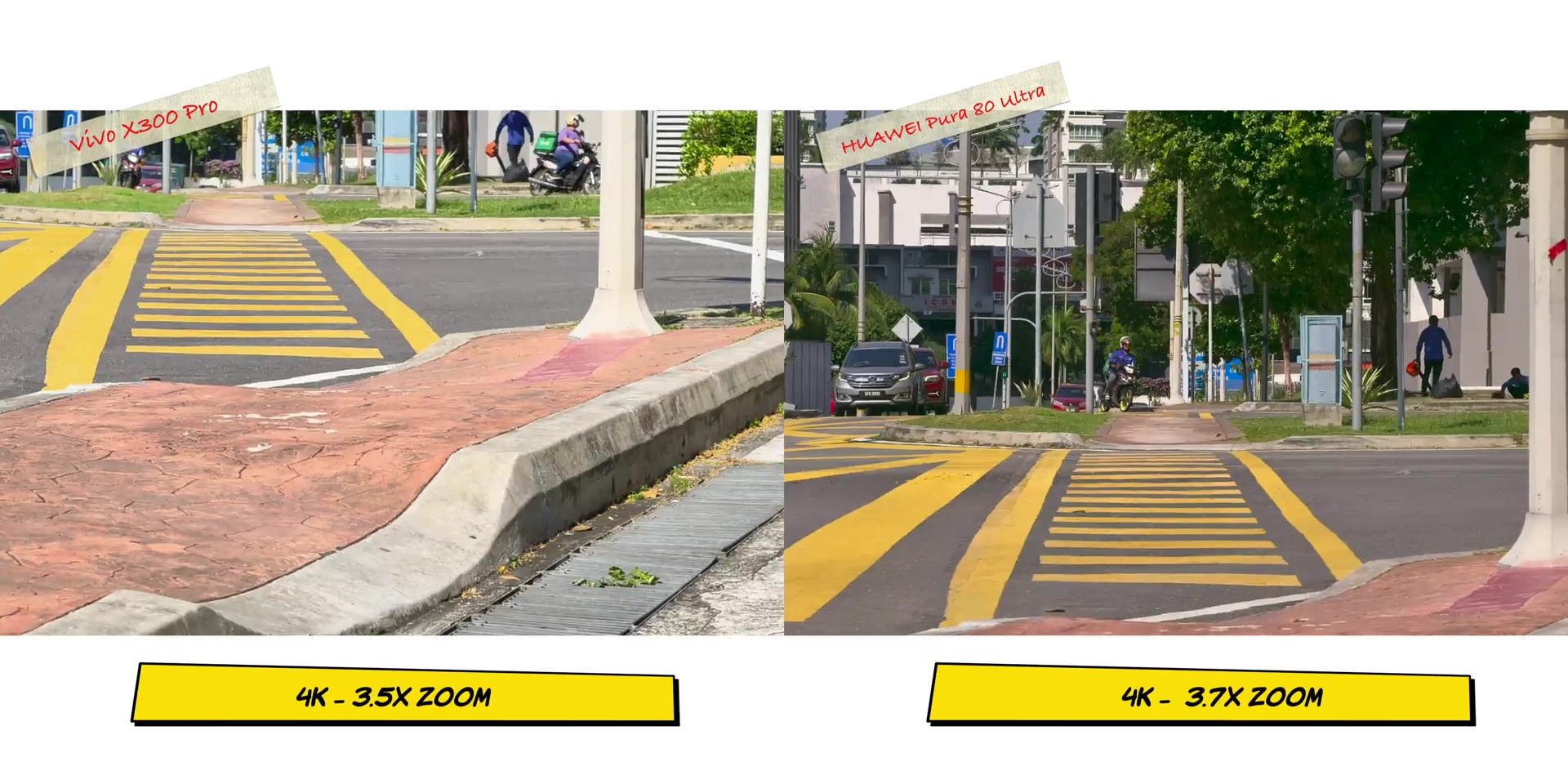
However, once I brought the footage and played back or exported it and viewed it on my computer, it was actually the opposite where the vivo did an overall better job when it comes to the stabilization compared to the HUAWEI. And this difference comes even more obvious as mentioned earlier on the 10x zoom where stabilization on the HUAWEI gets even worse.
Then for the front video, both phones can record up to 4K, so there’s no difference over here.
But when it comes to comparing the quality, another surprise is that compared to the photos, the video quality, especially for the skin tones, look better on the HUAWEI. As seen side by side on the ultrawide selfie video, the overall color, brightness, and skin tones were also better on the HUAWEI at 1x zoom. And the same applies for the 2x zoom or the selfie video as well.

In terms of the stabilization, both phones performed really well on the ultrawide selfie video. The 1x front video was equally good on both. And same goes for the 2x mode as well.
So, all of this means that while the vivo X300 Pro delivers better photos overall, the HUAWEI Pura80 Ultra shines more when it comes to the video. If we put the camera stabilization aside.
[Check out the vlog / audio test on my YouTube video]
Ultrawide (Night)
So looking at the ultrawide photos at night, the edge distortion is still present, especially on the pillar towards the right and the rail at the bottom left as well. The HUAWEI captures the sky even more accurately while it looks more black rather than bluish. But the highlights and the shadows were great on both phones.
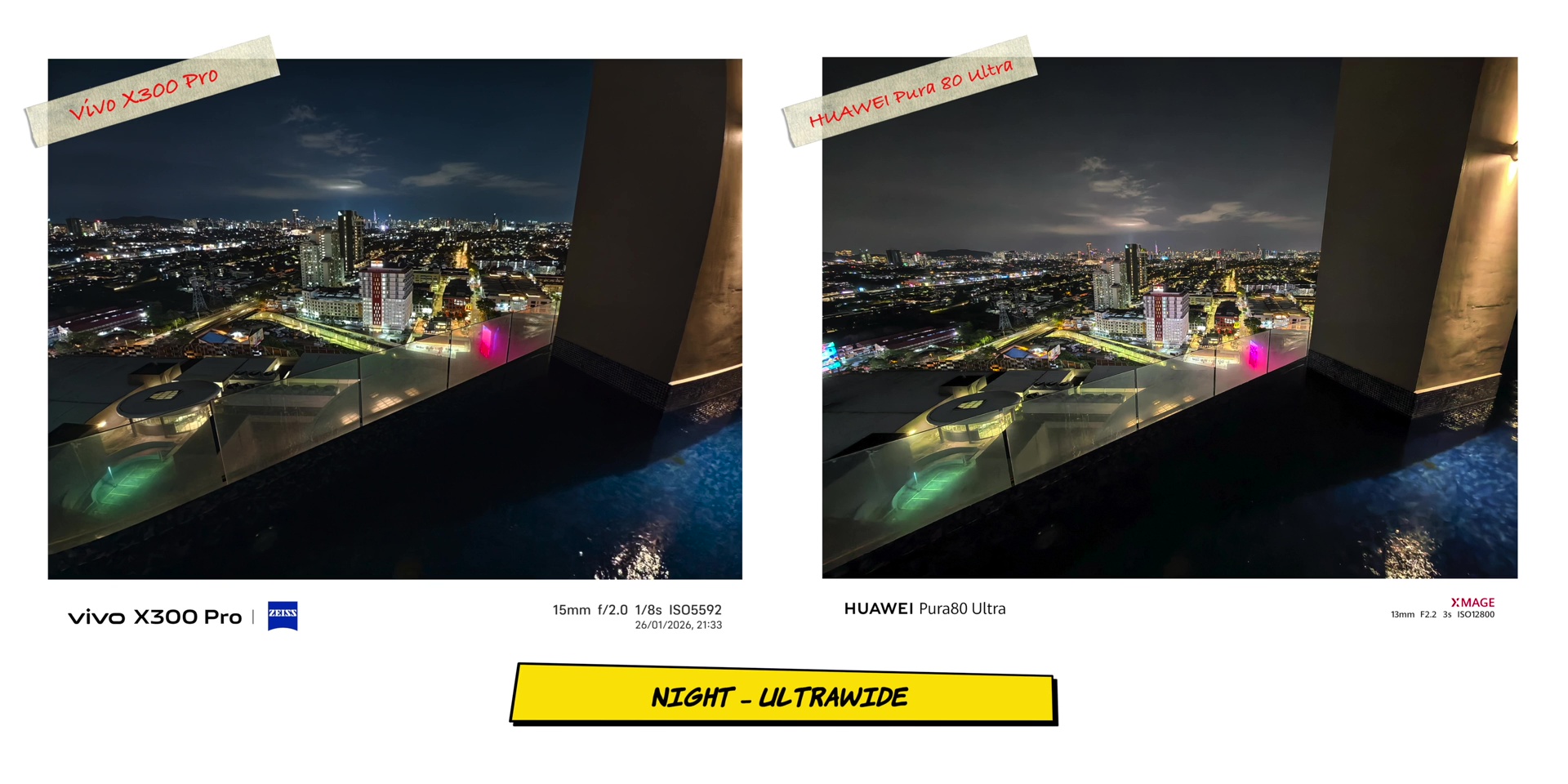
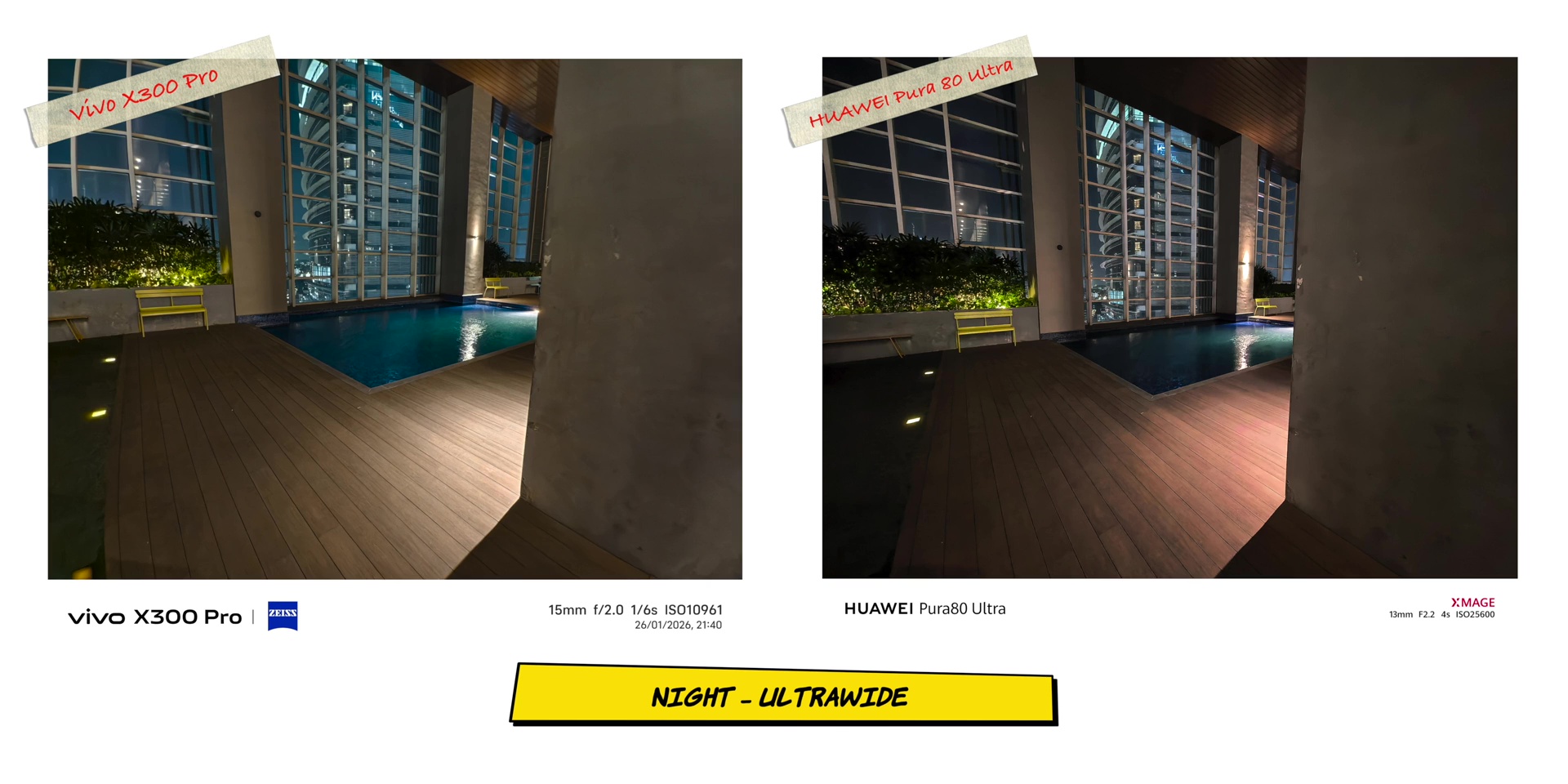
And aside from the obvious barrel distortion on the window towards the top left of this second comparison image, this shot was taken in a very dark environment which shows the strong image processing and the dynamic range on both phones.
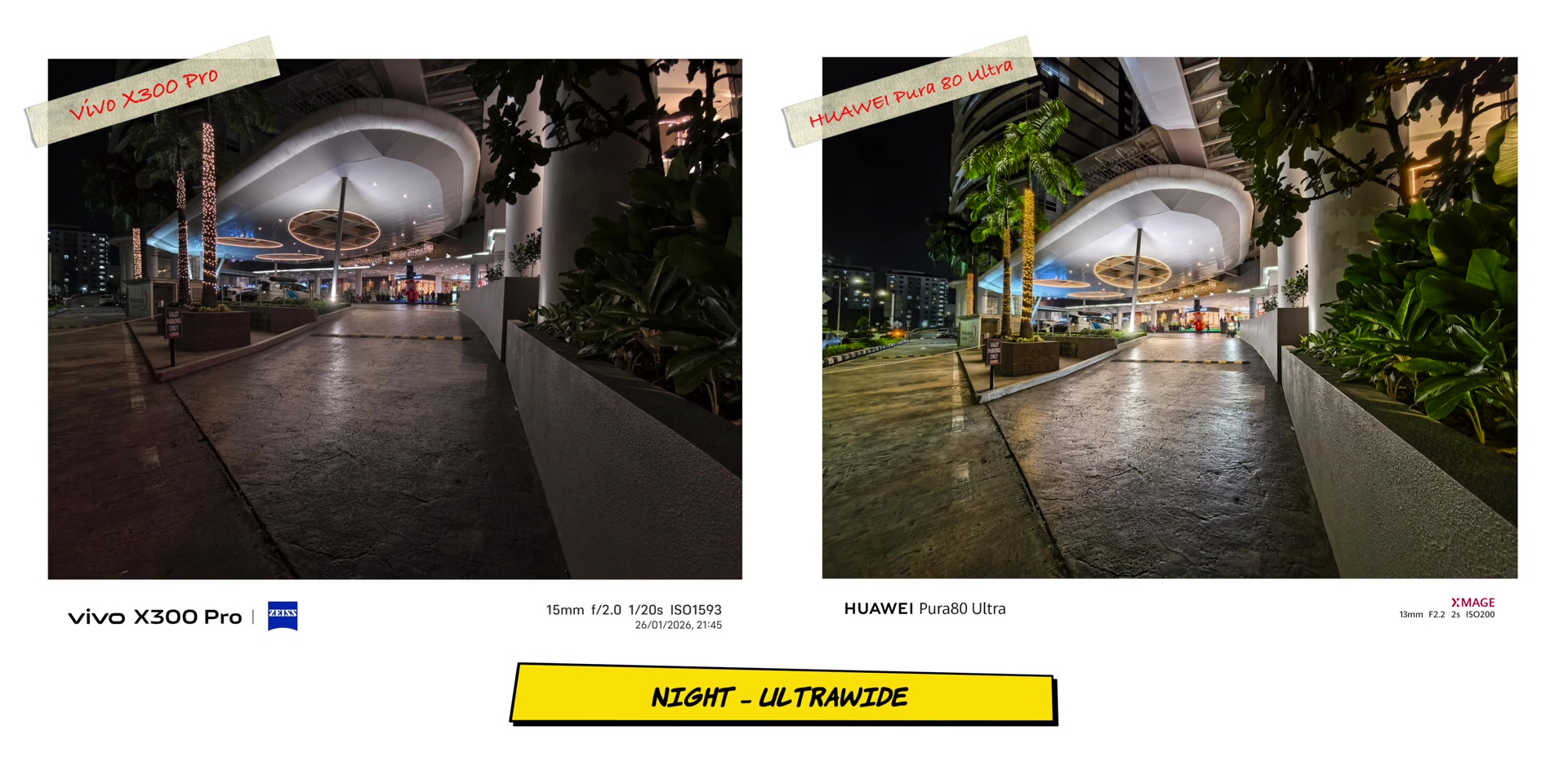
And finally for the third comparison photo, because HUAWEI uses a wider 13mm focal length, it looks better overall capturing more details on the brighter areas and even at the darker parts of the image as well.
Main + Zoom (Night)
But the story was a totally different story when it comes to the 1x zoom at night because vivo finally calmed itself down by returning to a more color accurate sky color.
While the HUAWEI became more aggressive in brightening the sky to a point where it almost looks like there’s a portal which is about to open in the middle of the sky, which was actually quite funny.
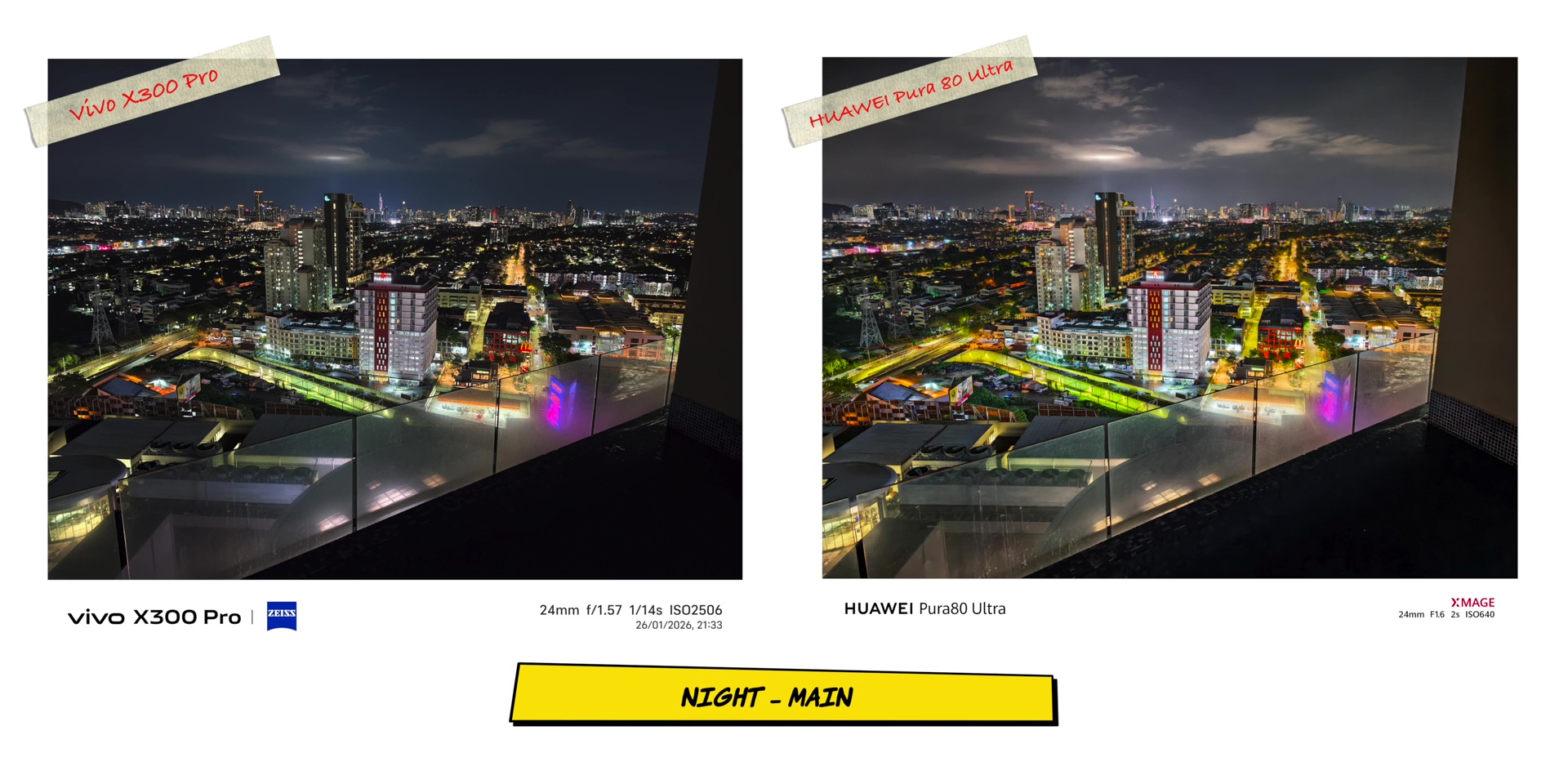
Then the 2x mode on the HUAWEI was not as aggressive with the highlights. So it performed equally as well over here. And while the optical lenses on the vivo look a little darker than the HUAWEI, I think that this is where vivo is actually compensating to avoid the blowing out of the highlights compared to before where I had to often manually touch the exposure dial to bring it down. So, this could be something that was fixed in vivo’s recent software update. So, good job vivo.
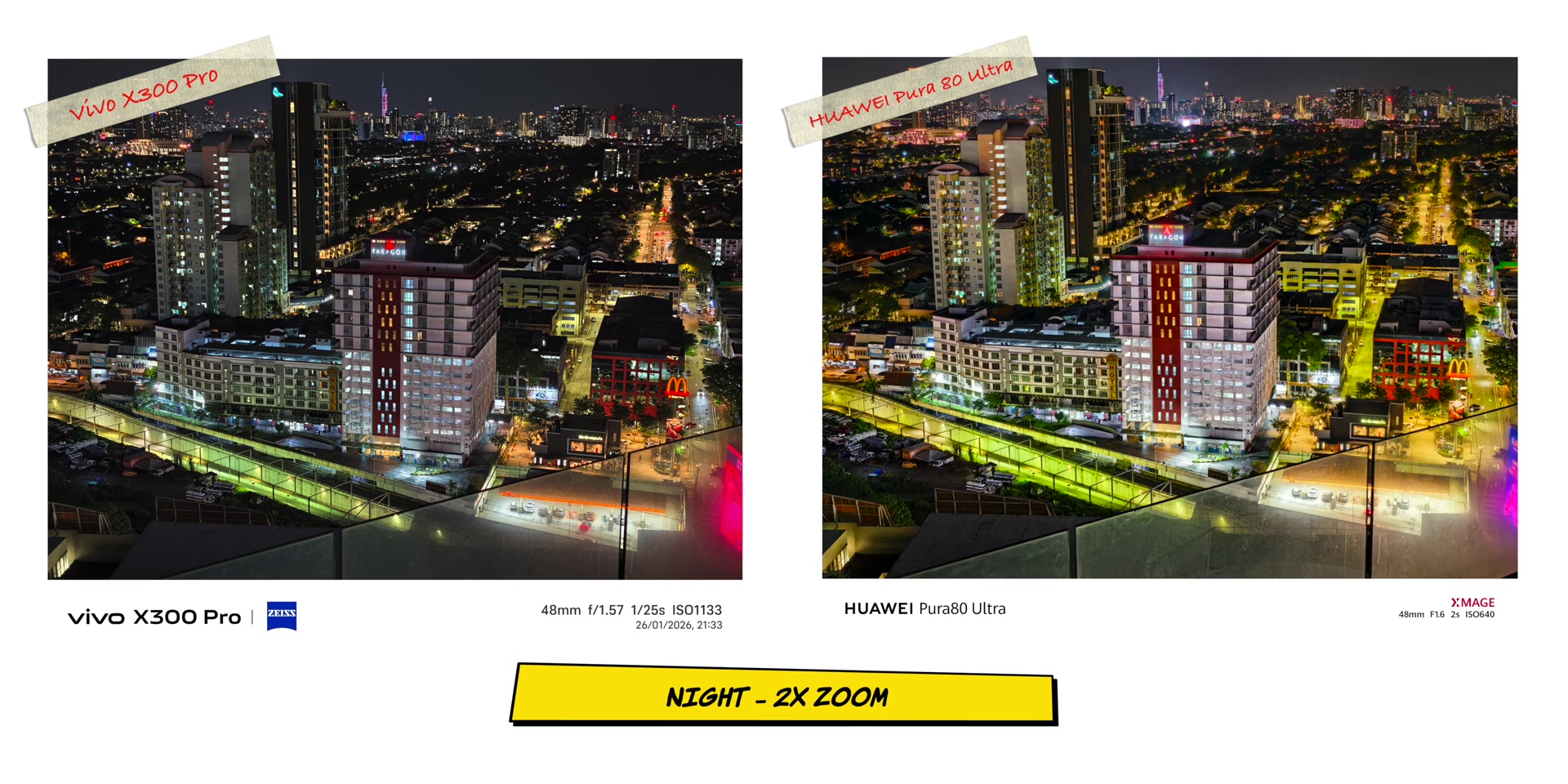
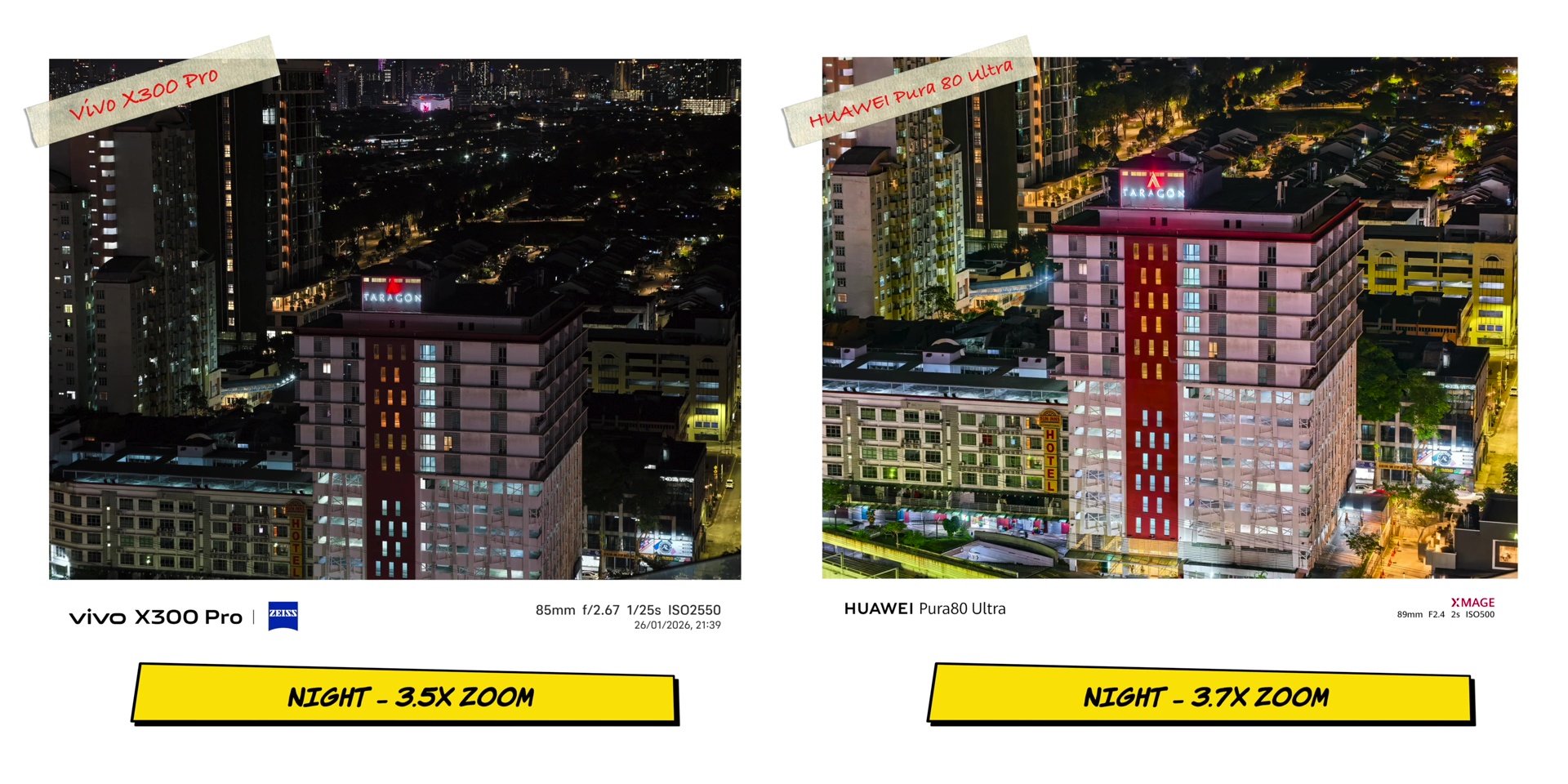
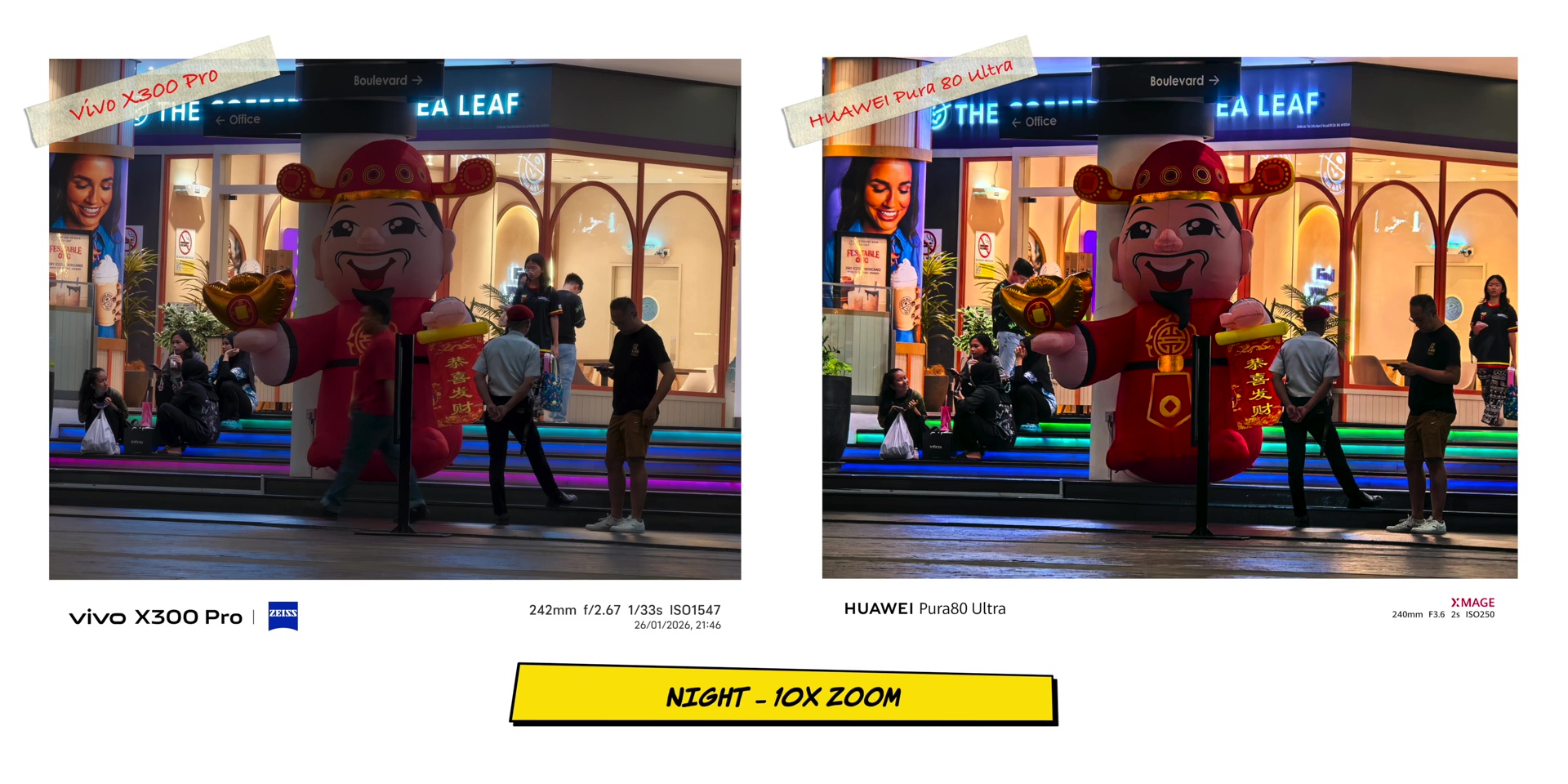
Then the 10x mode was slightly sharper on HUAWEI as you can clearly see over here at this “Taragon” sign.
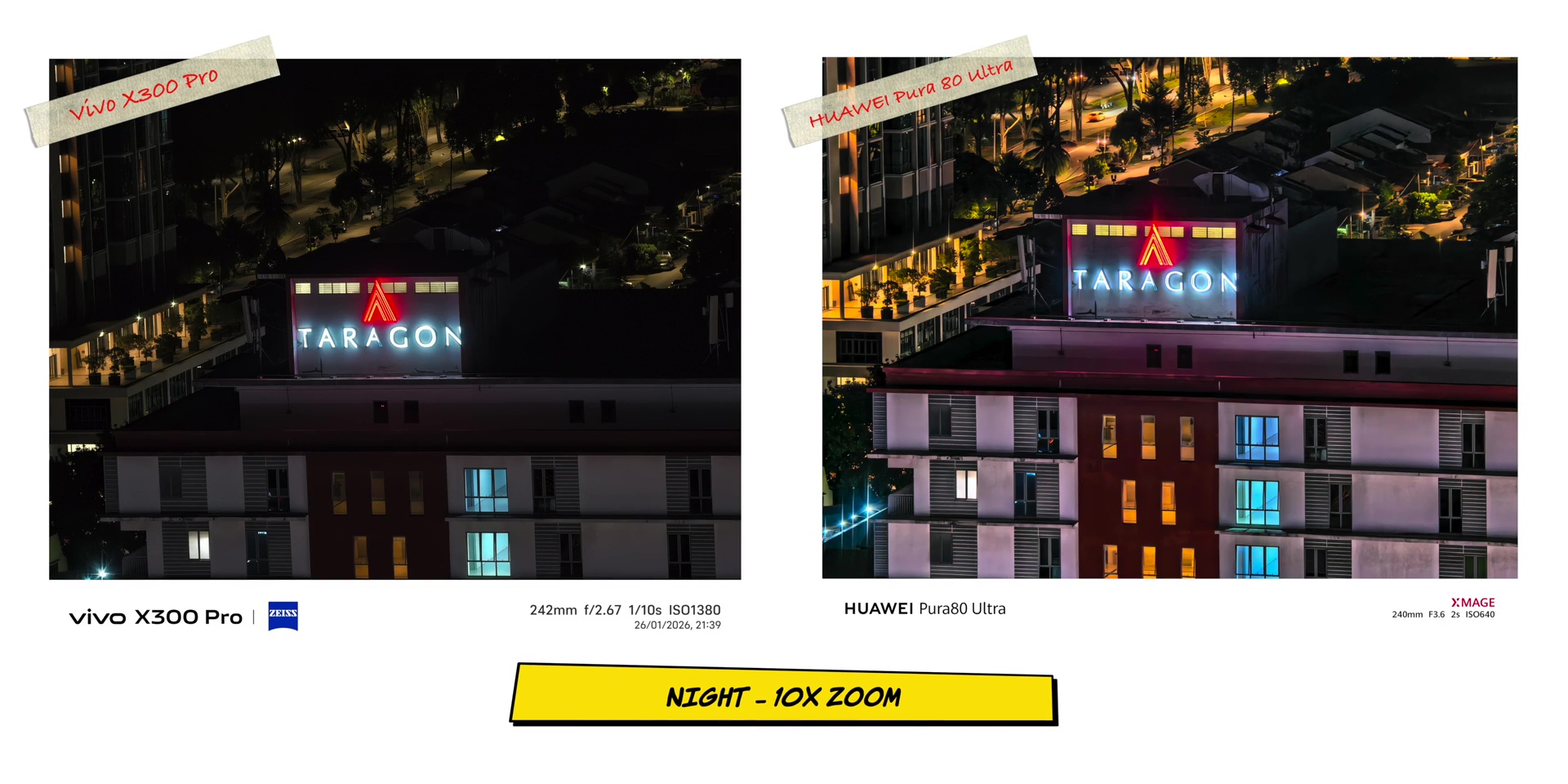
But things start to look really bad on the HUAWEI Pura80 Ultra from the 20x zoom onwards. Because here’s the problem. Once you go beyond 20x zoom at night, the shutter delay on the HUAWEI becomes so much longer.
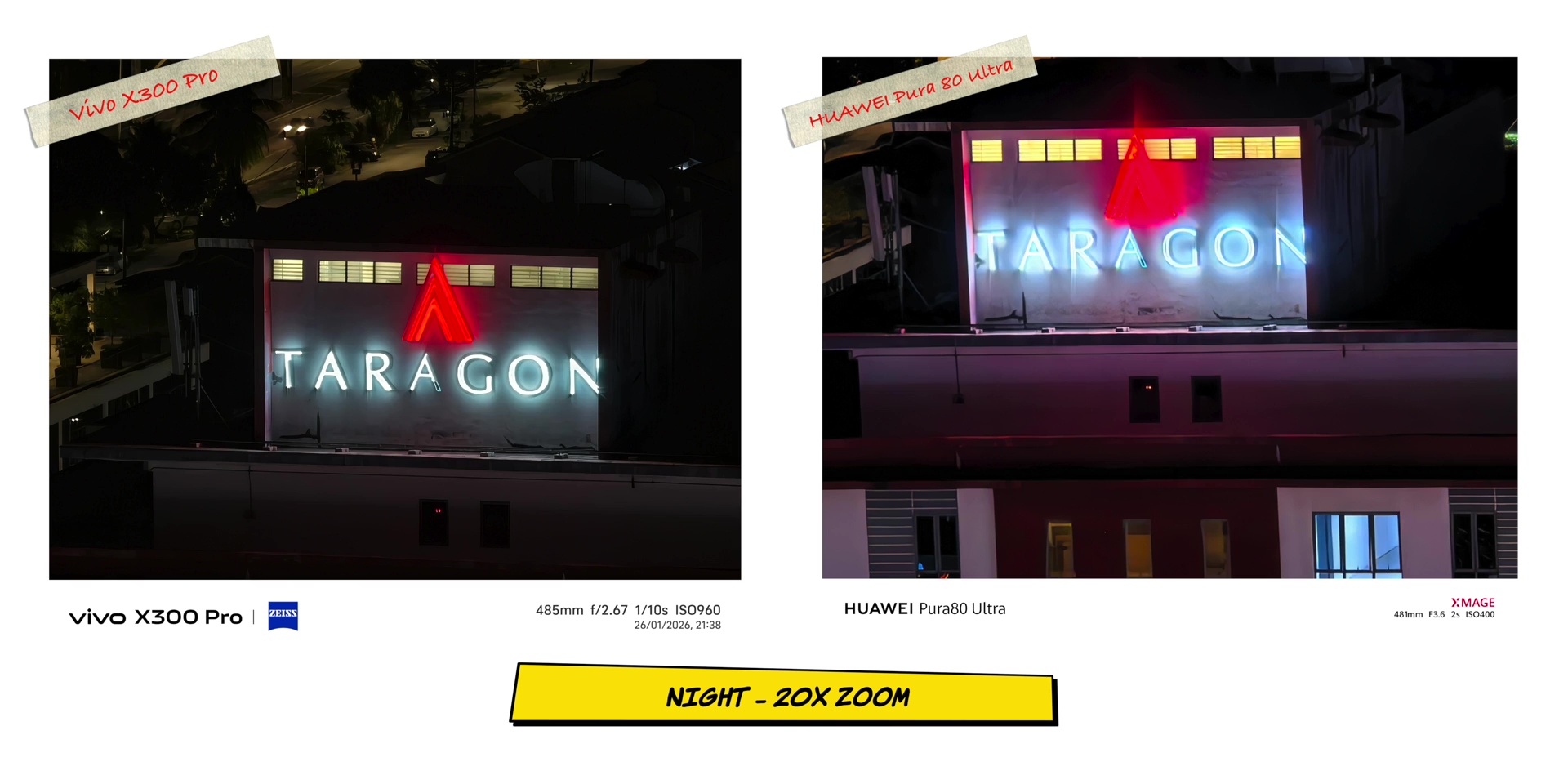
So not only do you need to stay completely still when you take the photos, in this case trying to focus on the “Taragon” sign, but you also need to remain still for a longer period of time. So unless you’re using a tripod, you will end up with some blurry images like this.
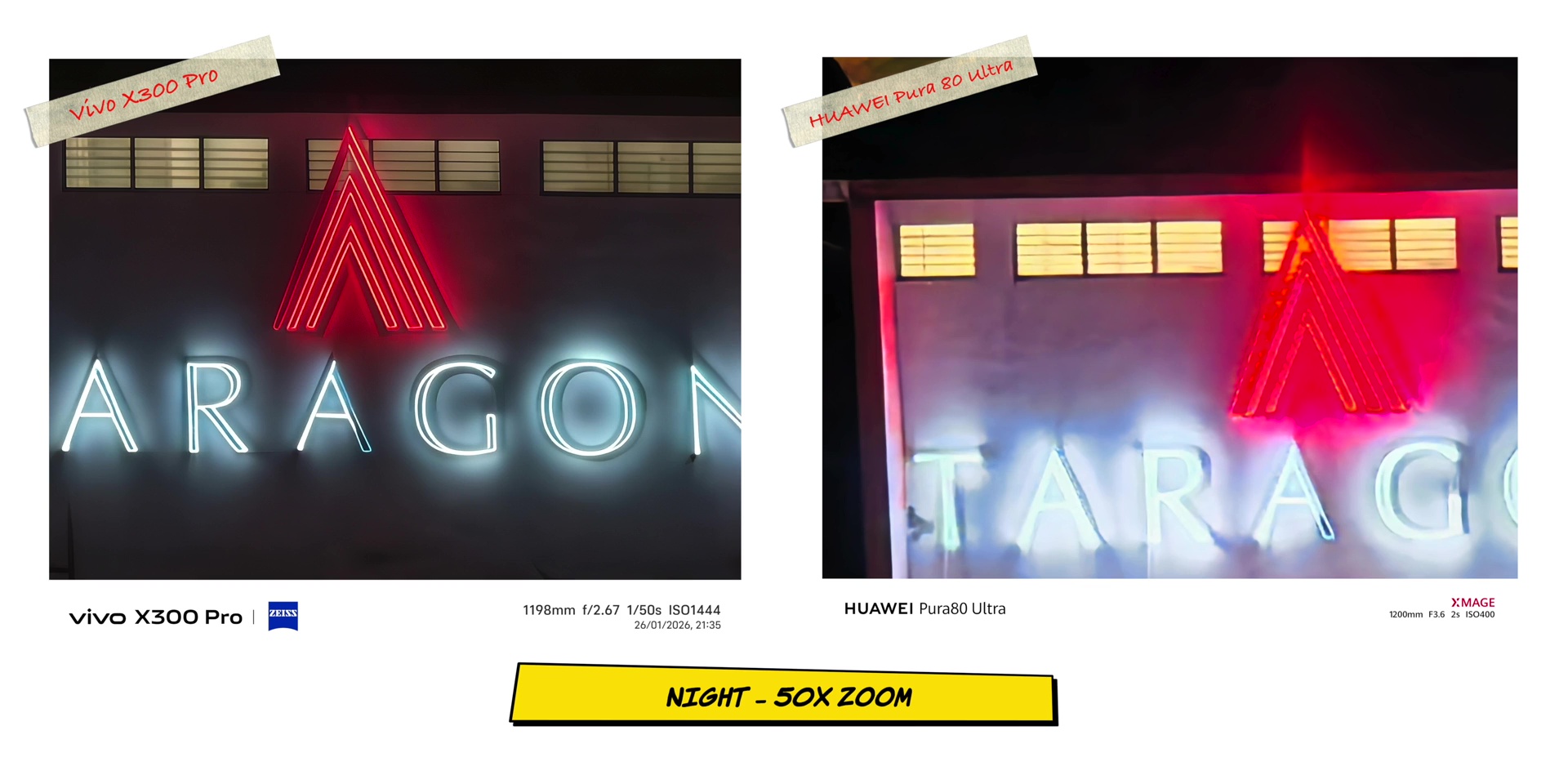
And it gets even worse at 50x and 100x zoom. As you can clearly see side by side, the vivo performed so much better.
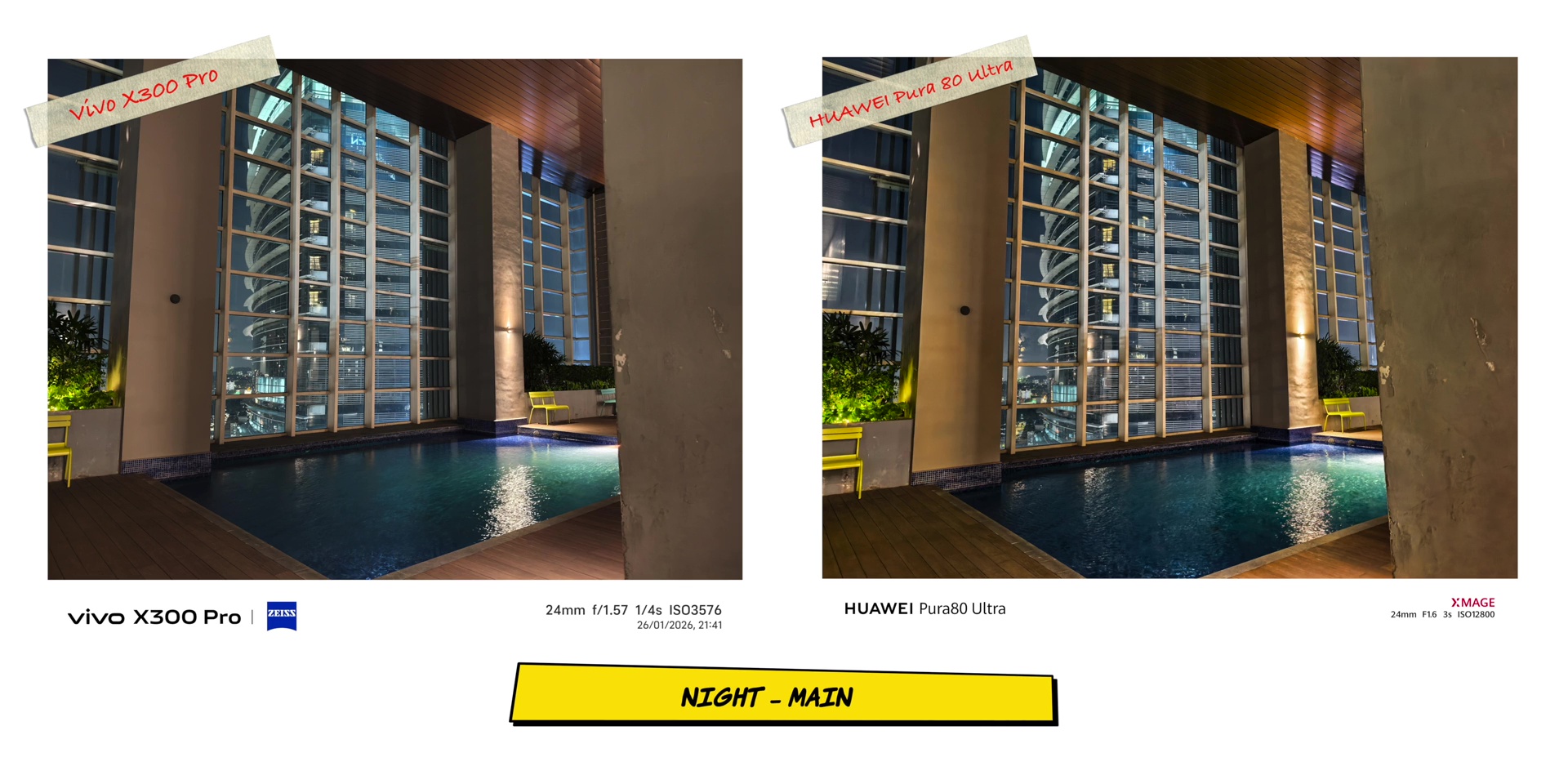
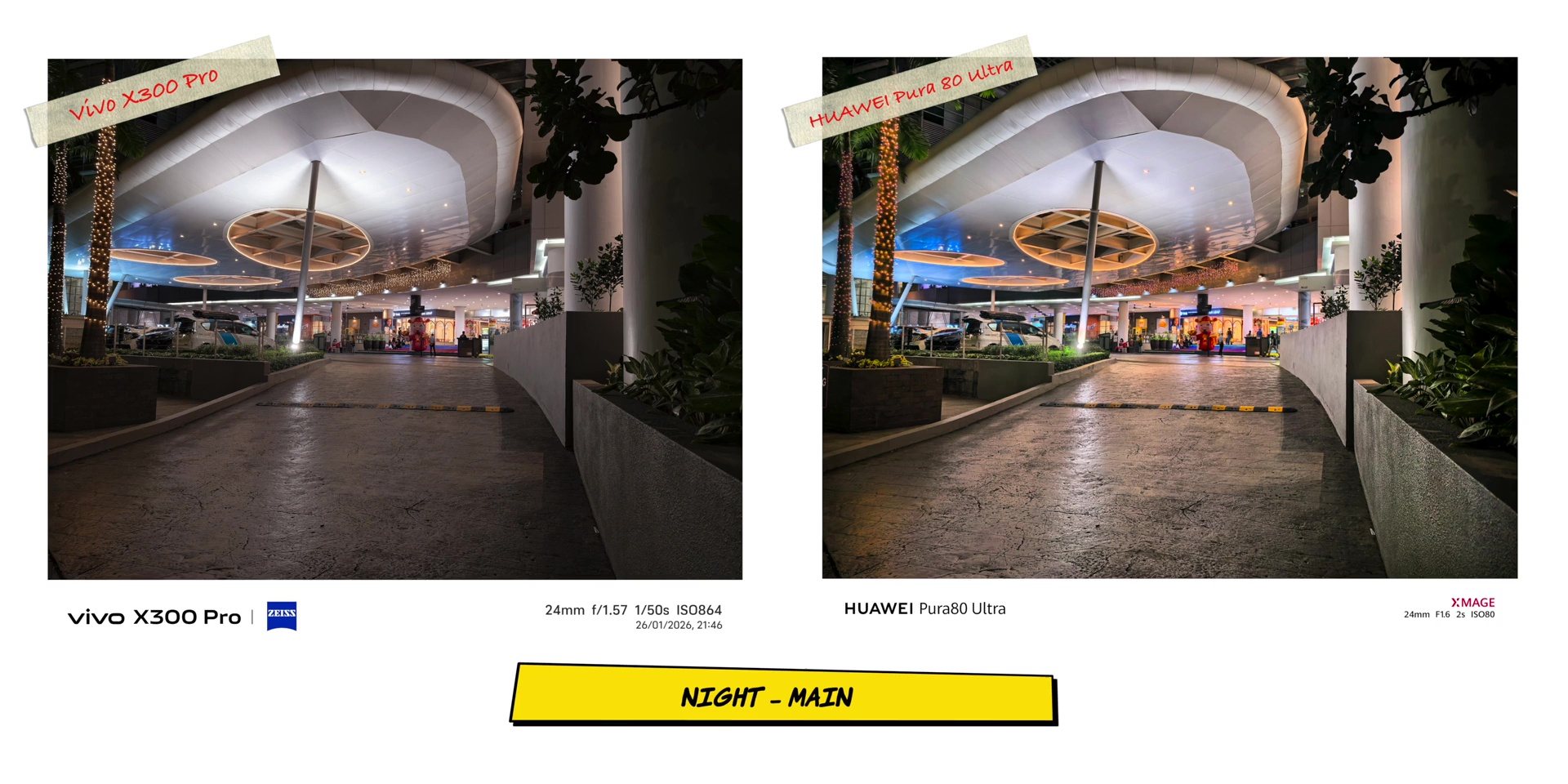
Now going back to the darker environmental scene, the 1x 24mm shots were equally good on both phones, but the orange light reflections were reduced on the vivo at 48mm or 2x, especially on the window panes on the left.
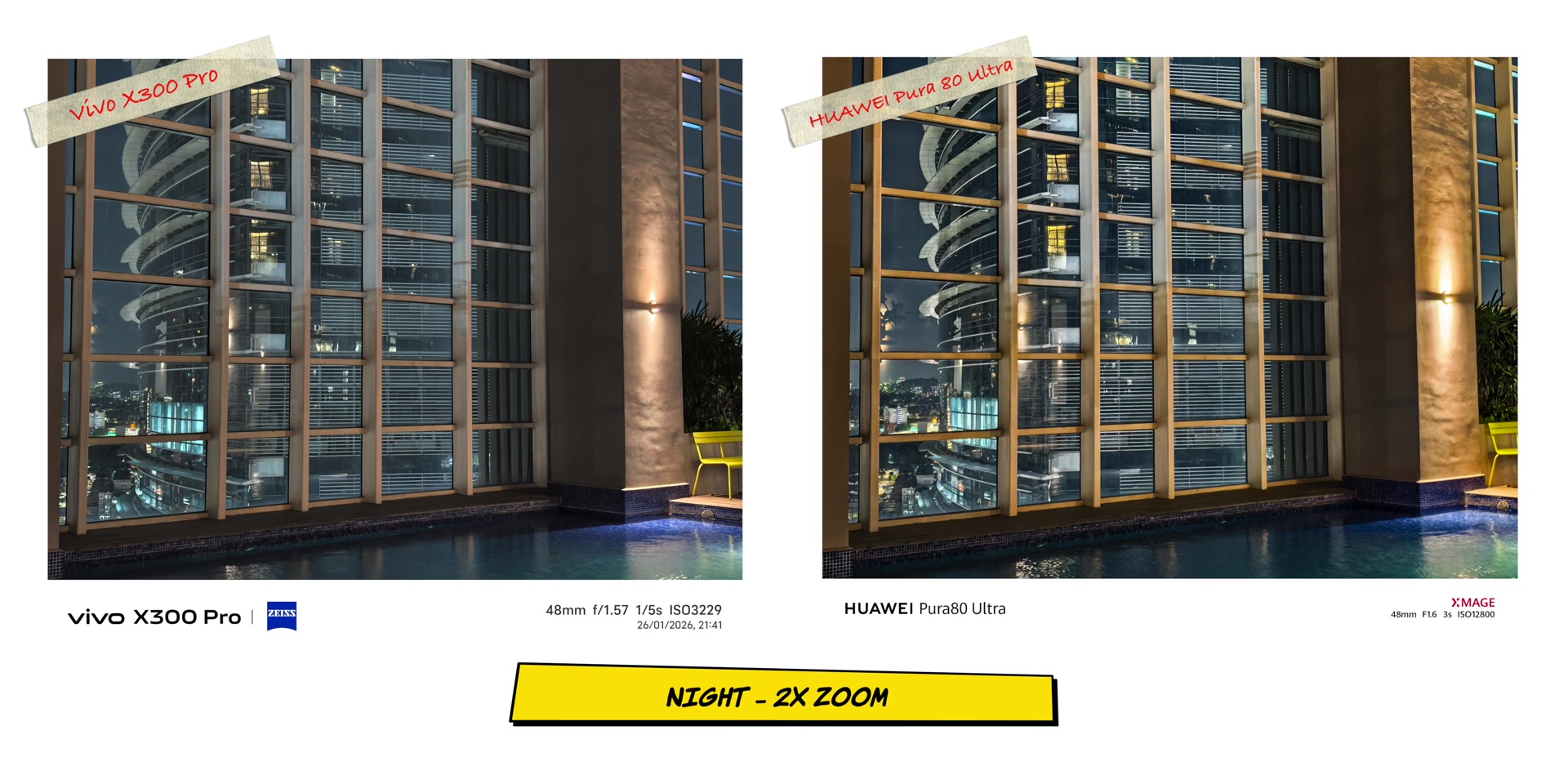
The shadows were also looking nicer on the vivo at 85mm compared to HUAWEI’s 89mm optical lens.
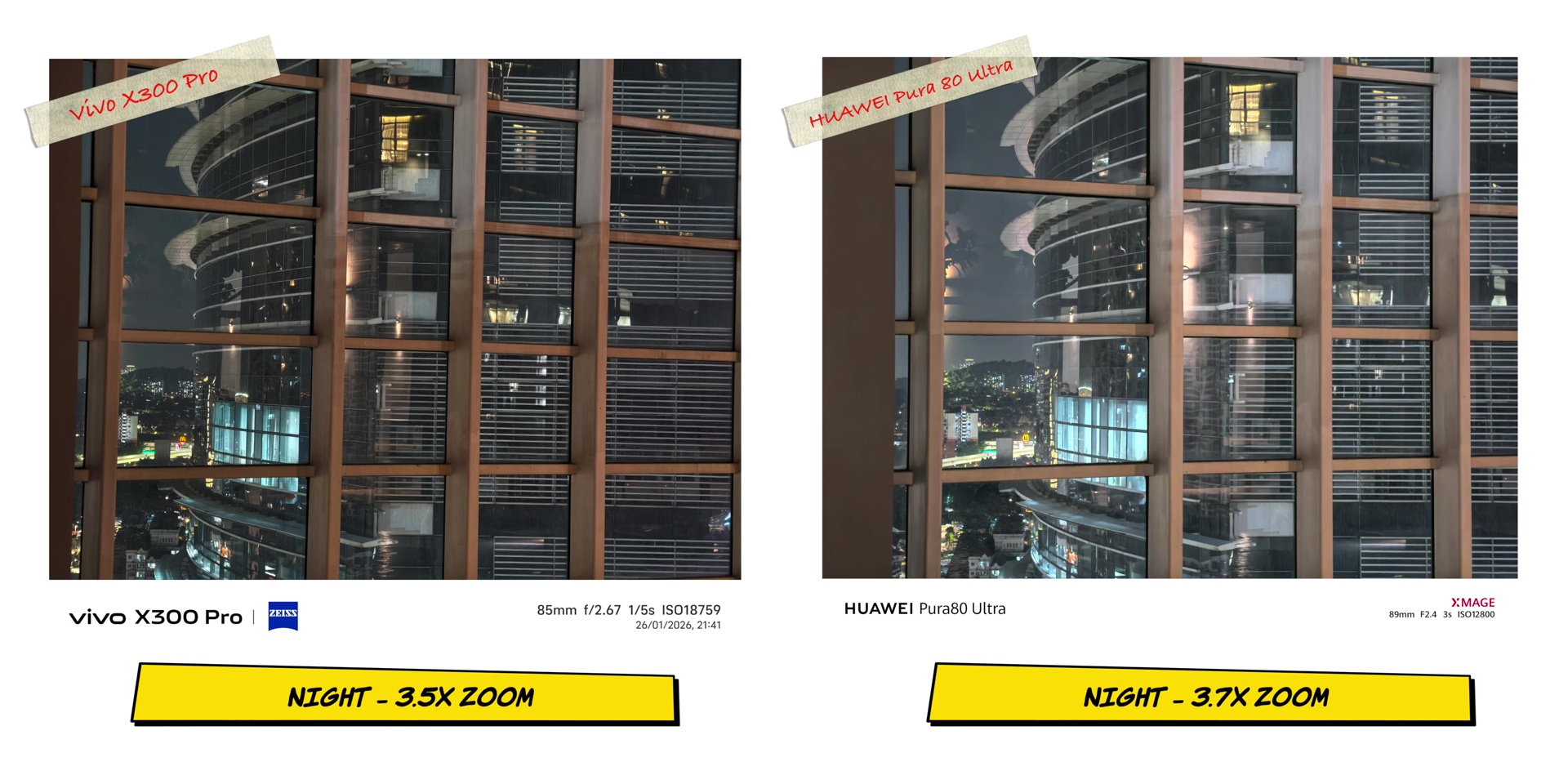
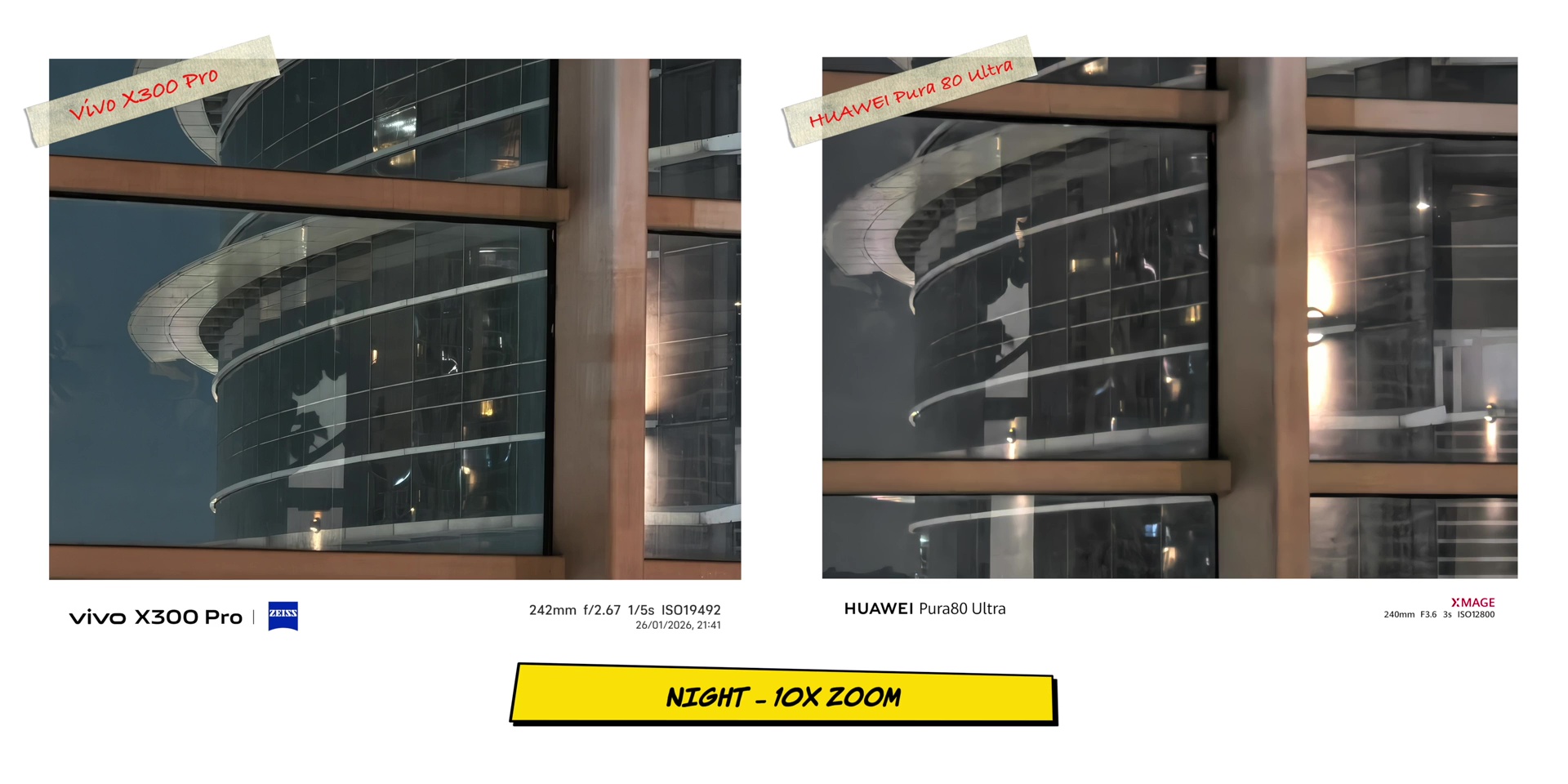
And just like earlier, the 10x zoom was better on the HUAWEI and this was consistent across several photos taken in this particular environment.
The colors were also punchier on the HUAWEI at 1x, but the lens flare on the pillar looked better on the vivo at 2x.
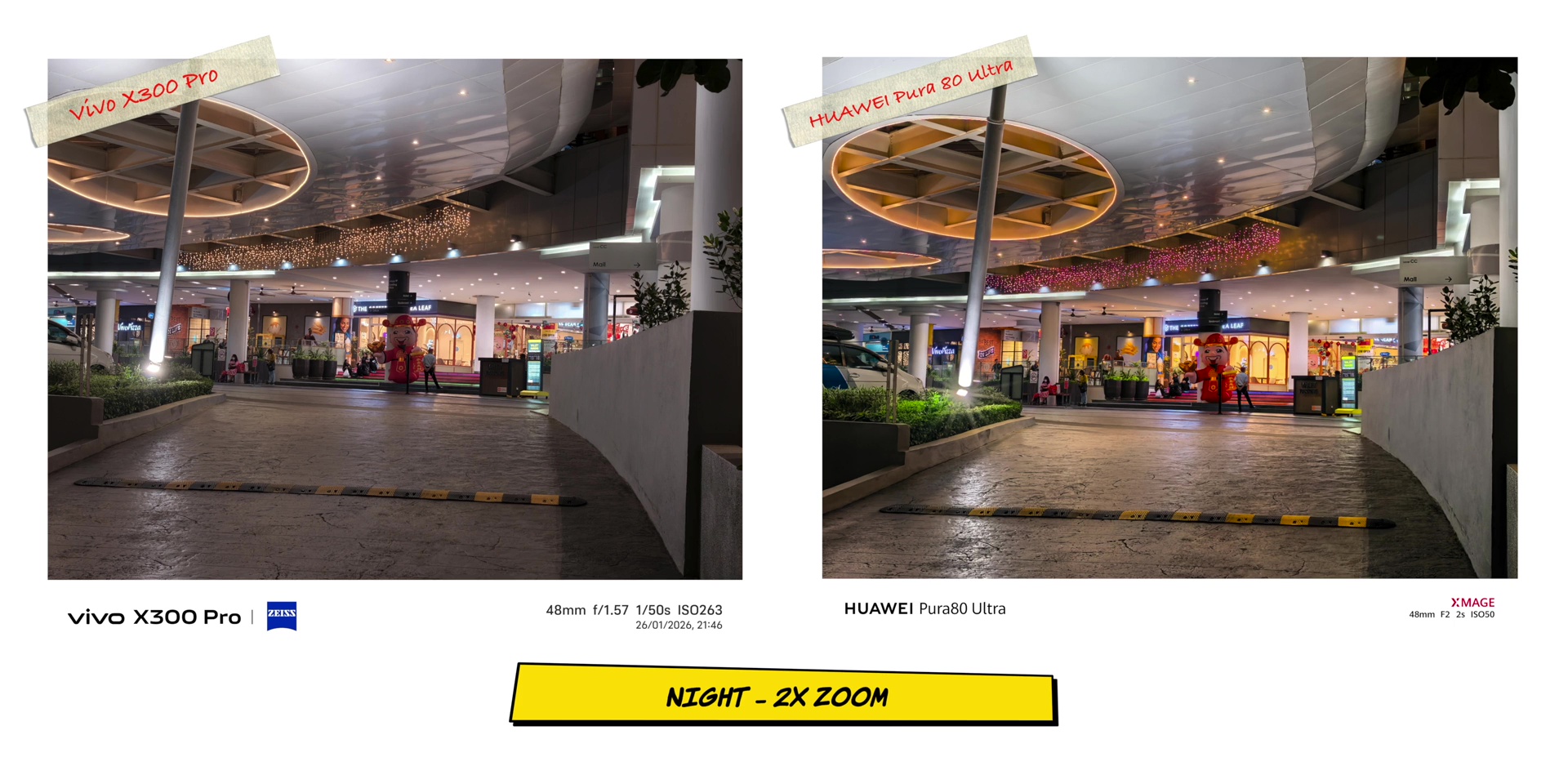
The colors remain punchier on the HUAWEI for the optical zoom comparison.
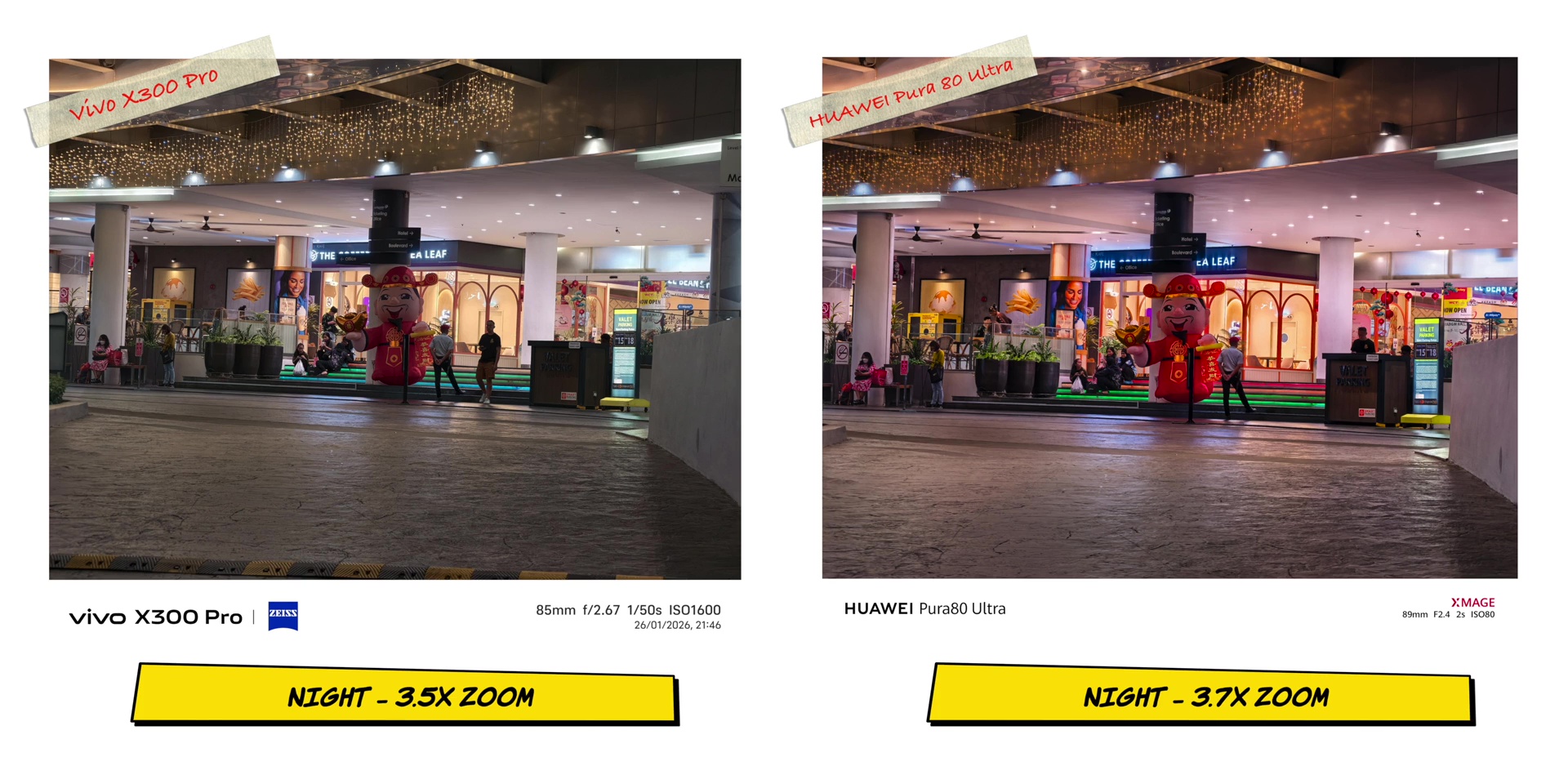
However, there was a noticeable amount of glare on the coffee bean sign at 10x on the HUAWEI, even though the image was brighter and sharper.
Portrait (Night)
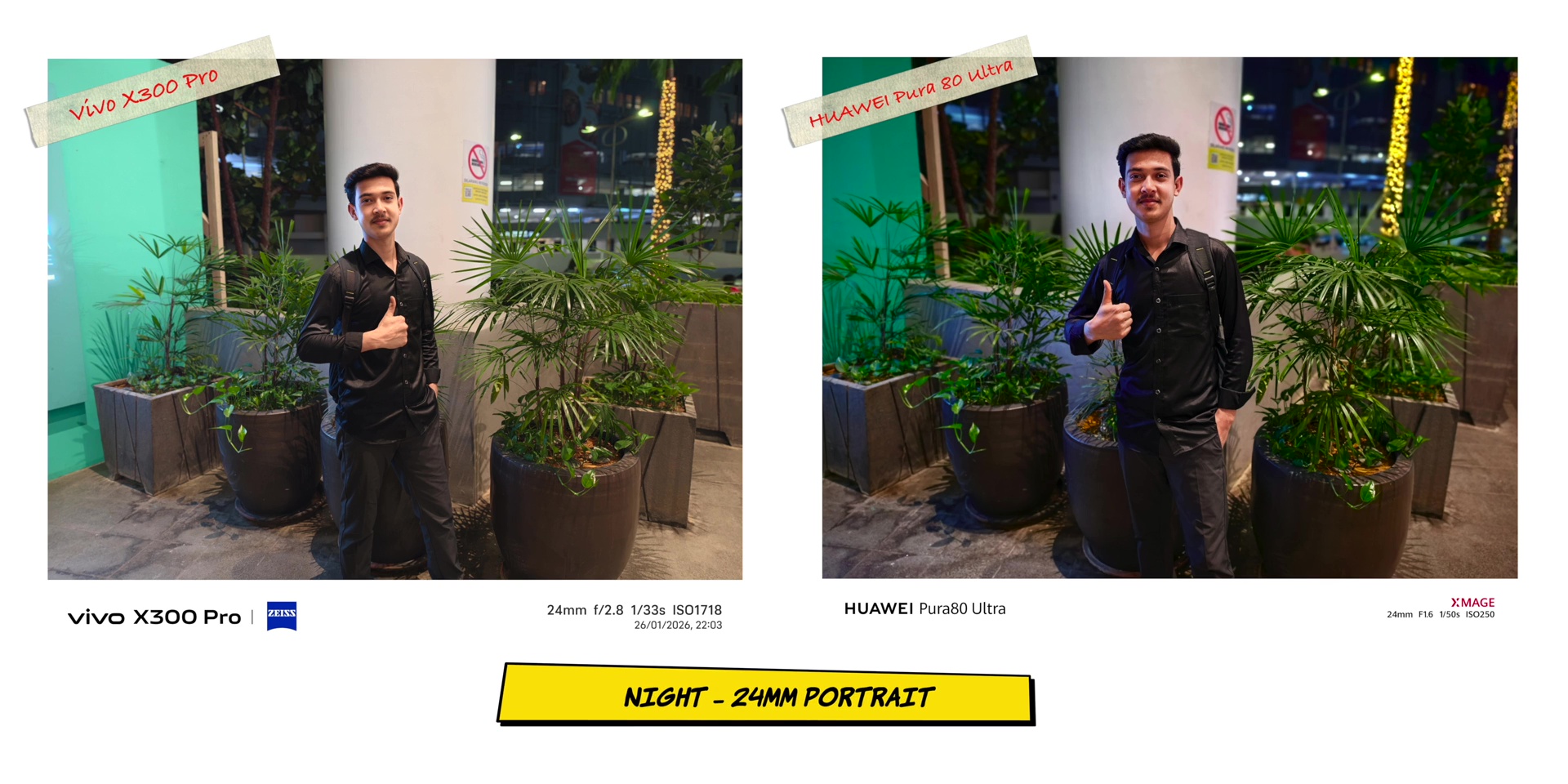
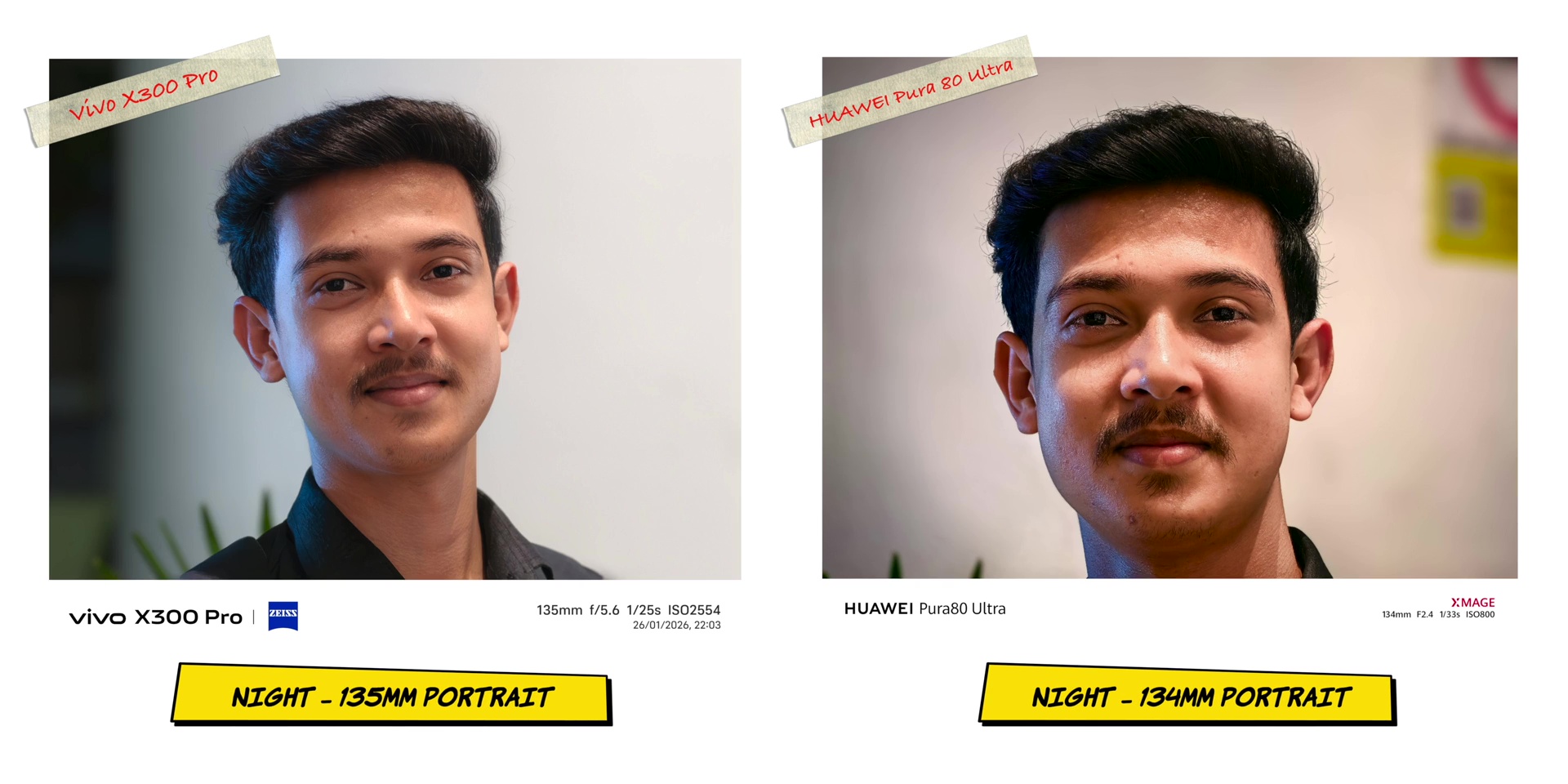
Then on the portrait mode at night, it gets a little odd because starting from this first photo of a person as a subject, the HUAWEI is using an f/1.6 aperture compared to vivo’s f/2.8.
So this does mean that by right, vivo is supposed to be more darker than the HUAWEI, right? But no, for some strange reason, the overall image looks darker on the HUAWEI, even though the shallow depth of field looks very similar on both phones.
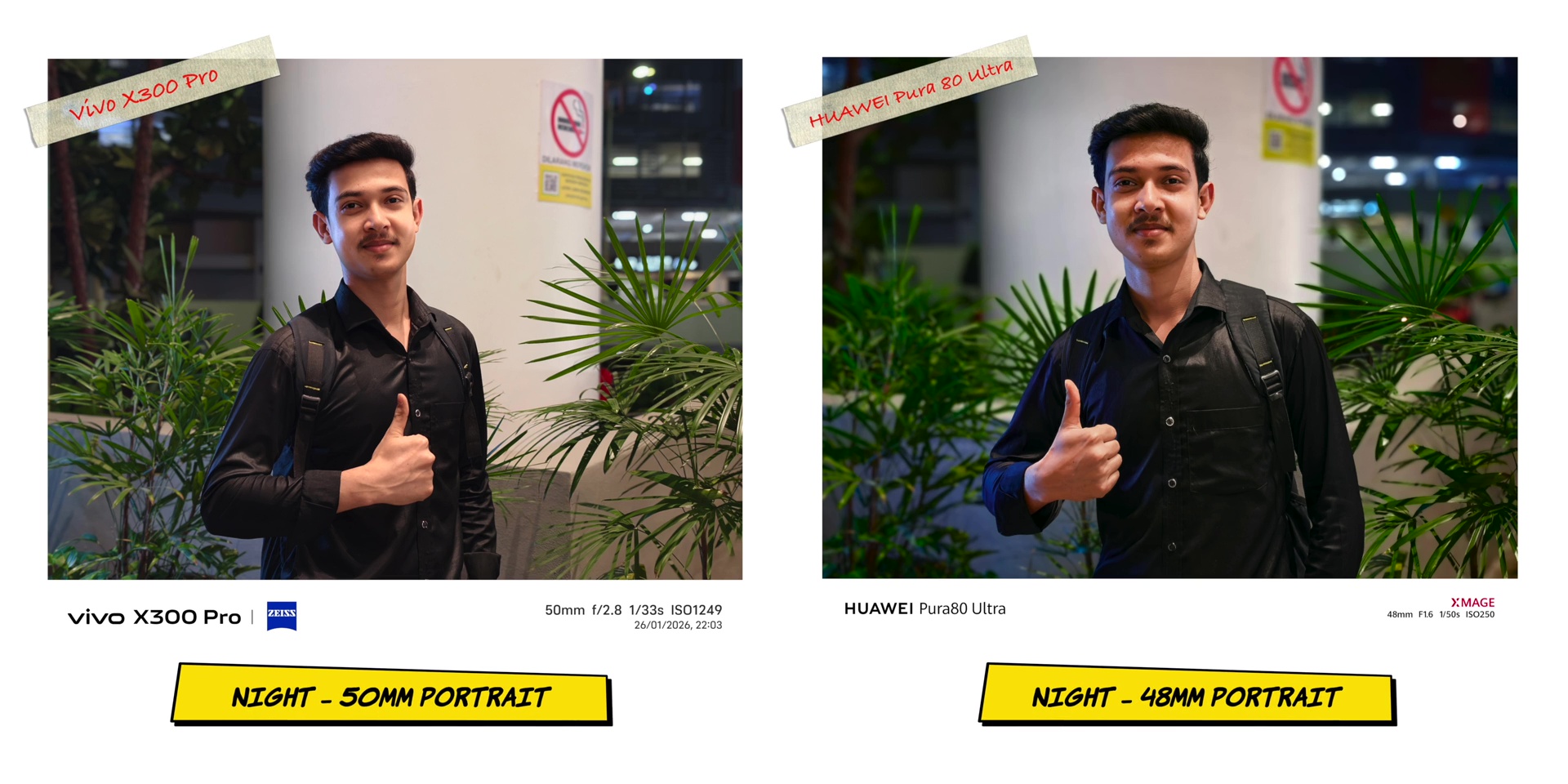
Now, I will skip vivo’s 35mm here since the next comparable focal length is HUAWEI’s 48mm. So, comparing the 50mm portrait mode, the good news is that the overall brightness on the HUAWEI is so much better now and the background blur also looks more prominent and nicer on the HUAWEI.
Then, comparing vivo’s 135mm against HUAWEI’s 134mm, the vivo starts to apply more aggressive skin smoothing. And because of that, overall, HUAWEI looks so much better over here, especially when it comes to capturing the strands of the hair on top.
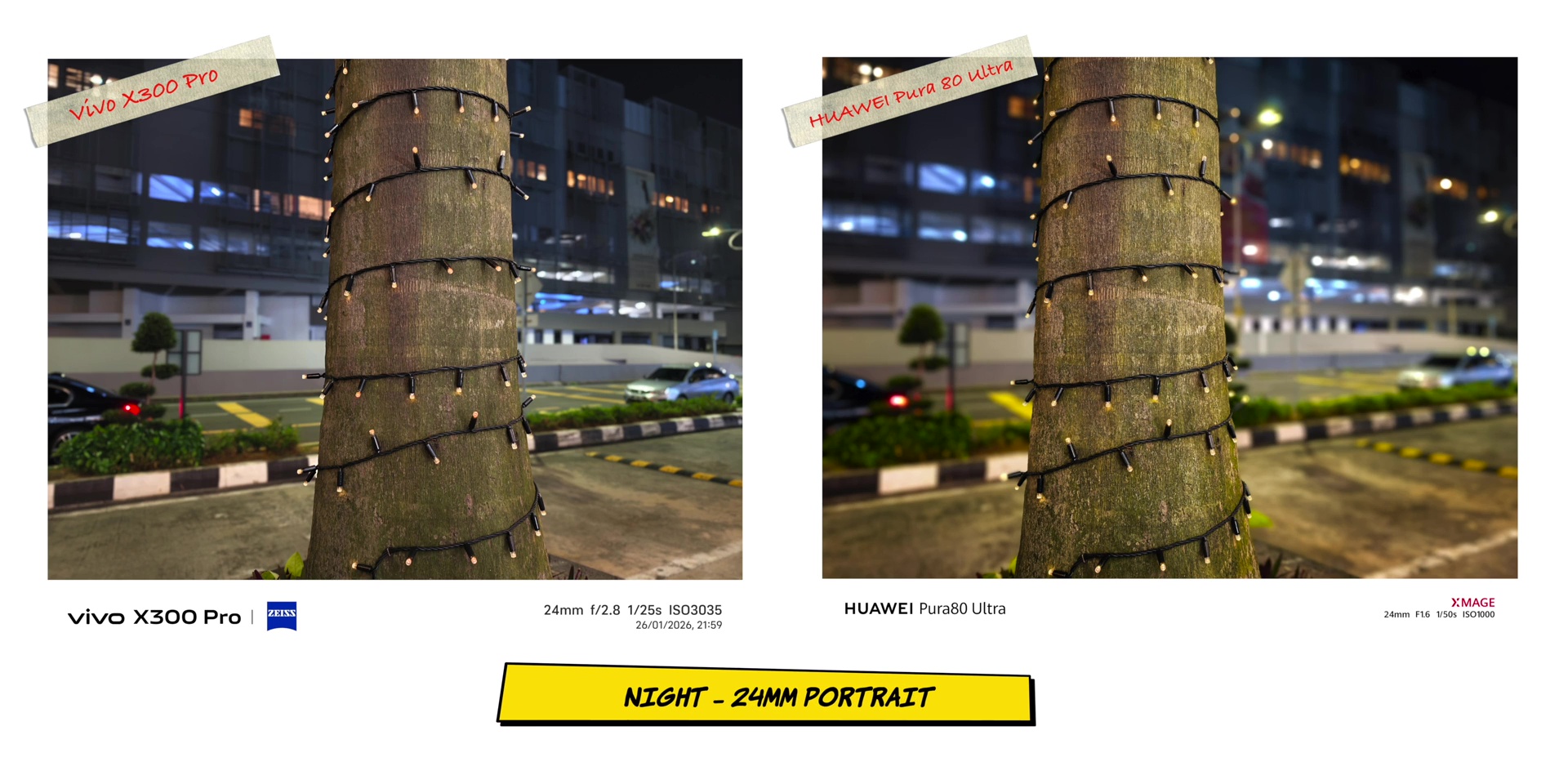
Now, using this tree trunk as a subject, there were no issues at 24mm. And since HUAWEI is using an f/1.6 aperture, it produces a nicer background blur without making the entire images look dark.
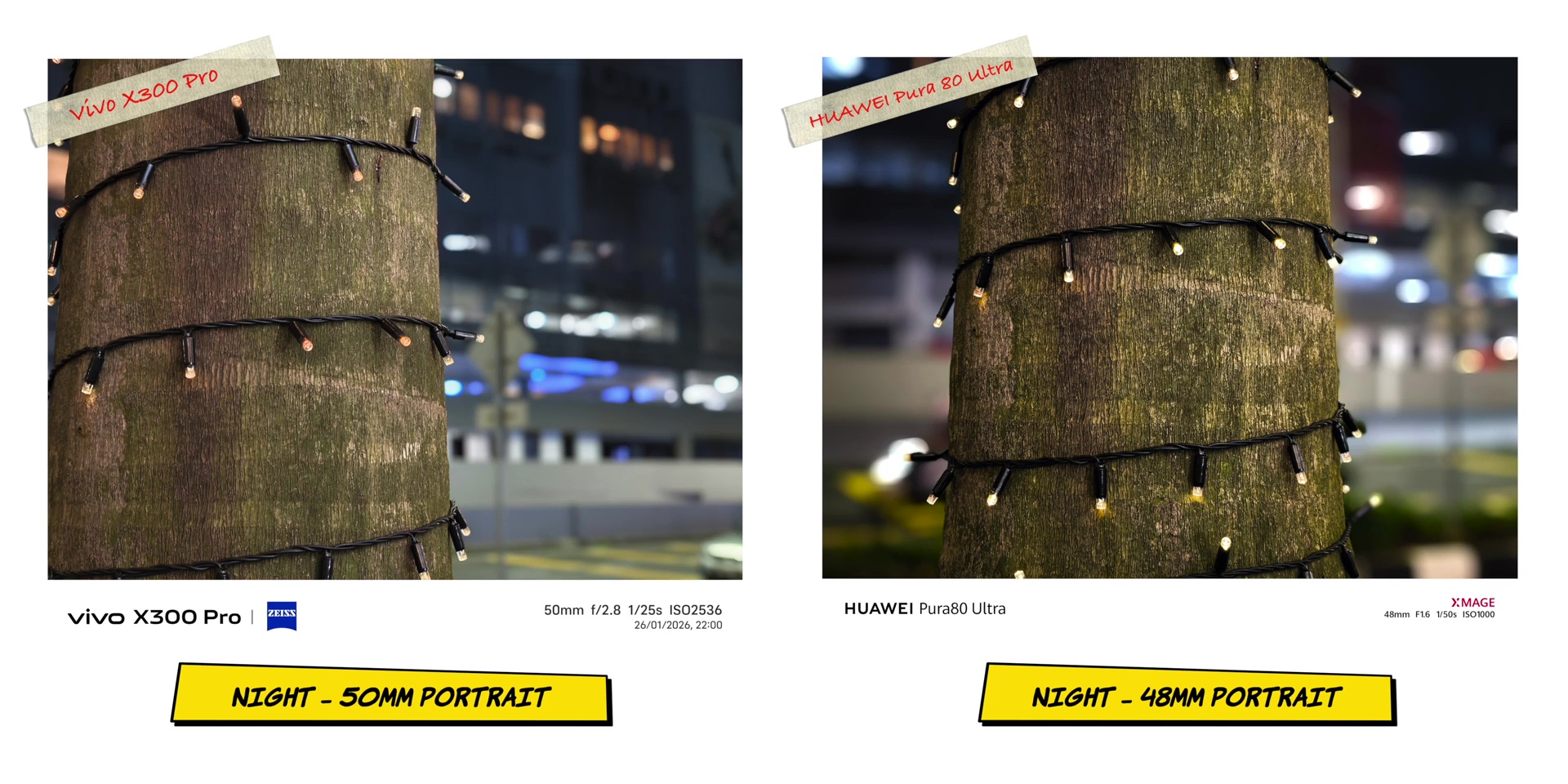
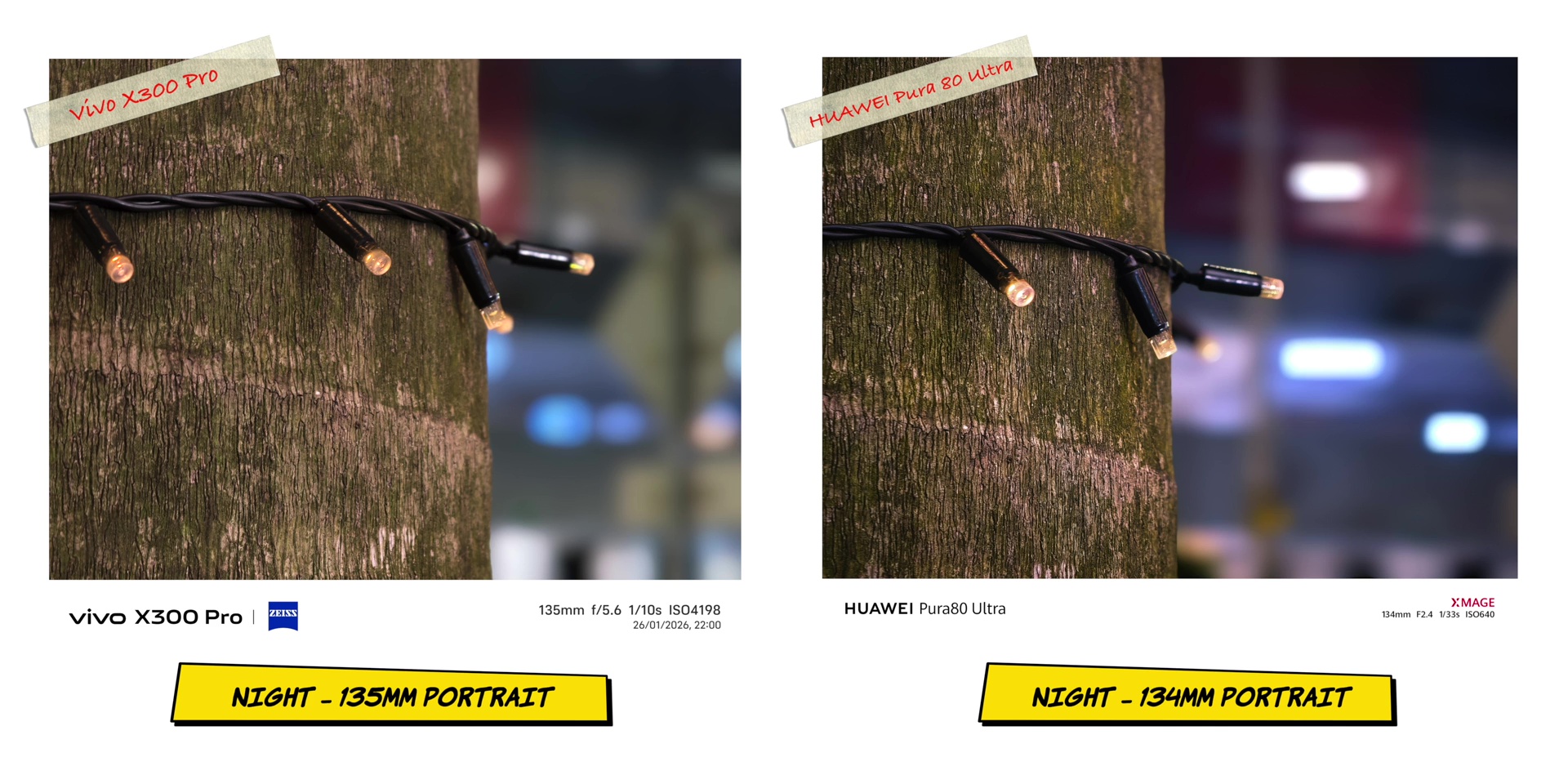
However, vivo comes back strong at 50mm with a more background blur compared to HUAWEI’s 48mm. Then comparing vivo’s 135mm against HUAWEI’s 134mm, I do wish that that small fairy light bulb just at the back of the tree was in focus. But as you can see, it was out of focus on both. But aside from that, HUAWEI shows more texture on the tree trunk compared to the vivo.
Portrait Selfie (Night)
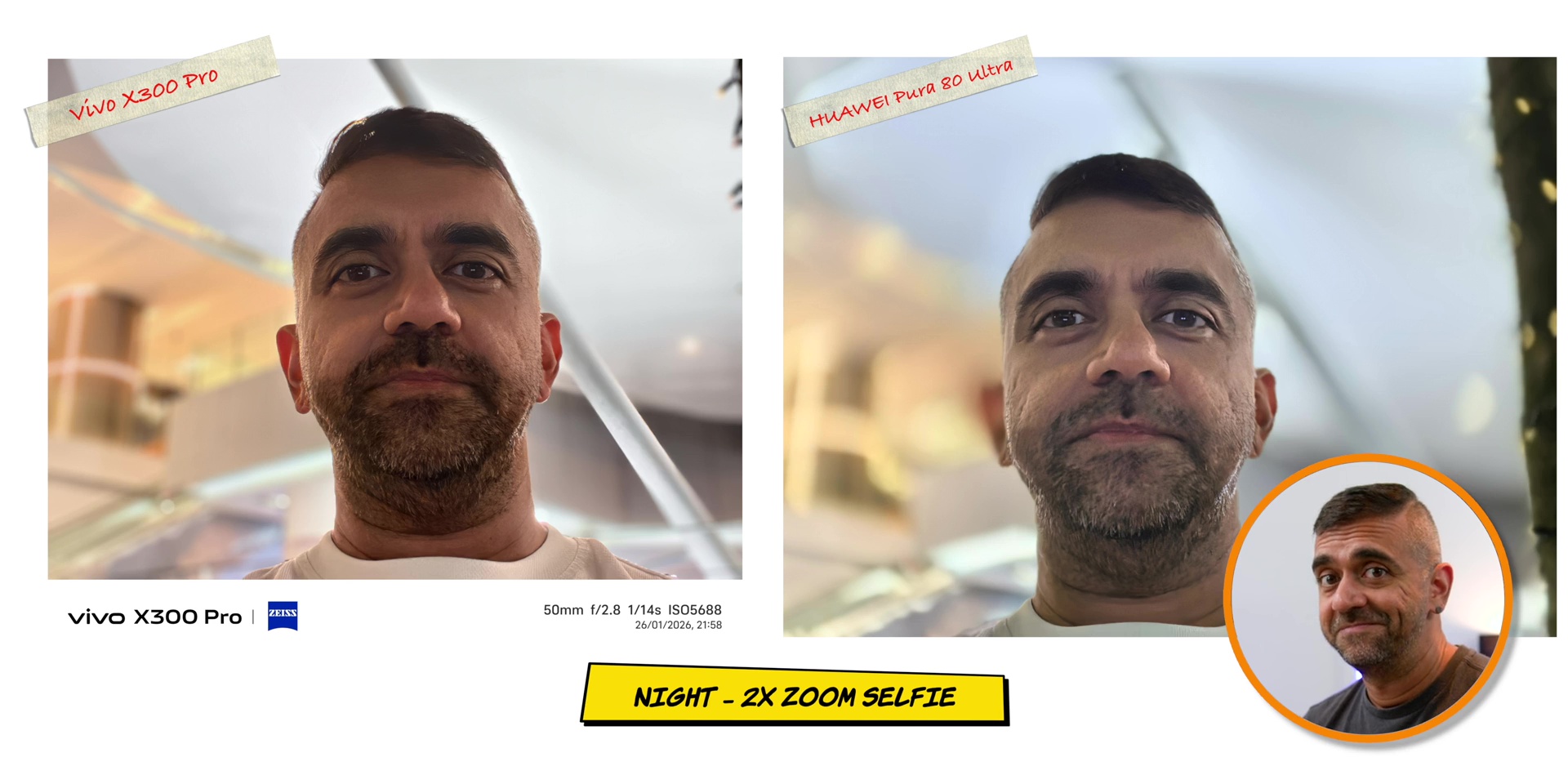
Then if you’re planning to take selfies at night, as usual, I took two shots. One with light hitting my face and the other one with a backlit situation.
The ultrawide selfies were clearly better on the vivo. Not only because it allows better background blur, but also the skin tones look better. Then things do improve on HUAWEI’s 1x zoom and also the 2x zoom where it performs well on both phones.
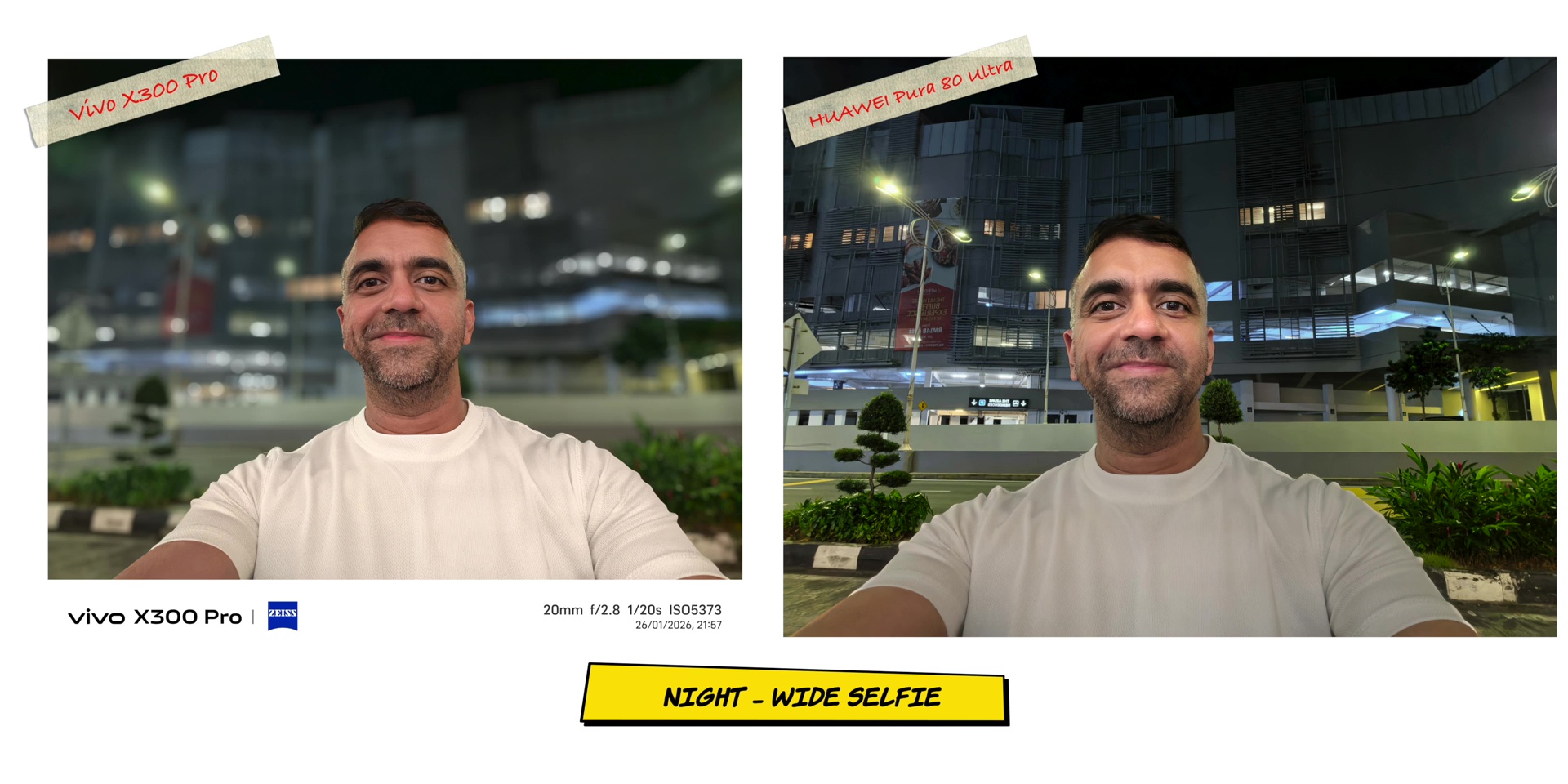
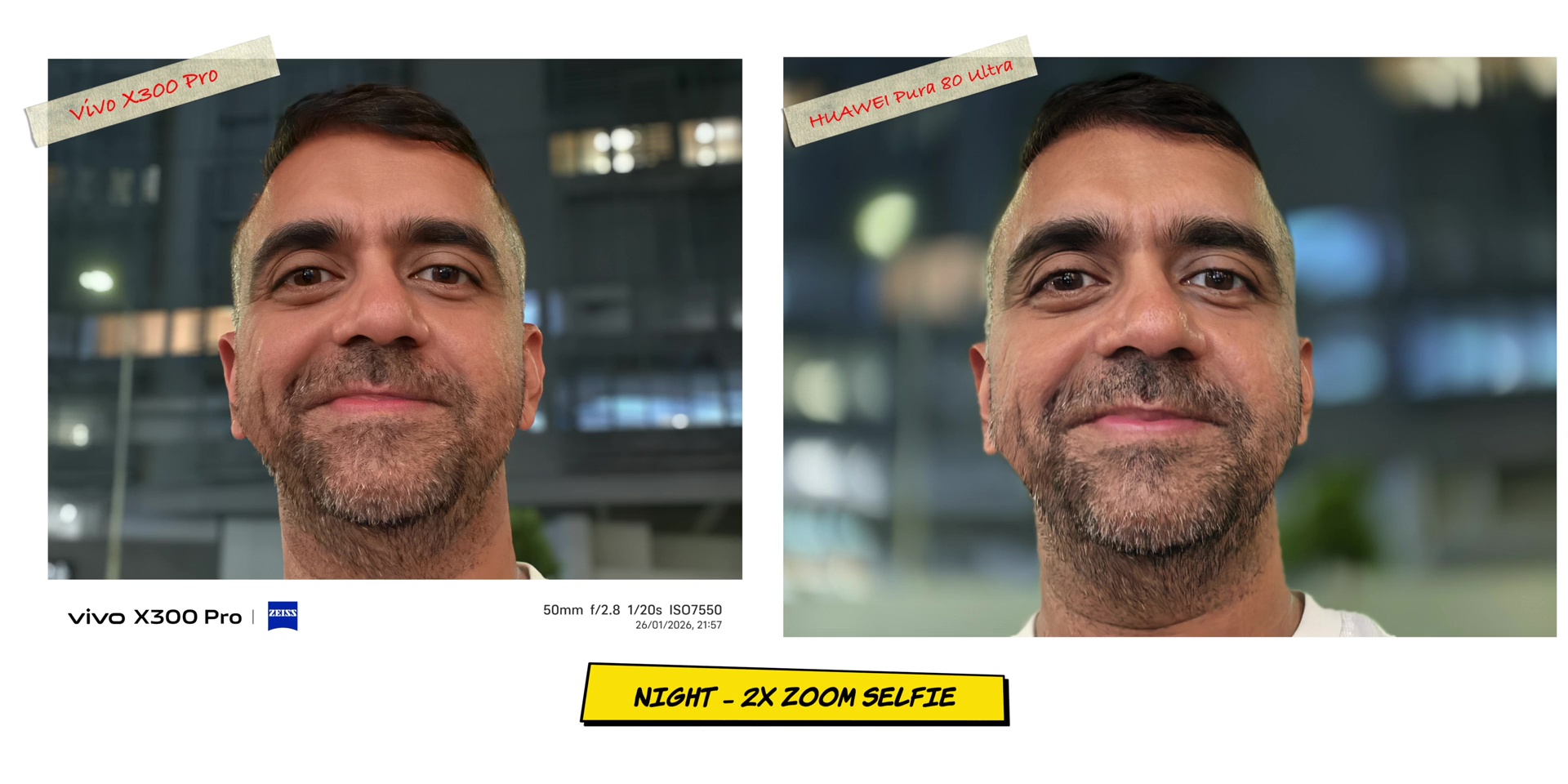
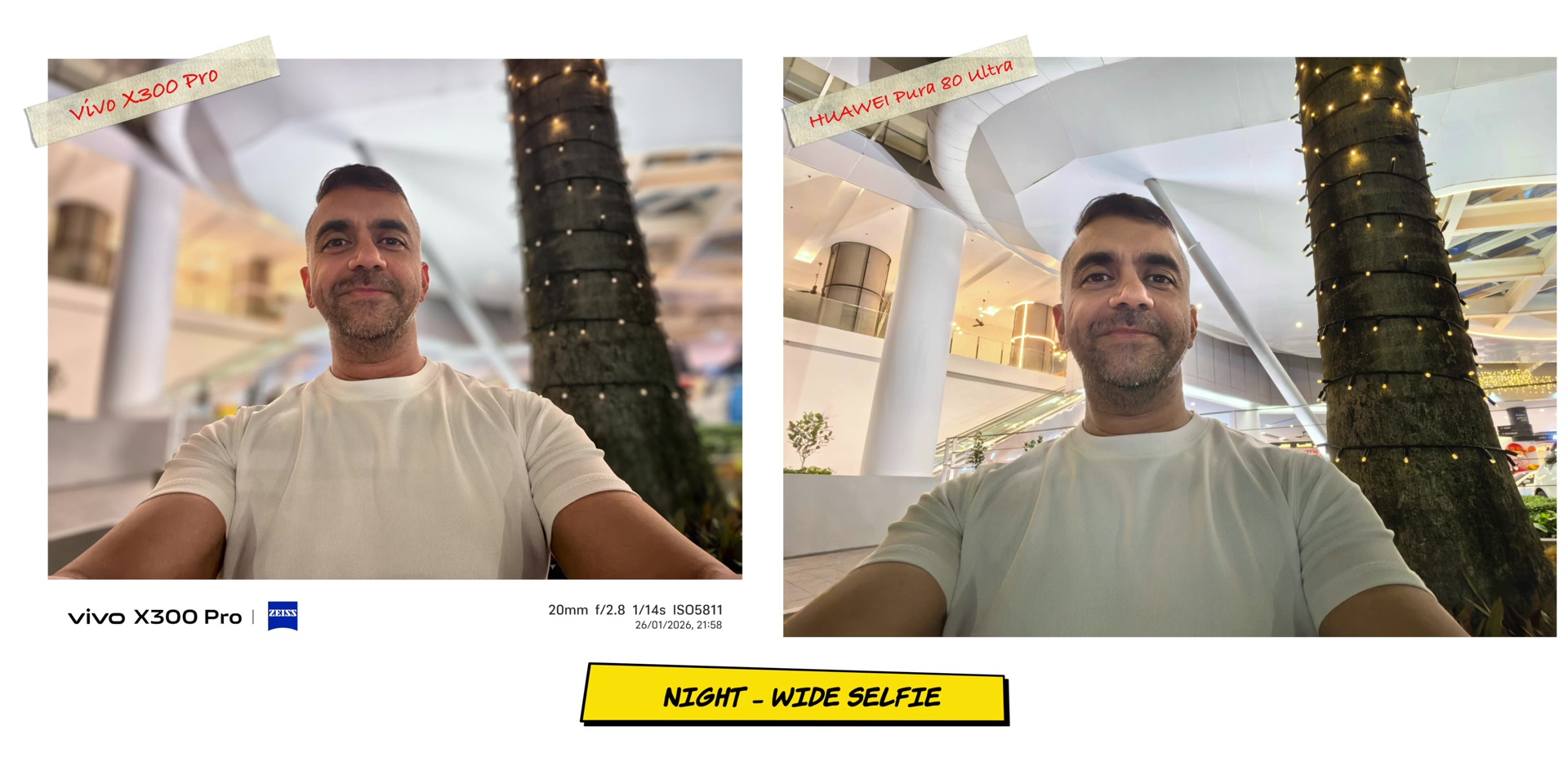
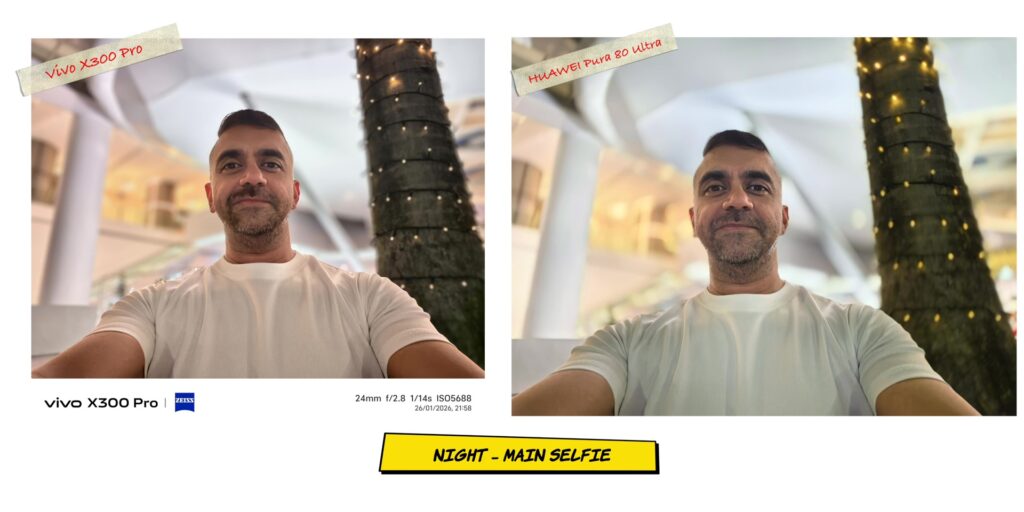
Then in a backlit situation, once again, the ultrawide selfie looks better on the vivo. The 1x selfie was also better in terms of the skin tones on the vivo too and while the 2x selfie on the vivo is not as good as earlier, but my skin tones look extremely pale on the HUAWEI.
Video (Night)
Then comparing the video footage on the ultrawide lenses at night, I already expected the vivo to struggle over here because it has been one of its biggest weaknesses compared to any other phones which I’ve reviewed and compared previously.
So overall, HUAWEI’s ultrawide video at night looks better, but both phones perform very well at 1x and the 2x video quality too.
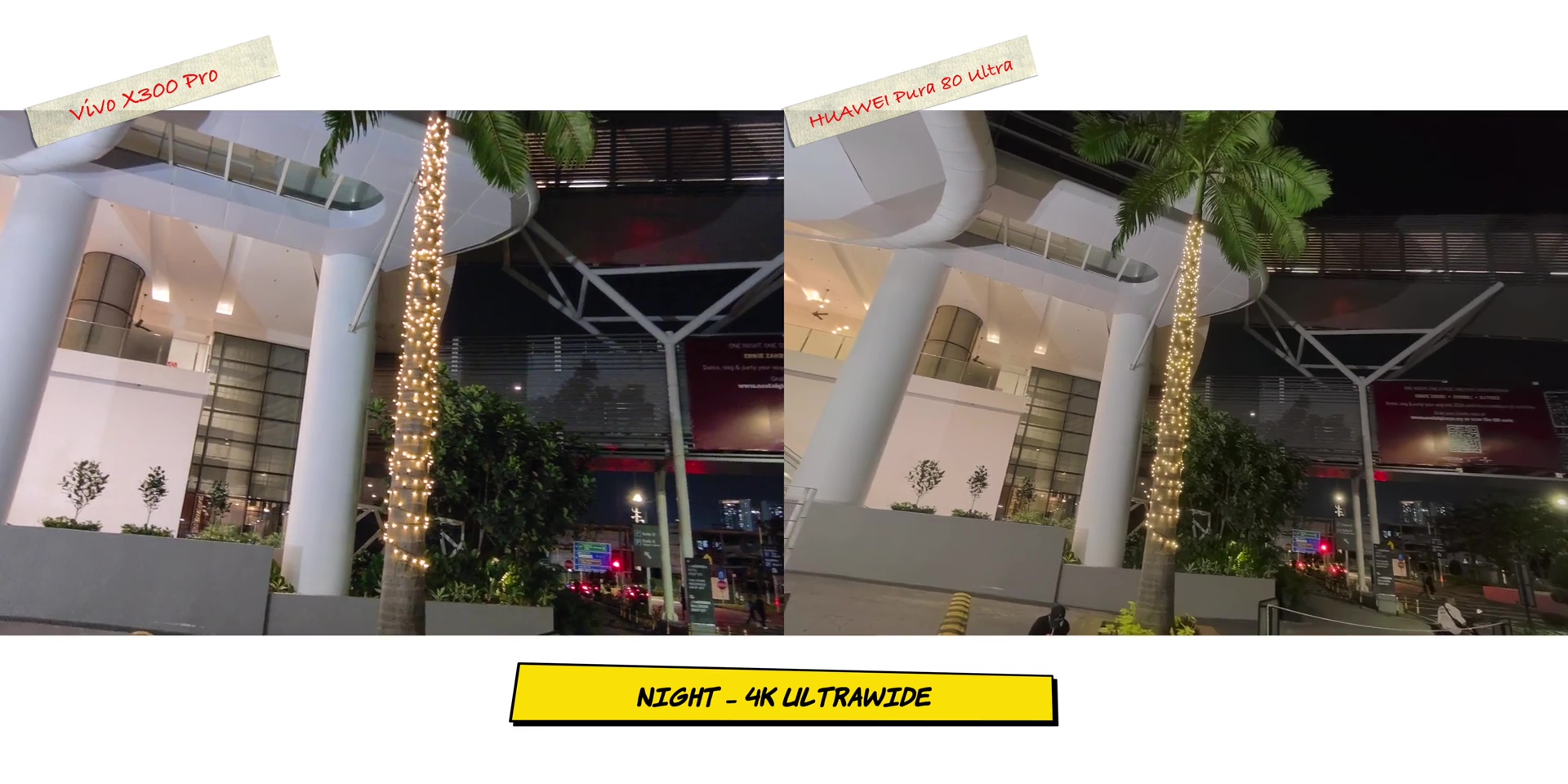
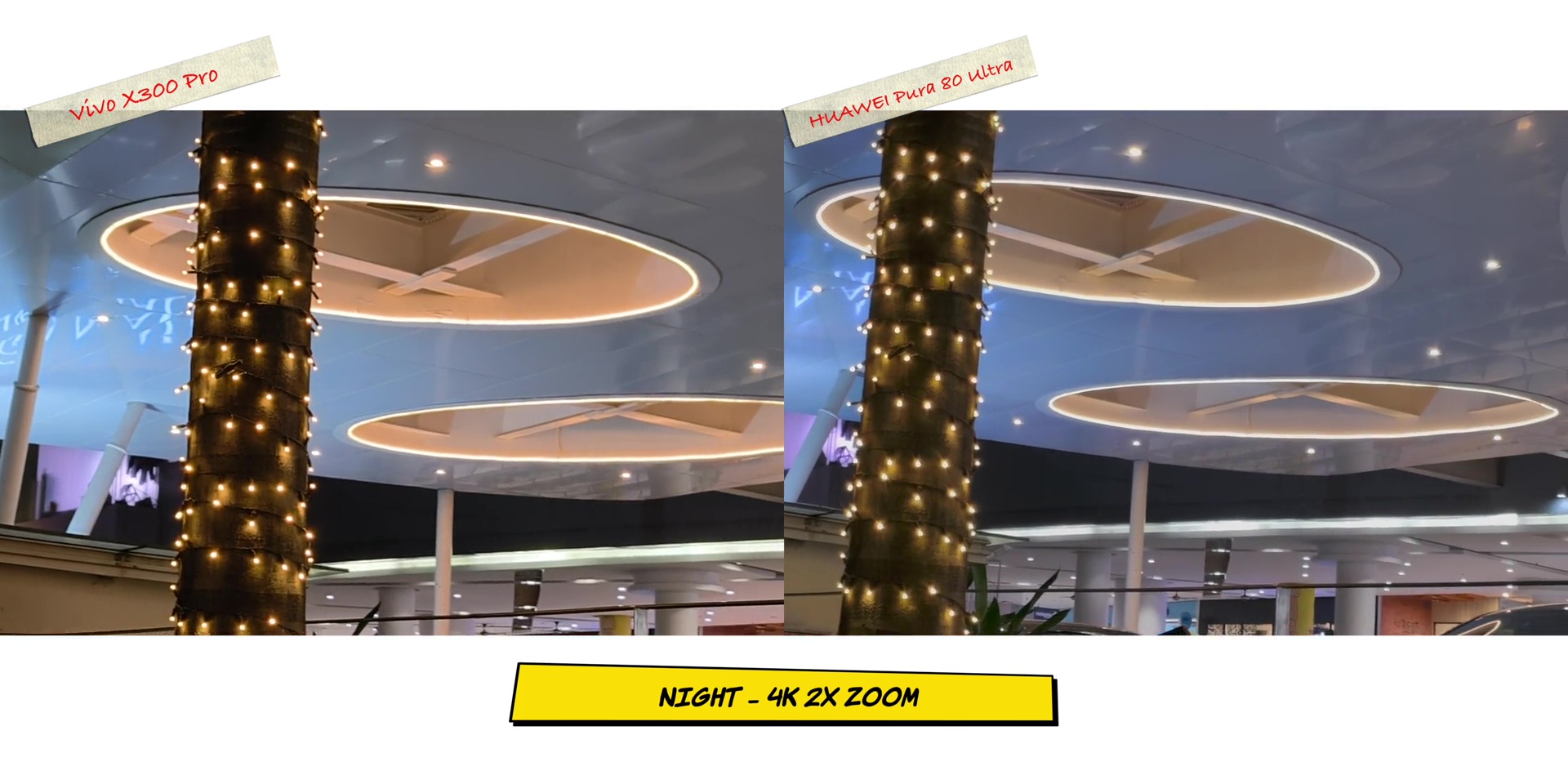
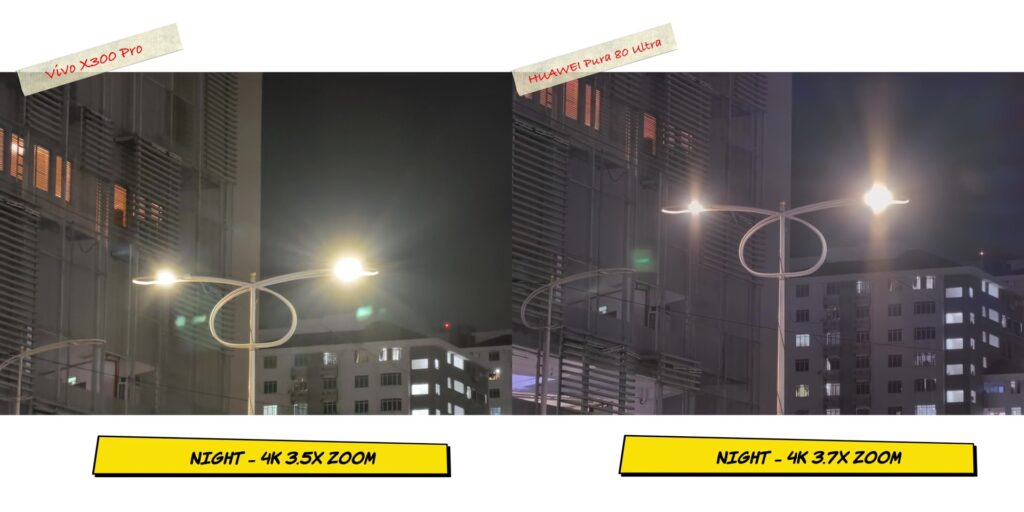
But be prepared to see some glare on both, especially when shooting towards a strong light source like a lamp post.
Lens flare was also more noticeable or prominent on the optical lenses. But if you are not filmming towards directly on a strong light source like what I did, the video quality is actually quite similar.
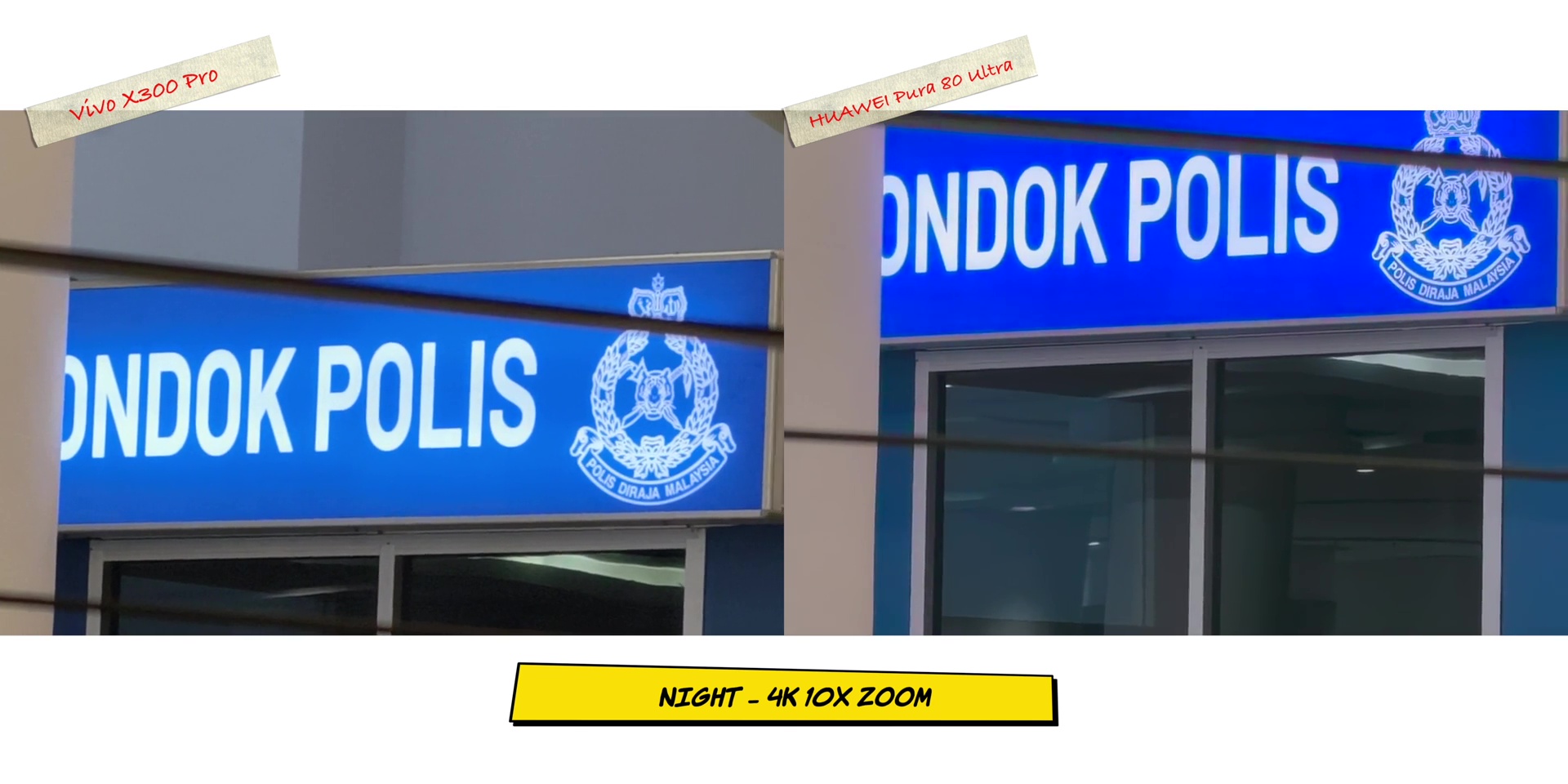
Then at 10x video, the color accuracy on the “Pondok Polis” sign was more accurate on the HUAWEI.
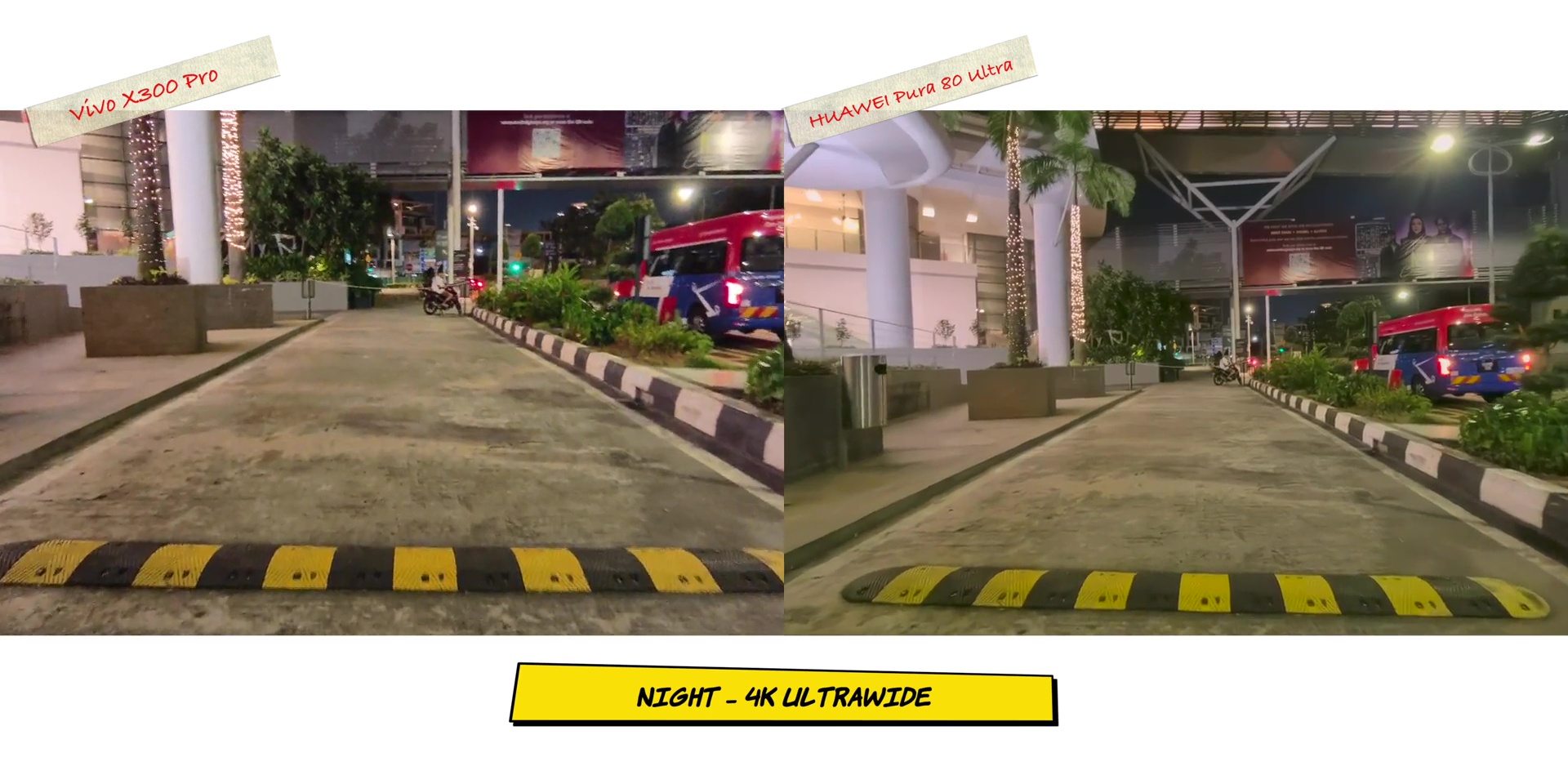
Then in terms of the stabilization at night, HUAWEI performed better on the ultrawide as there were some jitters on the vivo. However, vivo comes back strong at 1x zoom where both phones perform equally well and the same applies to the 2x video.
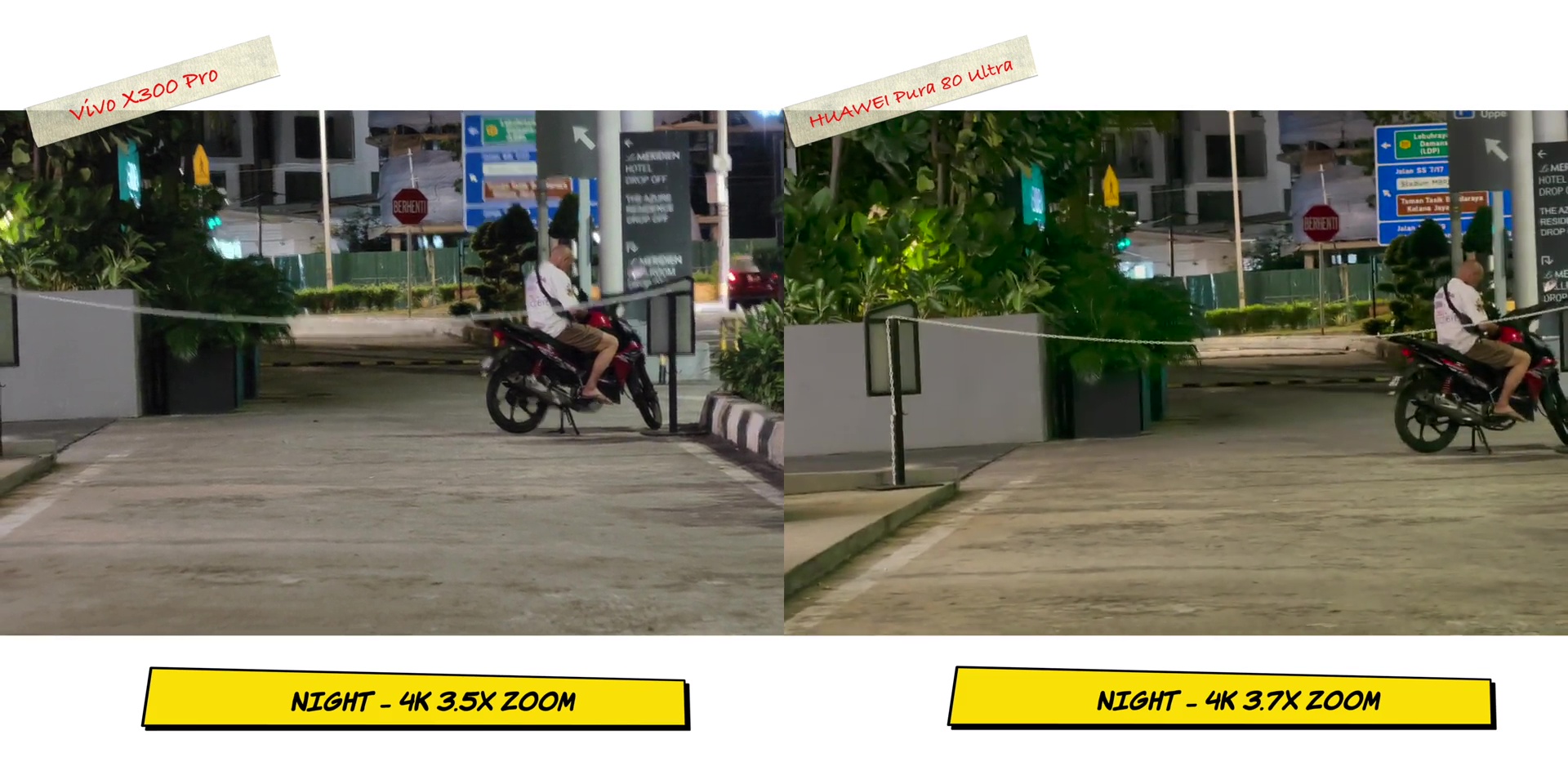
Now, when switching to the optical lenses, vivo starts to look a little more stable while HUAWEI becomes slightly more jittery.
Then the biggest difference appears at 10x where once again, just like earlier when you’re looking through the phone screen, the vivo footage looks very unstable and the HUAWEI looks stable. But after playback, the results were actually the opposite.
Just like during the day, the front video quality at night, especially the skin tones look better on the HUAWEI for the ultrawide selfie, although you have to ignore the lens flare all over my face.
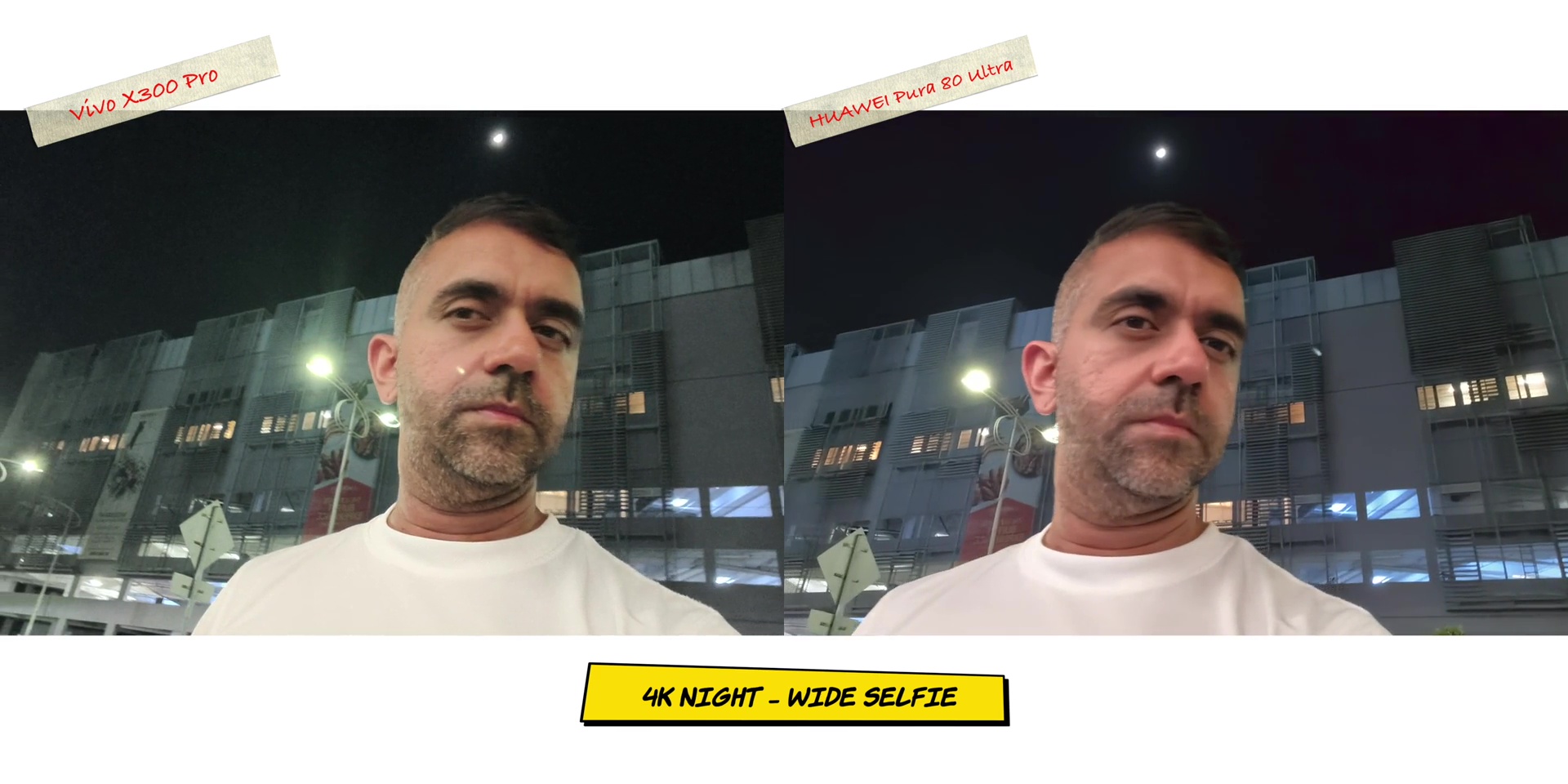
Then the same can be applied to the 1x selfie video with HUAWEI edging ahead once again. However, I would totally not recommend using the 2x selfie video at night.
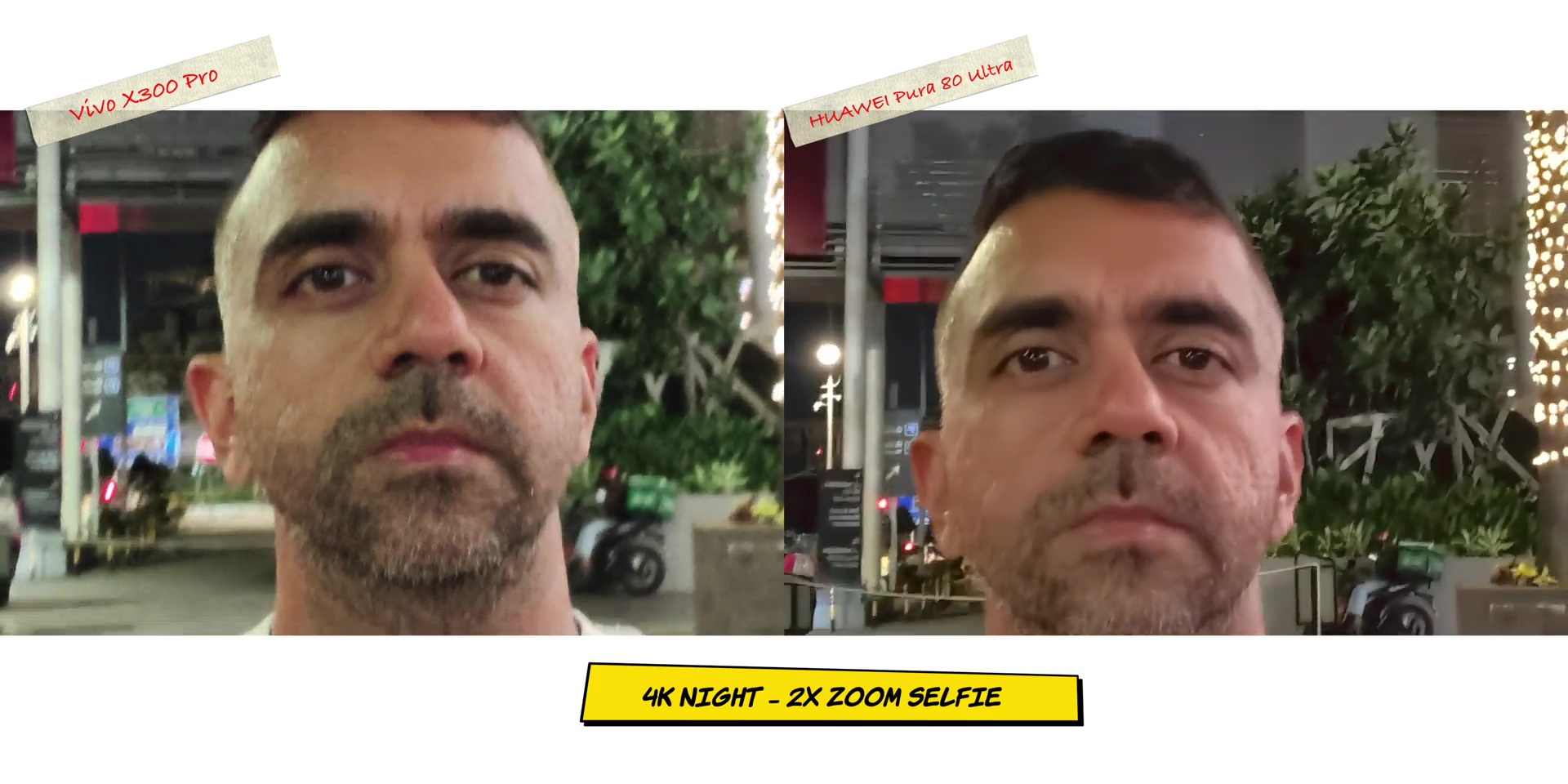
Now, in terms of the stabilization, the vivo performs slightly better on the ultrawide selfie. Although, the skin tones are still not very great over here. Stabilization at 1x is similar on both phones, and 2x selfie video is still something that I totally do not recommend on either of the phones.
Conclusion
So, now that you have seen this in-depth camera comparison, here’s a simple takeaway.
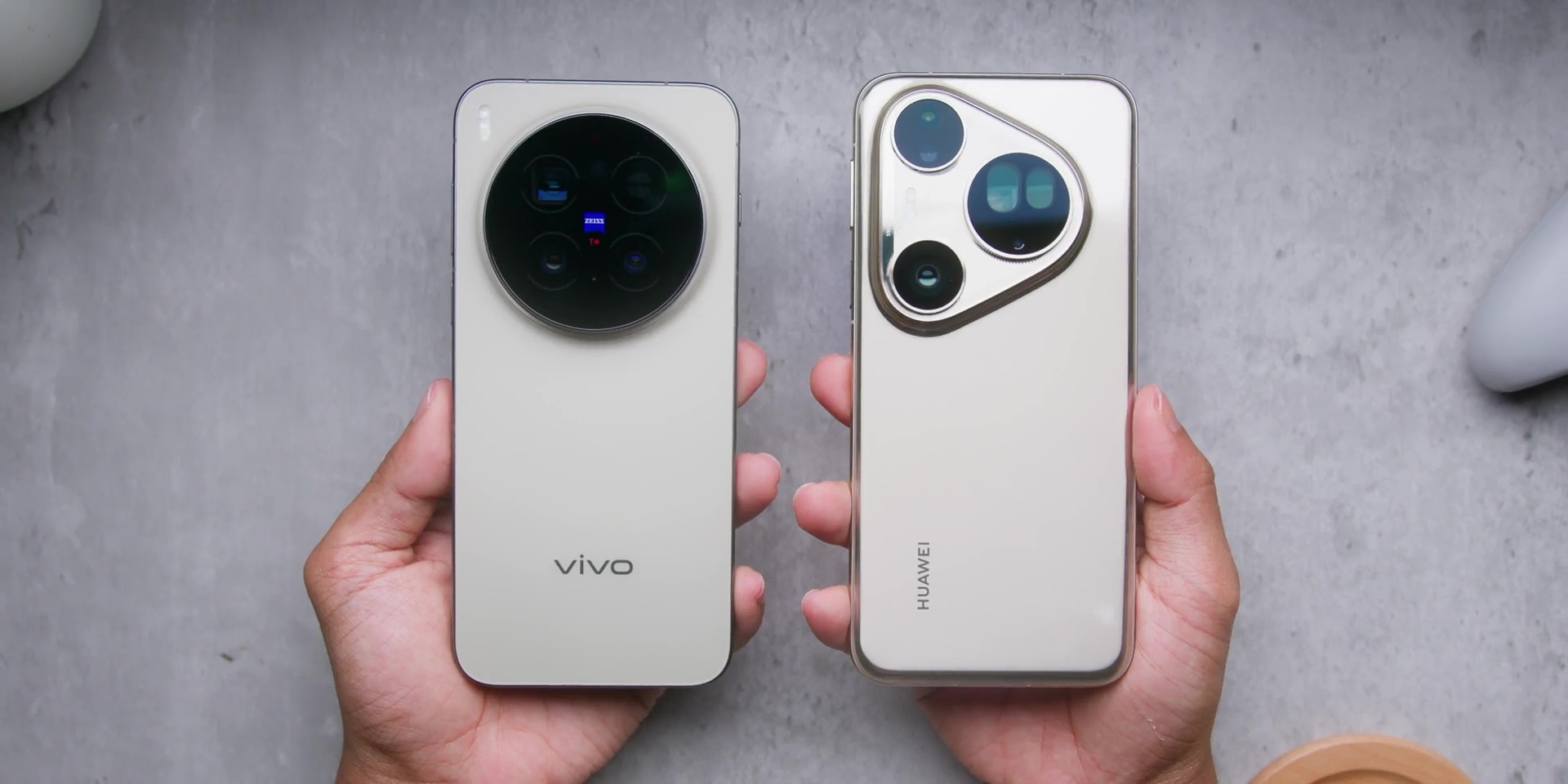
If you care more about photos, especially zoom, macro, and night stability, go with the vivo X300 Pro.
But if you care more about video, especially for the front camera video, then it should be the HUAWEI Pura80 Ultra.
–
[Watch the full video here]
Related: