
TL;DR / At a Glance: Is Friendster coming back in 2026? Yes, Friendster officially relaunched in April 2026 as a privacy-centric social network for iOS. Owned by entrepreneur Mike Carson, the new version—known as Friendster 2.0—discards algorithmic feeds and advertisements. It features a unique physical connection system where users must tap their iPhones together in person to add each other as friends. This version prioritises real-world intimacy over global follower counts.
If you told me ten years ago that we’d be talking about Friendster in 2026, I would have checked your temperature. Most of us assumed the platform was buried forever in the digital graveyard alongside MySpace (remember that one?). But as of April 27, 2026, the ghost of social media past has officially returned.
The new owner, Mike Carson, has performed a bold maneuvre. He didn’t just buy a legacy brand name; he bought a feeling. The 2026 relaunch isn’t trying to compete with the endless scroll of TikTok. Instead, it is positioning itself as the direct antidote to the noise and data-harvesting of modern platforms.
The Legend of the Granddaddy: A Primer for the New Generation
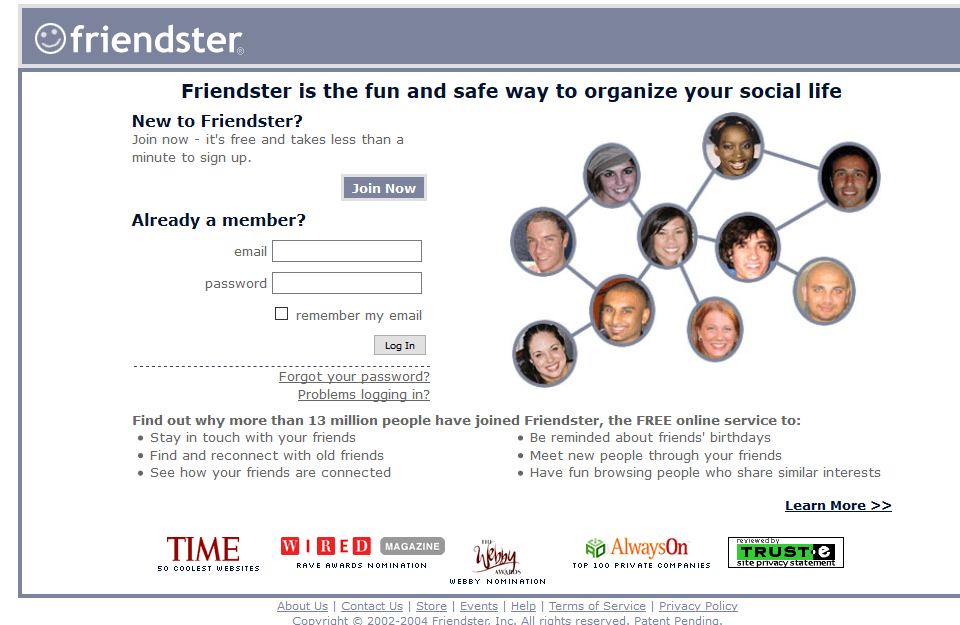
For those of you who grew up with the polished, hyper-optimised feeds of Instagram, the word Friendster probably sounds like a vintage clothing brand. But before Mark Zuckerberg had even finished his degree, Friendster was the undisputed king of the internet.
Launched in 2002, it was the first real social phenomenon. Profiles were a chaotic explosion of personality where you could use raw code to change your backgrounds to glittery, neon-colored designs. You didn’t just like a post; you left a testimonial—a public paragraph testifying that your friend was actually a cool person. It even let you set a profile song that would autoplay at full volume the second someone visited your page. It was messy, it was loud, and it was glorious.
The 2026 Shift: Real-Life Only
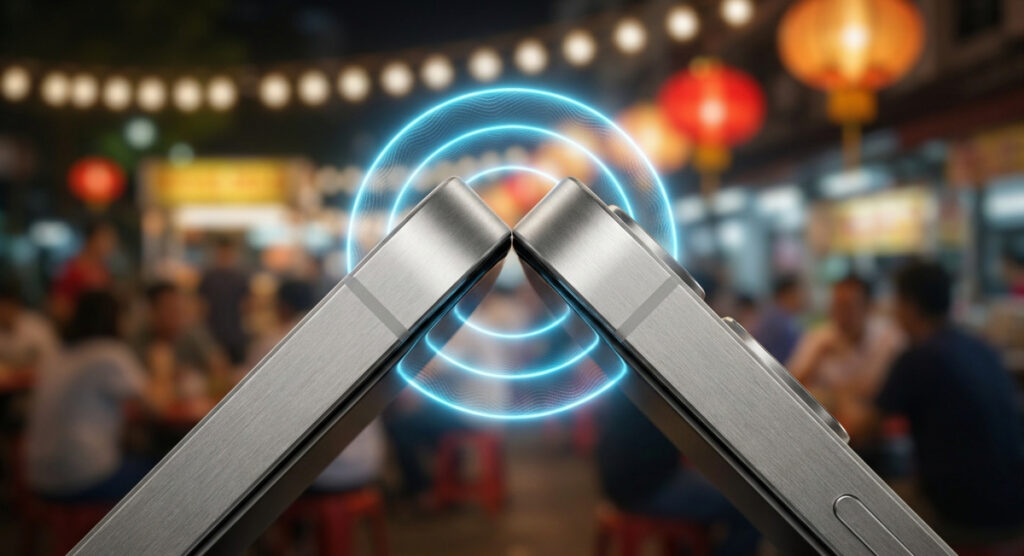
Friendster 2.0 has abandoned the glitter for a strategy that I’m calling the infrared vibe. You cannot add a friend unless you are physically standing in front of them. By requiring an NFC-based phone-tap to connect, the app effectively kills the stranger danger of the internet.
There are no bots, no spammy DMs from random accounts, and no suggested strangers cluttering your feed. In a world where our attention is auctioned off to the highest bidder by algorithms, this friends-only sanctuary feels revolutionary. It is the Mamak Test in app form—if you aren’t sitting across the table from me, we aren’t friends on the platform.
Is This Sustainable?
So, here’s the thing: Friendster is currently ad-free and does not sell user data. While Carson claims the focus is on meaningful connection, a platform needs a revenue stream to survive long-term. Will Malaysians, who generally live for viral reach, embrace a closed, private loop?
For the older generation, it’s a chance to return to a quieter web. For the new generation, it’s an experiment: Can you survive on a social network where you can’t see what a stranger in London had for breakfast? It isn’t a Facebook killer, but it might just be the digital detox we actually need.
If you already have your “Mamak Group” on WhatsApp, why bother with a separate app?
The difference lies in the Digital Architecture. Here is the breakdown of why a social network—specifically one built like Friendster 2.0, serves a different purpose than a chat app.
The “Noise” vs. The “Gallery”
WhatsApp and Telegram are high-frequency stream tools. They are designed for “Right Now.”
- The Chat Problem: Important life updates (like a new job or a travel photo) get buried under 200 messages about where to eat dinner or random memes.
- The Social Solution: A social network like Friendster acts as a Digital Gallery. It’s a persistent space where your milestones stay visible on a profile. You don’t have to scroll back through three days of “Good Morning” stickers to find a photo your friend posted.
Avoiding Notification Fatigue
In a WhatsApp group, every message is a ping. If you have a group of 10 friends, that’s 10 potential distractions every time someone breathes.
- The “Slow Social” Logic: On a network like Friendster, you consume content on your terms. You check the feed when you have five minutes of peace. It’s passive consumption rather than active interruption. It respects your time in a way that “Last Seen” and blue ticks simply don’t.
Contextual Identity
Your identity on WhatsApp is usually just a phone number and a small circle. You are just a participant in a scroll of text.
- The Original Friendster Vibe: Social networks allow for self-expression. In the 2000s, this was through glittery backgrounds; in 2026, it’s through your curated Life Board. It gives your friends a way to see the Updated Version of you without you having to announce it in a chat group.
The Physical Tap Security (Friendster’s Secret Sauce)
The reason you need close friends to join this specific network is for Trust Equity.
- The WhatsApp Risk: Anyone with your number can add you to a group. You can be dragged into property agent or scam groups without consent.
- The Friendster 2.0 Defense: By requiring a physical phone tap, the network ensures that your digital space is 100% verified real-world connections. It turns your social media into a safe house rather than a public square.
Intentionality
Let’s be real: WhatsApp is for utility (work, family, logistics). Telegram is for large-scale broadcast and files. Friendster is for Intimacy. By asking your close circle to join, you are collectively agreeing to a space that is “just us.” No ads, no strangers, and no algorithmic pressure to be viral.
The Verdict: You use WhatsApp to coordinate the mamak session. You use Friendster to preserve the memories from that session so they don’t get lost in the group chat void.
Hang on, isn’t this still an obnoxious, unnecessary idea?
On the surface, asking people to download a separate app just to see photos of the people they’ve already met sounds like a chore.
However, if we look at this through the lens of someone who must connect via digital means, there is a reason some people are actually buying into this “stupid” idea. Here’s why Friendster 2.0 is trying to be more than just a glorified WhatsApp group.
1. The Death of the Algorithm
WhatsApp isn’t an algorithm-free sanctuary; it’s a chaotic stream. Your important life updates…like your new car or a career move, get buried under a hundred messages about where to eat dinner or random memes. Friendster isn’t trying to be a chat app; it’s a digital gallery. It is a persistent space where your milestones stay visible on a profile without being drowned out by “Good Morning” stickers.
2. The Relationship Decay
One of the most controversial features in the 2026 relaunch is the Relationship Decay system. If you don’t meet a friend in person (confirmed by a phone tap) for over a year, your connection on the app actually starts to fade away.
- The “Stupid” Part: It’s inconvenient.
- The “Genius” Part: It forces a digital friendship audit. We all have 500 “friends” on Facebook we haven’t spoken to in a decade. Friendster 2.0 is the only platform that effectively tells you, “If you don’t make time for this person in real life, you aren’t actually friends.”
3. Privacy without the Corporate Baggage
Let’s be real about Meta (WhatsApp). Even if your chats are encrypted, Meta still knows who you talk to, when, and how often. This metadata is gold for advertisers. Mike Carson’s pitch for Friendster is a total lack of data selling. By removing the ability to search for strangers, he is removing the very thing that makes social media toxic: the desire for reach and the presence of bots.
4. It’s an “Intentional” Space
You use WhatsApp because you have to (work, family, logistics). It’s a utility. Friendster is being positioned as a luxury of intention. By asking your close circle to join, you are collectively agreeing to a space that is just for the inner circle. No ads, no spam, and no algorithmic pressure to be viral. Well, at least until the fateful day when Mike decides he wants to make money (let’s be real, this is how they all end, isn’t it?).
The Verdict:
Is it unnecessary? For 90% of people, yes. Most users will find the physical tap requirement too annoying to sustain.
But for the 10% who are suffering from digital burnout and notification fatigue, this stupid idea could actually be a sanctuary. It’s no Facebook killer; it’s a gated community for your real-life social circle.
Friendster 2.0: Frequently Asked Questions
Is Friendster really coming back in 2026?
Yes. Following a long period of inactivity, Friendster officially relaunched in April 2026 as a mobile-first social network. This version is a complete reboot under new ownership, focusing on privacy and real-world connections rather than the features of the original 2000s website.
How is the new Friendster different from the original version?
The 2026 version moves away from the public, glittery profiles of the past. It is an ad-free, algorithm-free platform that does not allow global searching for strangers. Its most distinct change is the requirement for physical proximity to connect with others.
How do I add friends on Friendster 2.0?
The app uses a system called physical-only connection. To add a friend, you must be in the same location and physically tap your smartphones together using NFC technology. There is currently no way to send friend requests to people you haven’t met in person.
Is there a cost to use the new Friendster?
At launch, the app is free to download and contains no advertisements. The developers have stated a commitment to not selling user data, though they may introduce subscription-based “Supporter” tiers in the future to cover server costs.
Can I still customise my profile with music and backgrounds?
The current version focuses on a clean, minimal aesthetic to avoid the technical lag that plagued the original site. While you can customise your profile bio and photos, the classic features like autoplay music and custom HTML backgrounds have not been included in the initial release.
What happened to my old Friendster account and photos from 2004?
Unfortunately, those are gone. The original Friendster wiped its servers when it pivoted to a gaming site in 2011 and eventually shut down in 2015. The 2026 relaunch is a entirely new database, meaning everyone starts with a fresh account.
Is Friendster available in Malaysia?
The app is available globally on the iOS App Store, including the Malaysian storefront. However, because the app relies on physically meeting people to grow your network, its utility depends on how many people in your immediate local circle are also using the platform.
Does the app have a “Who Viewed My Profile” feature?
No. To protect user privacy and reduce social anxiety, the 2026 version has removed the profile-visitor tracking that made the original version famous. Your browsing is completely anonymous.