
TL;DR / At a Glance: Intel has officially launched Project Firefly, a system-level manufacturing blueprint designed to drop the production cost of thin-and-light laptops. Positioned as a direct response to Apple’s $599 MacBook Neo, Project Firefly strips out bespoke engineering by utilising standardised, modular smartphone-derived components like 50-pin FFC connectors. Powering the new, low-cost Intel Core Series 3 (Wildcat Lake) processors on the 18A node, the initiative mandates premium 11mm aluminum unibody designs. The first commercial proof of concept, the Lenovo Lecoo Air 14, has hit shelves in China at a subsidised 2,999 yuan (~$413). We think that Intel’s brutal supply-chain-level invention is the only real way the PC world can compete with Apple’s unique vertical integration (note: we’re saying “compete” not “win”).

Apple completely shattered the entry-level computing status quo when they dropped the MacBook Neo. For years, the tech community accepted a frustrating reality: if you only had $500 to $700 to spend on a laptop, you were penalised with a bulky, flexible plastic block, a dim display, and a loud fan that kicked in whenever you opened more than four browser tabs. By repurposing binned iPhone-derived A18 Pro silicon into a premium, fanless aluminum chassis, Apple delivered a 16-hour endurance machine for an aggressive $599—completely boxing Windows manufacturers out of the premium-value demographic.
Intel’s historical response would have been a massive marketing campaign. We would have seen a shiny new sticker like “Intel Evo Value Edition” slapped onto the palm rest, instructing brands to build better laptops without actually lowering the structural component costs. The Snapdragon C Platform is a step in the right direction, if only silicon-skewed.
But with Project Firefly, Intel is fundamentally shifting its tactics. Realising they cannot out-optimize Apple’s tight hardware-software vertical integration, Intel is executing a brutal supply-chain-level intervention to democratise ultra-thin premium notebooks.
What is Project Firefly?
Announced alongside their low-power Intel Core Series 3 (Wildcat Lake) processors, Project Firefly is not a processor architecture or a consumer-facing brand—it is a comprehensive manufacturing blueprint.
Intel is trying to dismantle the massive financial overhead of bespoke PC engineering. Traditionally, every major OEM—be it Asus, Dell, or Lenovo—spends millions of dollars designing independent, custom internal motherboard layouts, which drives up production costs and isolates components. Intel is completely erasing this overhead by creating universal, shared “A+ reference designs”.
To drive the pricing floor through the floor, Intel is borrowing heavily from China’s hyper-mature smartphone ecosystem. The blueprint replaces bulky, custom internal cables and legacy ports with highly dense, standardised 50-pin Flexible Flat Circuit (FFC) connectors mass-produced for mobile phones. By shrinking the internal motherboard area by 5% and utilising 7% fewer components, Intel has cleared out massive structural overhead. It is an open collaborative framework forcing hardware brands like Lenovo, Honor, and HP into a singular, highly scalable component pool.
Premium Aesthetics, Budget Price
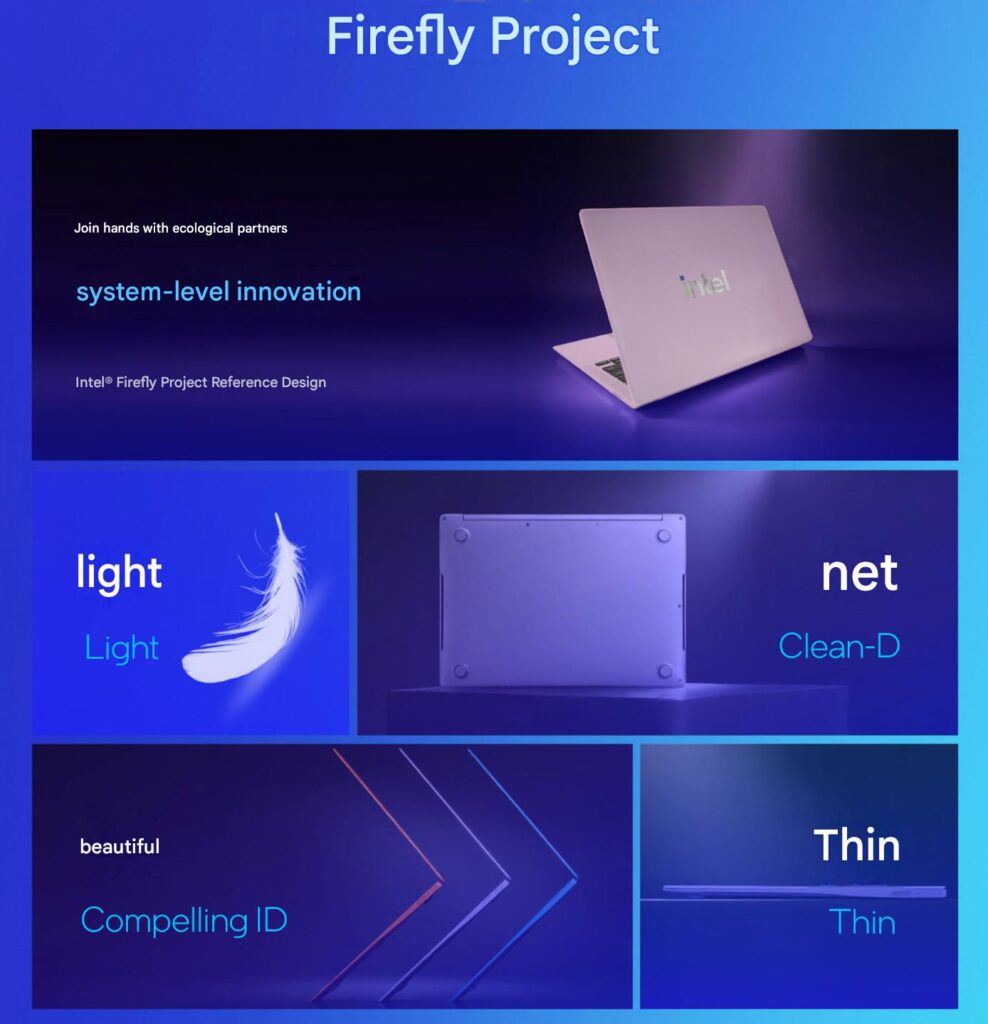
The true brilliance of Project Firefly is that it completely rejects the old “cheap laptop” aesthetic. Historically, stripping down costs meant dealing with unappealing plastic enclosures. Intel’s reference blueprint mandates an ultra-thin 11mm unibody aluminum chassis utilizing a clean, screwless bottom panel aesthetic.
We are already looking at a legitimate physical proof of concept. The Lenovo Lecoo Air 14 has launched as the world’s very first commercial Firefly laptop. Running on an Intel Core 5 Wildcat Lake processor, it squeezes a 14-inch display, up to 12GB of RAM, and a 512GB NVMe SSD into an all-metal unibody frame that weighs an astonishing 990 grams and measures under 13mm thick. After regional government subsidies in China, pre-orders opened at a staggering 2,999 yuan (~$413 USD)—completely undercutting the MacBook Neo before Apple can even mount a defensive marketing strategy (does Apple need to respond? I think not).
The Firefly vs. Neo Hardware Matrix
Here is how Intel’s standardised smartphone-derived ecosystem stacks up against Apple’s premium mobile platform on paper:
Entry-Tier Mobility Battleground
| Feature Parameter | Intel Project Firefly (Lenovo Lecoo Air 14) | Apple MacBook Neo (2026) |
| Target Starting Price | Sub-$600 (Actively hitting $400 – $550 via scale) | $599 Base ($499 Student Tier) |
| Silicon Infrastructure | 3rd Gen Intel Core Series 3 (Wildcat Lake 18A) | Apple A18 Pro (iPhone-Derived 3nm) |
| Core Architecture | 5 to 6 Cores / No Hyper-Threading (15W Base TDP) | 6-Core CPU (2 Performance / 4 Efficiency) |
| AI Processing Floor | Integrated Everyday AI Workloads | 16-Core Apple Neural Engine |
| Hardware Upgradability | M.2 NVMe Slot Flexibility (Varies by OEM) | Strictly Soldered 8GB Unified Memory |
| Physical Enclosure Class | 11.x mm “Clean D” All-Metal Aluminum | 11.3mm Premium Unibody Aluminum |
| Total Mechanical Weight | Sub-1 Kilogram (990 grams) | ~1.24 Kilograms (Traditional Framework) |
Other Little Things
1. The “Non-Ultra” Efficiency Leap
Do not confuse the Core Series 3 Wildcat Lake processors inside Firefly laptops with Intel’s premium Panther Lake (Core Ultra Series 3) architectures. Wildcat Lake is purpose-engineered to optimise mainstream value. Built on their advanced Intel 18A process node, these chips handle mobile power targets intelligently, making real-world all-day battery cycles completely achievable on Windows without a bulky physical battery layout. Is it Ultrabooks and underpowered Intel U chips all over again?
2. The Port Trade-off Sacrifice
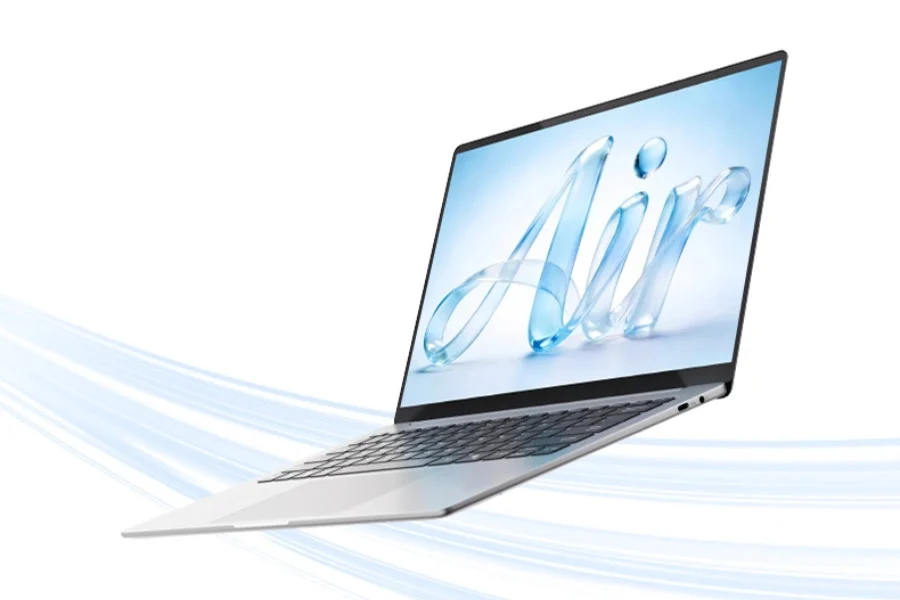
Achieving that razor-thin 11mm profile forces a complete rejection of older, legacy I/O configurations. As seen on the reference layouts, standard bulky USB Type-A ports and dedicated HDMI outputs are being completely stripped out of the chassis to preserve the slim metal profile. The layouts rely exclusively on high-speed USB Type-C connections and a headphone jack, meaning you will need to get comfortable carrying thin dongles.
3. The Pincer Attack From Above
While Project Firefly is designed to crush Apple on pure manufacturing volume at the bottom end of the market, it is only half of the story. The PC world is launching a coordinated, top-down assault to strip Apple of its performance crown. Read our exclusive architectural review of the leaked NVIDIA N1X Blackwell superchip to see how Team Green plans to permanently break Qualcomm’s ARM hype!
The Adam Lobo Verdict: A Structural Shield for Windows
Intel’s Project Firefly is one of the most calculated, system-level defensive maneuvers we have witnessed in modern mobile computing. Intel realised that letting Apple control the sub-$600 market uncontested would result in an entire generation of students and remote workers growing up exclusively inside the macOS ecosystem. It is what it is: an existential threat at the low-end. The PC world had no answer…until now.
By treating the laptop like a smartphone from a manufacturing standpoint, Project Firefly successfully breaks the link between “cheap pricing” and “cheap build quality”. It provides the global PC ecosystem with a legitimate structural blueprint to protect its market share, ensuring that the next generation of value-oriented laptops run fast, look stunning, and remain completely accessible to everyday consumers.
Apple showed the world how it can be done. And now it’s up to the rest to catch up.