
TL;DR / At a Glance: Effective 1 July 2026, Malaysia’s MITI has introduced new regulations for imported (CBU) electric vehicles, mandating a minimum CIF* value of RM200,000 (approx. RM300,000 retail) and a minimum power output of 180kW (245 PS). This policy effectively bans affordable, efficient imports like the BYD Atto 3 and ORA Good Cat. While framed as industrial protection, the move primarily shields national brands like Proton, whose e.MAS lineup consists of rebadged Geely vehicles from China, at the expense of Malaysian consumer choice and the green transition.
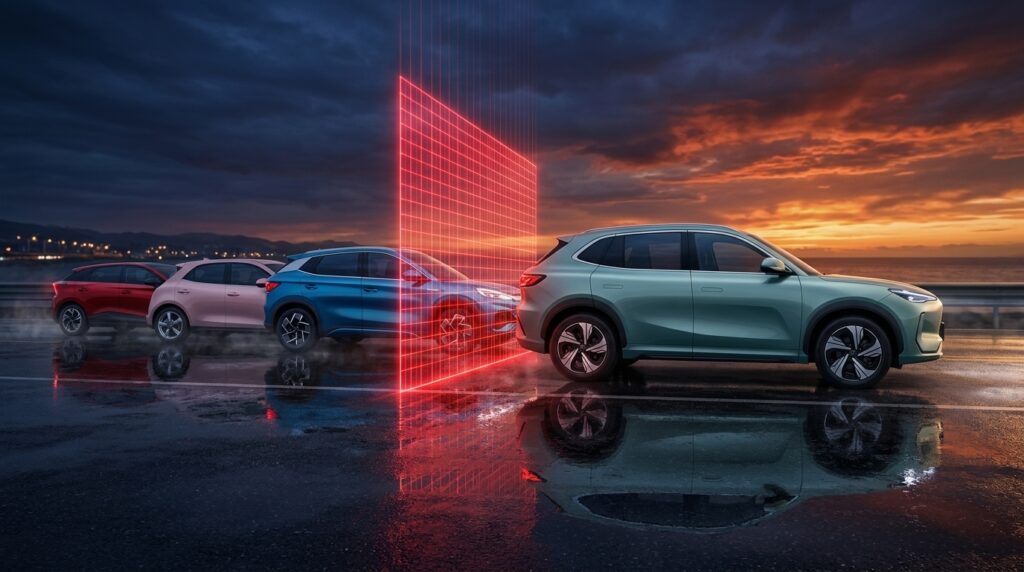
The Malaysian EV dream just hit a RM300,000 brick wall, and it is time for some Real Talk over teh tarik.
MITI’s media statement released on 6 May 2026 (Ref: Penamatan Pengecualian Khas EV CBU) has officially ended the Wild West era of affordable, high-tech imported EVs. While the headlines focus on the price, the real story lies in the technical handcuffs being placed on the market to ensure national brands have a protected sandbox to play in.
The Technical Gatekeeping: 180kW is the New Minimum
The most shocking revelation in the circular is the motor power requirement. MITI has adjusted the minimum power for imported EVs to 180kW (245 PS). This is a surgical strike against the most sensible, mass-market EVs on the road today.
To put this into perspective:
- BYD Atto 3 (150kW): Disqualified.
- ORA Good Cat (105kW): Disqualified.
- MG4 Standard (125kW): Disqualified.
By setting the bar at 180kW, the government is ensuring that if you want an imported EV, it must be a high-performance luxury vehicle. If it is affordable and practical for a Malaysian family, it is effectively banned as a CBU import.
Who is the Government REALLY Protecting?
The official narrative is that these rules protect the local automotive ecosystem. But let’s look at the numbers.
- The Losers: Consumers who wanted a BYD Atto 3 or MG4 for RM130,000. These cars are now effectively banned from import because they don’t meet the 180kW power floor or the RM300,000 price tag.
- The Winners: Geely and Proton. By legally pricing out superior Chinese rivals like BYD and GWM, the government has created a captive market for the e.MAS 7.
The Geely in the Room
The government claims this move protects national engineering. But let’s pass the Mamak Test: Is the Proton e.MAS 7 truly a Malaysian innovation?
Under the skin, the e.MAS 7 is a right-hand-drive version of the Geely Galaxy E5, designed and manufactured in China. While local engineers adjusted it for our roads, the platform, the Aegis battery tech, and the Flyme Auto software are Geely’s intellectual property. By pricing out rivals like BYD and GWM, the government isn’t necessarily protecting “Malaysian Tech”—they are protecting a corporate partnership with one Chinese giant by banning the others. Sounds fair, kan?
The CKD Checkmate
It isn’t just about the imports. Even if a brand like BYD or MG decides to build their cars in Malaysia (CKD – completely knocked down), the government is reportedly pushing for an 80% export quota. Think about that: we want the foreign investment, we want the factories, but we are legally restricting how many of those affordable, locally-made cars can actually be sold to Malaysians. This isn’t just protecting Proton; it’s gatekeeping the entire technology.
- The “Customised Incentive” (NCM): From 2028, even CKD vehicles will face excise duties. MITI has introduced a “Scorecard” system. The more local parts you use (batteries, motors, software), the lower your tax.
- Stellantis (Leapmotor): They are moving fast to assemble Leapmotor EVs in Gurun, Kedah. By assembling locally, they can bypass the RM300k CBU floor and potentially launch cars in the RM120k–RM160k range.
- The National Advantage: Proton and Perodua are the only ones who can realistically hit a 70%+ localisation rate quickly. Everyone else is starting from 20-30%. This gives the Proton e.MAS 7 a massive price advantage that is legally manufactured by the government’s policy.
*What is CIF?
CIF stands for Cost, Insurance, and Freight.
In international trade (Incoterms), it is a specific pricing agreement that dictates the value of goods when they arrive at the destination port. In the context of the MITI announcement, it is the benchmark the government uses to set the “price floor” for imported EVs.
Here is the breakdown of what is included in a CIF value:
- Cost: The actual price of the vehicle from the manufacturer.
- Insurance: The cost of the insurance policy taken out to cover the vehicle against loss or damage during its journey across the ocean.
- Freight: The cost of shipping the vehicle from the origin port (e.g., Shanghai or Tianjin) to the destination port (e.g., Port Klang).
Why does this matter for the RM300,000 price rule?
The MITI circular states that the minimum CIF value must be RM200,000.
When a car reaches Port Klang with a CIF of RM200,000, it hasn’t been taxed yet. To get that car onto a showroom floor, the distributor must then add:
- Import/Excise Duties (though currently waived for many EVs, the “floor” is calculated as if they apply or to ensure a specific retail buffer).
- Sales Tax (SST).
- Dealer Margins & Handling Fees.
The Logic: By setting the pre-tax (CIF) floor at RM200,000, the government effectively ensures that the final retail price to the consumer cannot be lower than RM300,000. It is a clever way to “gatekeep” the market at the port level before a single ringgit of local tax is even calculated.
Critical Consumer Questions
Beyond just the price, tech-savvy Malaysians are starting to ask the hard questions that MITI hasn’t fully addressed:
- The “Used Car” Trap: If I bought a BYD Atto 3 for RM150k last year, and now new ones are “banned” unless they are RM300k, does my car’s resale value skyrocket because of scarcity, or does it tank because the brand’s local ecosystem might weaken?
- The Power Paradox: Why is 180kW the minimum? Most city-dwelling Malaysians want efficiency and range, not more horsepower than a Golf GTI. Is the government essentially forcing us to buy “performance” cars we don’t need?
- The Fuel Subsidy Connection: The government is planning to cut RON95 subsidies soon. How can they justify removing cheap fuel while simultaneously making the most affordable alternative (budget EVs) illegal to import?
- The Infrastructure ROI: If the number of new EV registrations slows down because of this price floor, will charging providers (like Gentari or JomCharge) still see the ROI to keep building chargers in East Coast or Northern regions?
Manufacturer Reactions: The “Tanjung Malim” Pivot
The reaction from global players has been a mix of diplomatic frustration and strategic scrambling.
- BYD & GWM: They are the hardest hit. Reports indicate that BYD is “reconsidering” the scale of its investments at the KLK TechPark in Tanjung Malim. MITI has reportedly imposed an 80% export condition on their local assembly (CKD) projects. This means for every 5 cars they build here, they must ship 4 overseas. This makes it incredibly difficult for them to price their cars low for the local market.
- Tesla: Since Tesla only does CBU and doesn’t have a CKD factory in Malaysia, the Model 3 RWD (currently ~208kW) might barely clear the power hurdle, but the price floor will force them to keep their margins high or risk being disqualified from the market.
The Bottom Line
- Innovation Stagnation: Without the threat of BYD or Tesla’s budget-friendly CBUs, national brands have zero incentive to push the envelope on price or software.
- The Green Tax: You shouldn’t have to be a T1 earner to save the planet. This policy makes the green transition a luxury privilege rather than a national goal.
- Policy Whiplash: This flip-flop destroys investor confidence. Global brands cannot build long-term charging infrastructure if the goalposts move every six months.
The era of choice is narrowing. If you want a tech-heavy EV under RM200k, you are no longer choosing the best tech; you are choosing what the government has allowed to remain.
NOTE: The boys at PaulTan.org published an amazing, extensive article on MITI’s latest controversial move, so head over to have read (note: make a cup of coffee).