
TL;DR / At a Glance:
What is U Mobile’s 5G coverage as of April 2026? As of April 7, 2026, U Mobile’s Ultra5G network covers 82.9% of populated areas (COPA) in Malaysia, surpassing its 80% regulatory requirement ahead of the July 2026 deadline.
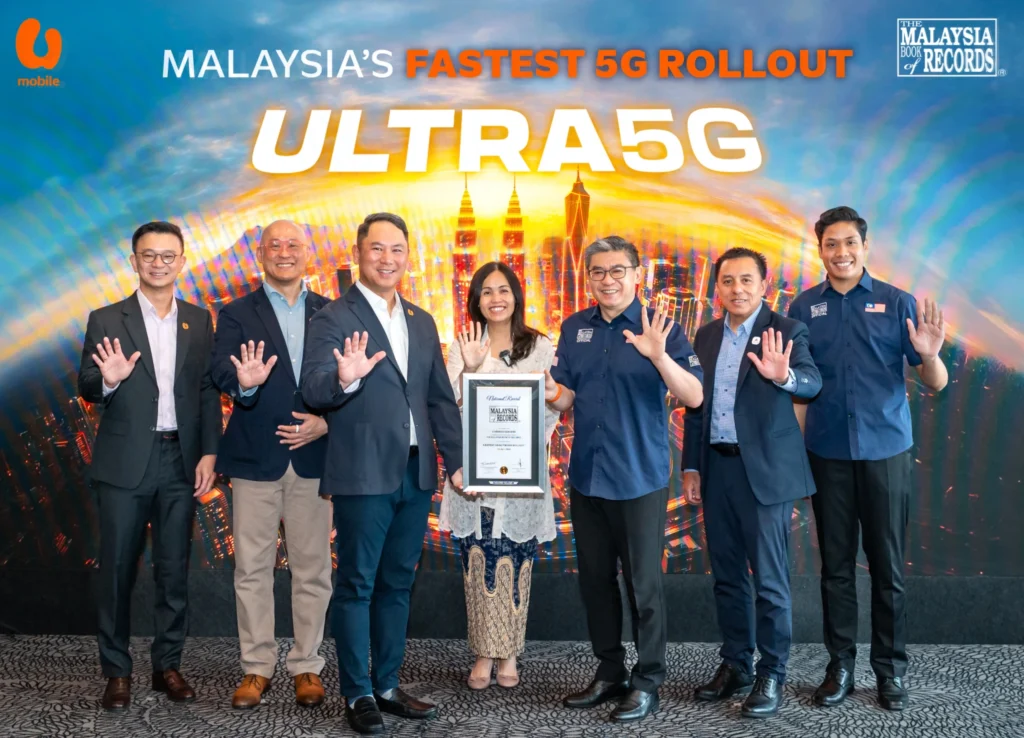
The “Orange Telco” just pulled off a checkmate. In a move that has sent shockwaves through the Malaysian telecommunications industry, U Mobile officially announced on April 7, 2026, that its ULTRA5G network has achieved a staggering 82.9% Coverage of Populated Areas (COPA).
If you’ve been following my previous coverage on the DNB vs. Dual Network transition, you’ll know this isn’t just a milestone—it’s a declaration of war. U Mobile didn’t just meet their 80% target; they smashed it three months ahead of the July deadline, earning a prestigious spot in the Malaysia Book of Records for the Fastest 5G Rollout in the country.
But beyond the banners and the trophies, what does this actually mean for you? Let’s break down the “Real Talk” on why Ultra5G is shifting the landscape of 5G in Malaysia.
The Numbers: A Nationwide 5G Bubble
As of March 31, 2026, U Mobile has deployed a total of 6,737 sites across the nation. While the Klang Valley has effectively become a giant 5G Standalone (SA) bubble, the speed of deployment in East Malaysia and the northern corridor is what stands out.
Apart from wide outdoor coverage, the company is also rolling out full in-building coverage (IBC) systems and is on track to deploy 175 IBC sites by July 2026.
| State / Territory | COPA (%) | State / Territory | COPA (%) |
|---|---|---|---|
| WP Putrajaya | 99.9% | Johor | 86.4% |
| Penang | 99.1% | Kedah | 77.2% |
| WP Kuala Lumpur | 98.6% | Pahang | 72.8% |
| Selangor | 95.2% | Sabah | 62.1% |
| Melaka | 92.6% | Sarawak | 58.7% |
I must openly admit, I was a skeptic right from the beginning. But I was proven wrong, U Mobile has pulled it off. And the deployment strategy here is fascinating. U Mobile has utilised a dual-vendor approach to maximise speed and efficiency: Huawei is handling the heavy lifting for West Malaysia, while ZTE is spearheading the rollout in East Malaysia. This competitive split is likely the secret sauce behind their record-breaking pace compared to the more centralised (and often slower) legacy rollouts we’ve seen in the past.
The Game Changer: “Network Slicing” Explained
The real headline of the 2026 launch isn’t just the coverage—it’s ULTRA5G Priority. U Mobile is the first telco in Malaysia to commercially offer 5G Network Slicing to everyday consumers.
What is 5G Network Slicing?
In the 4G era, when you were at a crowded concert at Bukit Jalil or a massive sale at Mid Valley, your data would simply die. The “pipe” was full. 5G Standalone (SA) changes this by allowing the network to be “sliced” into virtual lanes.
With the ULTRA5G Priority Pass, U Mobile is essentially giving you a VIP Lane on the digital highway. When the main network is congested, your data is prioritised, ensuring your 4K stream or social media upload goes through while everyone else is staring at a loading spinner.
- 1 Hour Pass: RM2 (The “Quick Boost”)
- 3 Hour Pass: RM5 (The “Concert/Event King”)
- The Reward: Selected new ULTRA Prepaid and Postpaid plans now include these passes for free every month.
The Agentic Shift: Why You Need 5G SA
In my recent research into Agentic AI, I discussed how 2026 is the year of “AI that acts.” Whether it’s your phone booking a Grab for you or your AI agent filing your taxes, these tasks require a low-latency, “always-on” connection that 4G or even 5G NSA (Non-Standalone) simply cannot guarantee.
U Mobile’s pivot to 5G Standalone (SA) is the infrastructure play that makes Agentic AI possible in Malaysia. 5G SA doesn’t rely on 4G crutches. It offers near-instant response times (low latency) and supports VoNR (Voice over New Radio), meaning your voice calls stay on 5G for crystal-clear quality without dropping back to legacy networks.
The Hardware Requirement
To enjoy the ULTRA5G Priority Pass, you can’t just have any old 5G phone. You need:
- A 5G SA Compatible Device: (e.g., iPhone 15 or newer, Samsung S26 Ultra, or latest Pixel 10).
- The Correct SIM: You must have a 5G SUCI*-compliant SIM or an eSIM activated after March 2025. You can check this in the MyUMobile App—if you’re still on an old physical SIM, it’s time for an upgrade.
*A SUCI (Subscription Concealed Identifier) compliant SIM is a type of SIM card designed for 5G Standalone (SA) networks that encrypts the user’s permanent identity (SUPI – Subscription Permanent Identifier) before it is transmitted over the air. Unlike 4G SIMs that transmit identity in plain text, SUCI SIMs prevent IMSI catchers and trackers from identifying or locating users.
Beyond Speed: ULTRA Security Pro
One of the most overlooked parts of the April 2026 launch is ULTRA Security Pro. Launching on April 14, this is a network-level security feature.
Unlike traditional antivirus software that you have to install on your phone, this protects you at the source. It filters out phishing SMS, fraudulent calls, and unsafe websites before they even reach your screen. For the average user who isn’t tech-savvy, this is a massive win in the fight against the rising wave of AI-driven scams in Malaysia. It is also free for all ULTRA postpaid and prepaid subscribers.
The “Adam Lobo” Verdict: Why This Matters
For years, the Malaysian 5G conversation was stuck in a loop of “Who owns the spectrum?” and “Why is DNB the only option?” By exiting the DNB shareholders’ agreement and successfully launching the second network, U Mobile has forced a competitive spirit back into the telco space.
Telekom Malaysia (TM) has already jumped ship from DNB to sign a 3-year wholesale deal with U Mobile. This is the ultimate vote of confidence. When the national backbone provider chooses the challenger provider over the state-backed wholesaler, you know the tide has turned.