TL;DR / At a Glance:
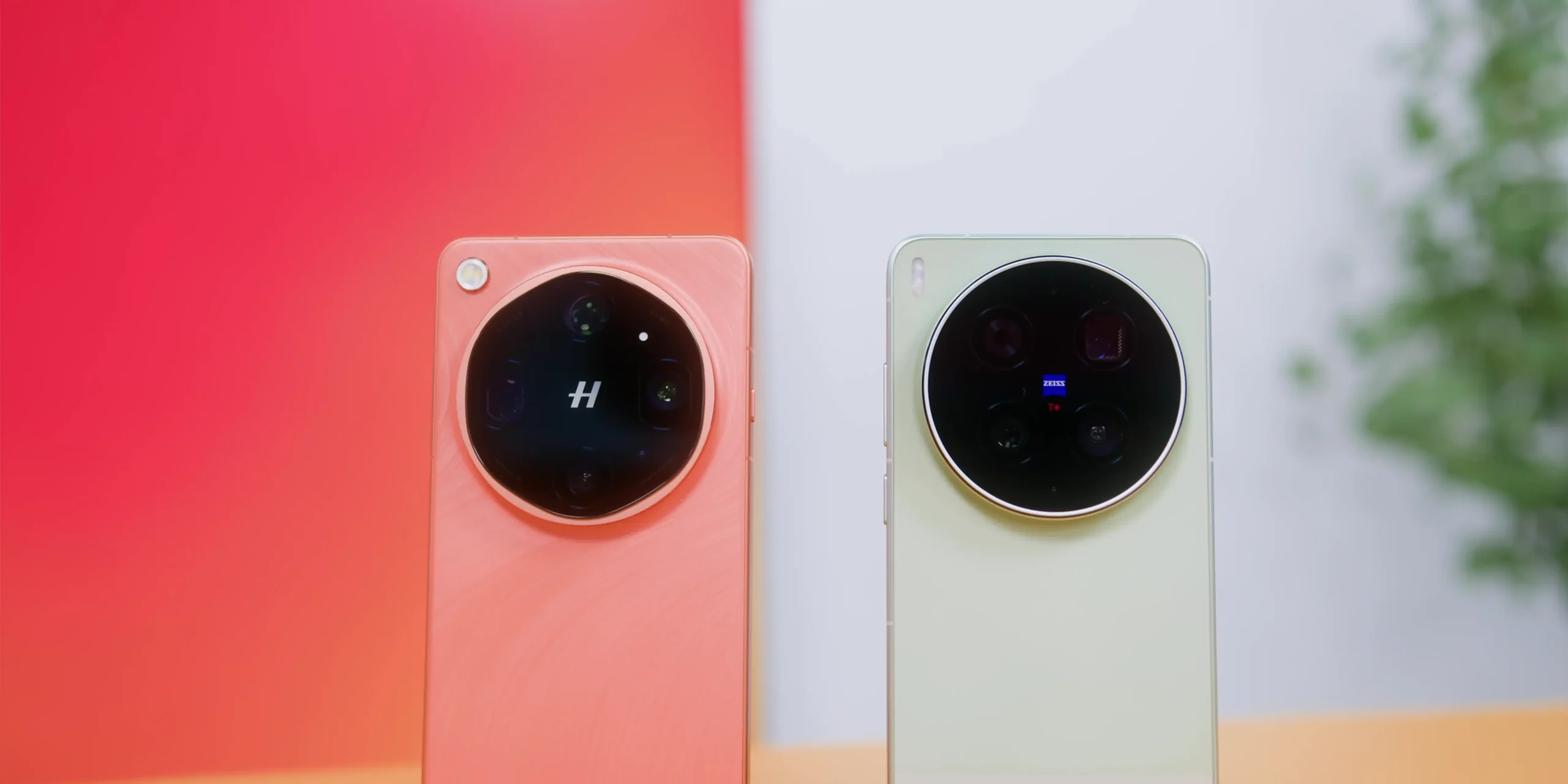
In the ultimate flagship camera battle between the vivo X300 Ultra and the OPPO Find X9 Ultra, your choice comes down to color accuracy versus zoom versatility.
The vivo X300 Ultra excels in delivering consistent, natural color science across all lenses, backed by ZEISS optics and a dedicated imaging chip. It also features superior stabilization at high zoom ranges and 4K 60fps portrait video.
On the other hand, the OPPO Find X9 Ultra offers unmatched focal length flexibility, a wider variety of portrait modes, and a deeper maximum zoom reach, though it suffers from minor color shifting and software artifacts at higher zoom levels.
Finally, the comparison video that you all have been asking for many months is here: vivo X300 Ultra vs OPPO Find X9 Ultra.
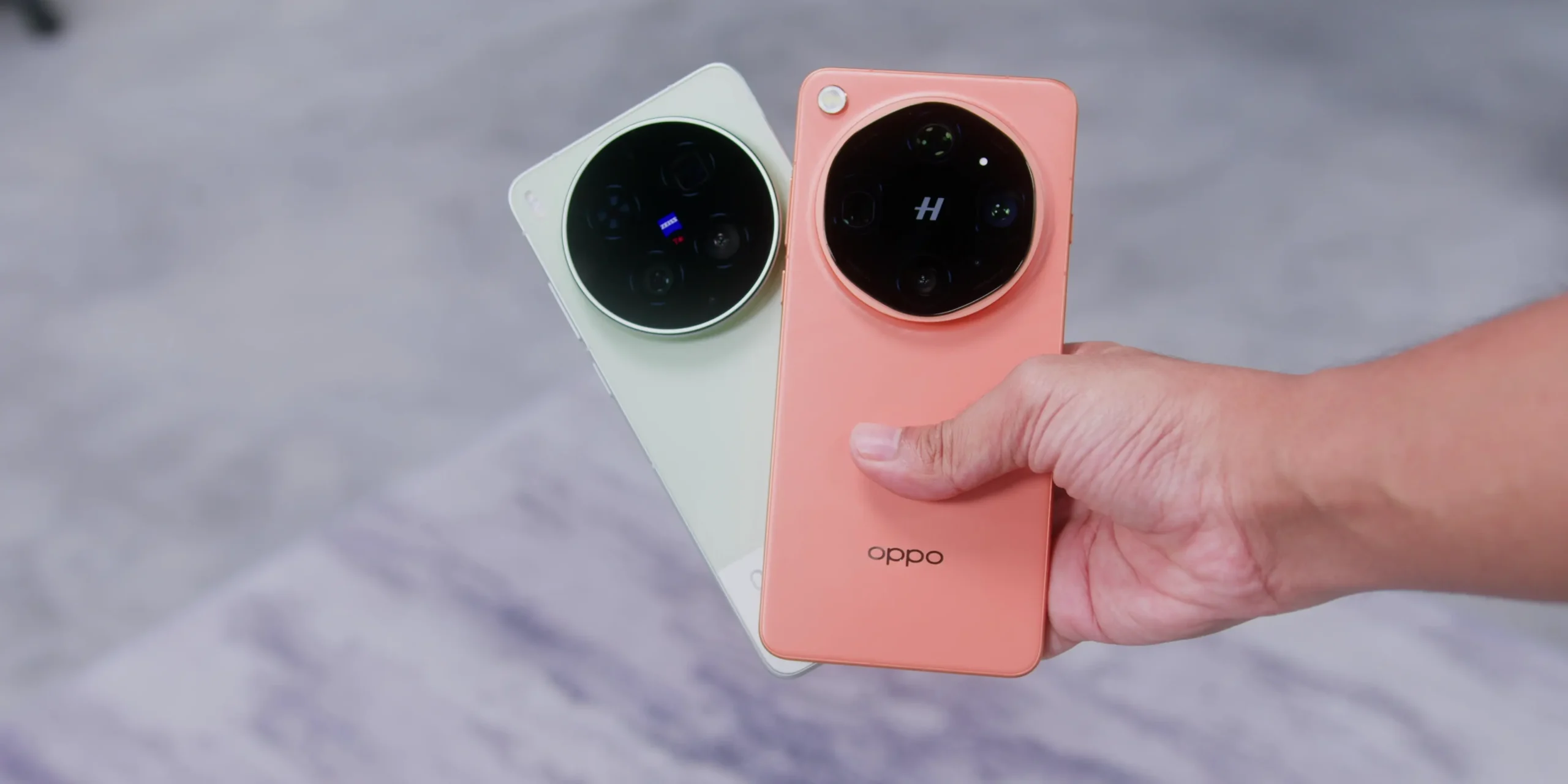
Well, after countless calls trying to get hold of this phone, thanks to DirectD, I managed to get it. I guarantee you that someone is going to get really angry with what you are about to see over here, so watch first and buy smart.
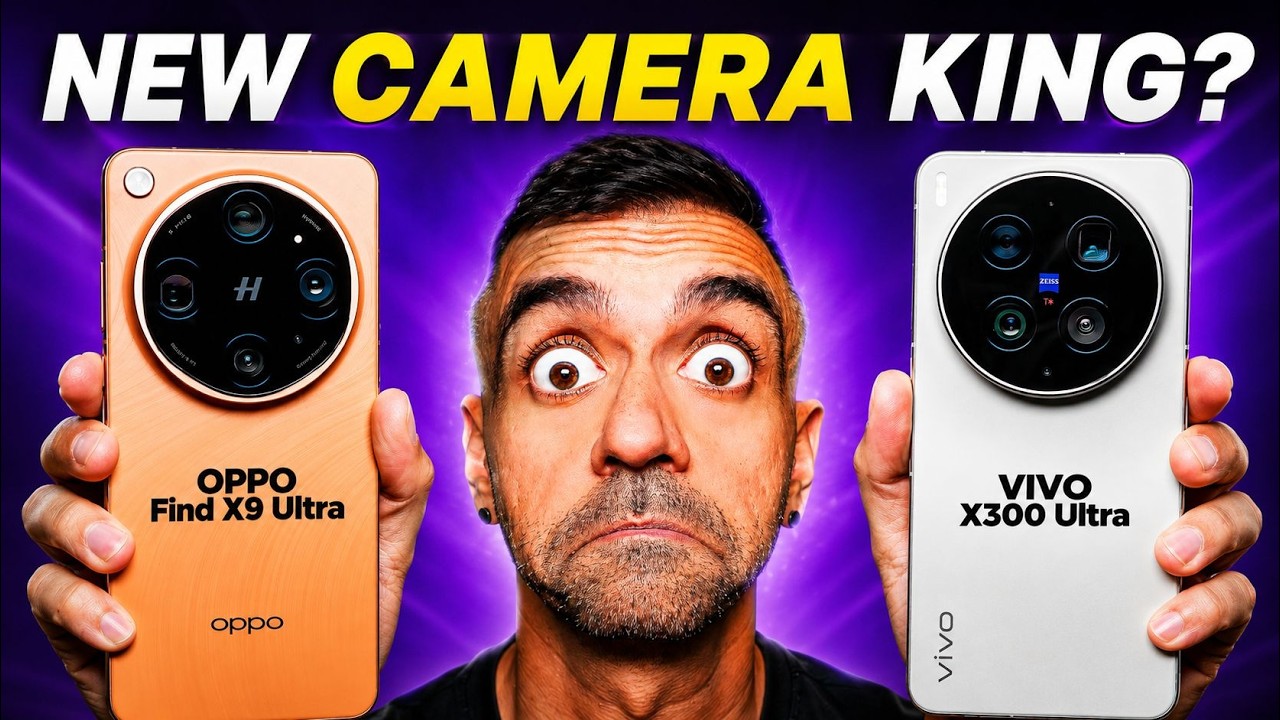
Context: As usual, during my comparison reviews like this, there will be no specs mentioned. Just purely a comparison and overall context of each photo and the focal length. So let’s get started.
Ultrawide Lens
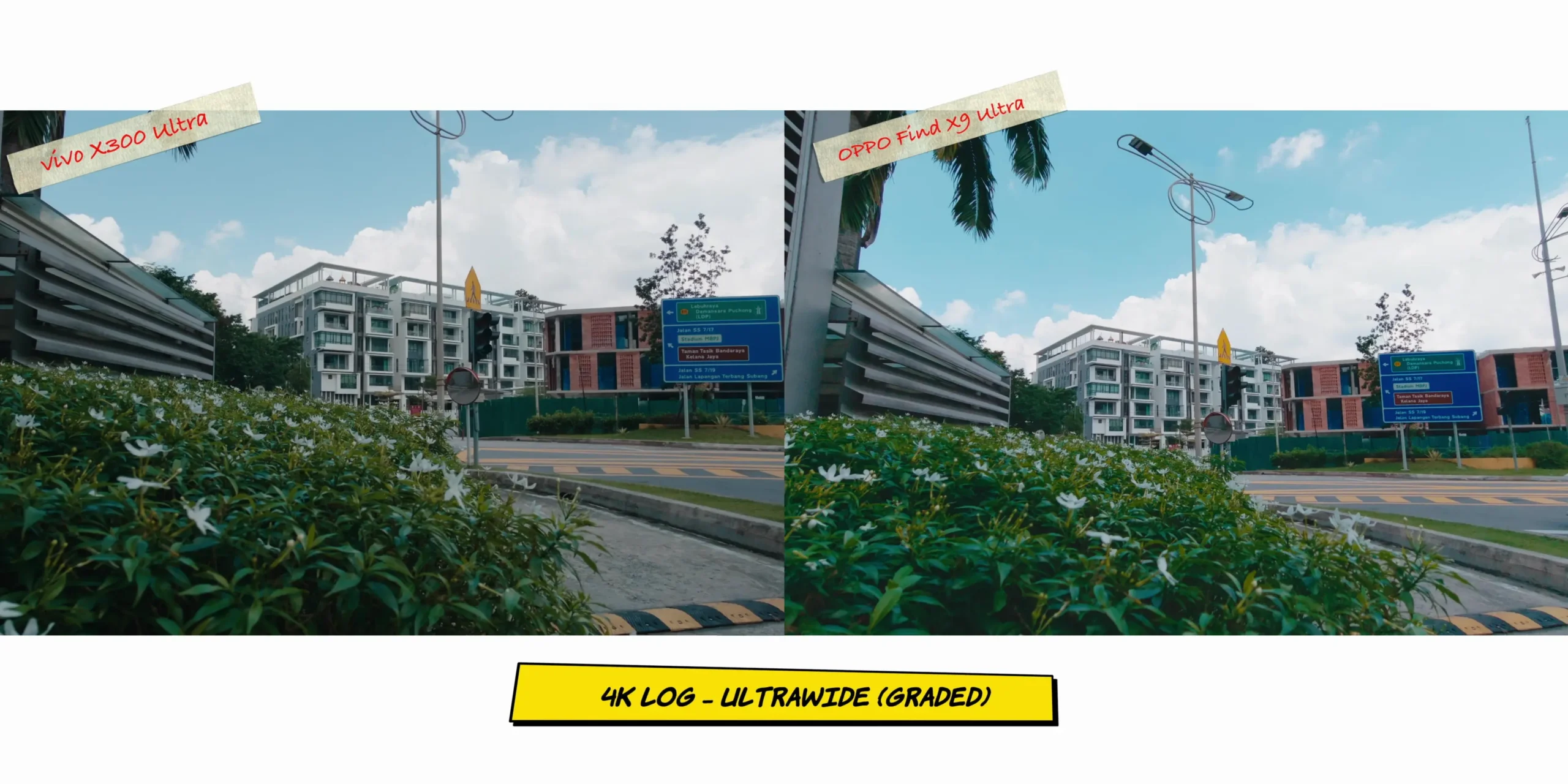
Starting from the ultrawide lenses, both focal lengths are at 14mm. The dynamic range for both was equally good, and the barrel distortion, which on the previous Pro variant of the vivo was an issue, is no longer an issue on this Ultra.
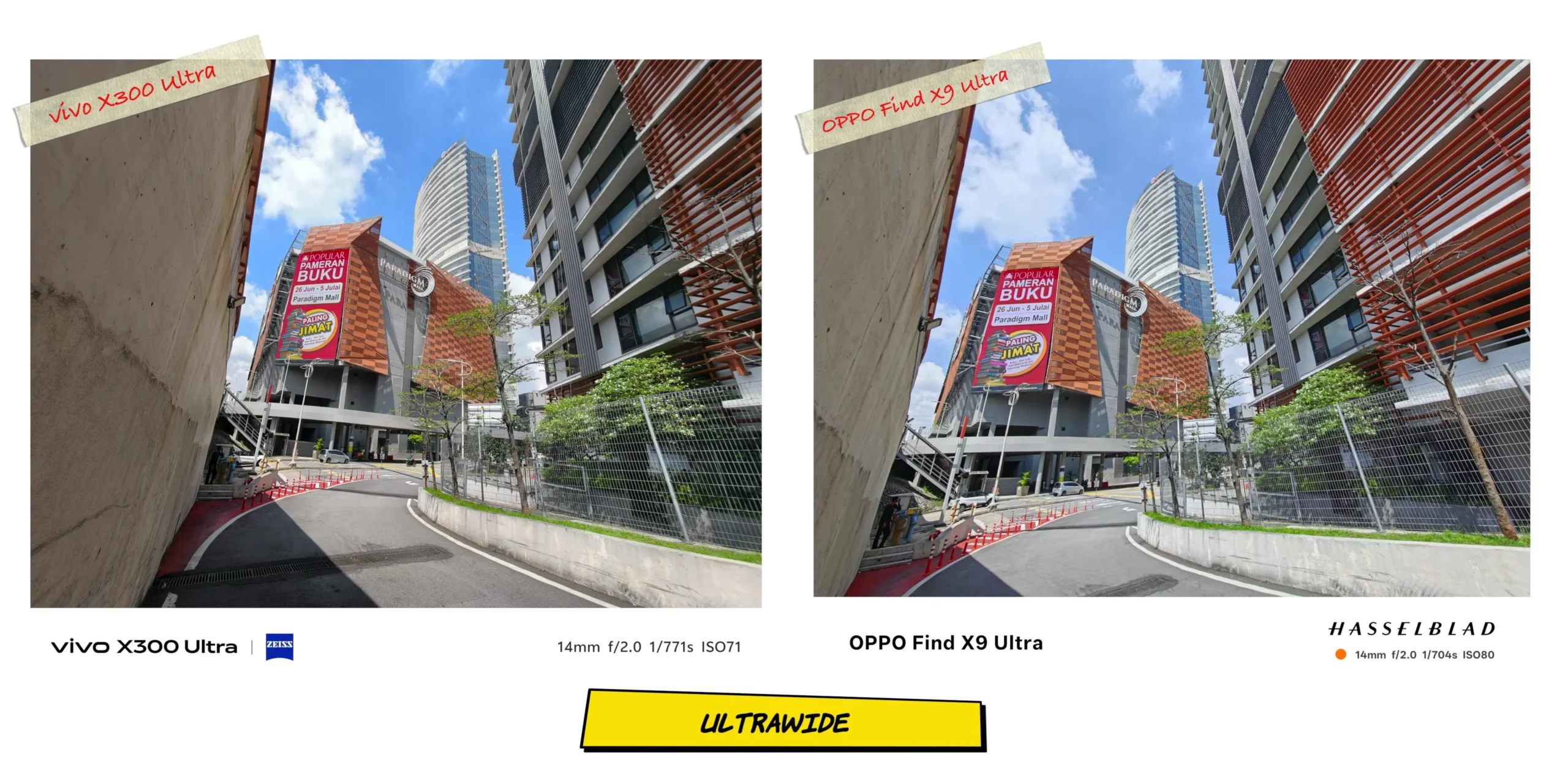
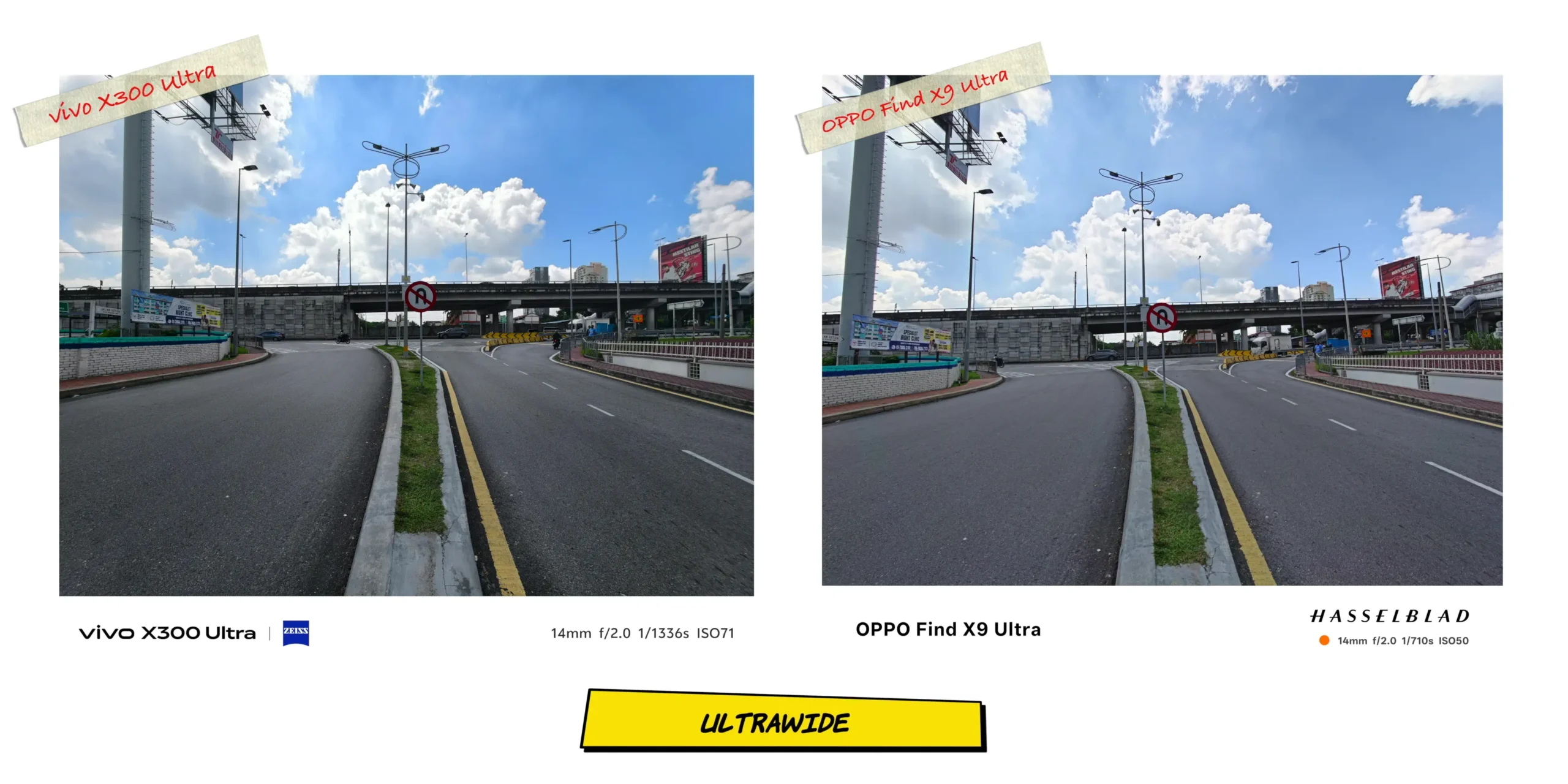
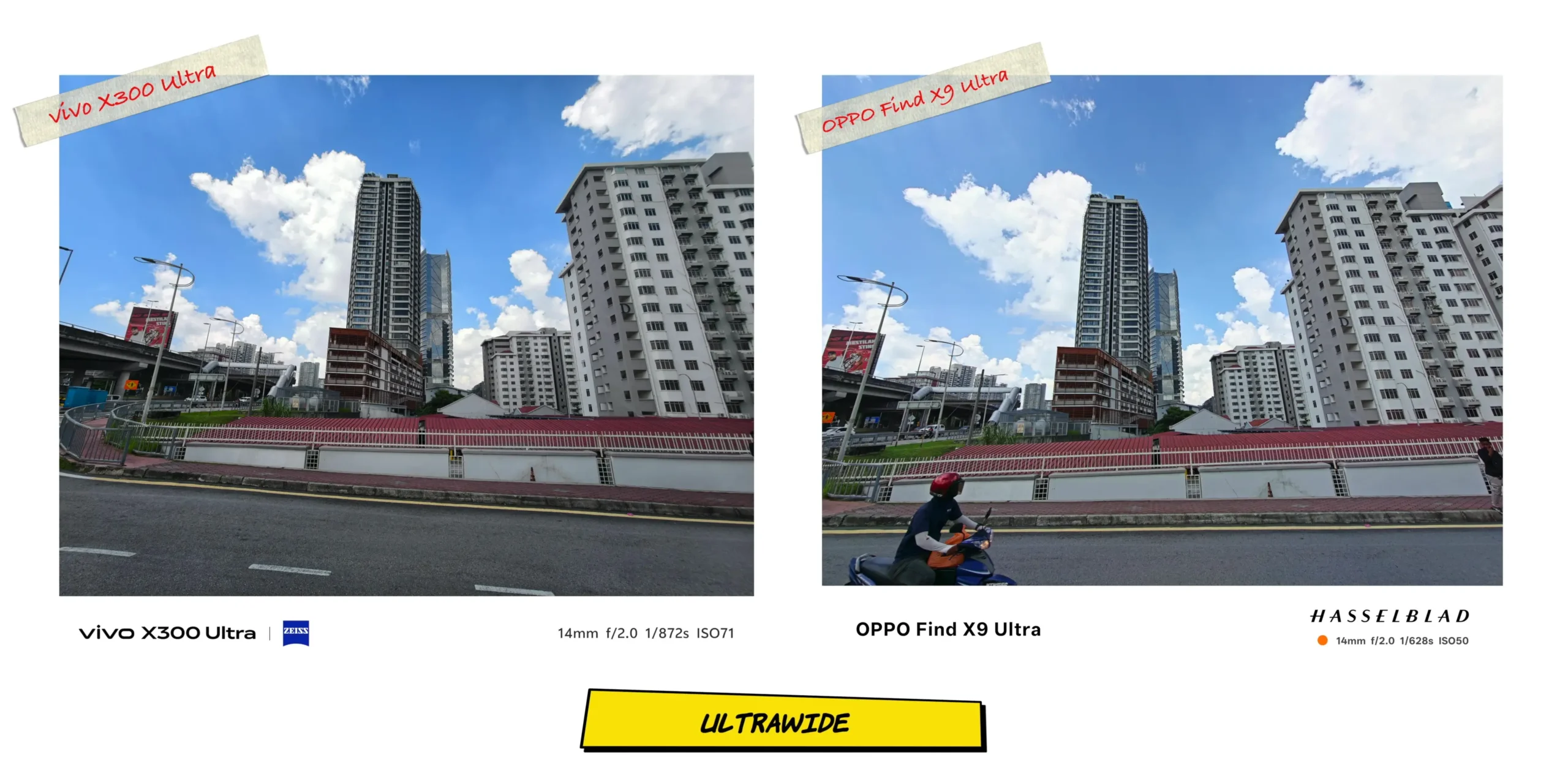
So because of that, both phones are sharp from edge to edge, and the only difference would be the skies, as the vivo is just a little bluer. And the story was the same for the second comparison photo, also for this third comparison photo.
Main + Zoom
Now, before comparing the main and zoomed photos, something that we all expected is the fact that each phone will interpret each zoom value differently. So, let’s compare the quality based on the focal length of each photo instead, because the key here is color consistency.
Which has the consistency of colors and, of course, quality? Because what’s the point of having a zoom value of 70,869x zoom and getting a photo that looks like a wasted chewing gum? Yeap, I am looking at you, Nothing, with the 140x zoom.
Starting from the 35mm focal length, what’s interesting is that, both looked very similar. Even the blue skies were very close to each other, compared to the ultrawide lenses shown earlier.
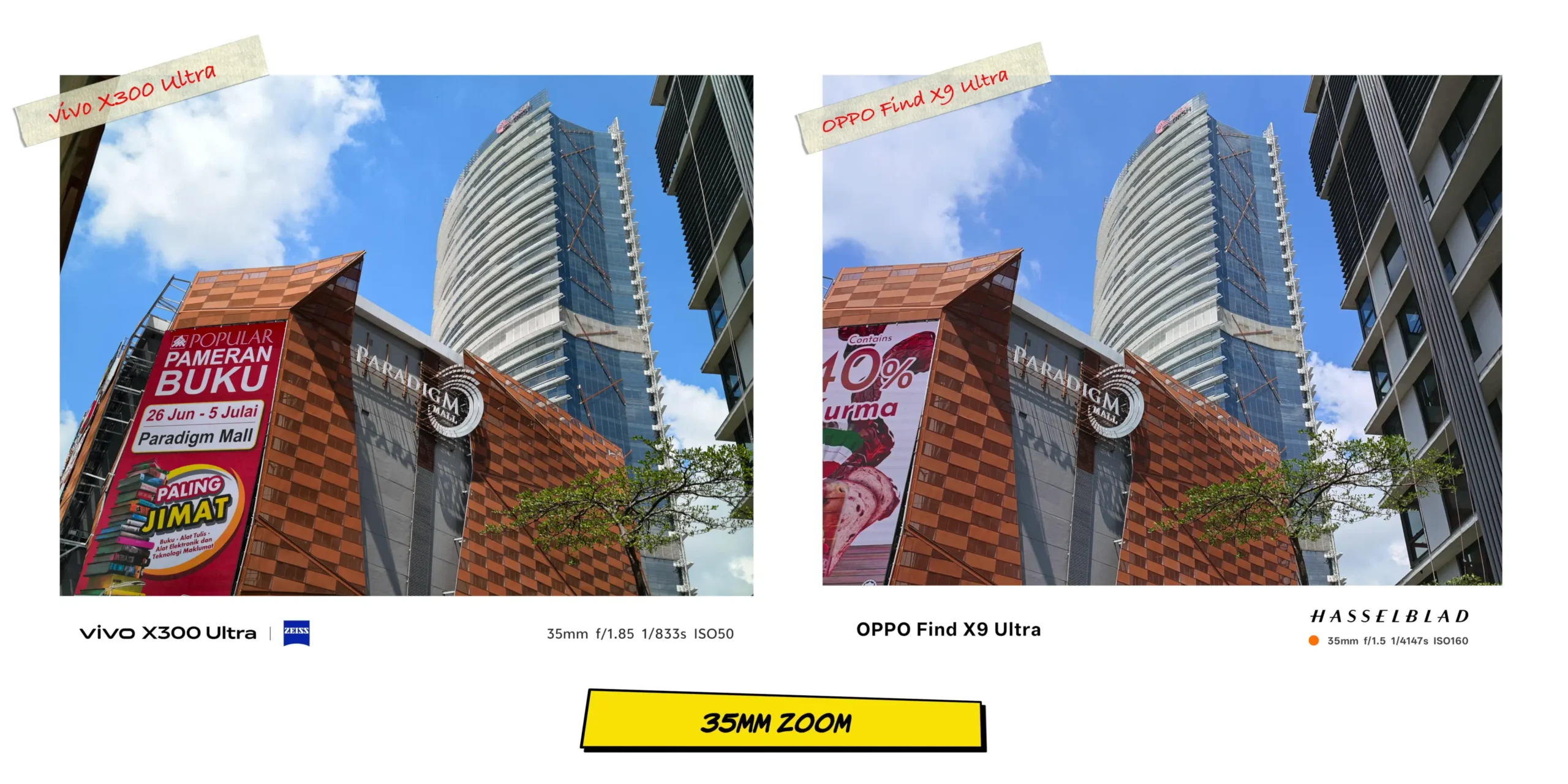
The consistency of colors between the 35mm and the 70mm was spot on when you compare it side by side on the vivo, and the same can be said for the OPPO as well, where the consistency remains throughout. And even when you have the 70mm with the 85mm on vivo, and, as expected, on the OPPO at this focal length side by side as well.
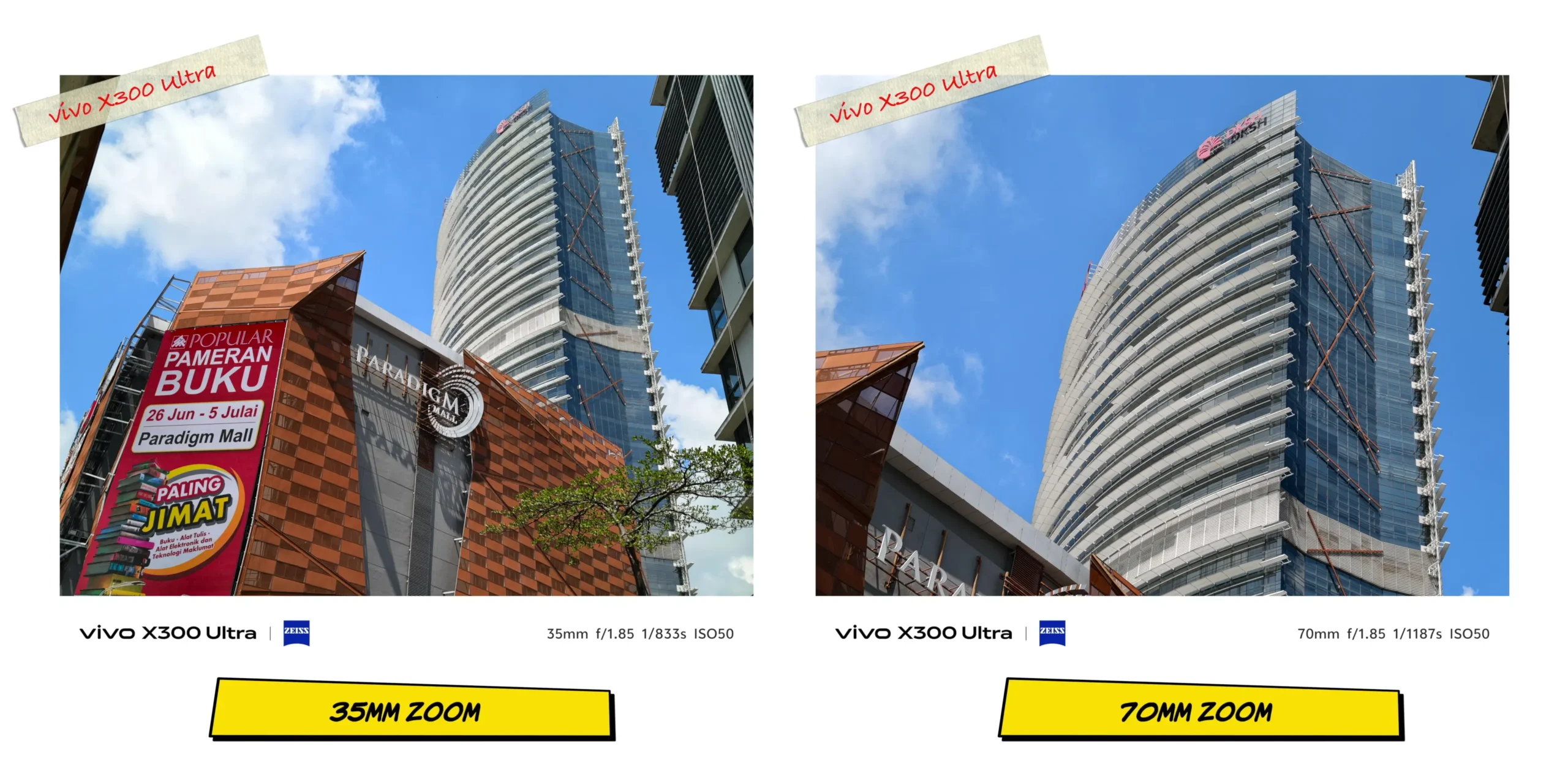
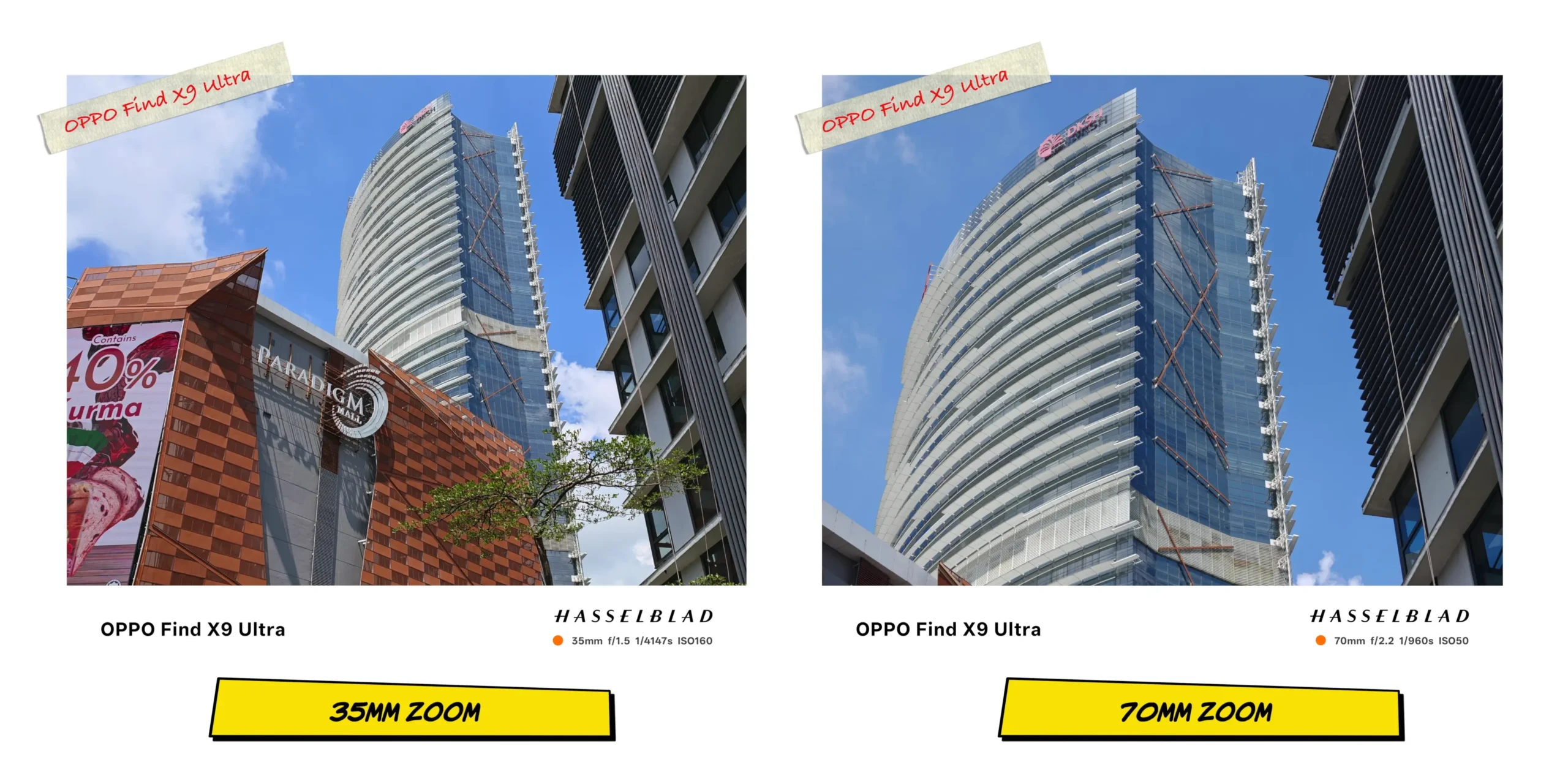
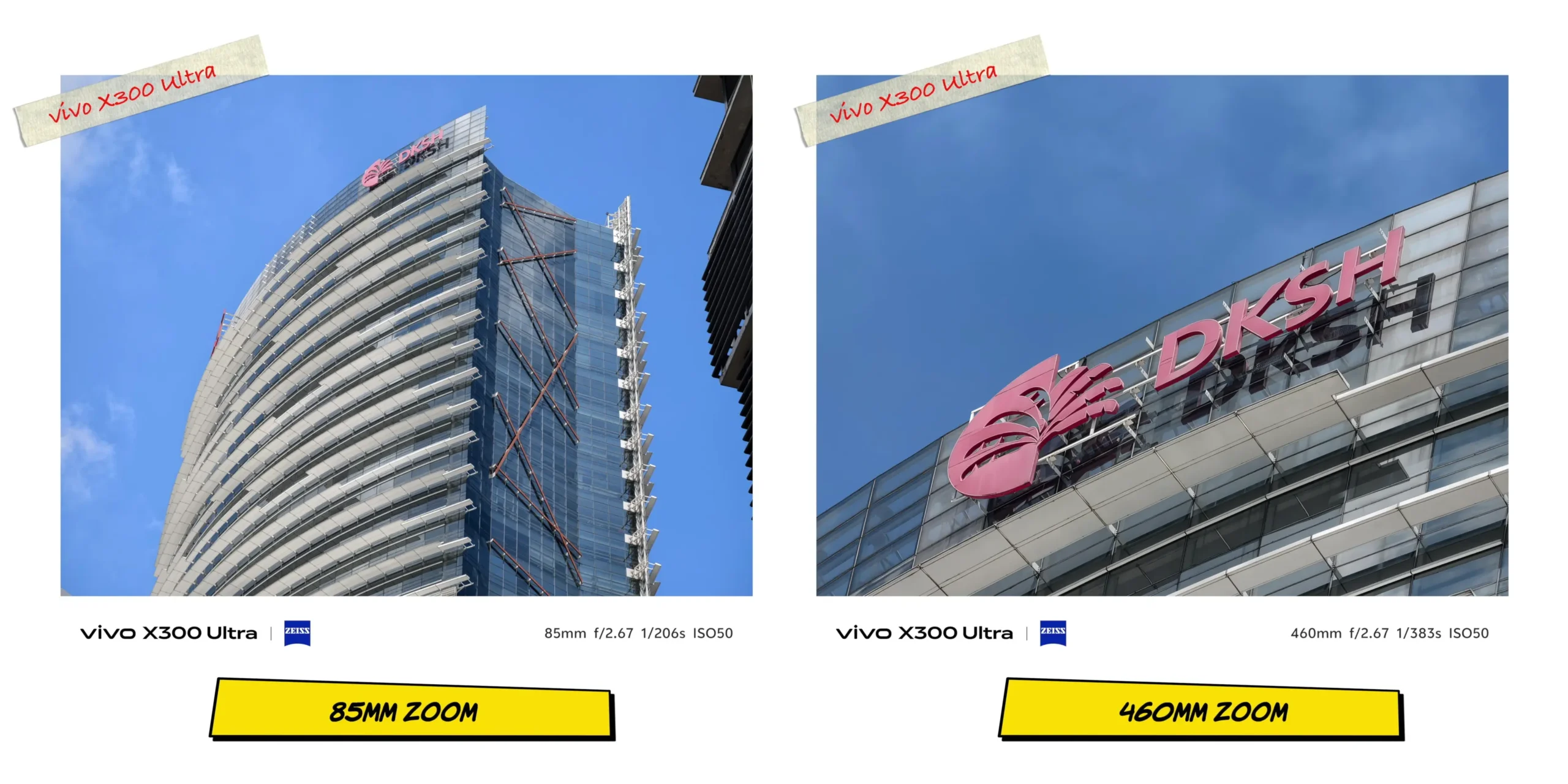
But where the color sciences start to drop is when you start increasing the zoom value to about 460mm, as the OPPO gives you a different look compared to the 85mm earlier, as seen side by side.
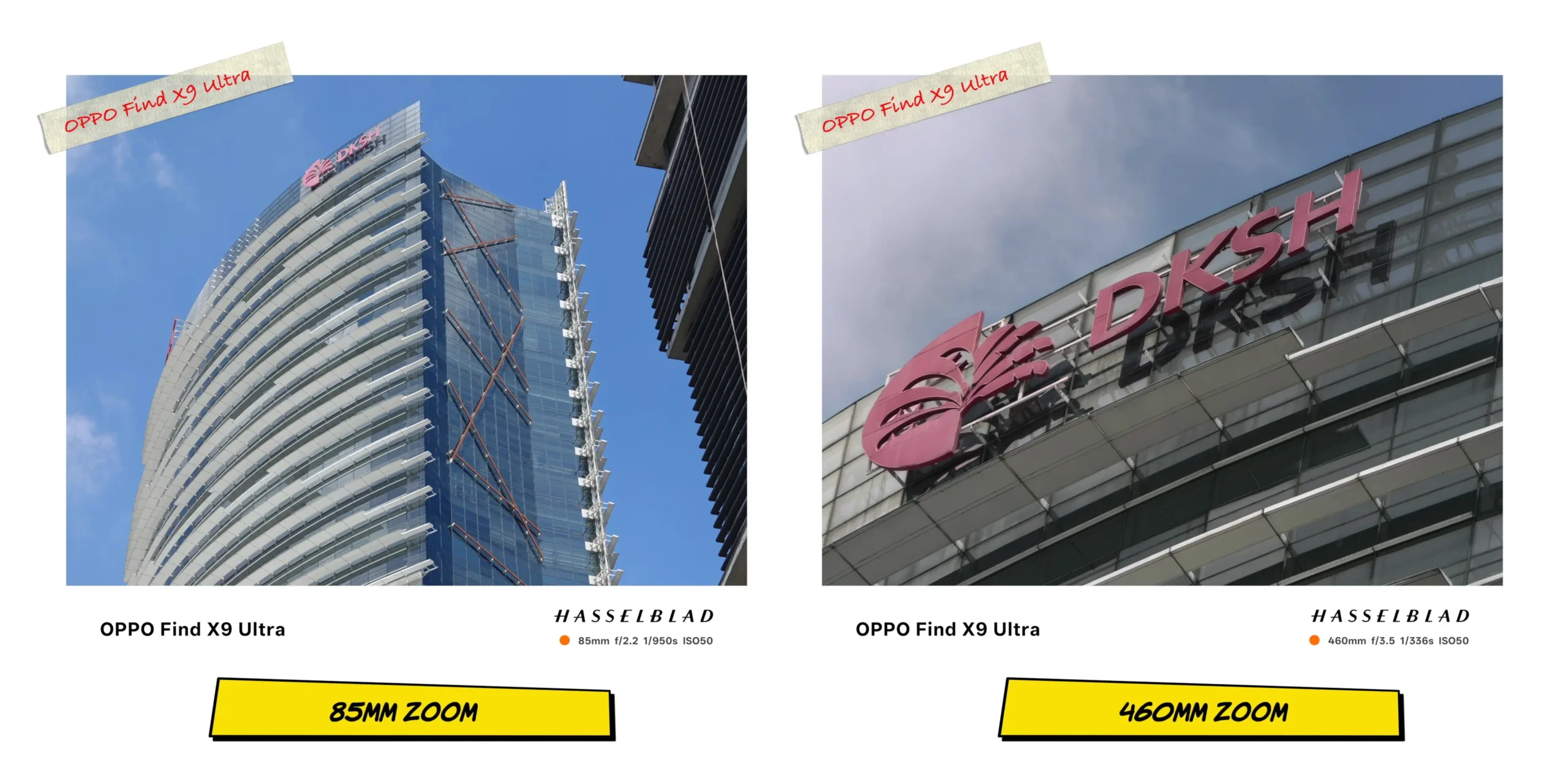
But the vivo remains consistent as seen side by side, from its very own 85mm compared to the 460mm.
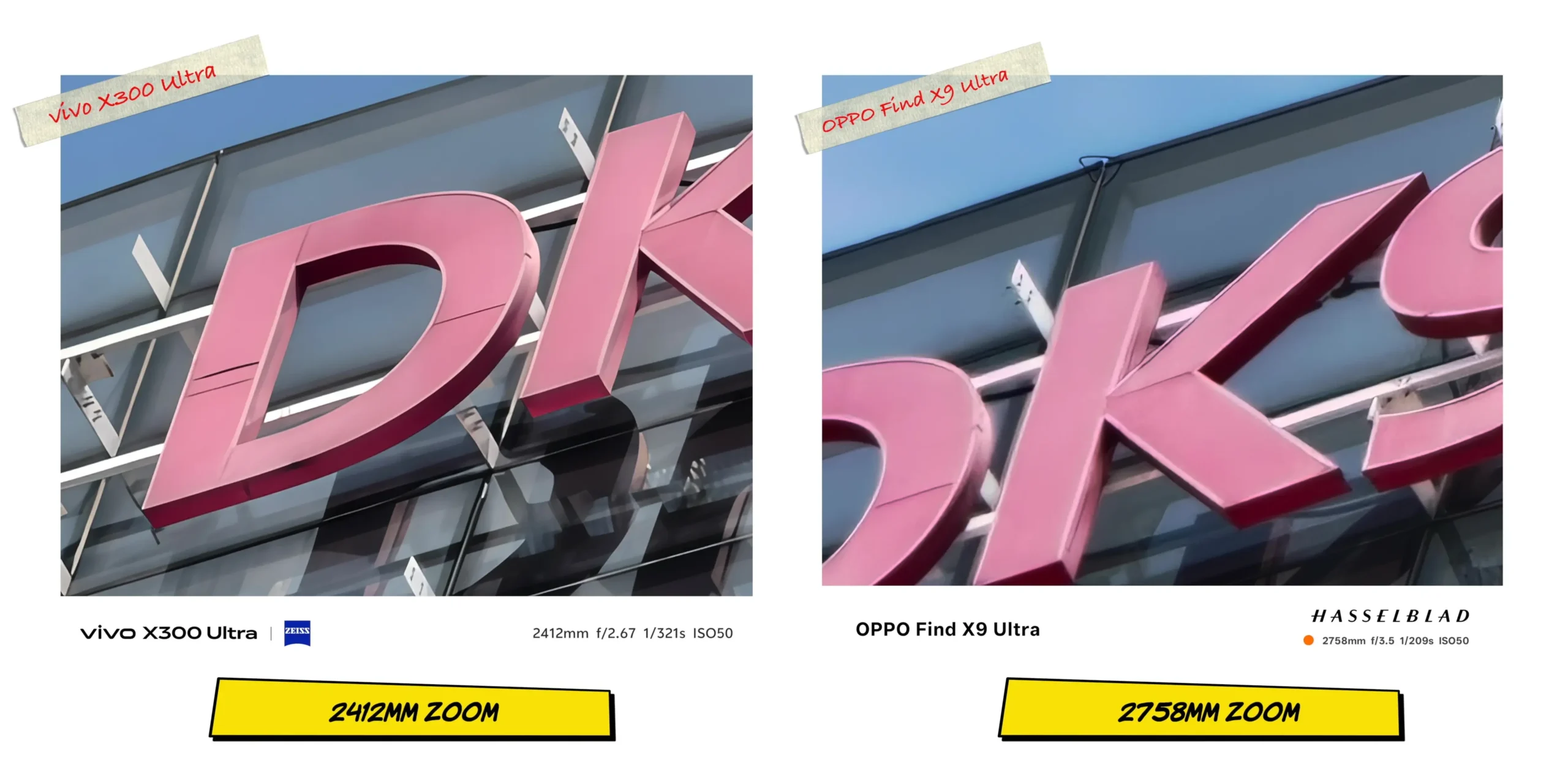
And that consistency remains even if you compare that 460mm to its max zoom of 2412mm of 70x on the vivo. But if you put OPPO’s 460mm against its max zoom of 2758mm, while yes, 120x is far superior to 70x zoom, but as seen over here, the quality was nowhere as good.
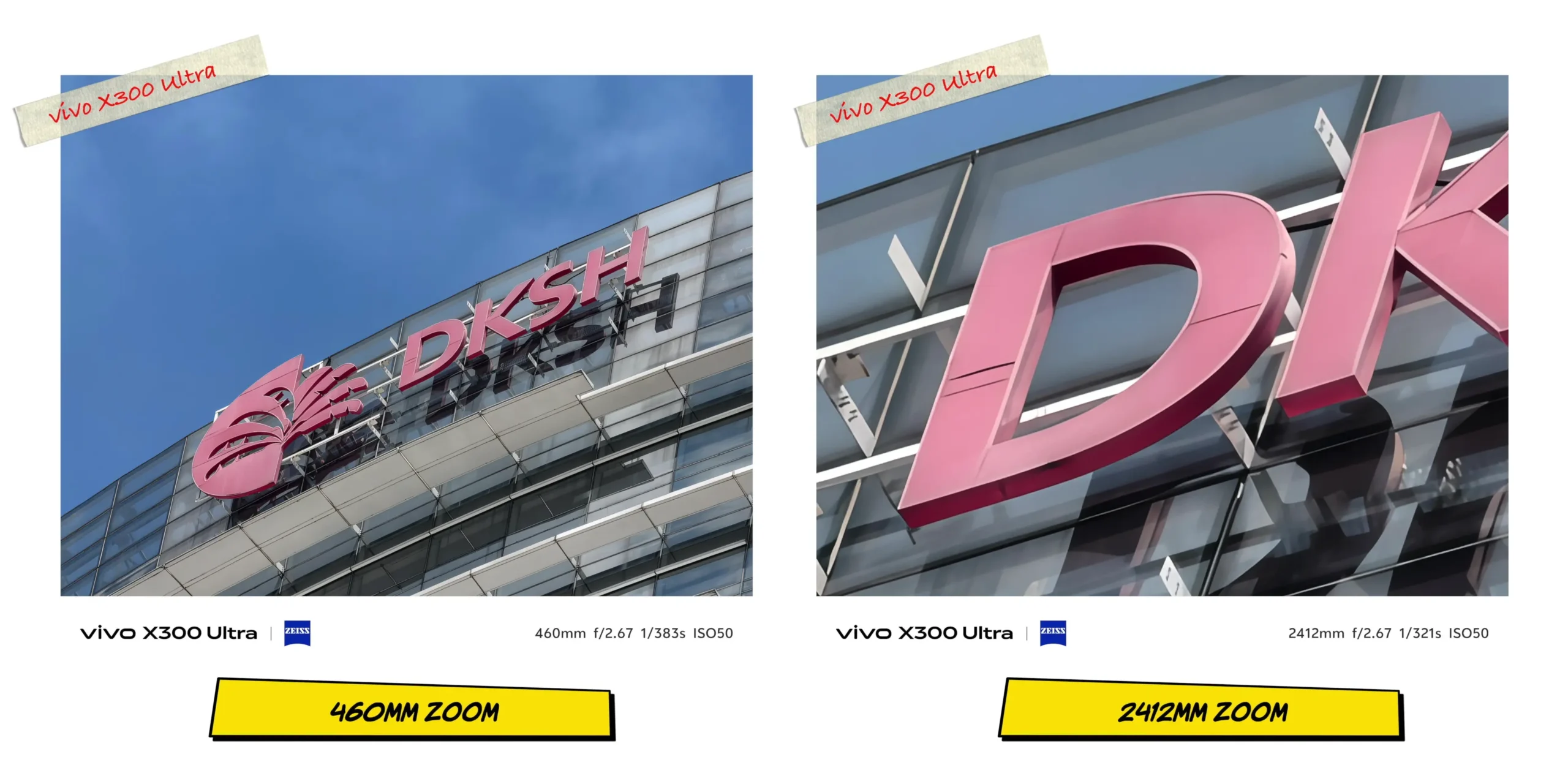
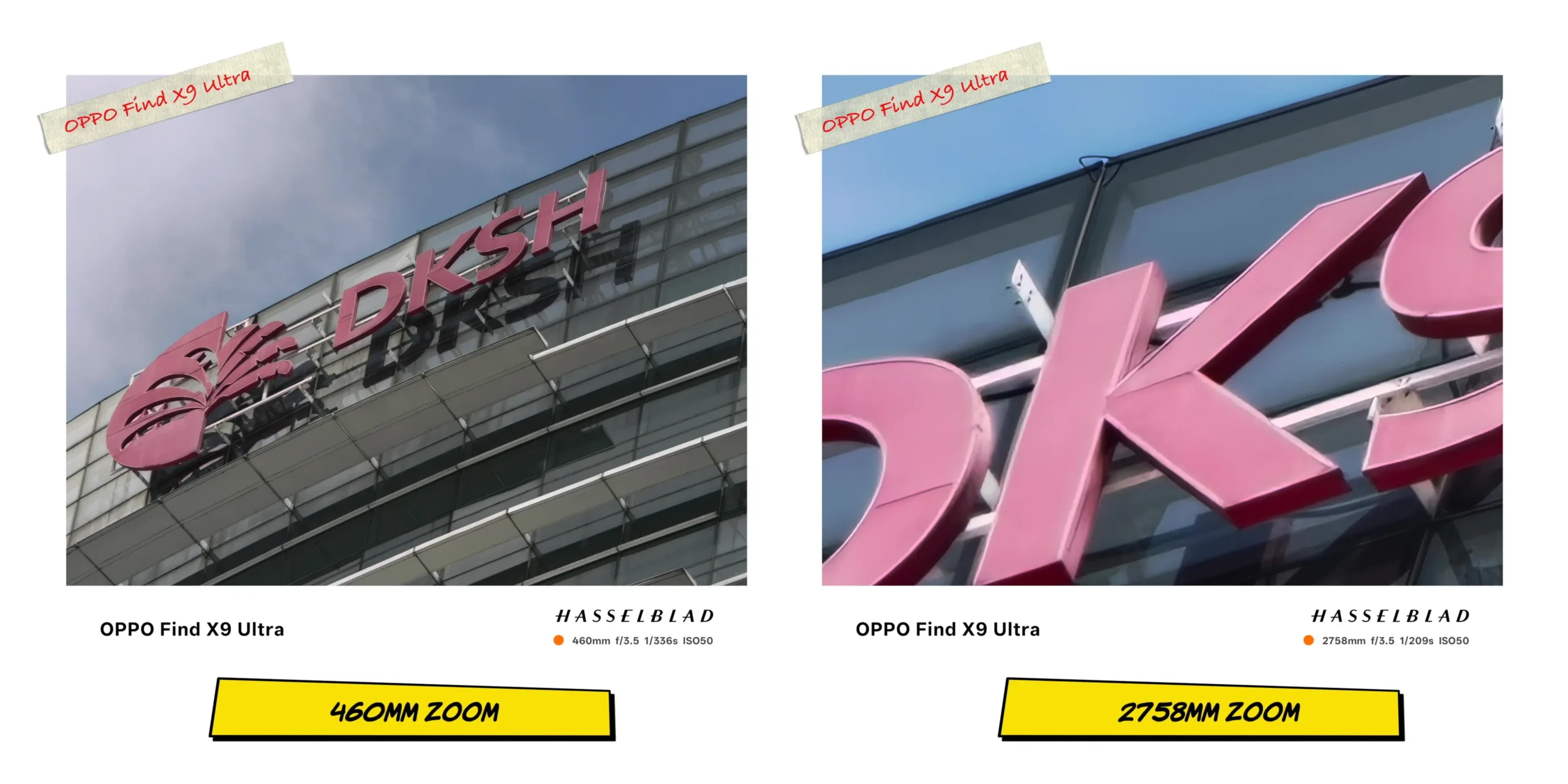
And what’s interesting is the fact that the vivo doesn’t actually technically “lose” on the zoom lens because as mentioned, each phone interprets the zoom values differently.
Because on the OPPO, 70x zoom is 1609mm, and on the vivo, the max zoom is 2412mm. So technically, if you compare the max OPPO zoom at 2758mm against vivo’s max zoom of 2412mm, while 70x and 120x sound like such a difference, from a focal length’s perspective, it is actually not far off. So yeah, hit the like button below if you found that fact interesting.
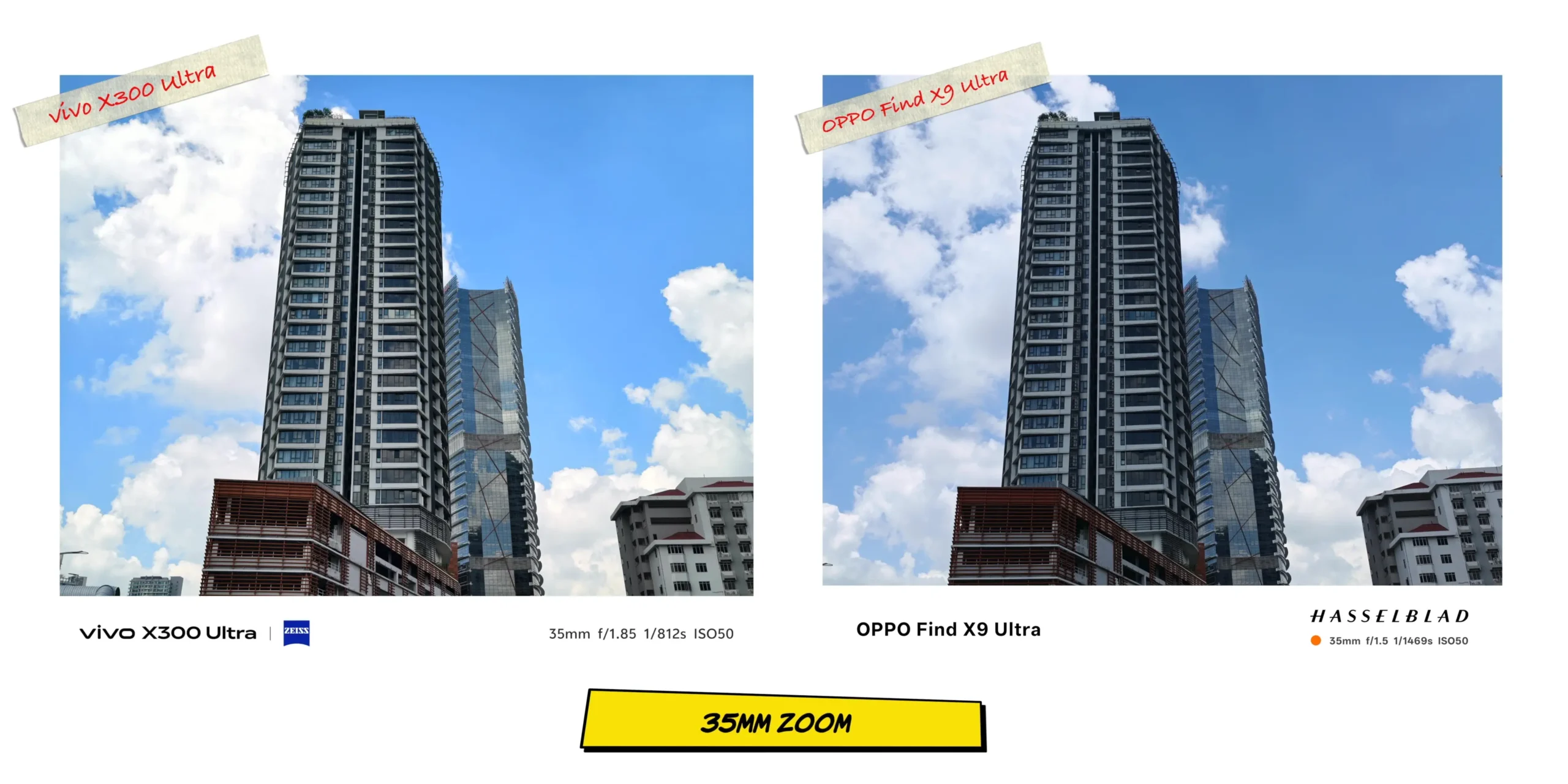
Then the story was the same, on the next batch of photos when comparing the 35mm focal length.
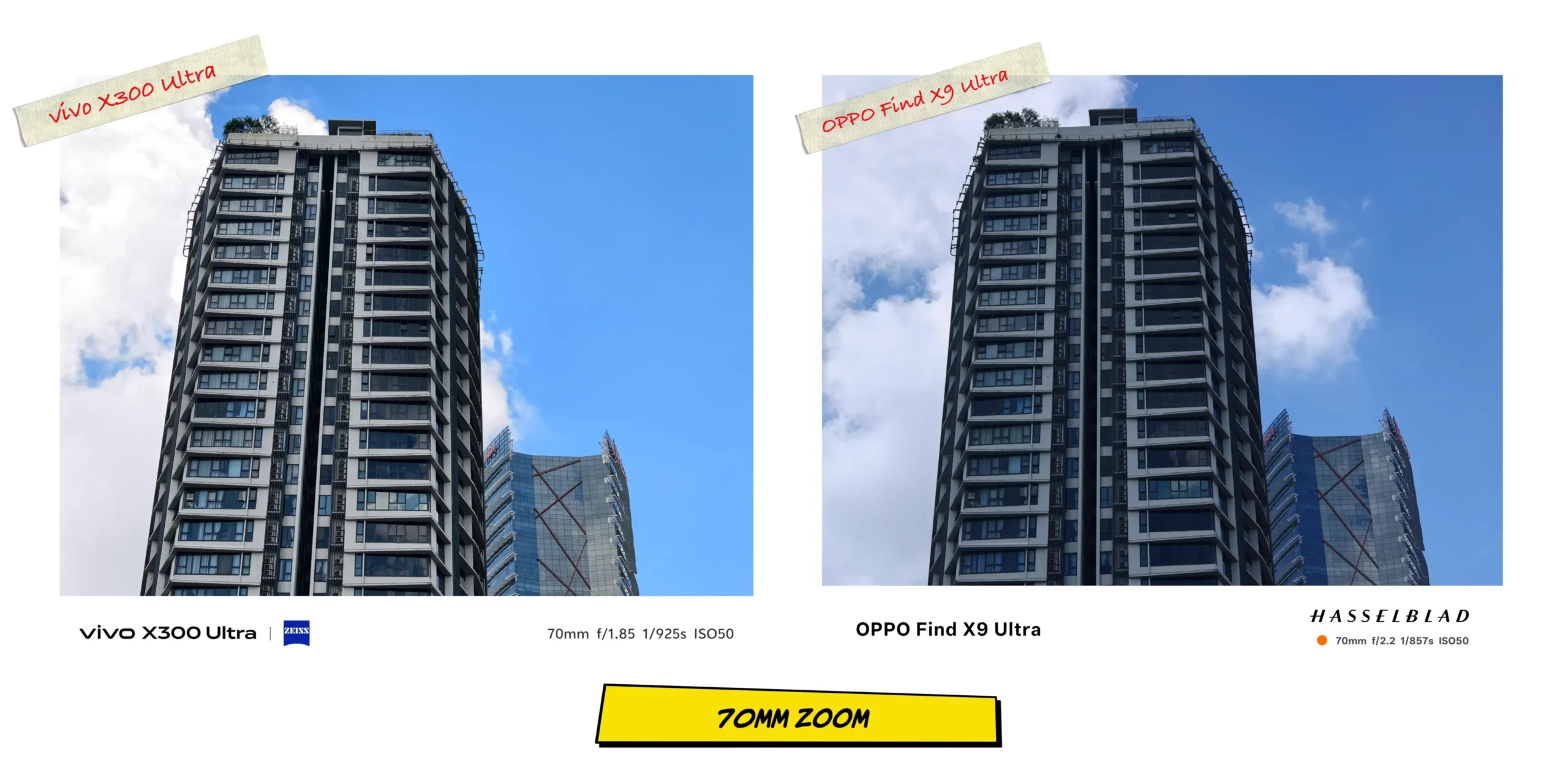
But the 70mm on the vivo were not only consistent with the 35mm earlier, but the building became a little darker on the OPPO for some strange reason.
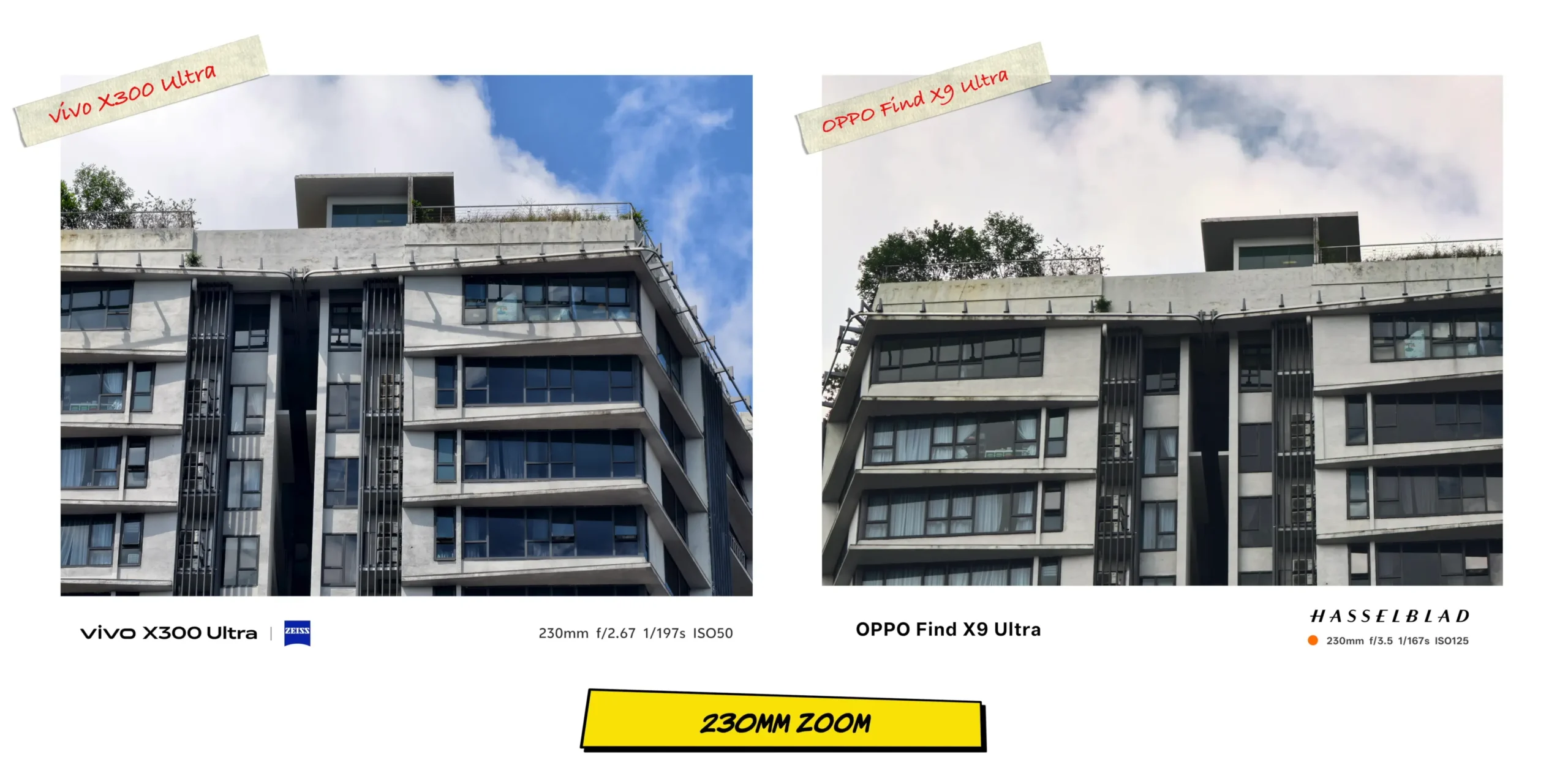
And then, out of nowhere, OPPO decided that life was dull because suddenly the 230mm focal length looked desaturated on the whole building compared to the vivo.
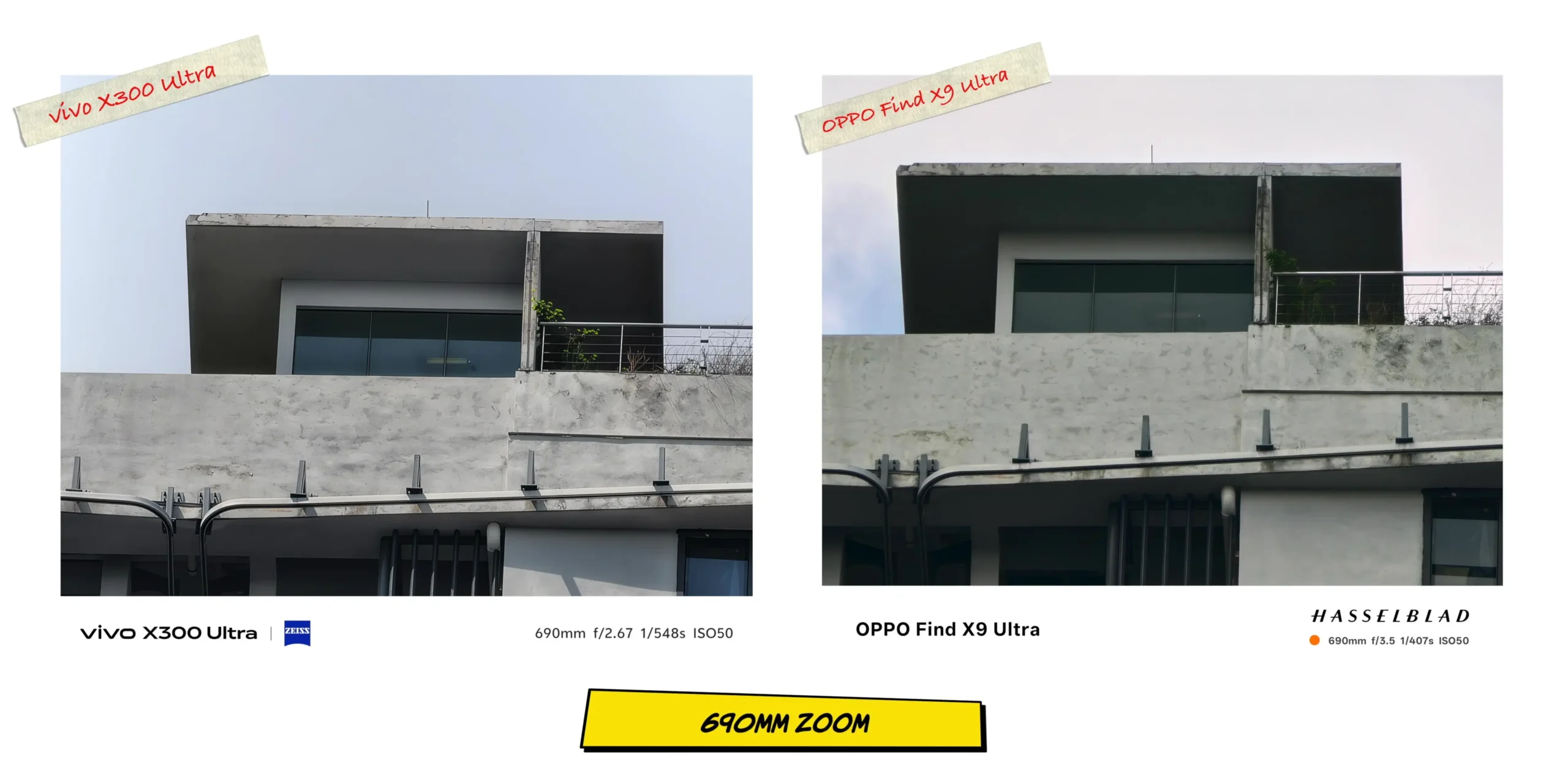
And I stopped at 690mm, and you can see more overall details and better color accuracy on the vivo as well.
Portrait Mode
As usual, my portrait mode tests start with a comparison of taking a photo of a person first. But here is another context because, once again, the focal length differs from phone to phone.
Firstly, on the vivo’s camera app, there is a 14mm, yeap, 14mm ultrawide portrait. Then there are 35mm, 50mm, 85mm, and 135mm. So that’s 5 focal lengths in total.
Compared to the OPPO, which has 23mm, 35mm, 47mm, 70mm, 85mm, 139mm, and even a super far 230mm. So that’s an extra two focal lengths on OPPO.
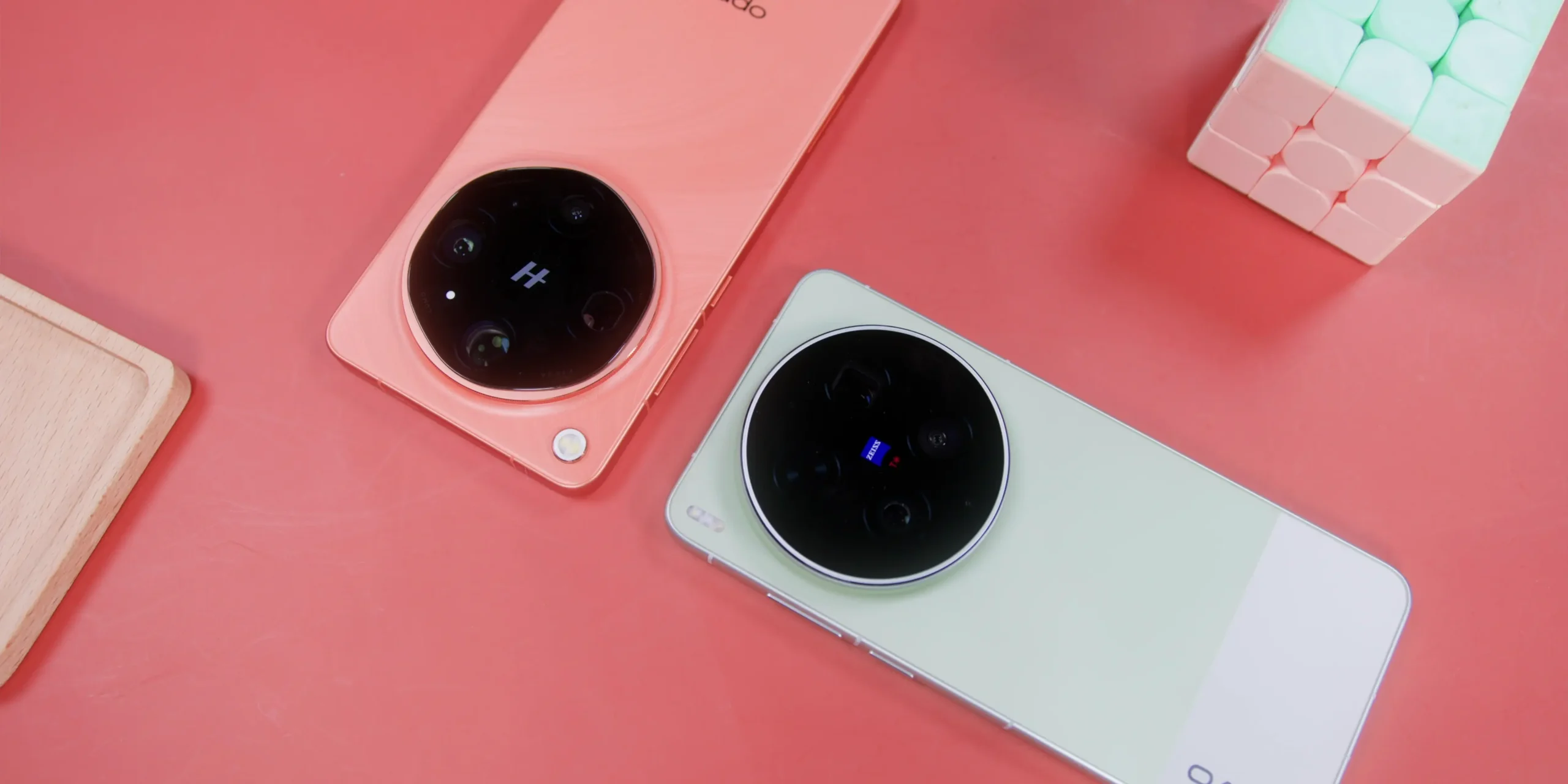
When it comes to the comparison of each focal length side by side, what we need to know is the subject’s edge detection, the color accuracy, and the dynamic range of the background blurred area for you and me to know which is better.
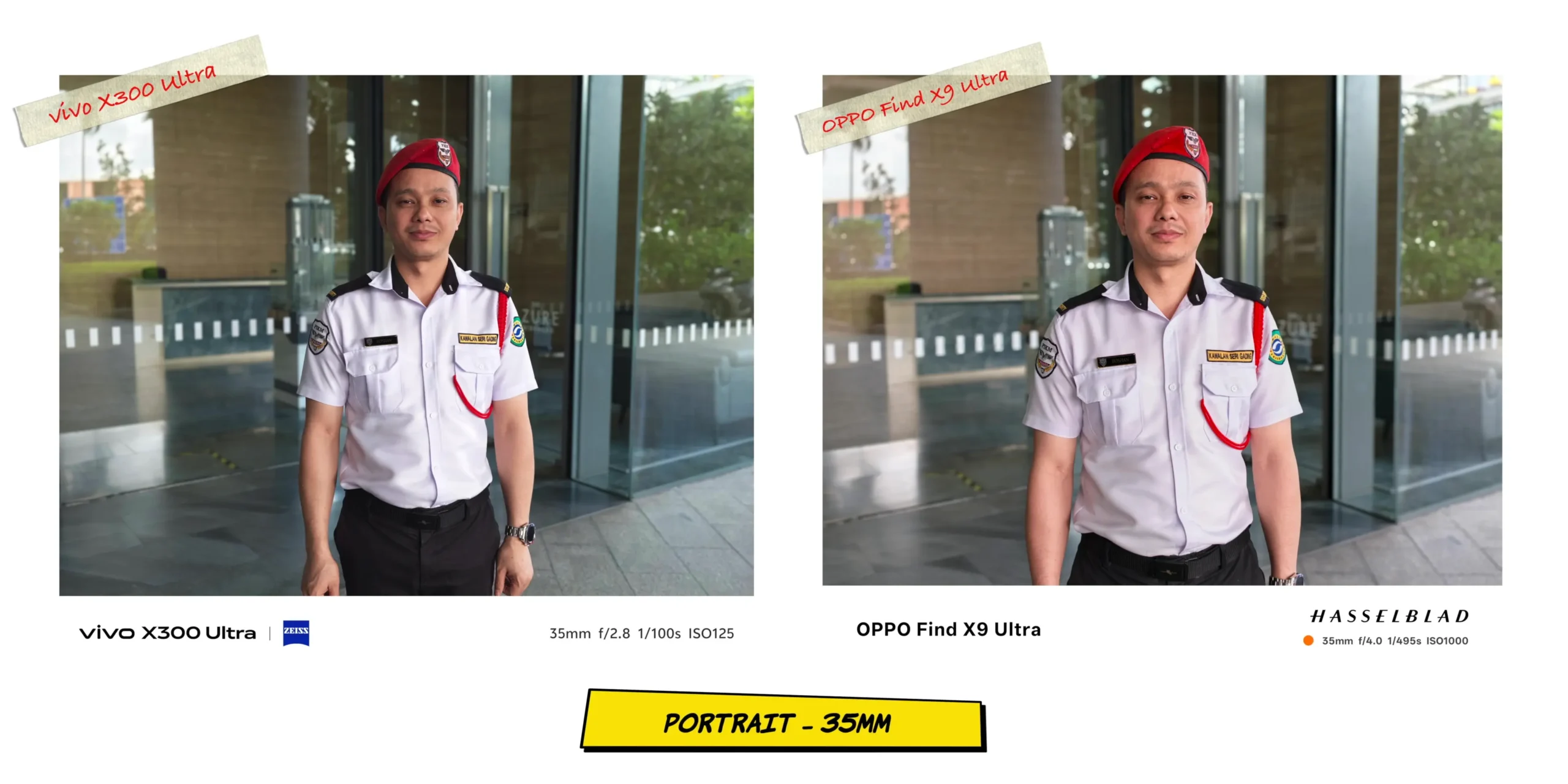
So when comparing the 35mm, both looked great in each of the areas mentioned earlier. But in terms of the color accuracy, the vivo did better at capturing Roshan’s red hat as it looked like that in real life.
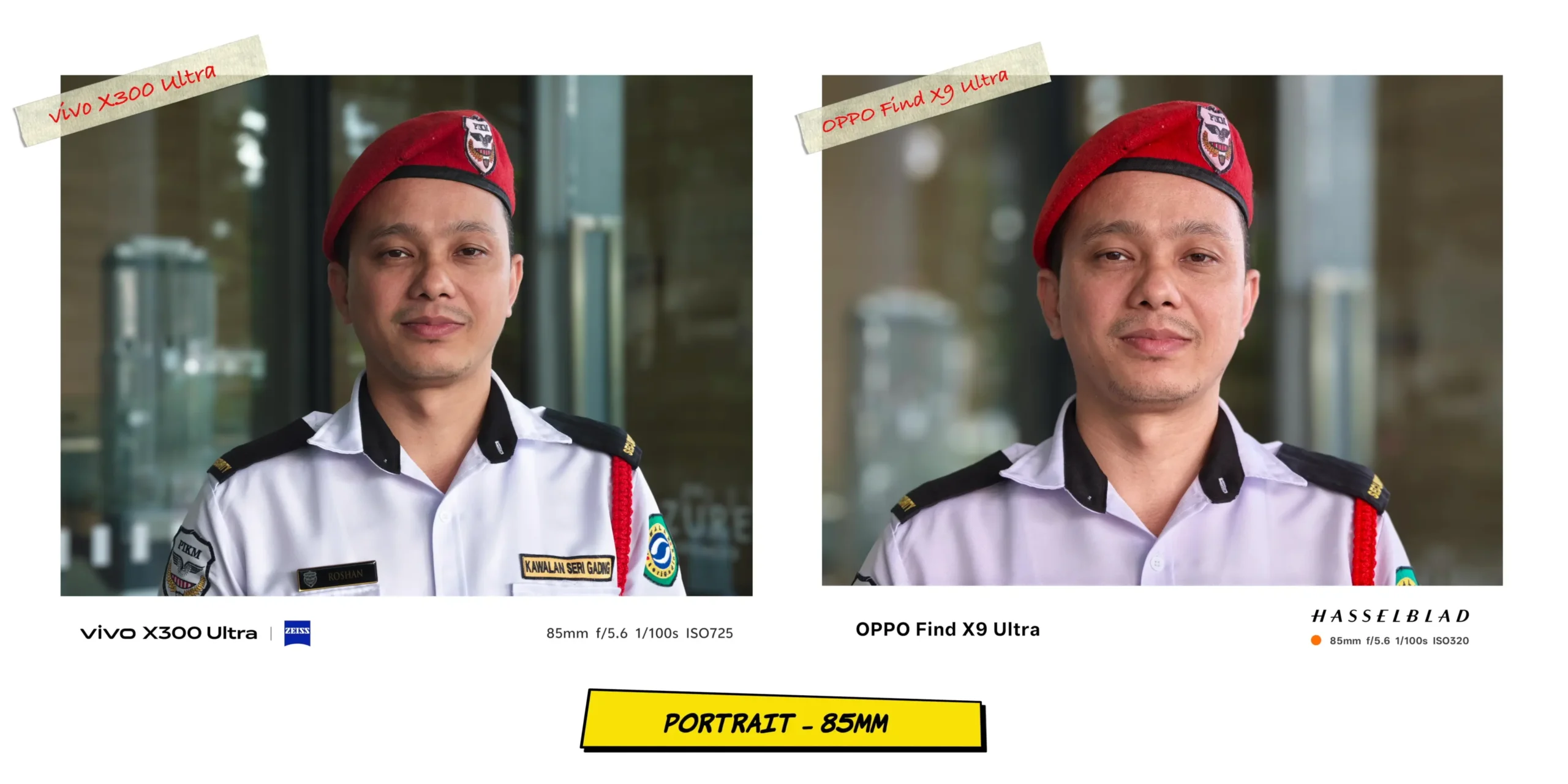
And the consistency was the same for the 85mm, as seen side by side. There is a better blend of contrast on Roshan’s face compared to OPPO making his whole face brighter, which was not the case in real life. But what’s interesting is that while both photos have the same aperture value of f/5.6 and even the same shutter speed too, the background was more blurred on the OPPO. Which is not a problem at all, but I do think that this is due to the image processing from OPPO.
So the only factor that OPPO has over here is the versatility, which could be good or maybe not so good. And what I mean by that is this: if you want to take photos without moving back and forth, vivo gives you that. Which means if you stand in one place, switch to portrait mode, you can take all of the 5 focal lengths over there with just a tiny shift back and forth.
But on the OPPO, since its maximum portrait mode is 230mm, you suddenly need to move quite far back. So imagine if you are busy trying to take a photo like this and then you knock somebody who is standing behind you, or God forbid, if you are next to a pond? You might end up swimming and taking a photo. Haha.
So for this case, I do prefer the ease of not moving too much and also the color accuracy more than anything else.
Now, when I reviewed the vivo X300 Ultra, I questioned vivo on this: “Why would anyone need a 14mm portrait mode? Isn’t it too wide?” But now, for situations like this, taking a photo of a subject, like a flower, then it makes sense because it allows you to take very interesting angles and be very close to the subject too.
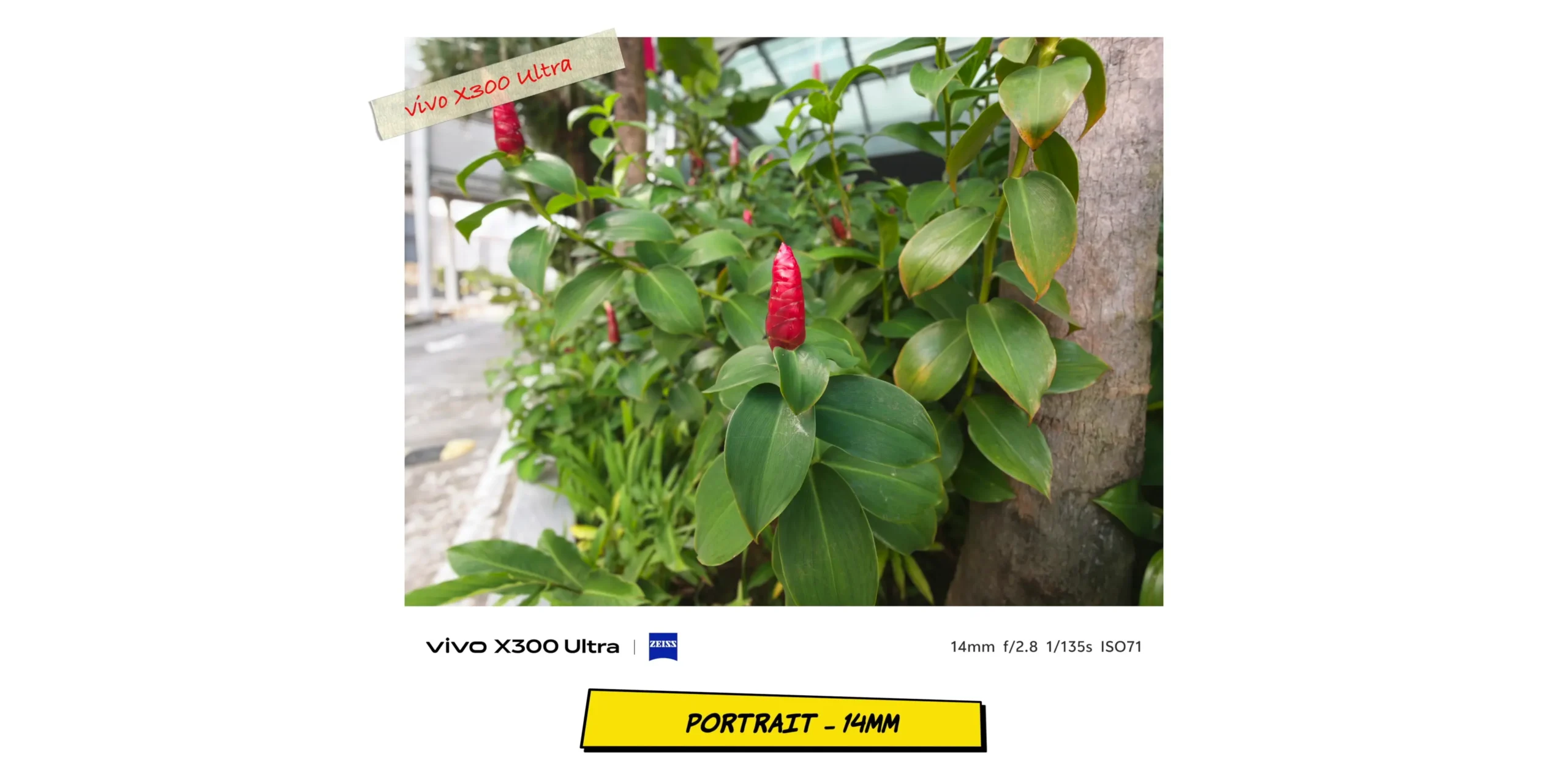
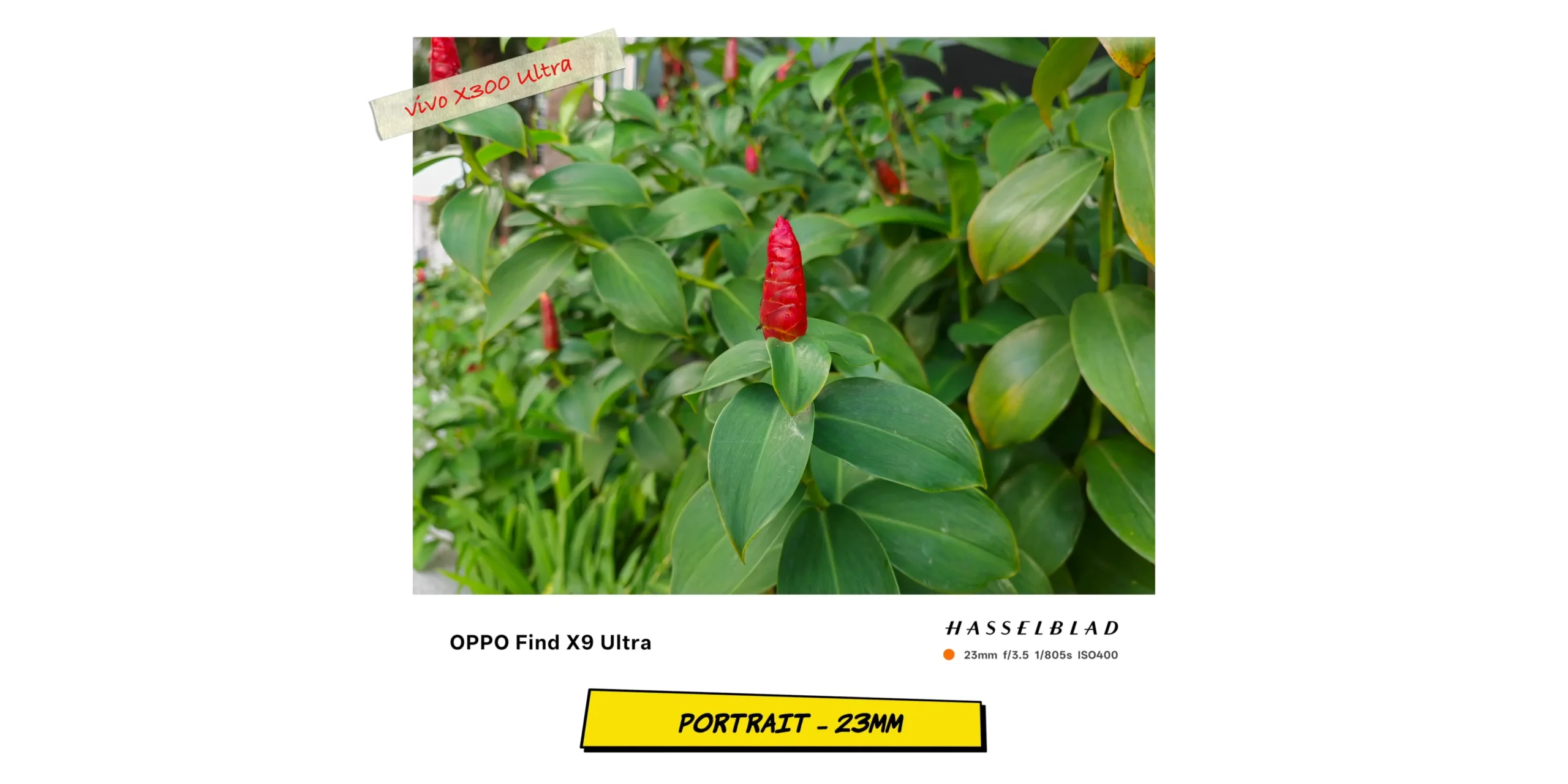
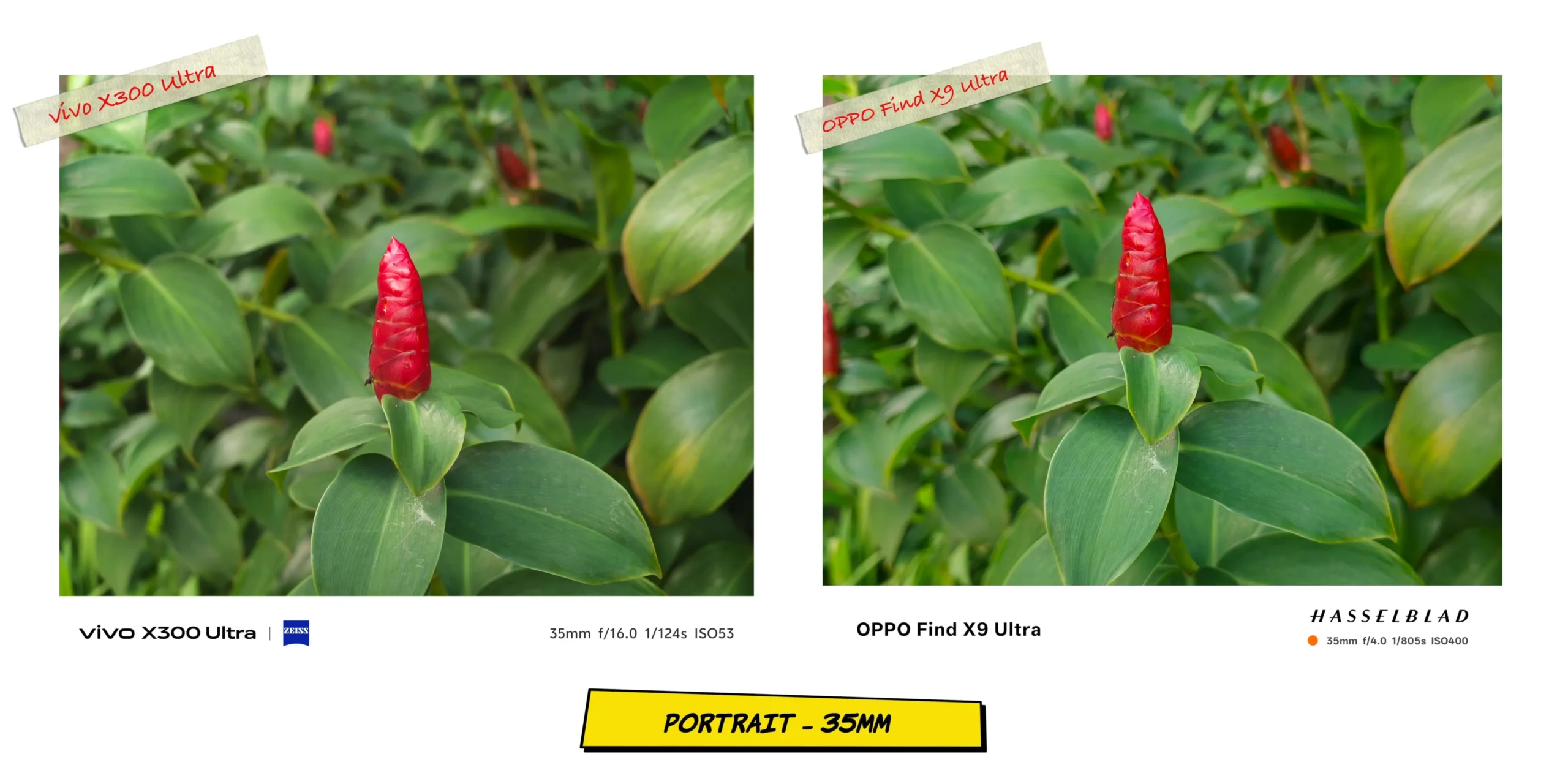
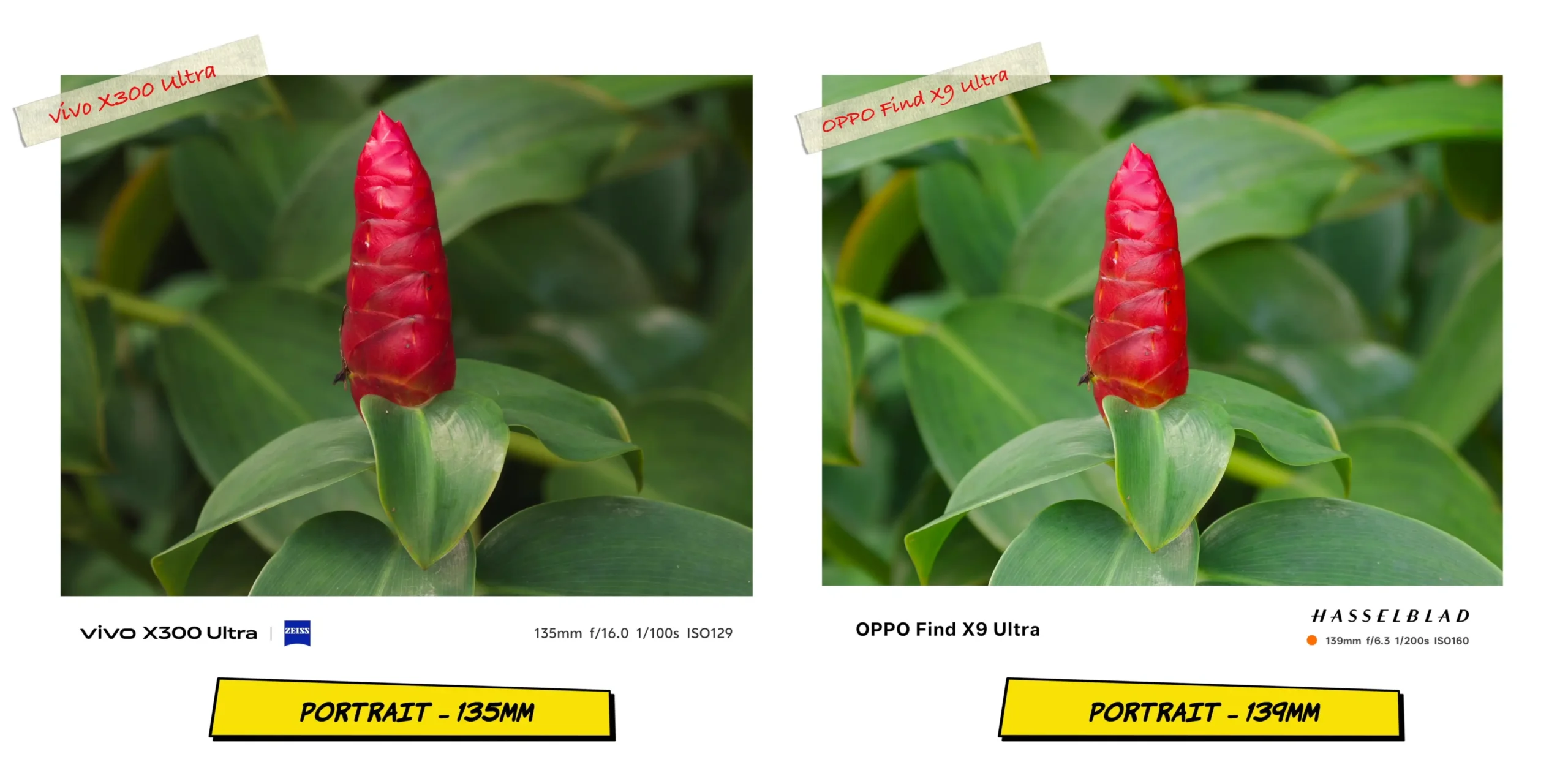
Compared to immediately starting at 23mm on the OPPO. However, when you compare the 35mm focal length on both, it turned out great, as seen side by side. And while the image was a little darker on the vivo at the max portrait focal length of 135mm, the subject to background blur was very similar too, even when you are looking at an aperture value of f/16 compared to the f/10 on the OPPO.
Macro Mode
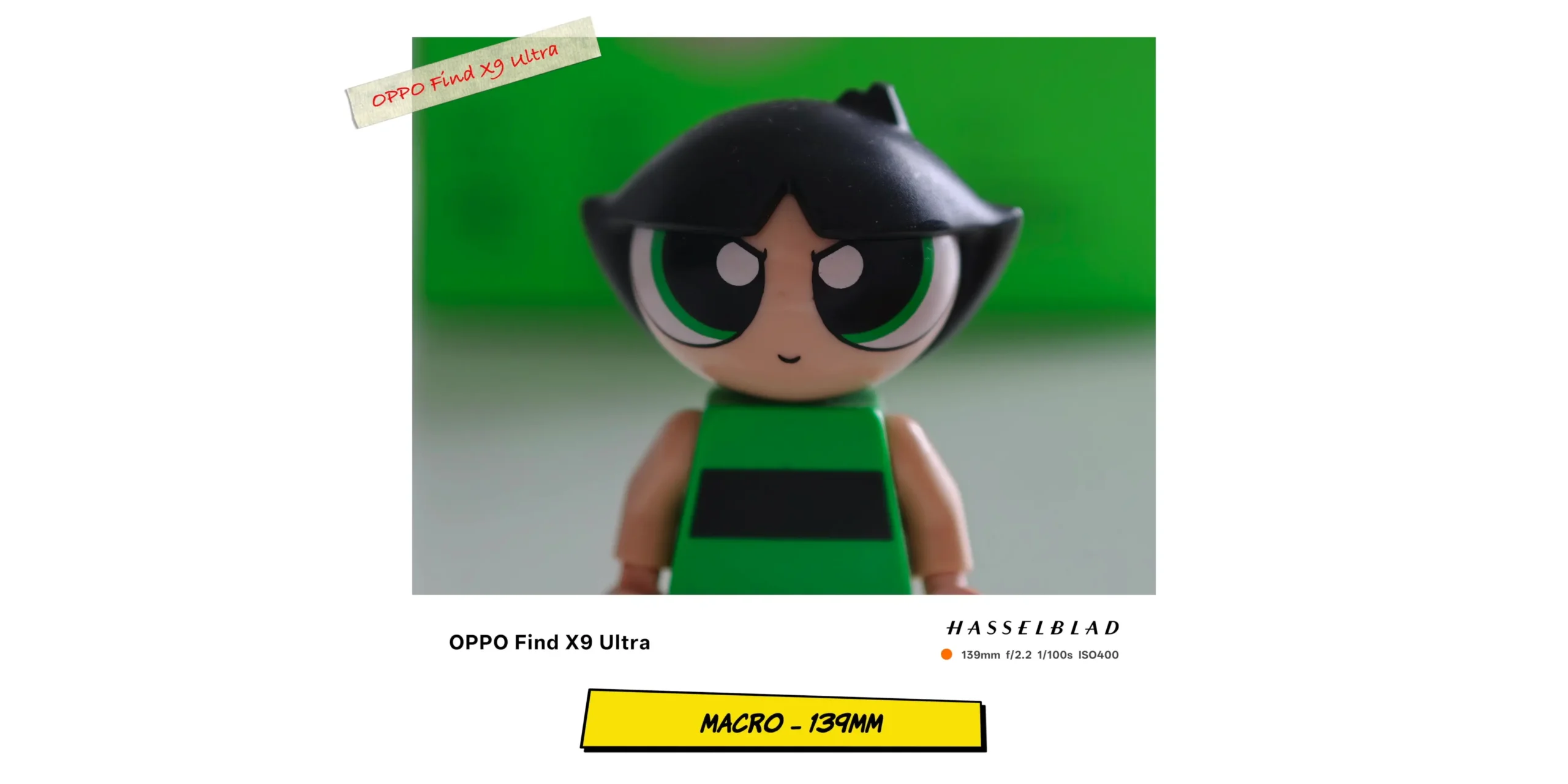
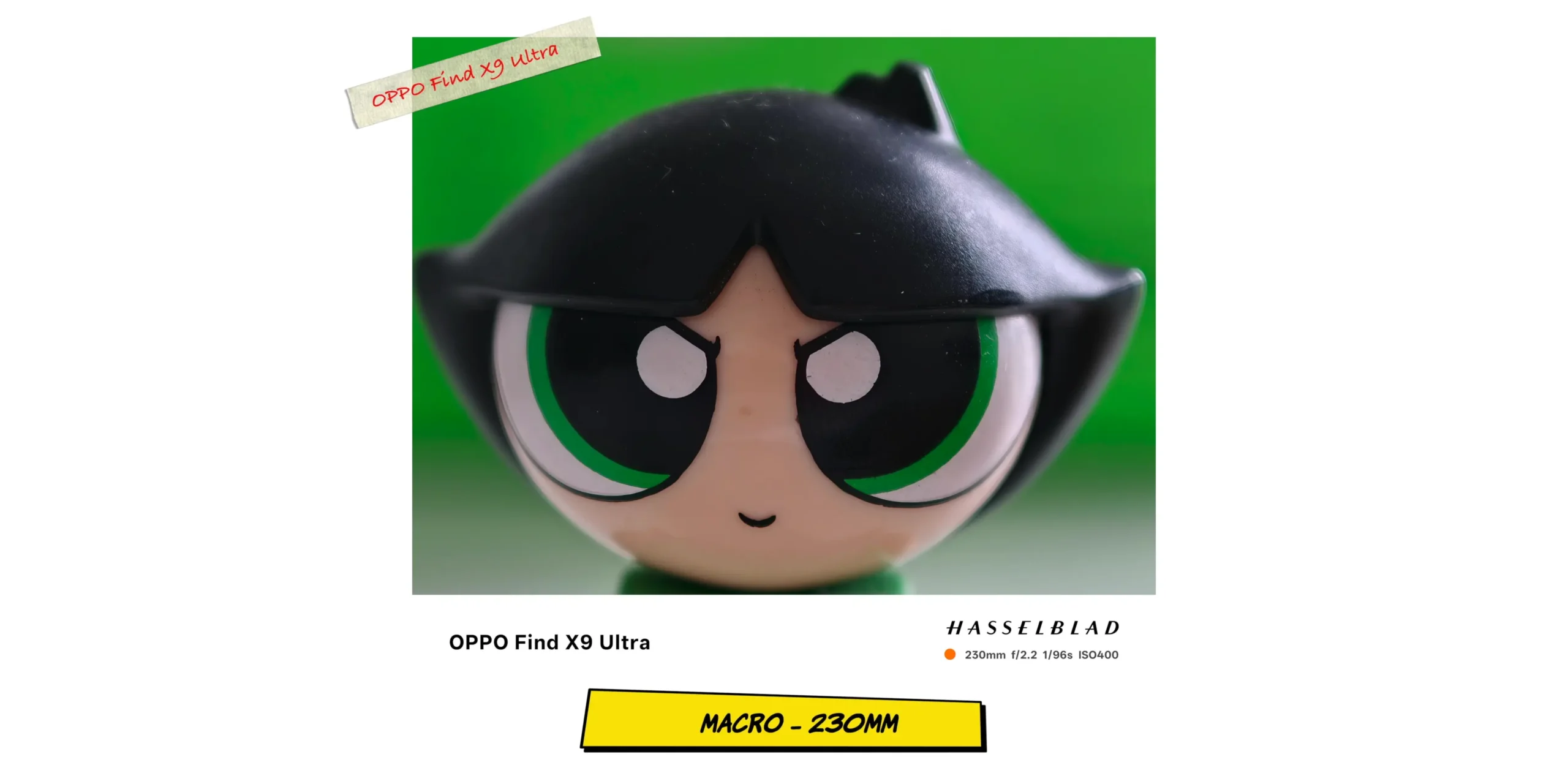
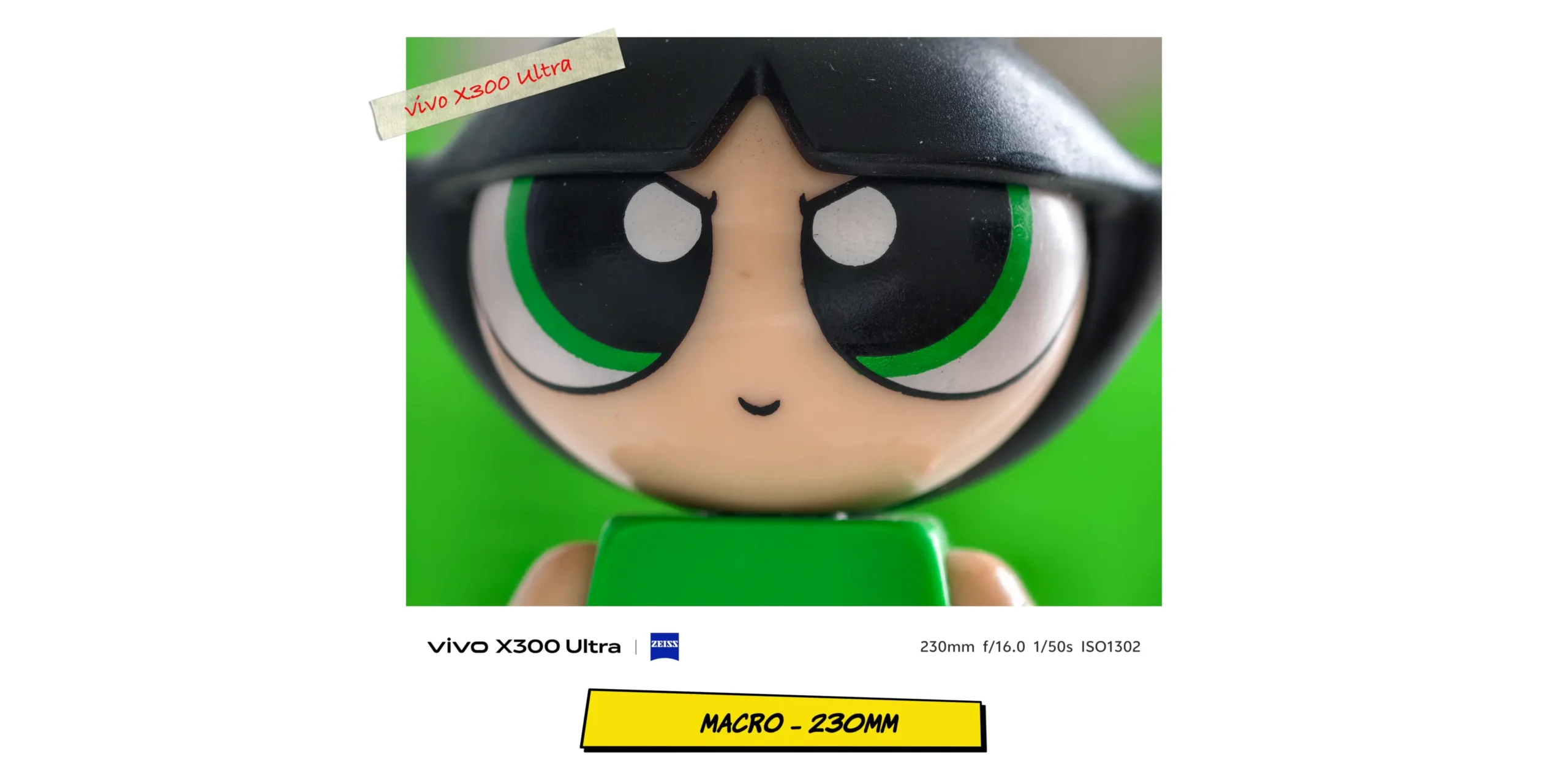
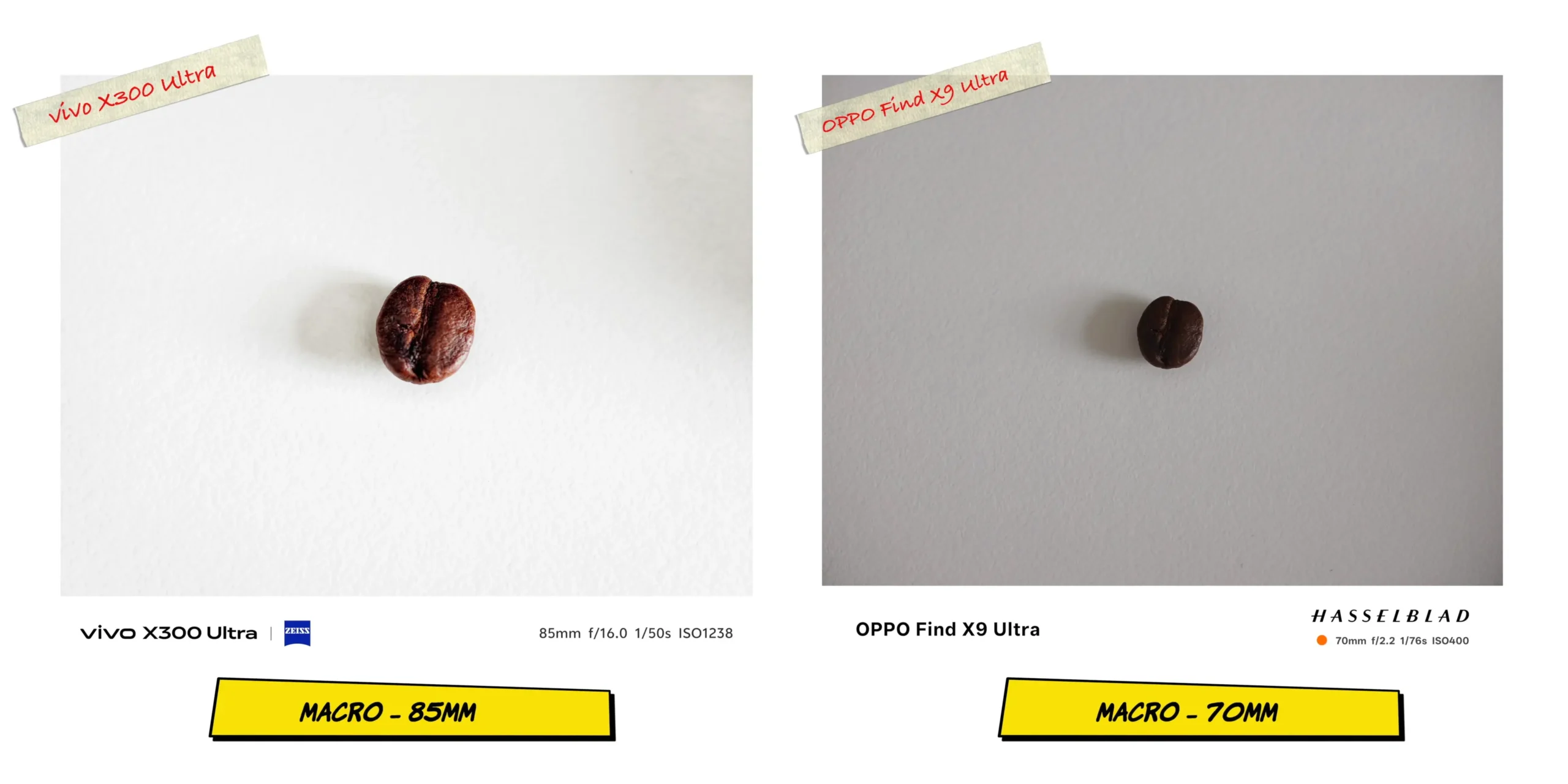
As for you “macro mode fans” out there, this comparison is for you. But before that, here is another context: on the OPPO, while there are many focal lengths over there, the best macro mode focal lengths are at 70mm, 139mm, and 230mm, which is equivalent to 3x, 6x, and 10x zoom.
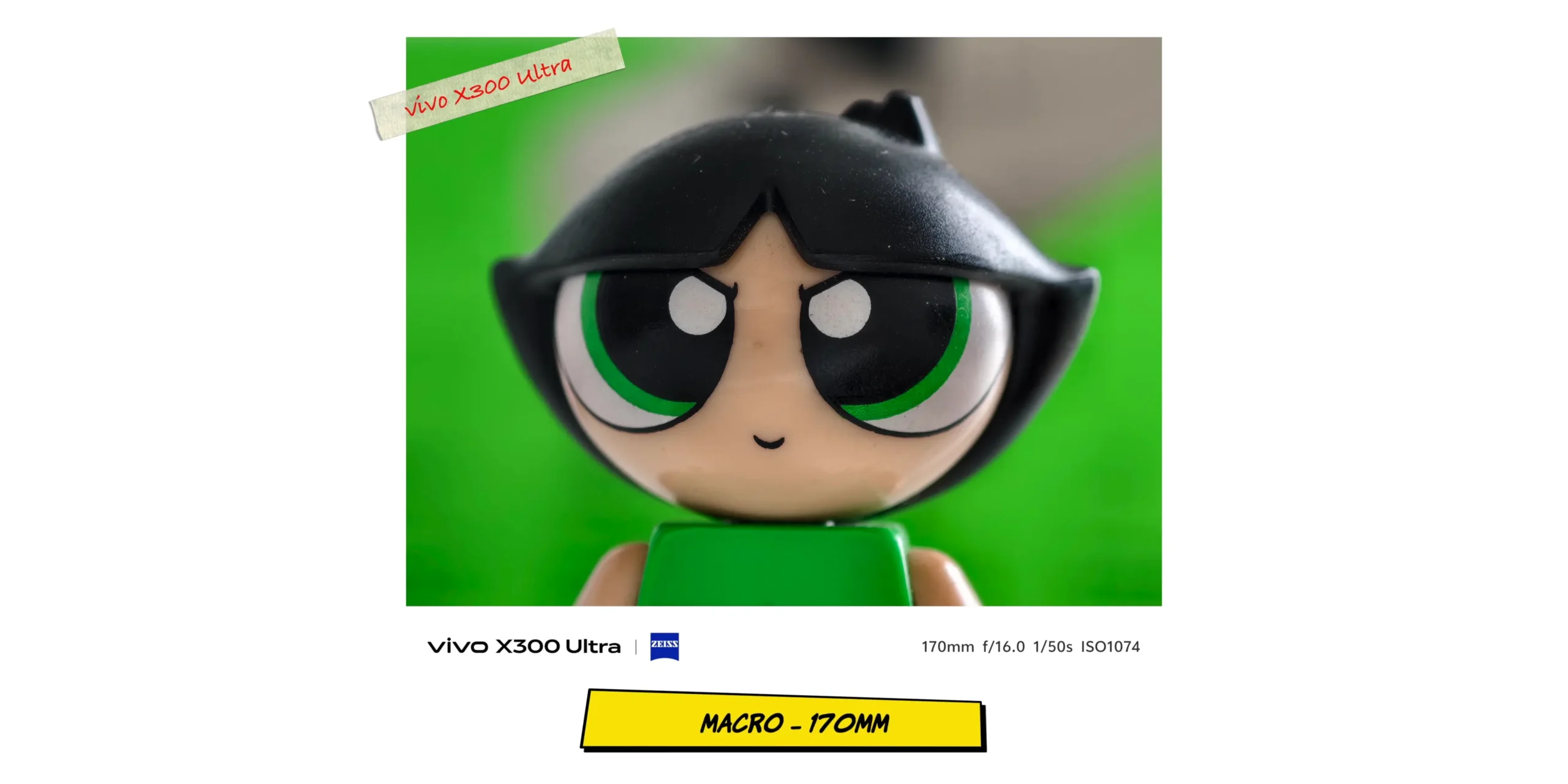
But on the vivo, which has other focal lengths, the best for a macro shot is 85mm, 170mm, and 230mm, which is 2.5x, 5x, and 6.7x zoom. Yeap, notice how it interprets the zoom value differently again?
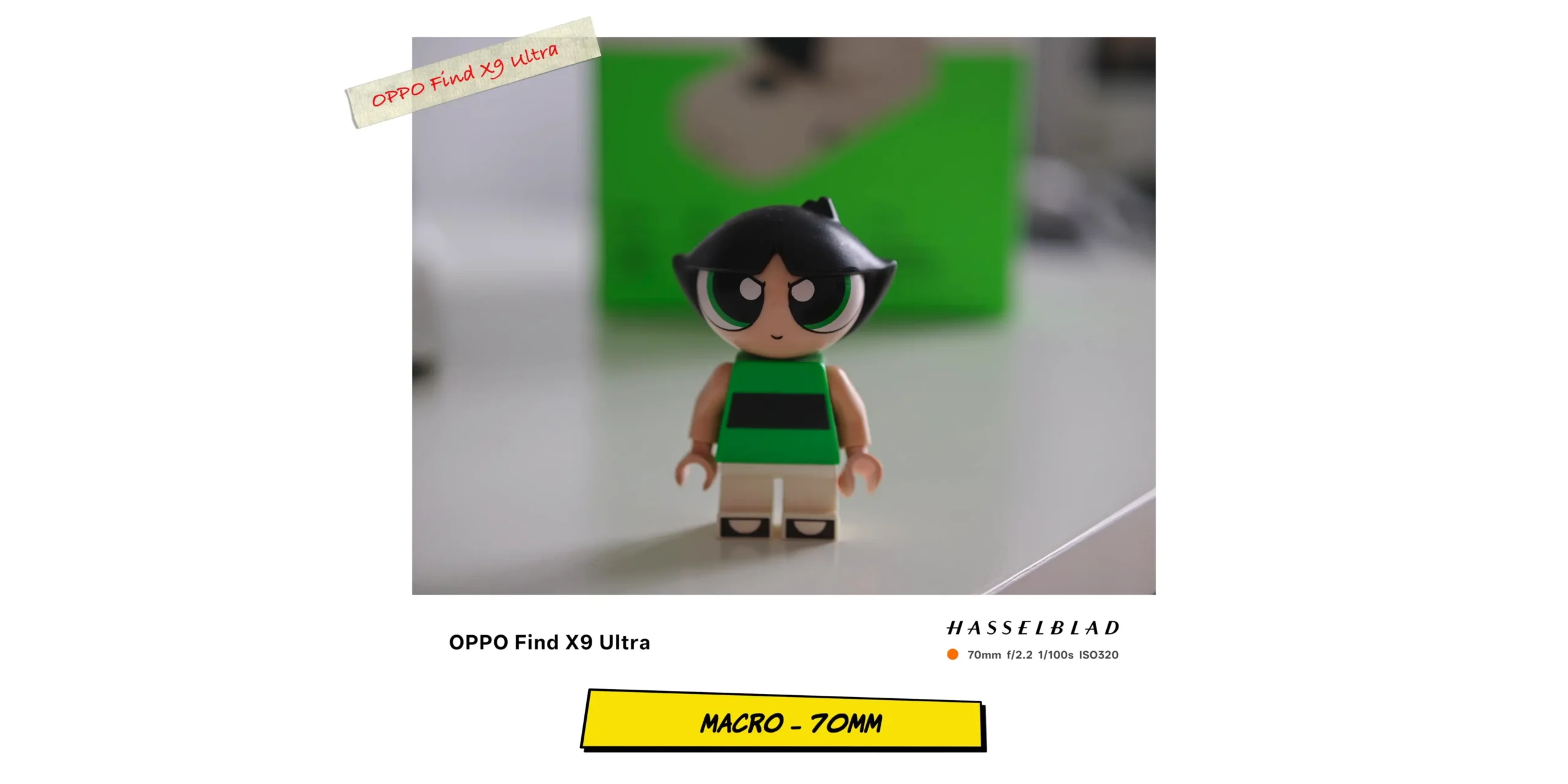
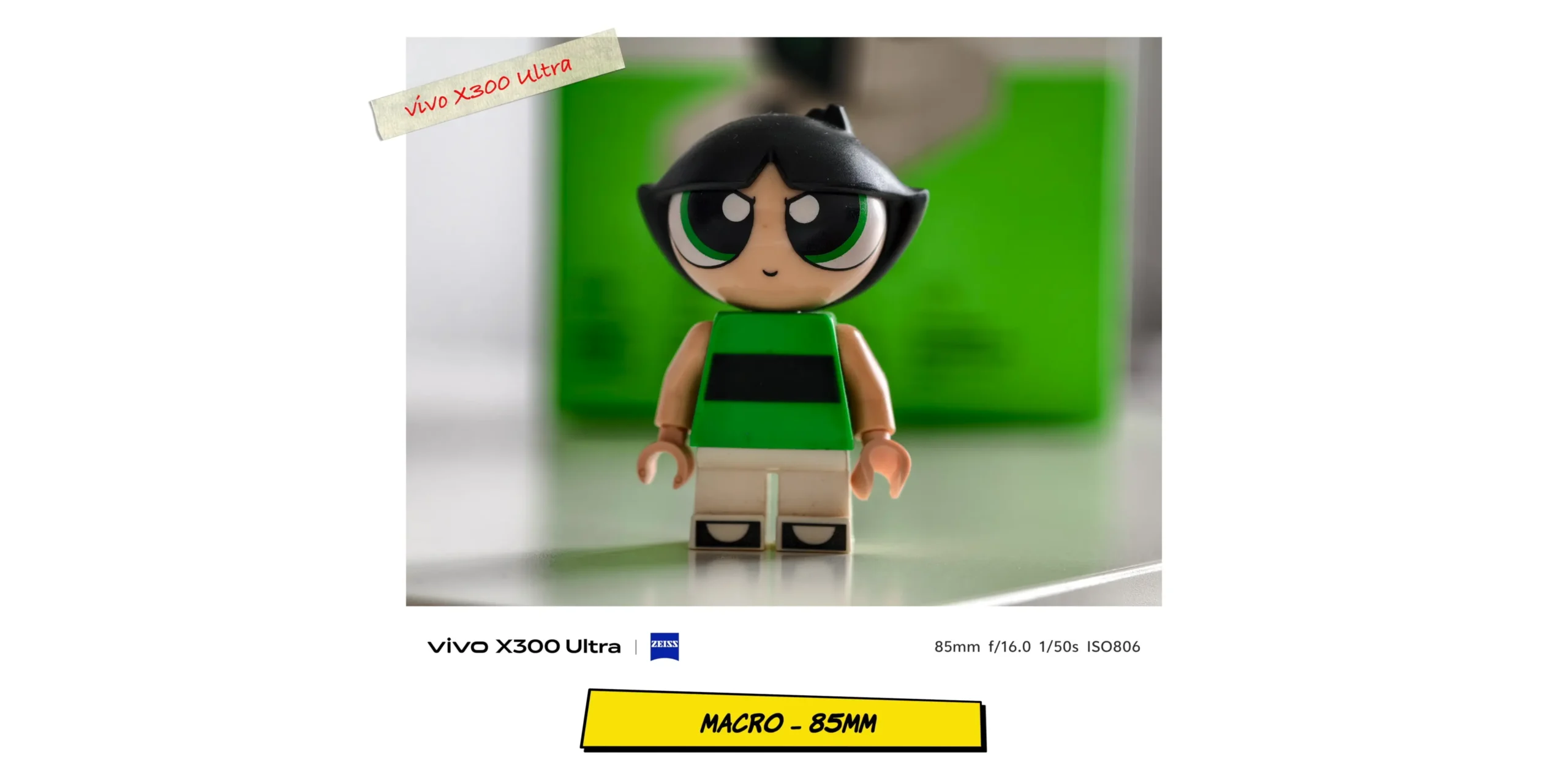
So just by comparing the photos of this single coffee bean at 85mm on the vivo against 70mm on the OPPO, the details on the coffee bean were brighter on the vivo.
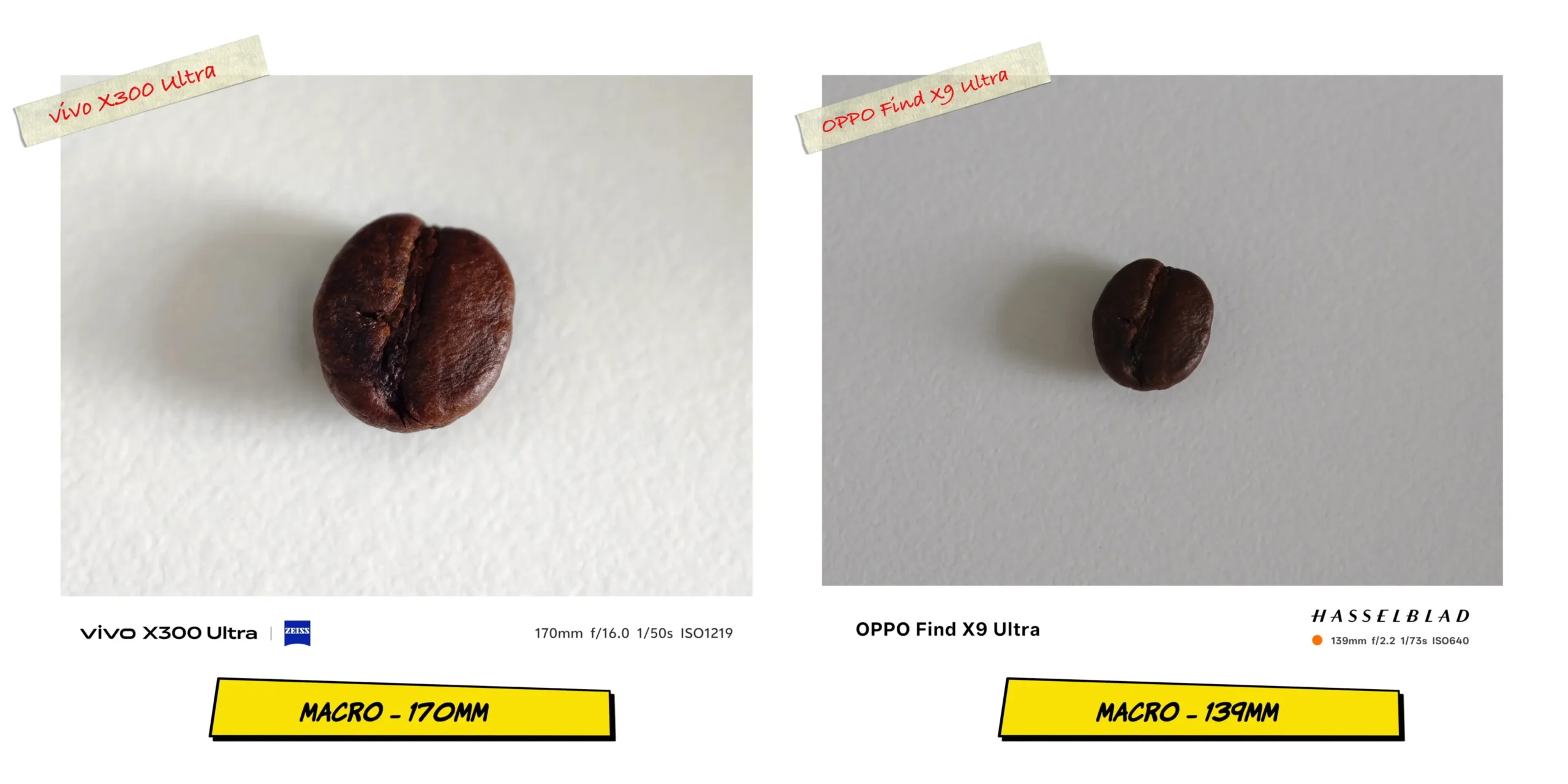
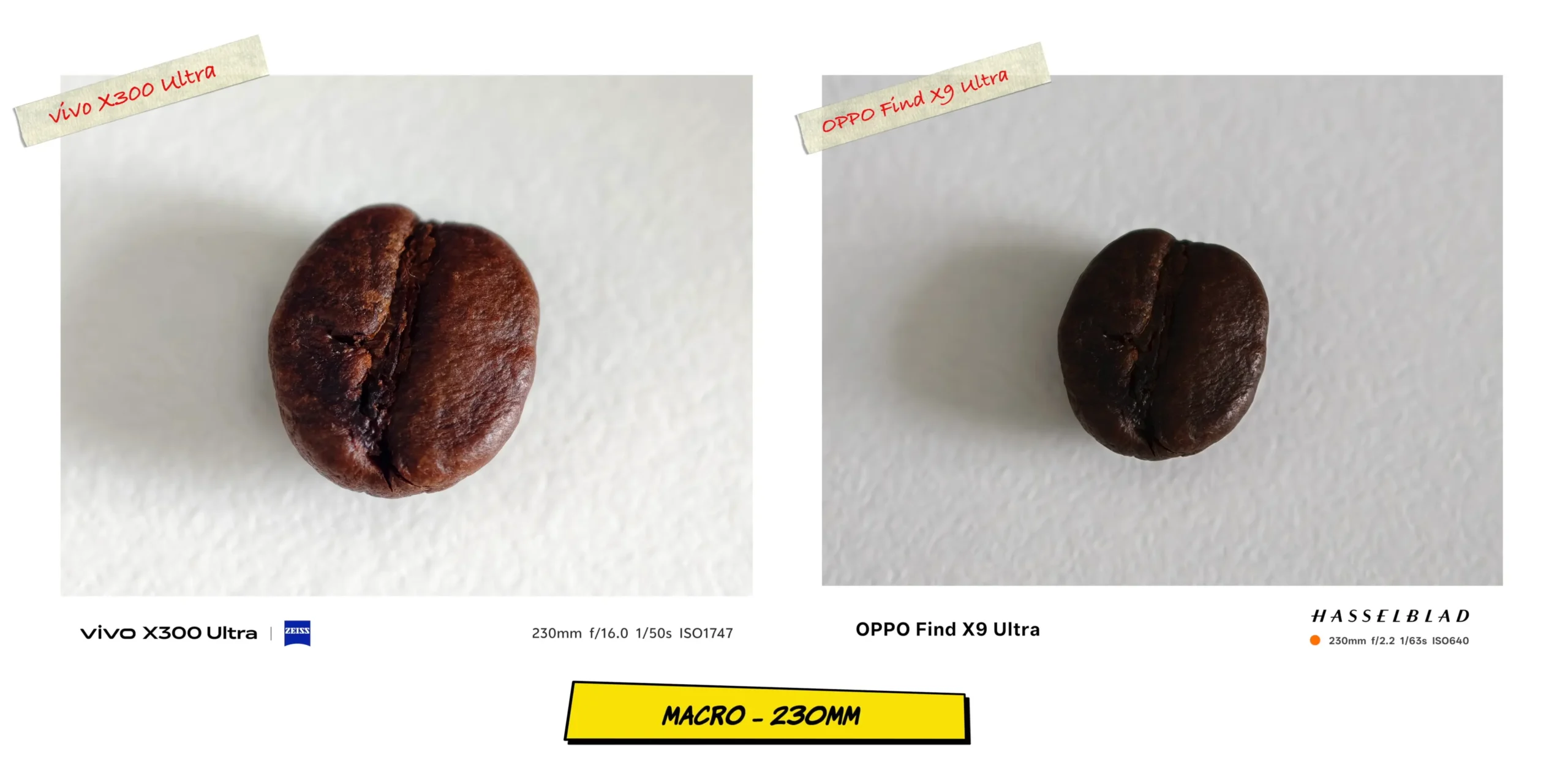
Then the details were more prominent on the 170mm on the vivo against the 139mm macro shots on the OPPO, and it was so much better at the max focal length of 230mm for vivo, as seen over here.
Selfie
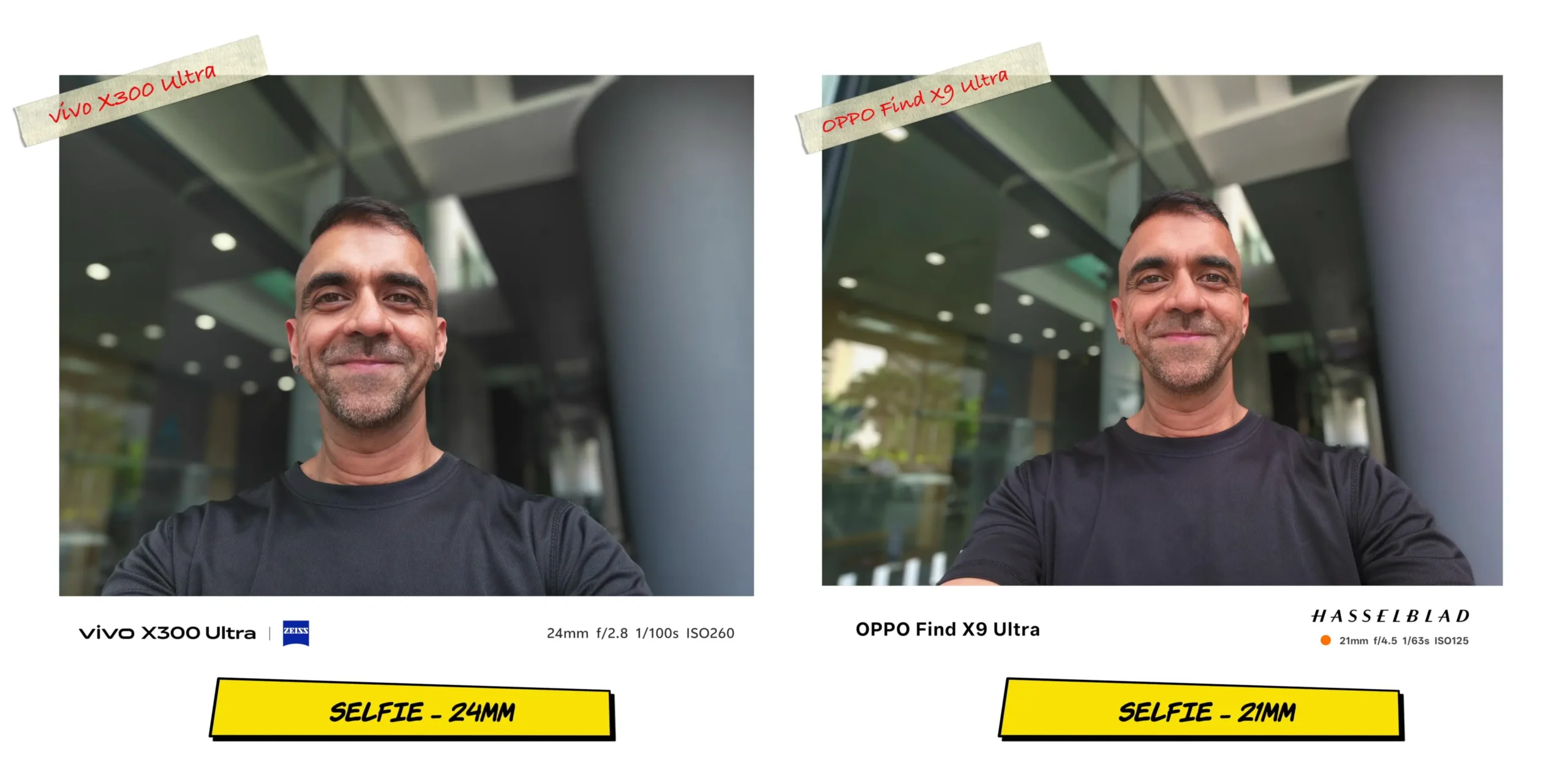
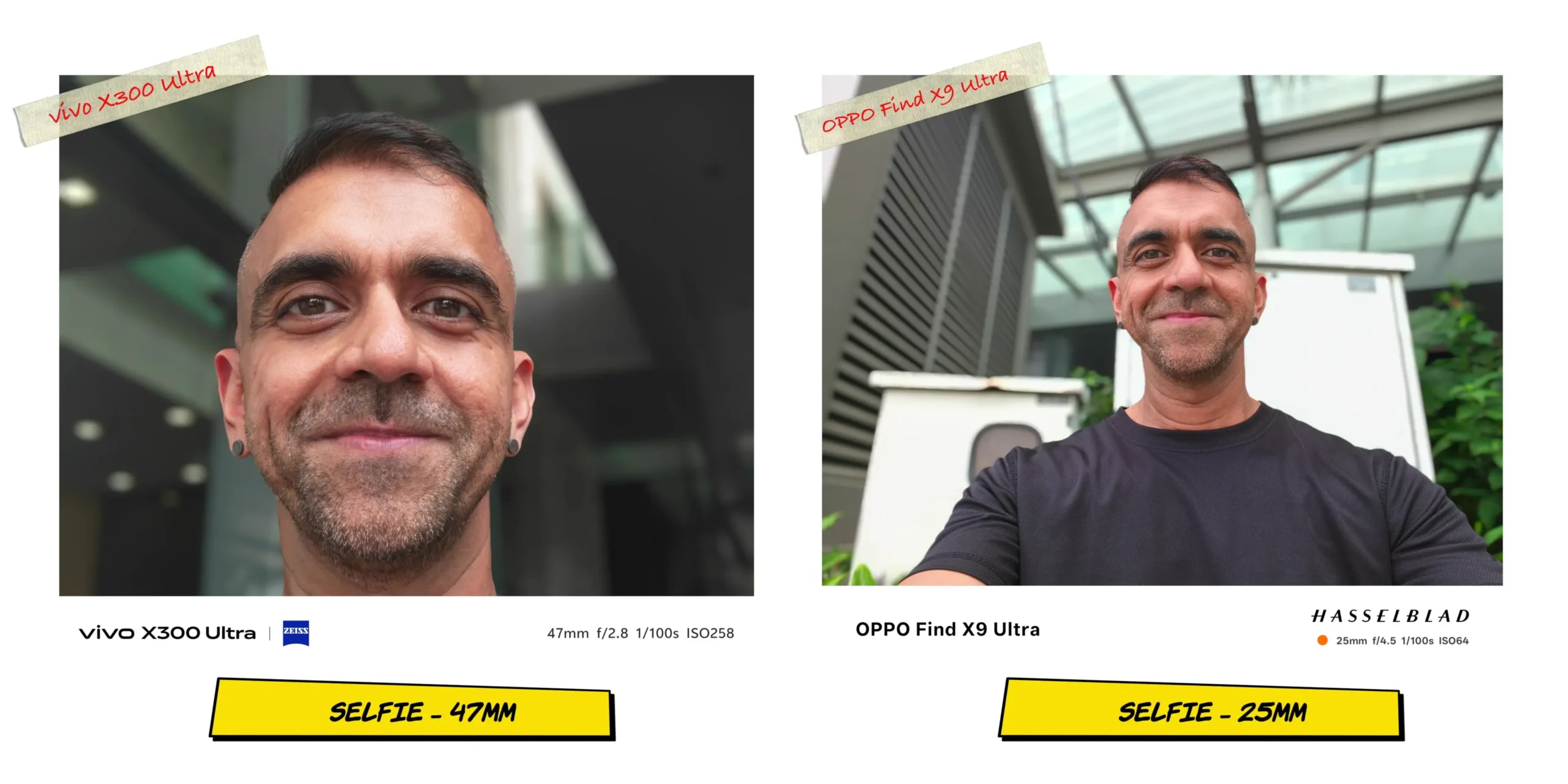
So another area of being a little different is the Selfie Portrait’s focal lengths. On the vivo, there is the regular wide selfie and a super close-up of 2x. But on the OPPO, it has an almost “ultrawide” and also a main. I do prefer the ultrawide capability compared to 2x mode. Still don’t know who asked for this, but yes, it is there.
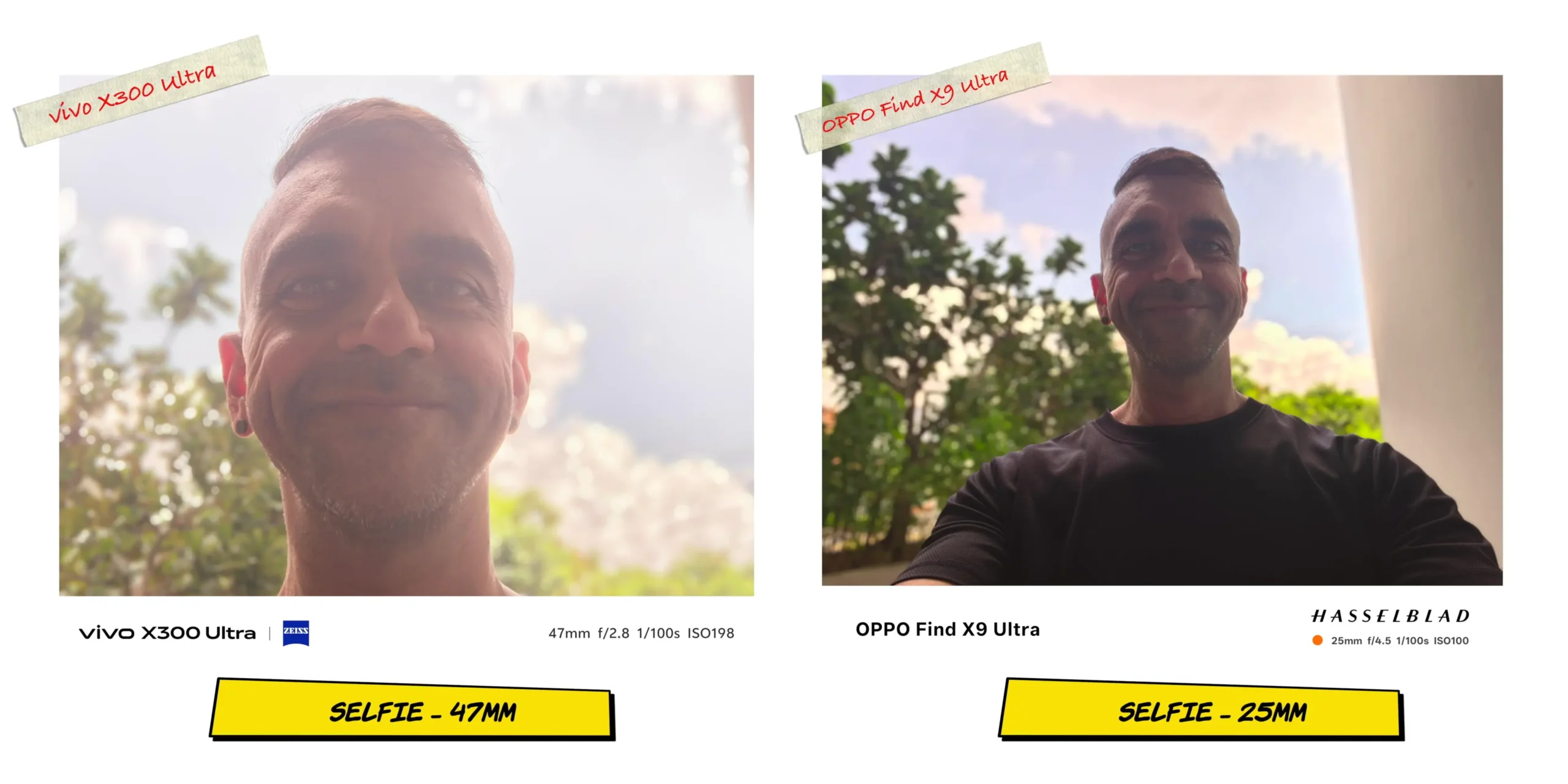
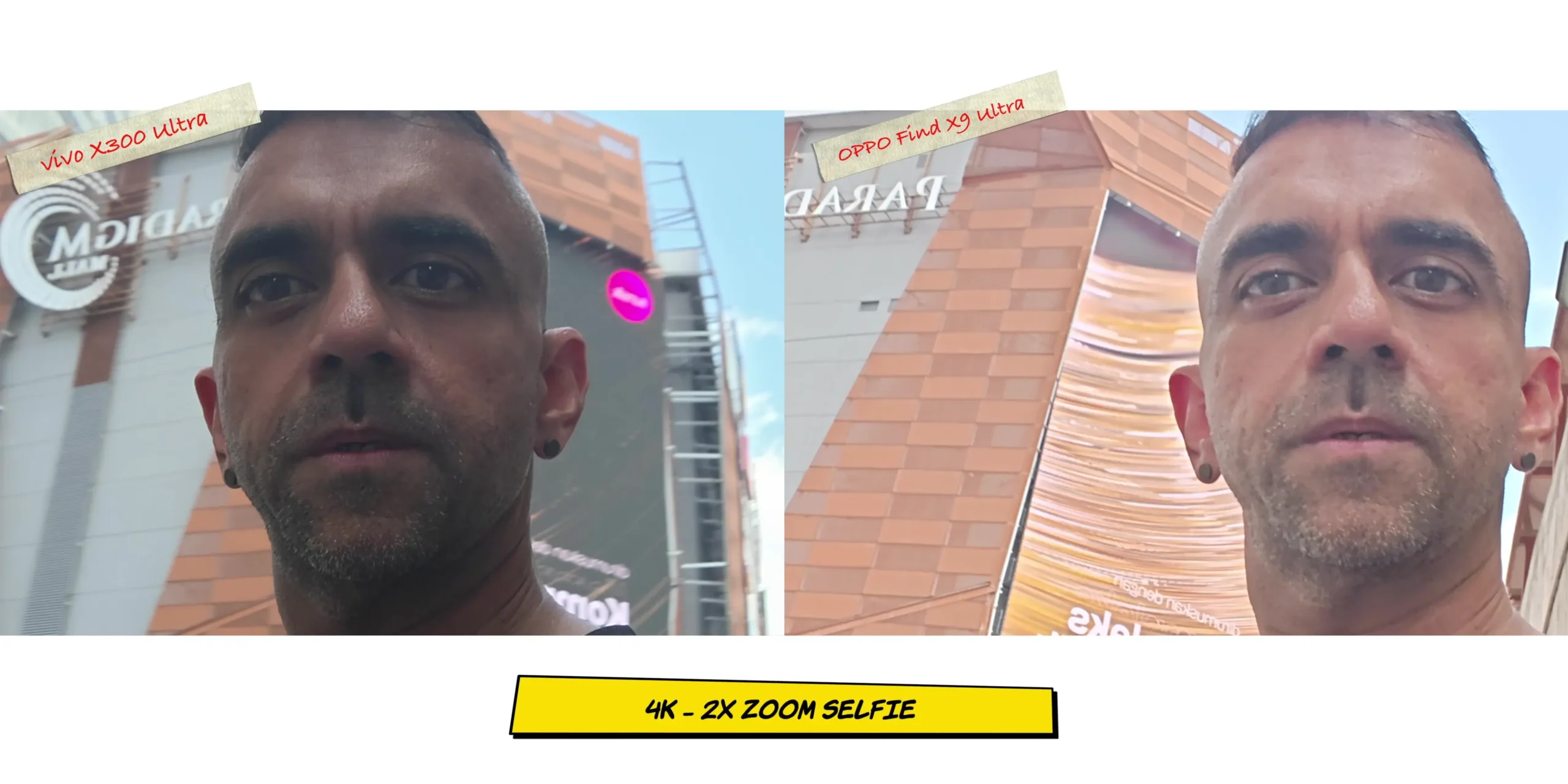
However, here is probably where you can see the weakness of BOTH phones, because if the light is towards your face? Then hell yeah, you have one of the best selfie photos taken on a phone, both on OPPO’s 21mm and vivo’s 24mm, or even OPPO’s 25mm main with vivo’s 2x or 47mm.
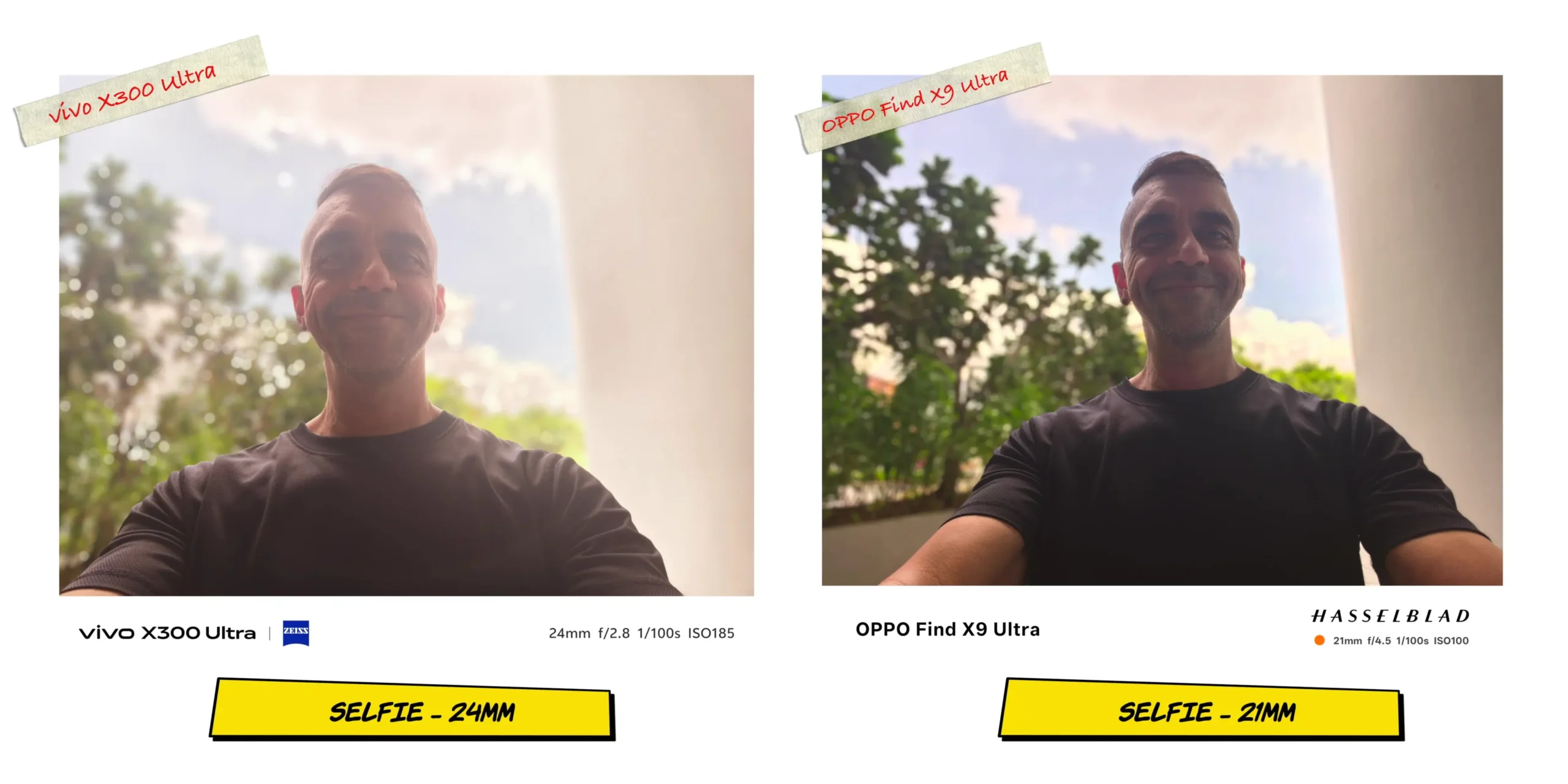
BUT if there is backlight or the sun shining behind you, then the photos will look like this—yeap, truly surprising results. Which, funny enough, was a totally different story at night.
Night
Ultrawide
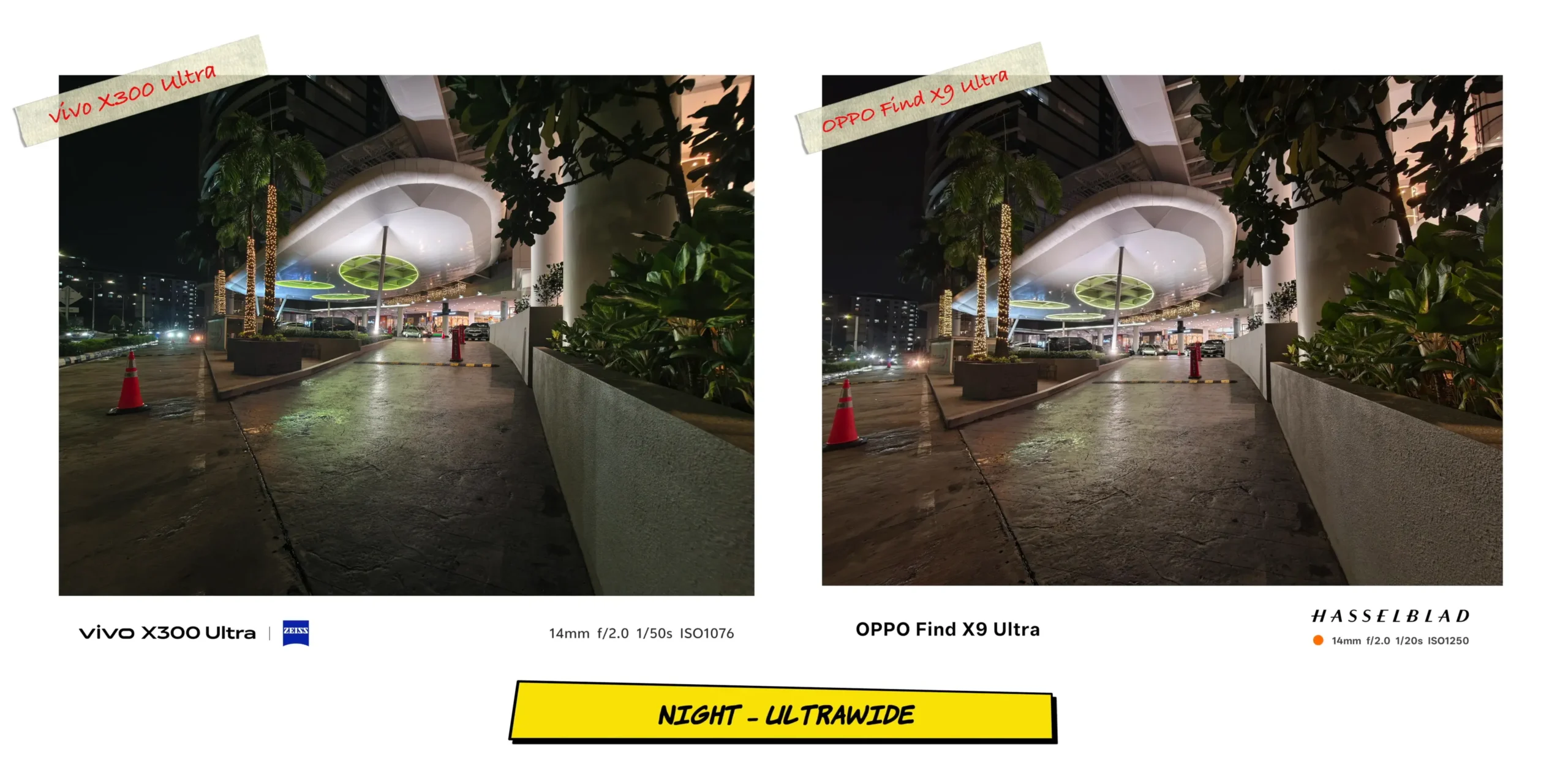
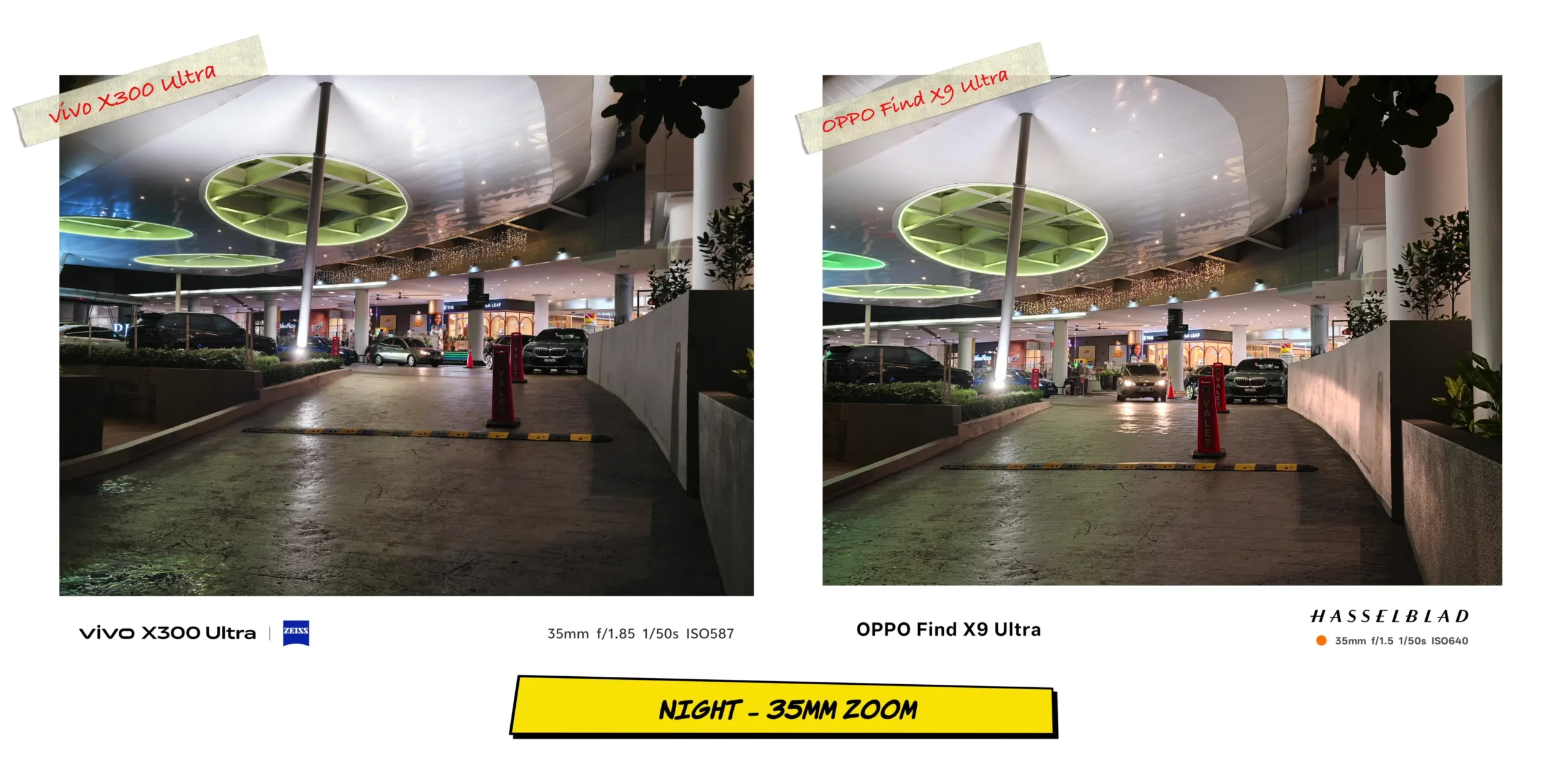
So at night, the ultrawide lenses’ color accuracy was a little more accurate on the vivo, where the green ceiling lights were EXACTLY how it was when I was there.
So while both phones have a multispectral sensor, it shows that vivo has been more consistent in getting the accurate color than OPPO. And that comes down to a lot more than just the multispectral sensor—it’s the ZEISS optics, vivo’s own imaging chip, and years of color tuning all working as one.
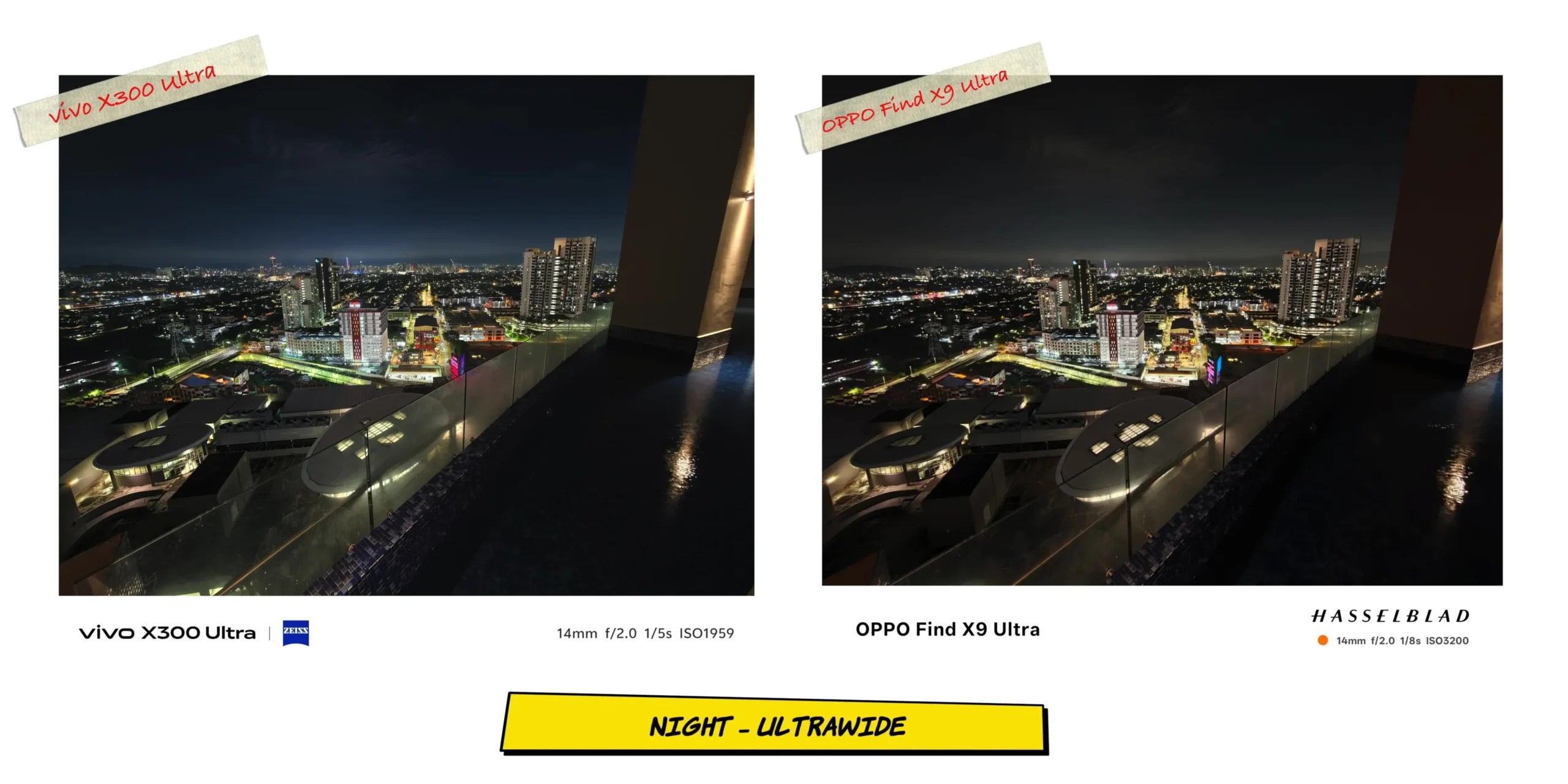
And it was the same for this second image, where the skies were bluer than black on the vivo since it was taken around 7:45 PM Malaysian time.
Main + Zoom
But things start to improve on the OPPO for the main lenses, as the 35mm was great on both. On top of that, the good news is that there was no color shift present when you put the 35mm and the 85mm focal length photos side by side on the vivo, and so it was on the OPPO too.
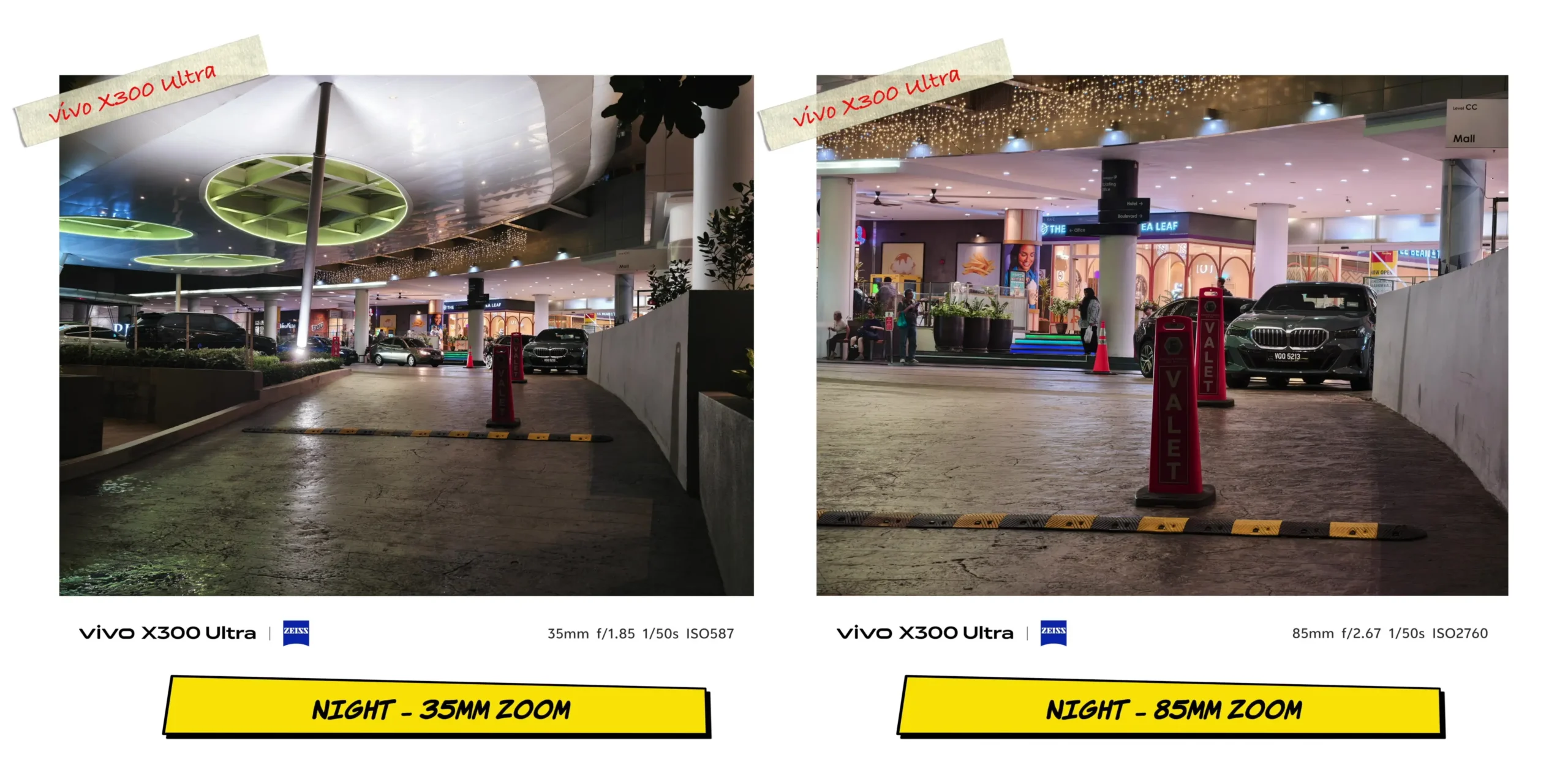
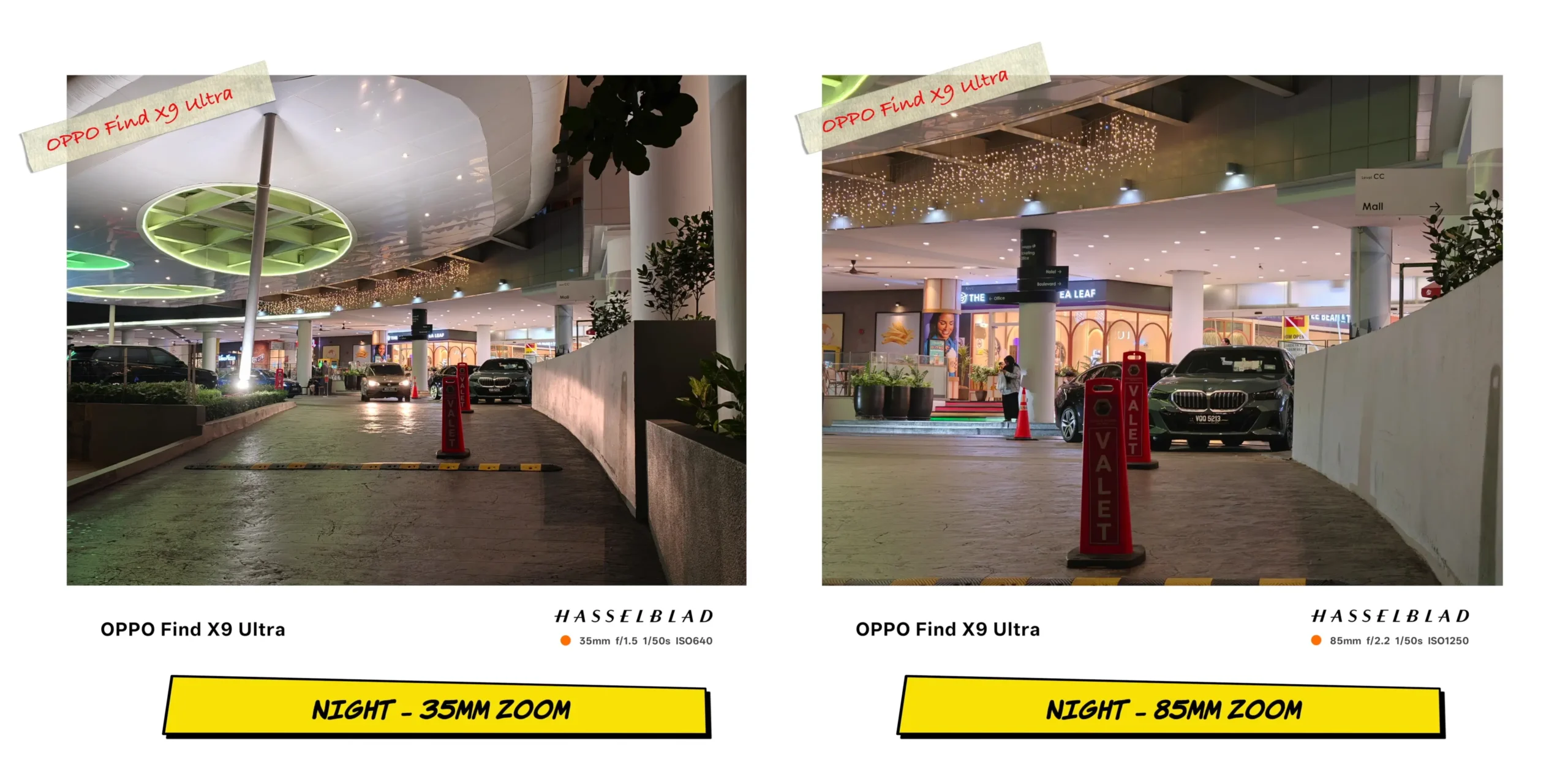
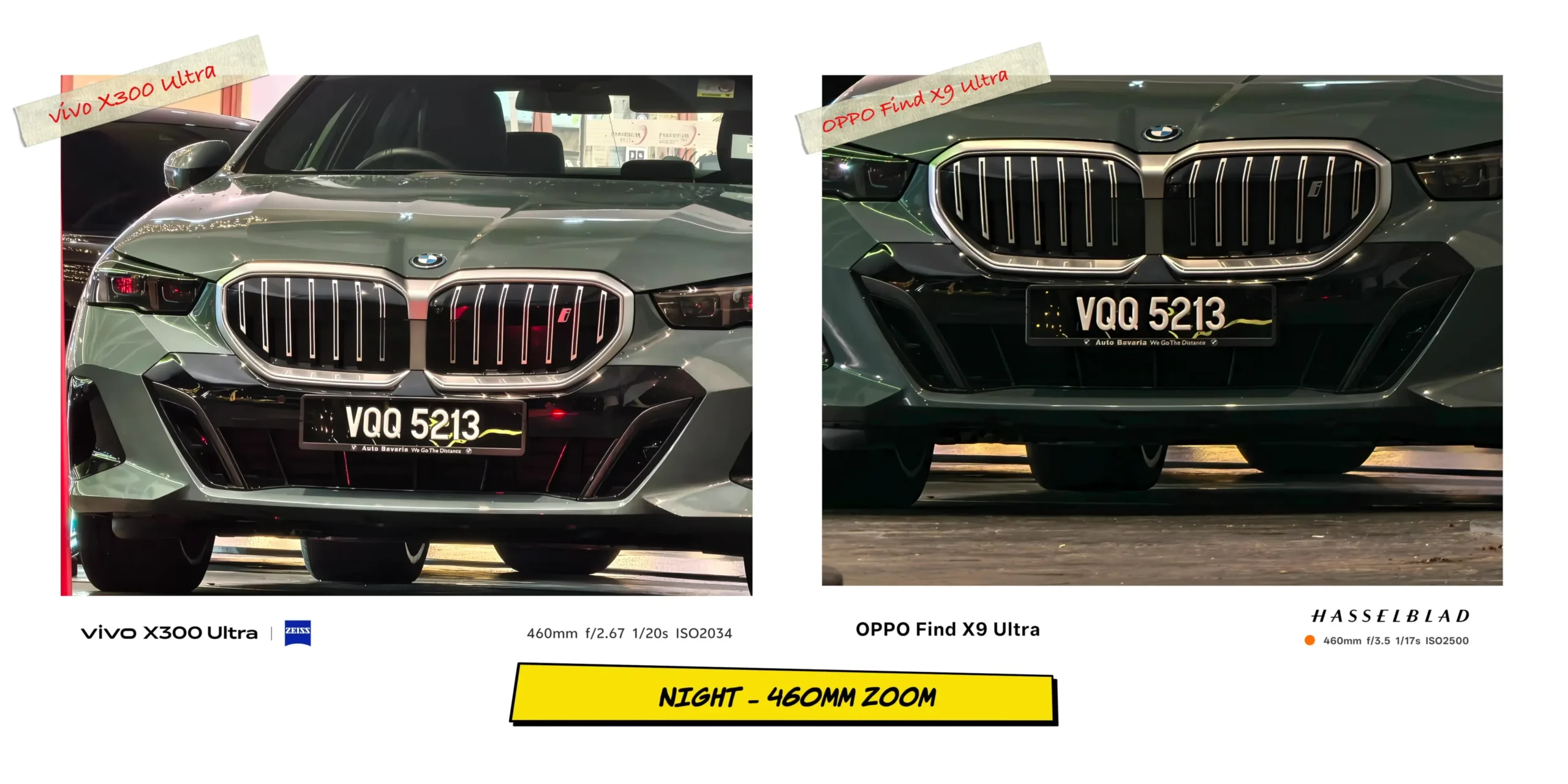
Then zooming straight to the car’s number plate at 460mm on both, it was the battle of the image processing as the vivo was a little brighter overall, but both were equally sharp.
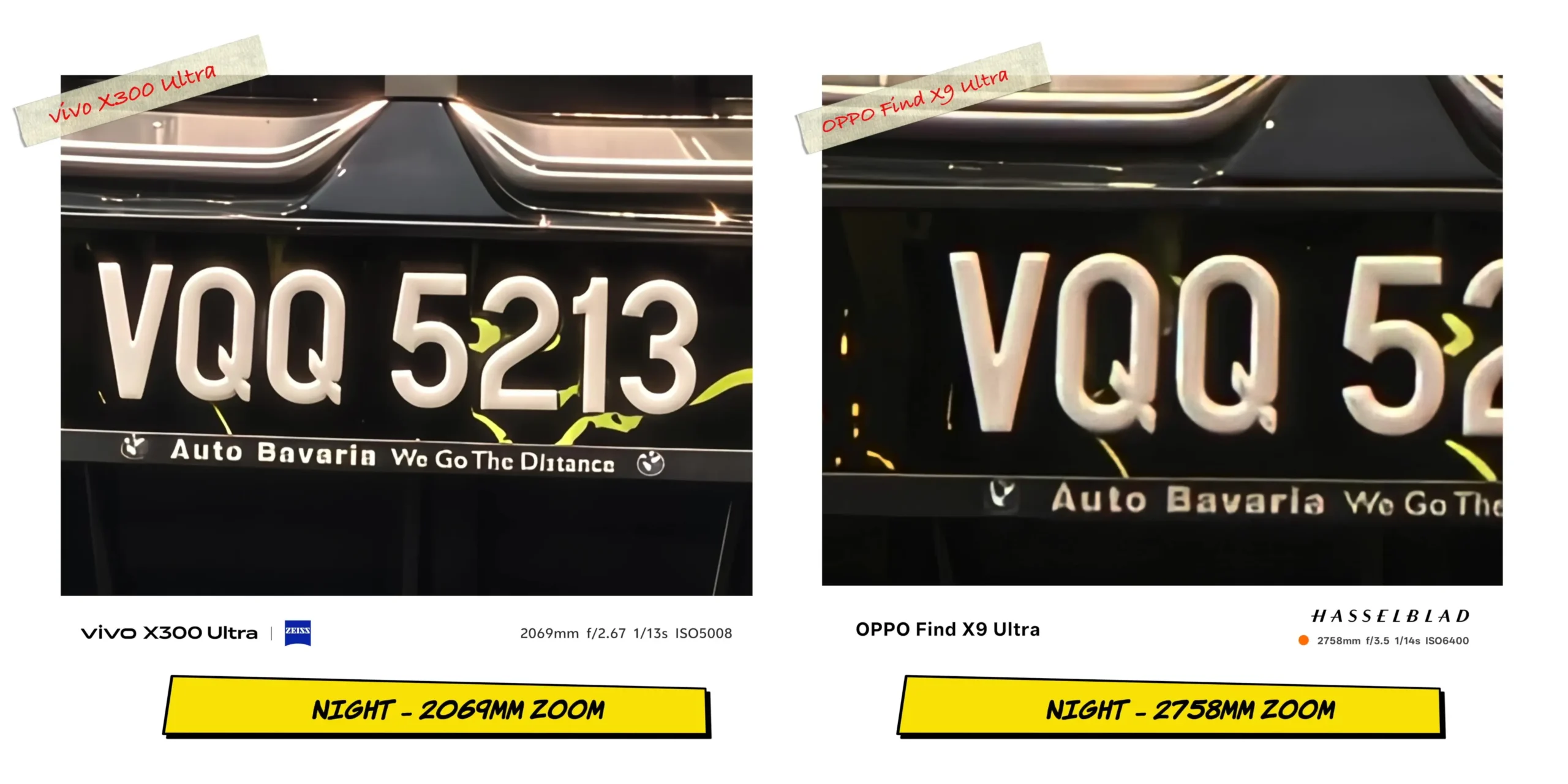
And for some strange reason, if you want to zoom it further, here is how it looks on both at its max zoom range.
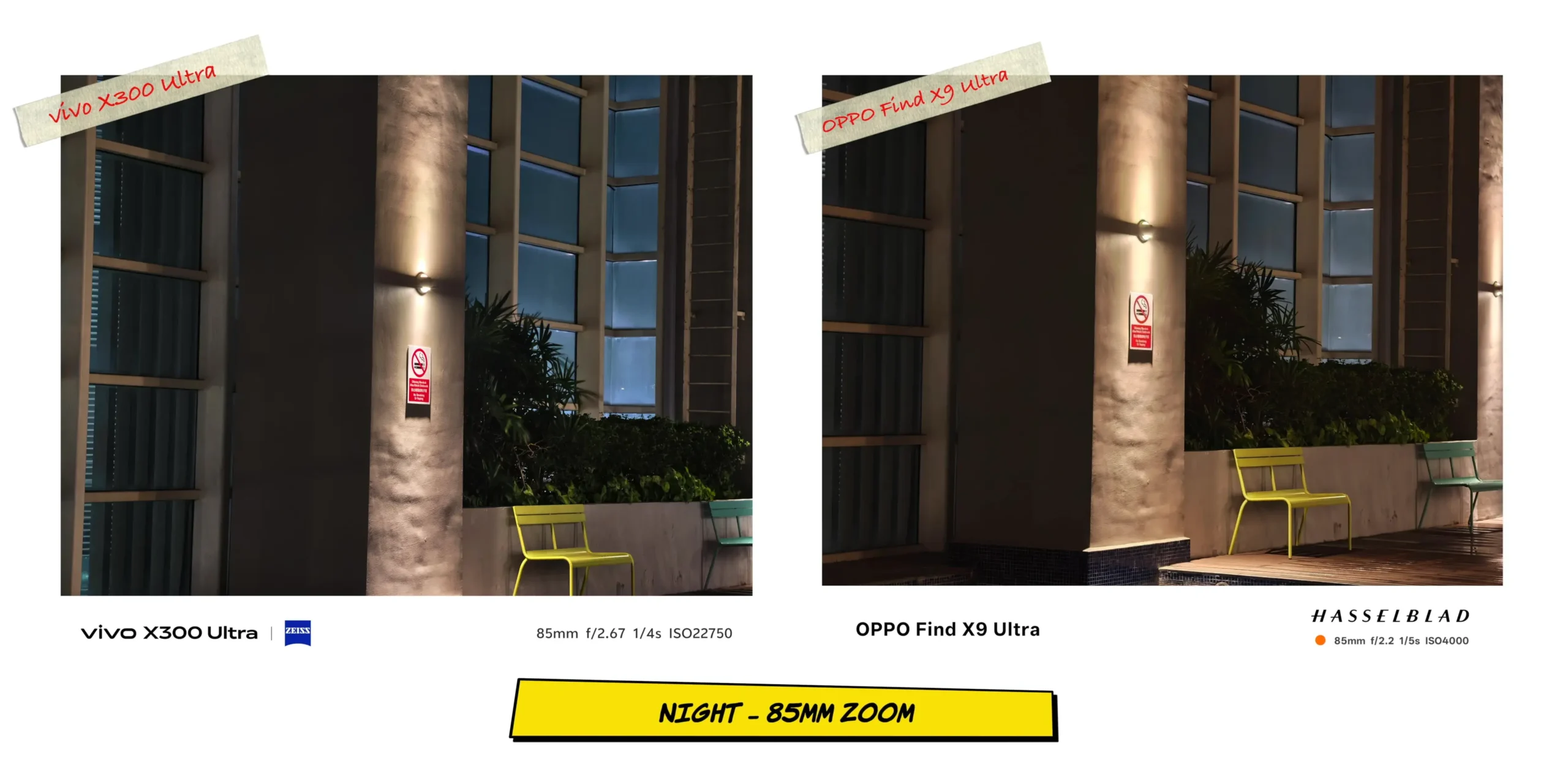
Then the next batch of photos was based on how both phones handle the highlights and the shadows. And yes, both did very well at the 35mm and 70mm, even at 230mm, too.
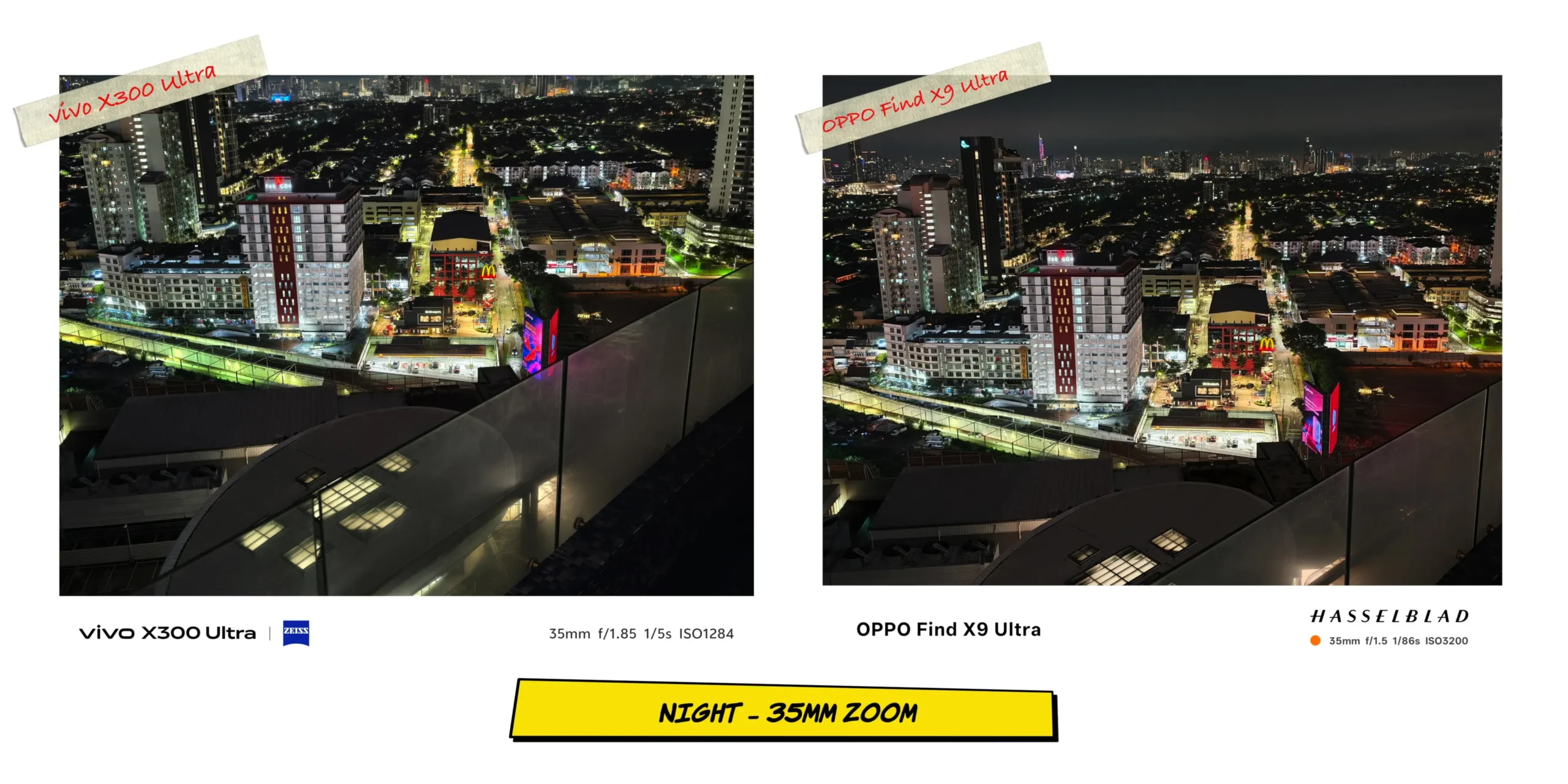
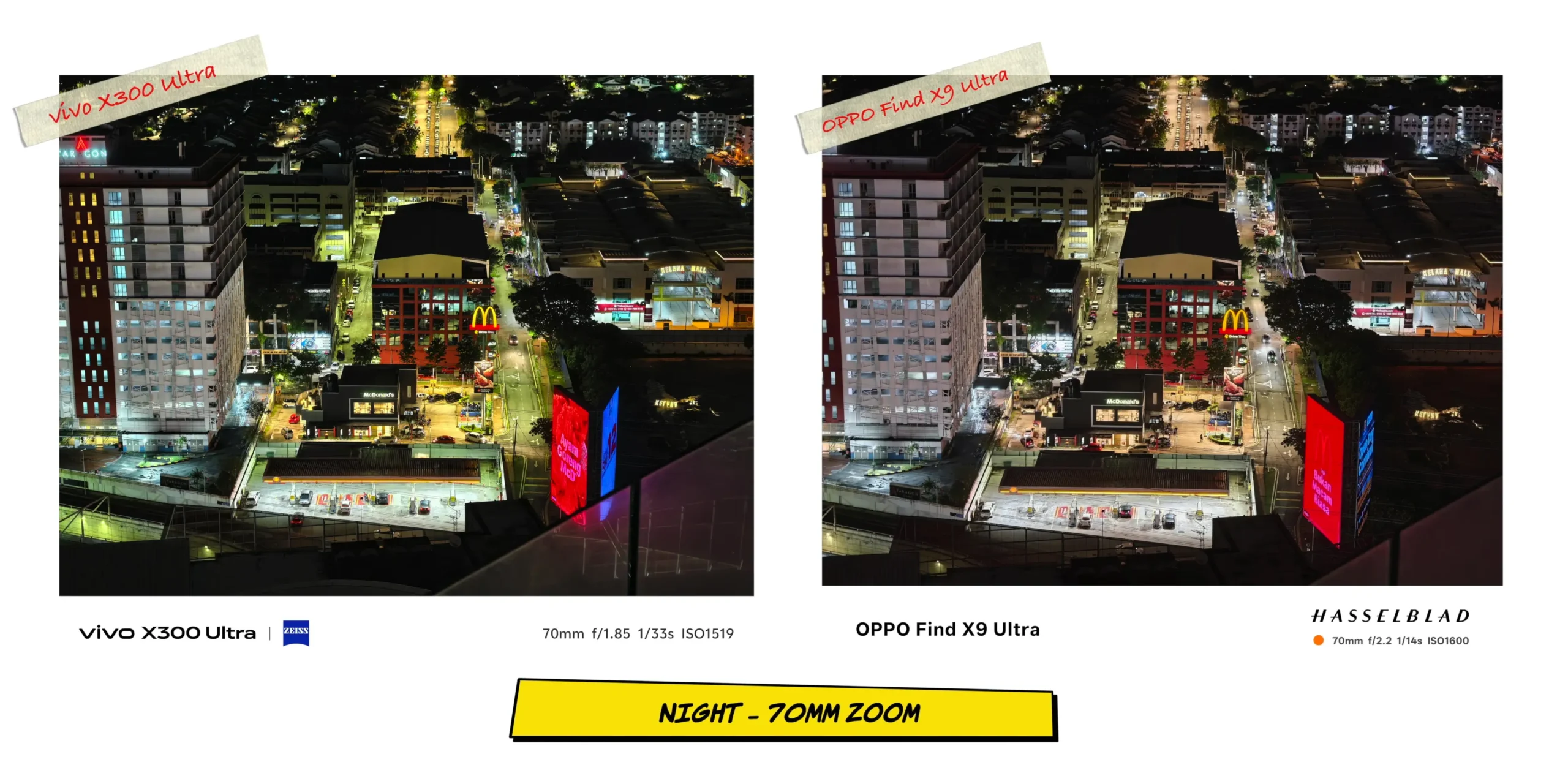
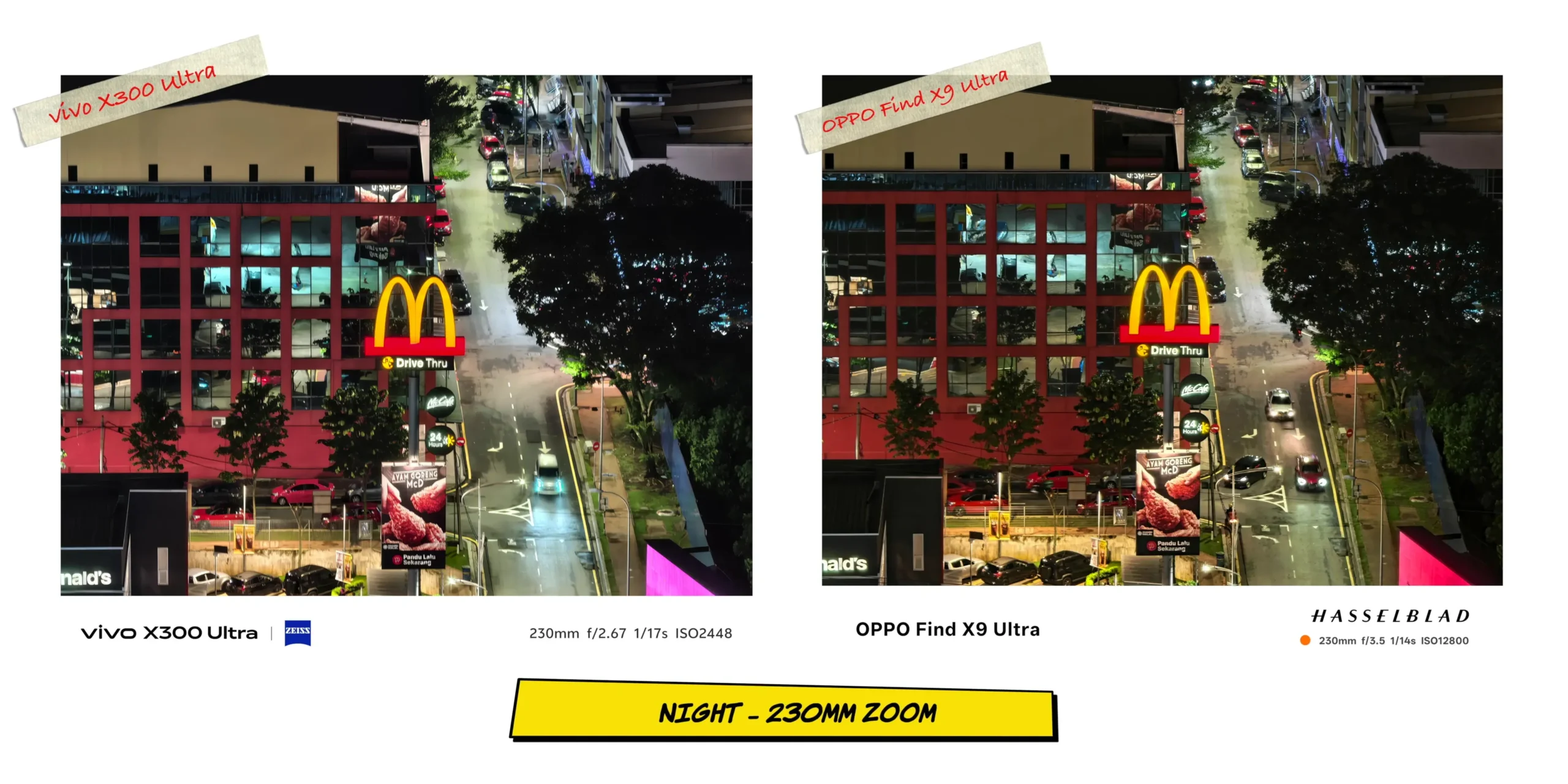
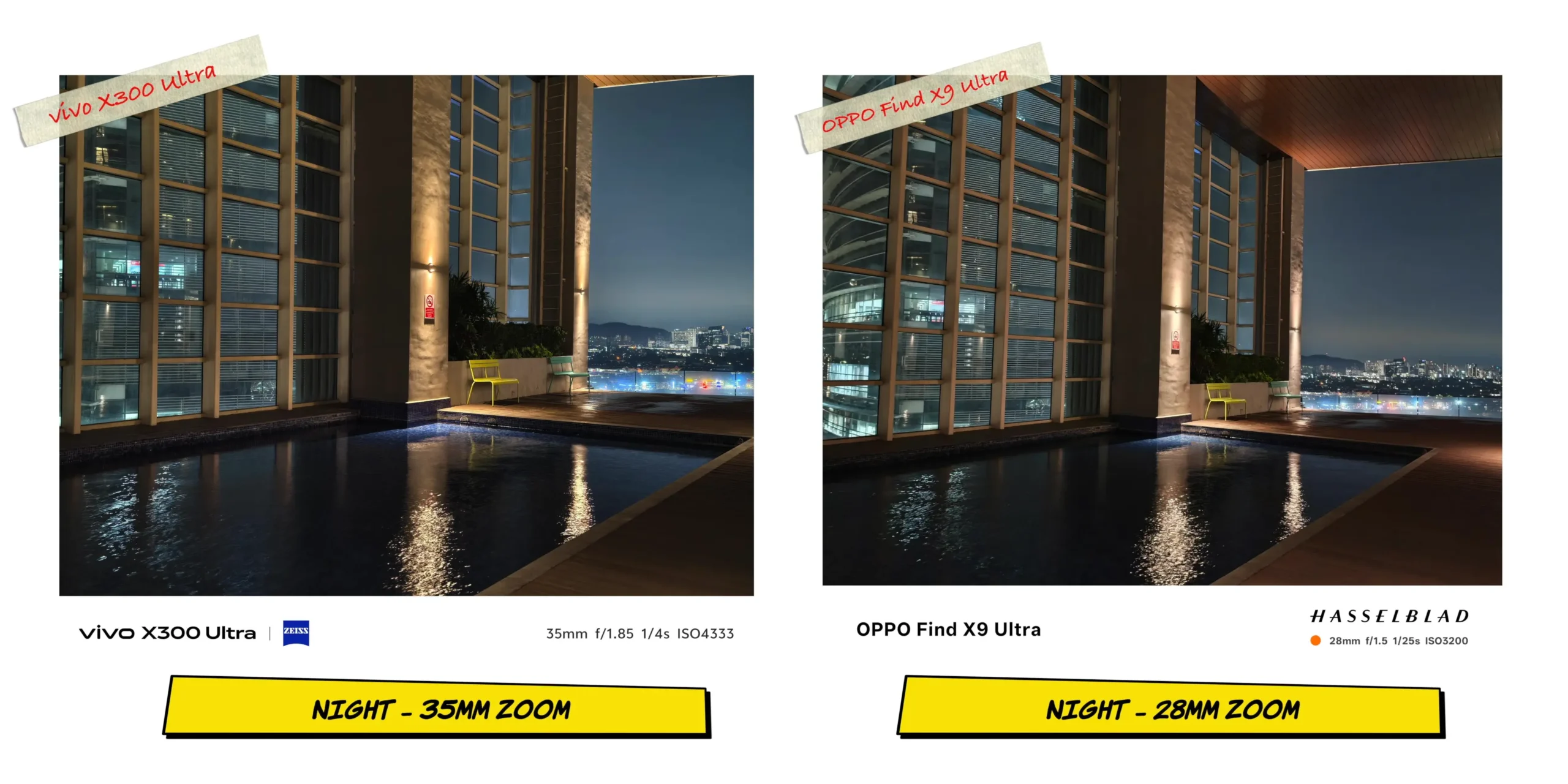
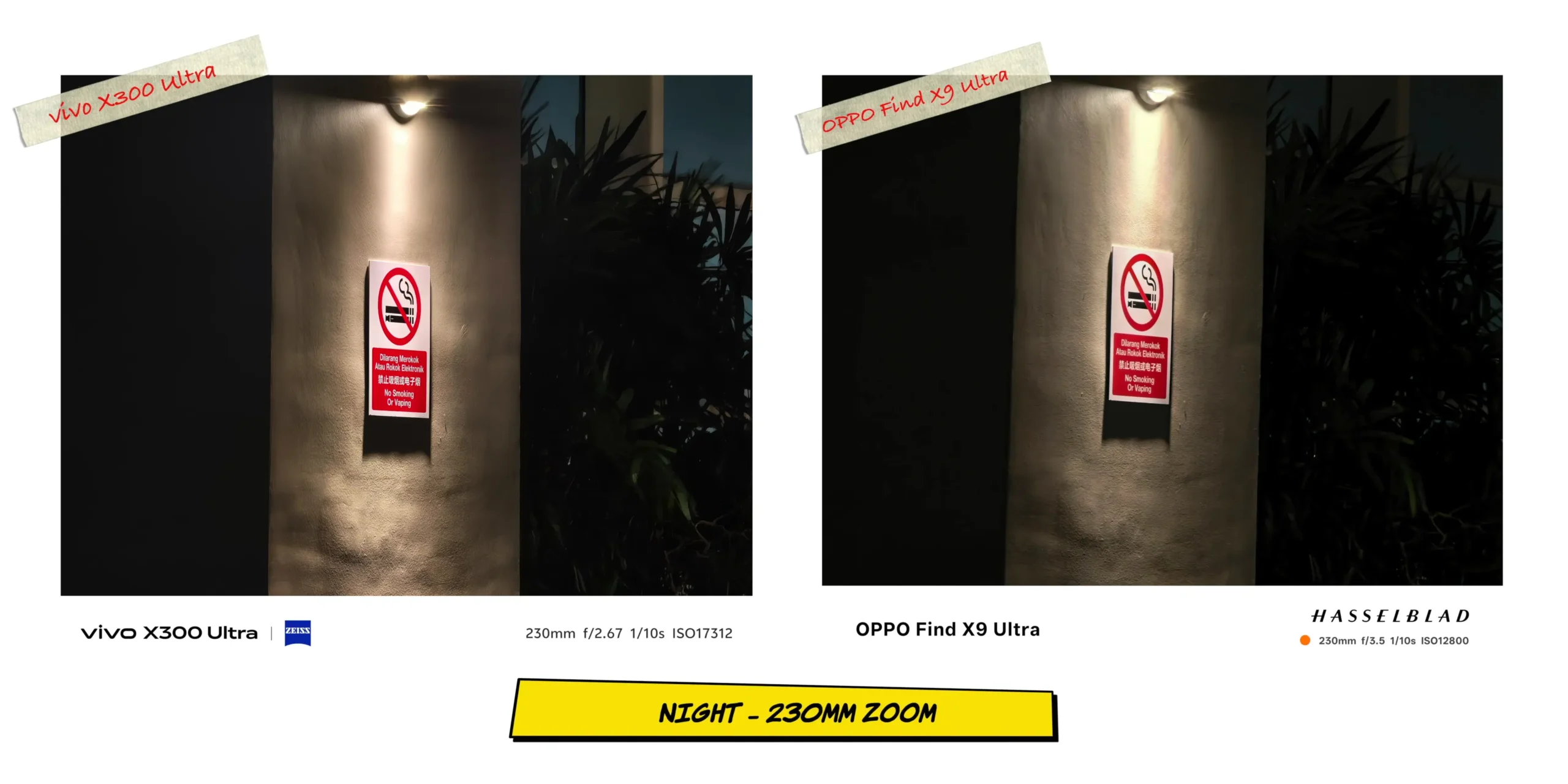
Next, to challenge both phones further, I took a picture of a scene that had very minimal light. And even though the focal lengths were different, the floor textures towards the far right were a bit more prominent on the vivo compared to the softer image on the OPPO.
Not a hell of a difference, only if you really zoom in closer, because everything else was spot on.
And with zooming in at 230mm, when it was focused on this signage, there was like an artifact over the “Dilarang” word on the OPPO compared to it being very clean on the vivo. Not sure where that came from, hopefully not a…..ghost.
Portrait Mode
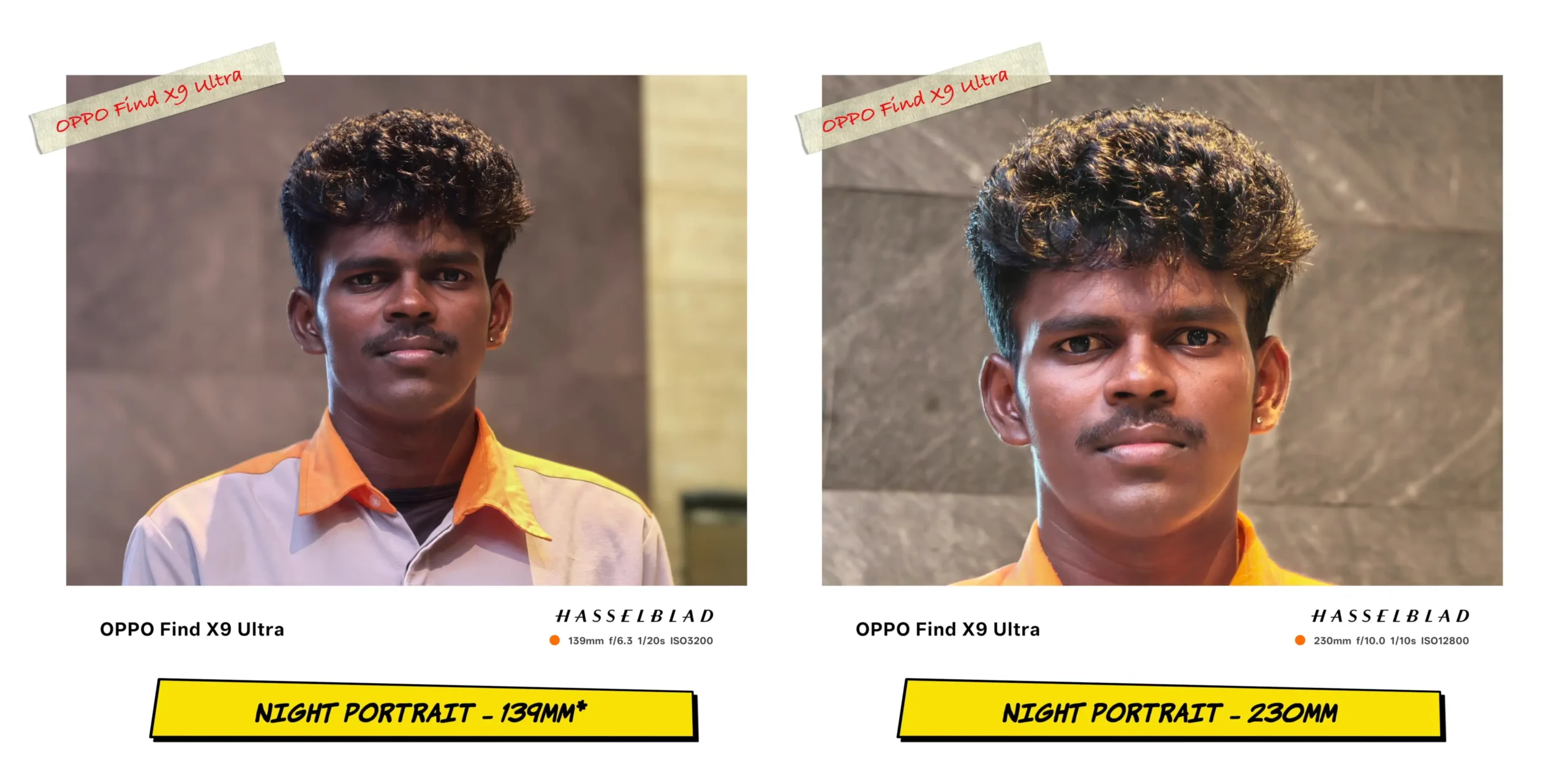
Then, as for the portrait mode on humans as a subject at night, please don’t mind Thiru looking away on this shot, because he had to stand there for quite a while. That’s why he looked away for a quick second when the photo was taken.
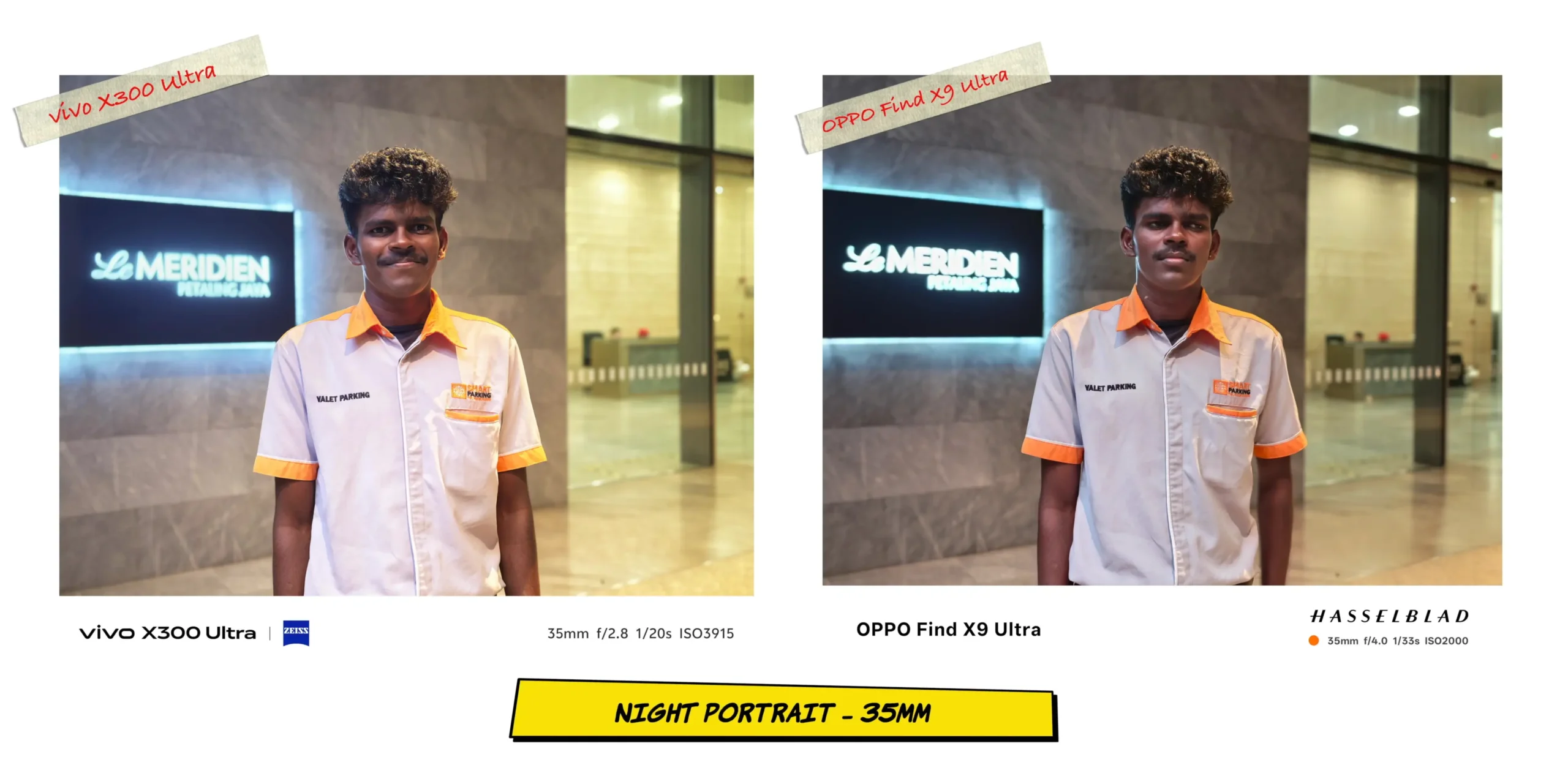
But while the overall quality was good on both, now, if I had to nitpick, there are two things which didn’t turn out “perfect”.
Number 1, there is once again a weird artifact on his neck, just above his collar. Number 2, his left arm was out of focus, and it blended into the background compared to vivo keeping things proper.
And in case you are wondering, both phones are updated to the latest software BEFORE taking these photos. So hopefully a future software update can help with these weird artifacts that OPPO has been giving us.
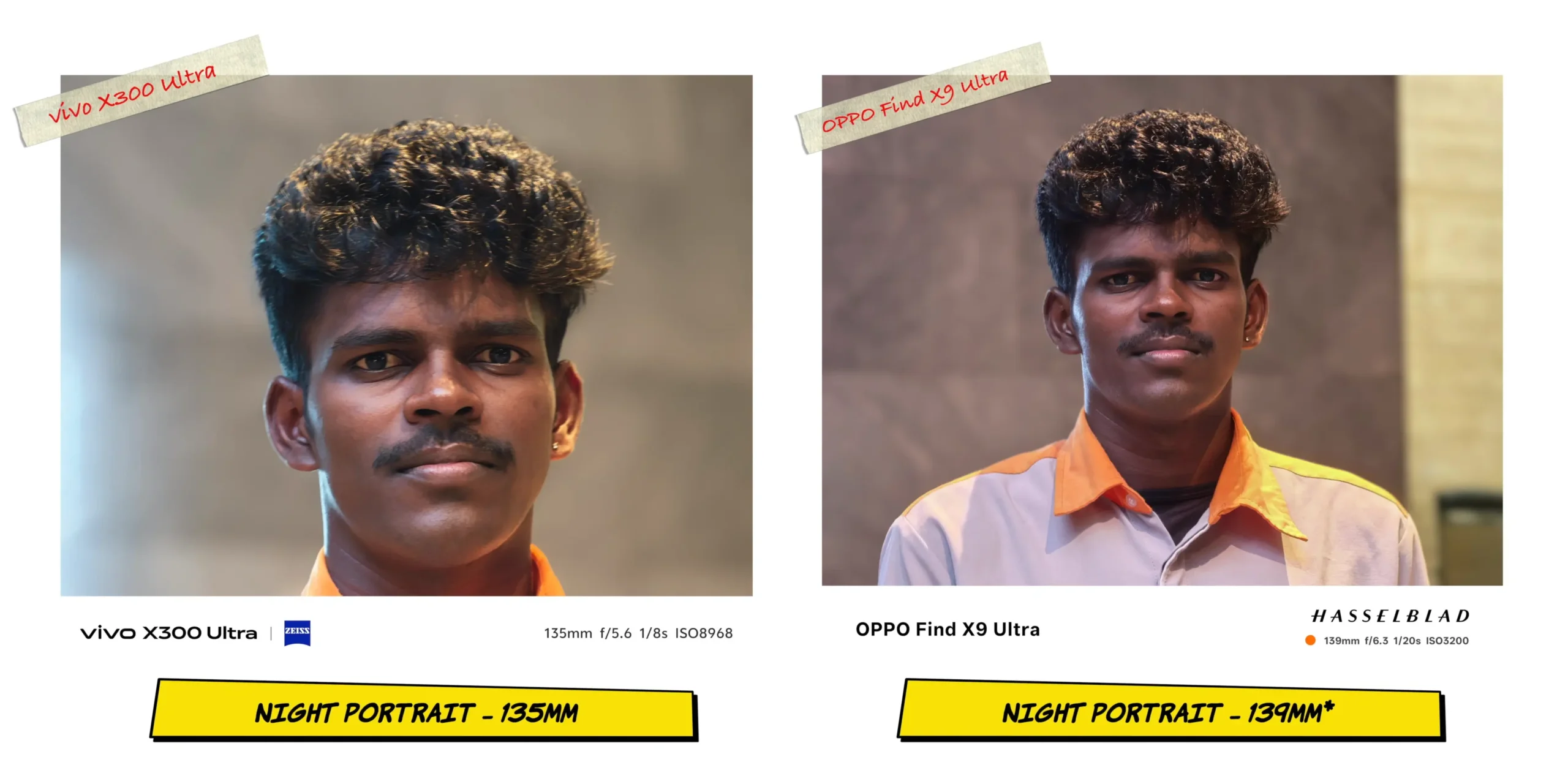
But at 85mm, Thiru’s hair was captured better at the top part on the OPPO compared to the vivo, and so it was for the 135mm on the vivo and 139mm on the OPPO.
But while the max focal length on the OPPO was great up to 230mm, if you compare OPPO’s very own 139mm against its 230mm, side by side, you can see quite a color shift, specifically in his skin tones.
Selfie
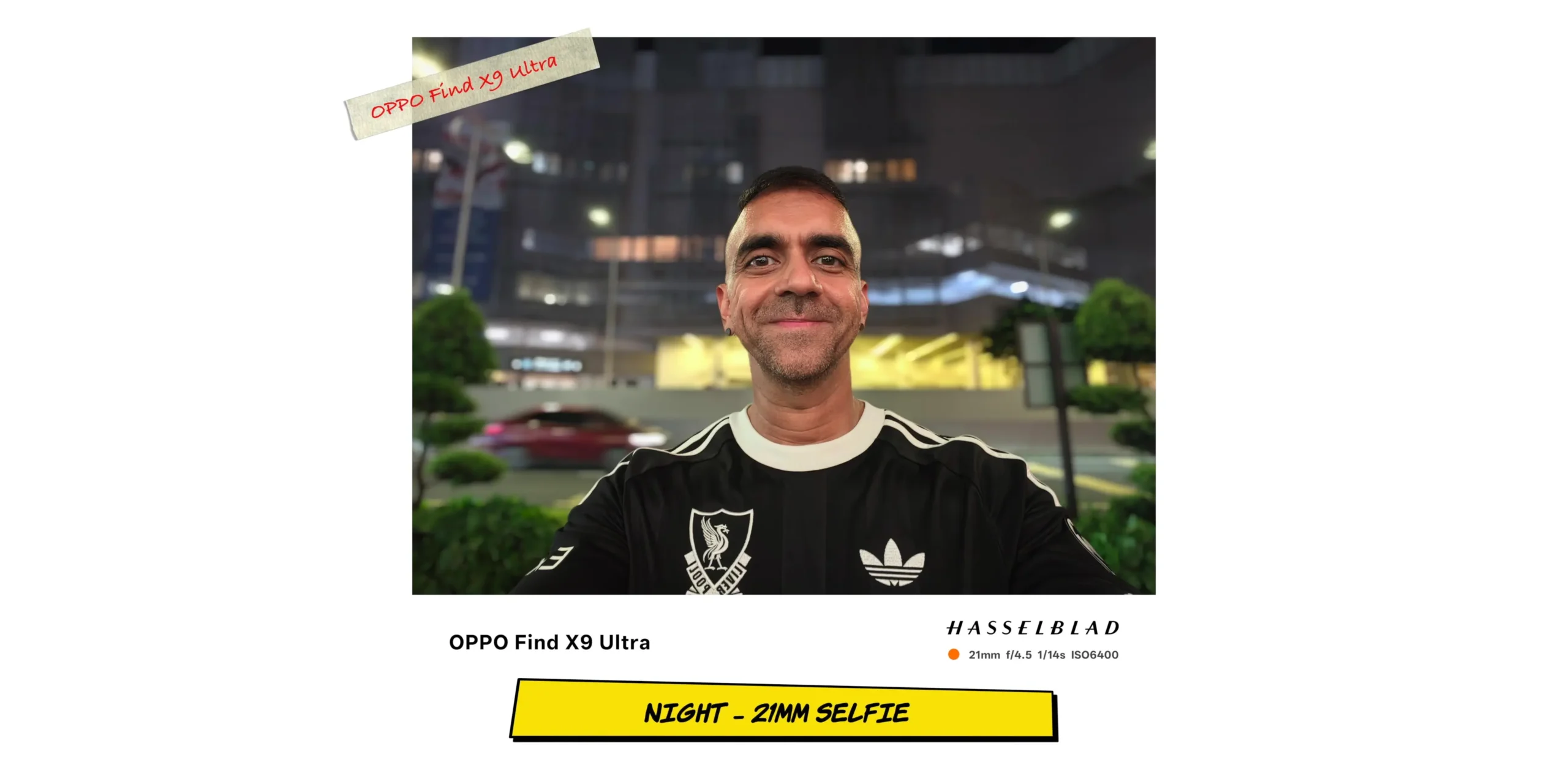
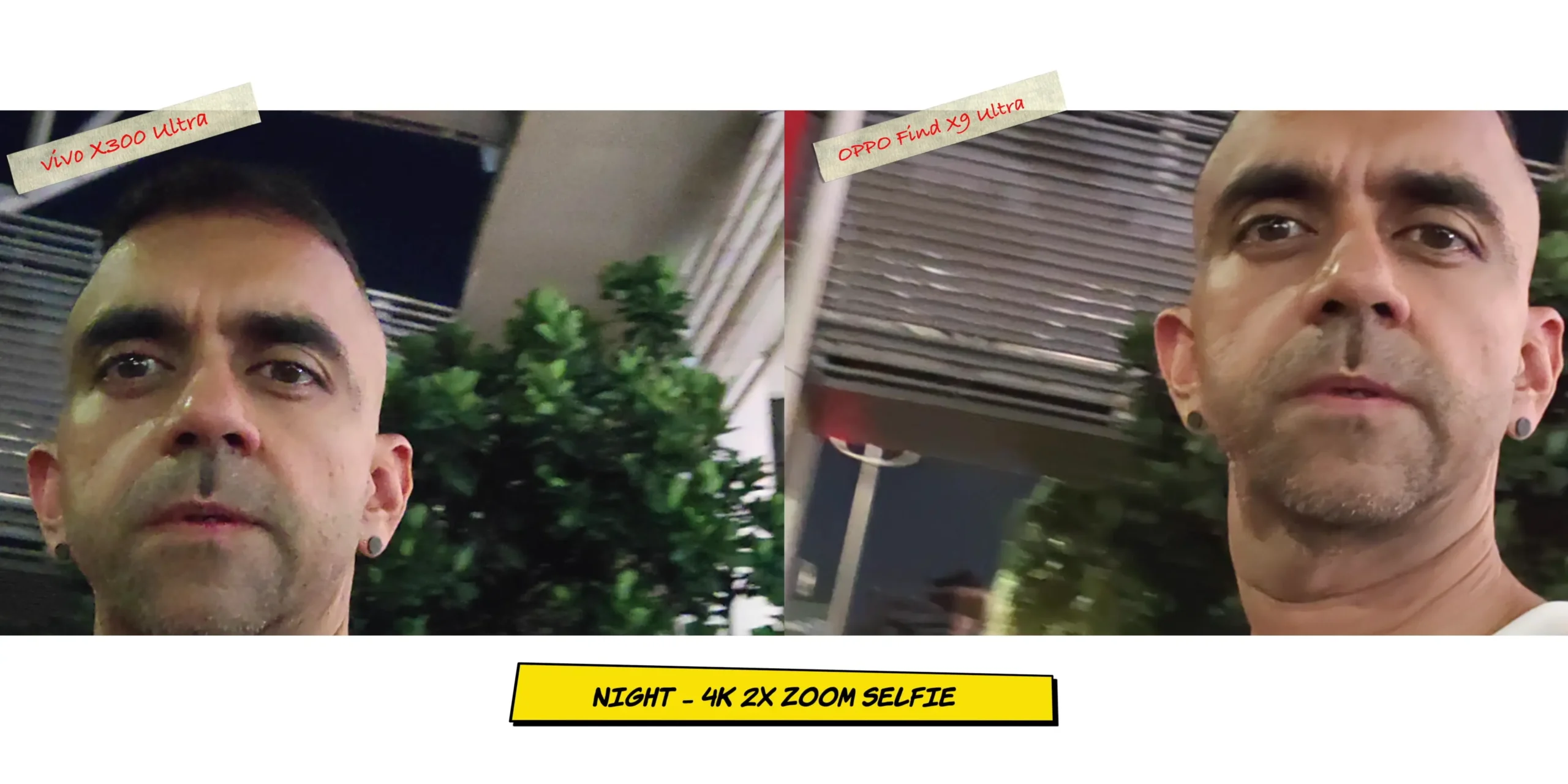
Switching over to the front camera for a nighttime selfie, for scenario one, with the light shining towards you, the “ultra-wide” angle selfie was as good as the daytime selfie. And when compared to the vivo’s main of 24mm and OPPO’s main of 25mm, the quality was really good, too, just slightly different skin tones on each.
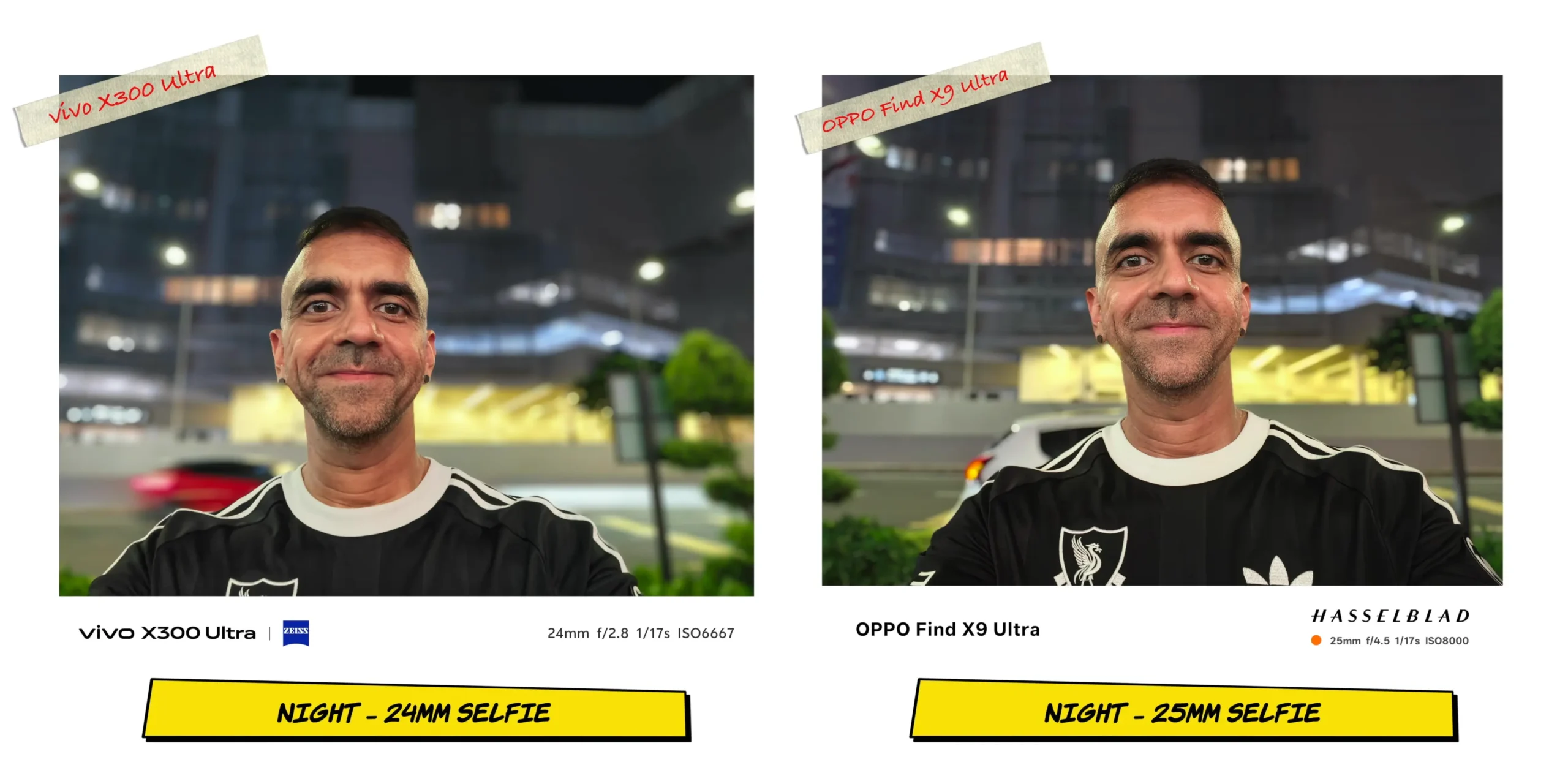
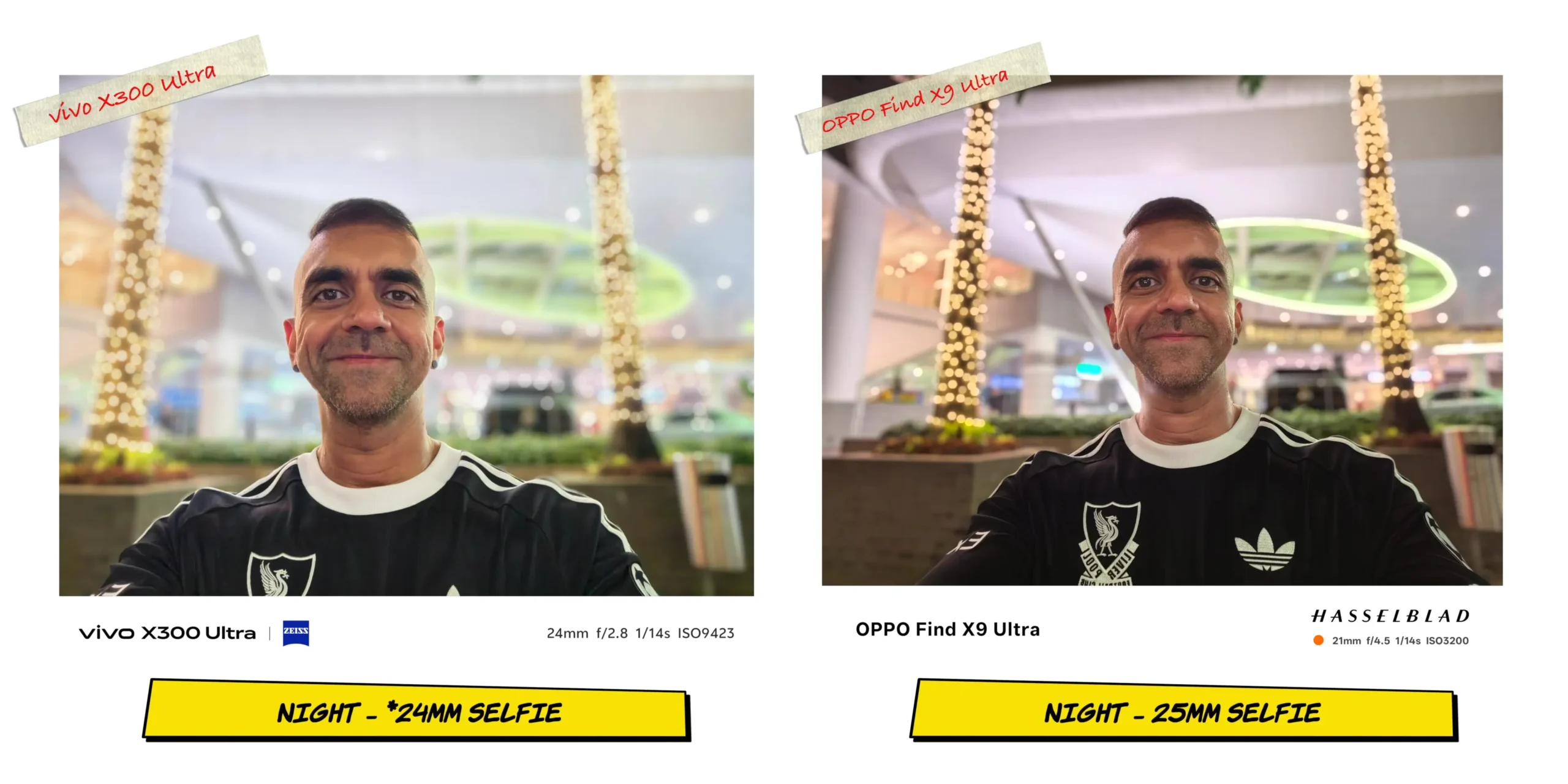
Now, remember how when I showed you a picture, I was taking a selfie with backlight during the day, and it didn’t look great, right? Well, the good news is that it handled that very well at night now instead.
And it was the case for both OPPO’s 21mm and 25mm. But there was this weird white glow on my nose and my neck just below my right chin. Yeah, it was the case of things…appearing out of nowhere again.
Video – Day
Alright, next is video comparison time! While both can record up to 8K, let’s take a moment to have a proper realization that none of us will be shooting in 8K and posting on socials, ok?
Ultrawide
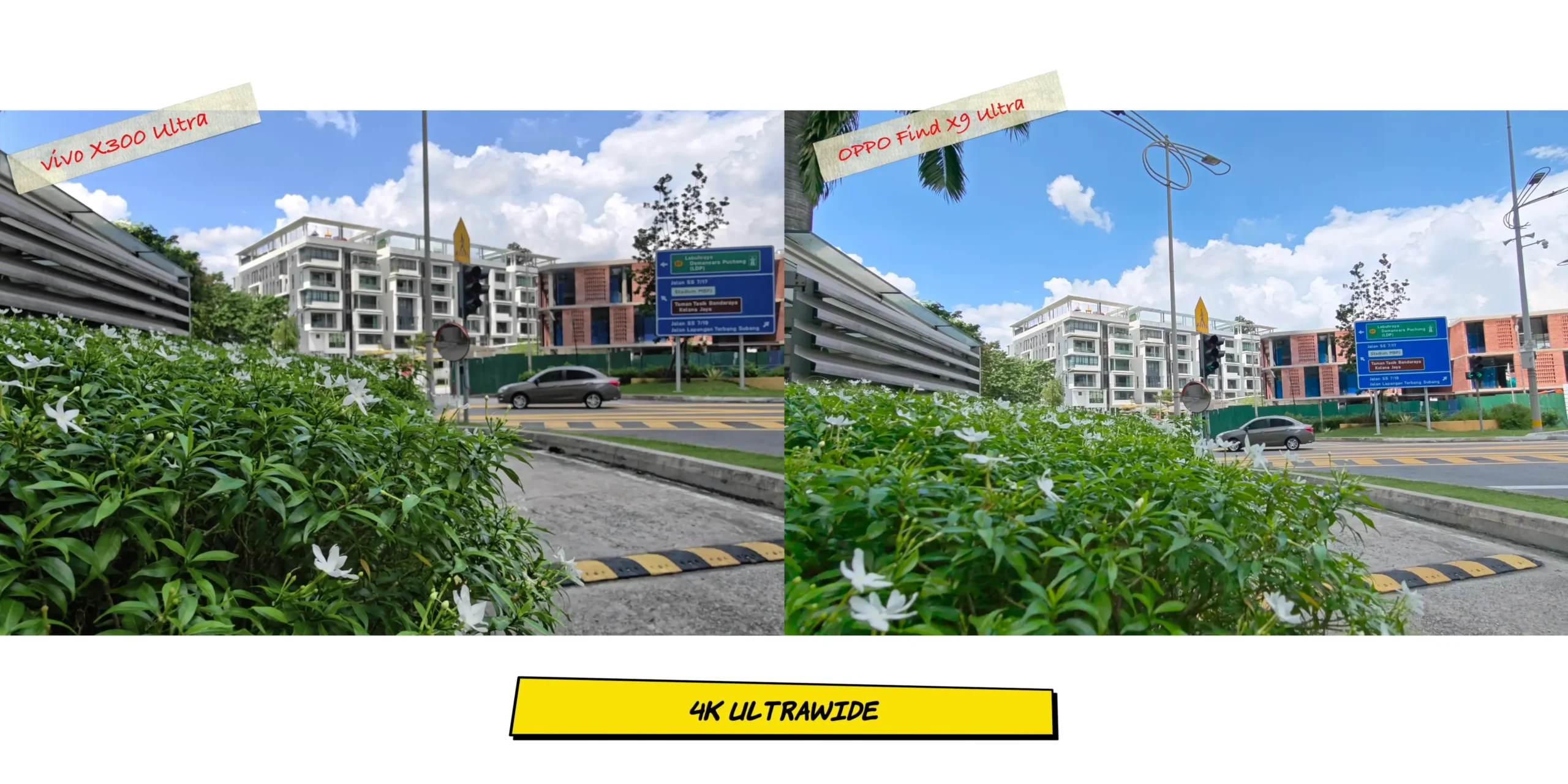
Starting from the 4K video quality for both of the ultrawide lenses, the quality of both was really good, but the “vivid look” of the skies does make it look a little fake on the OPPO, but some people may like it, so I guess this is based on a personal preference.
Main + Zoom
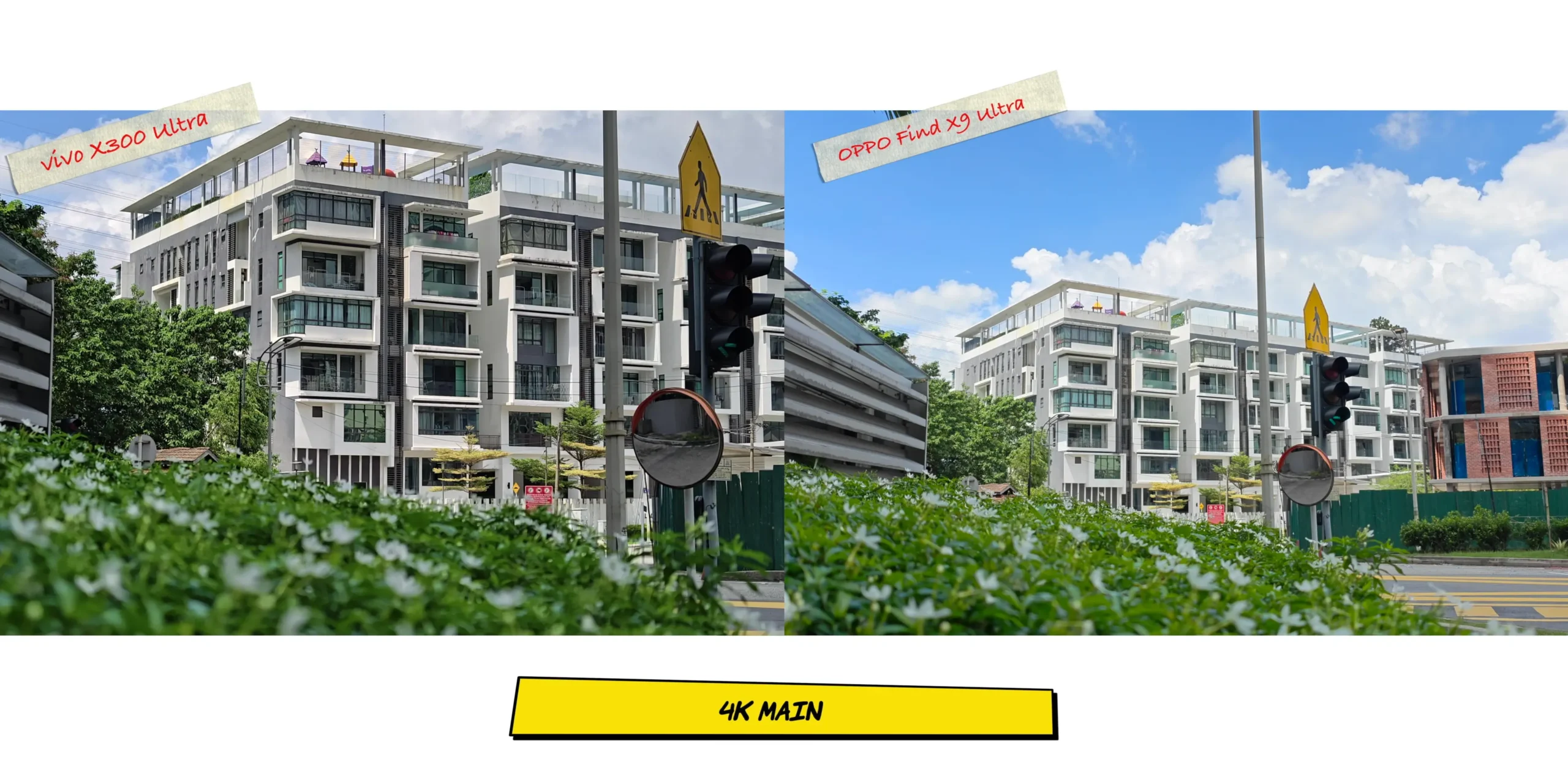
And this more vivid and punchy look on the OPPO remains, but it was more natural in vivo, so it reminds me of the Leica Vibrant vs Leica Authentic of Xiaomi phones, haha.
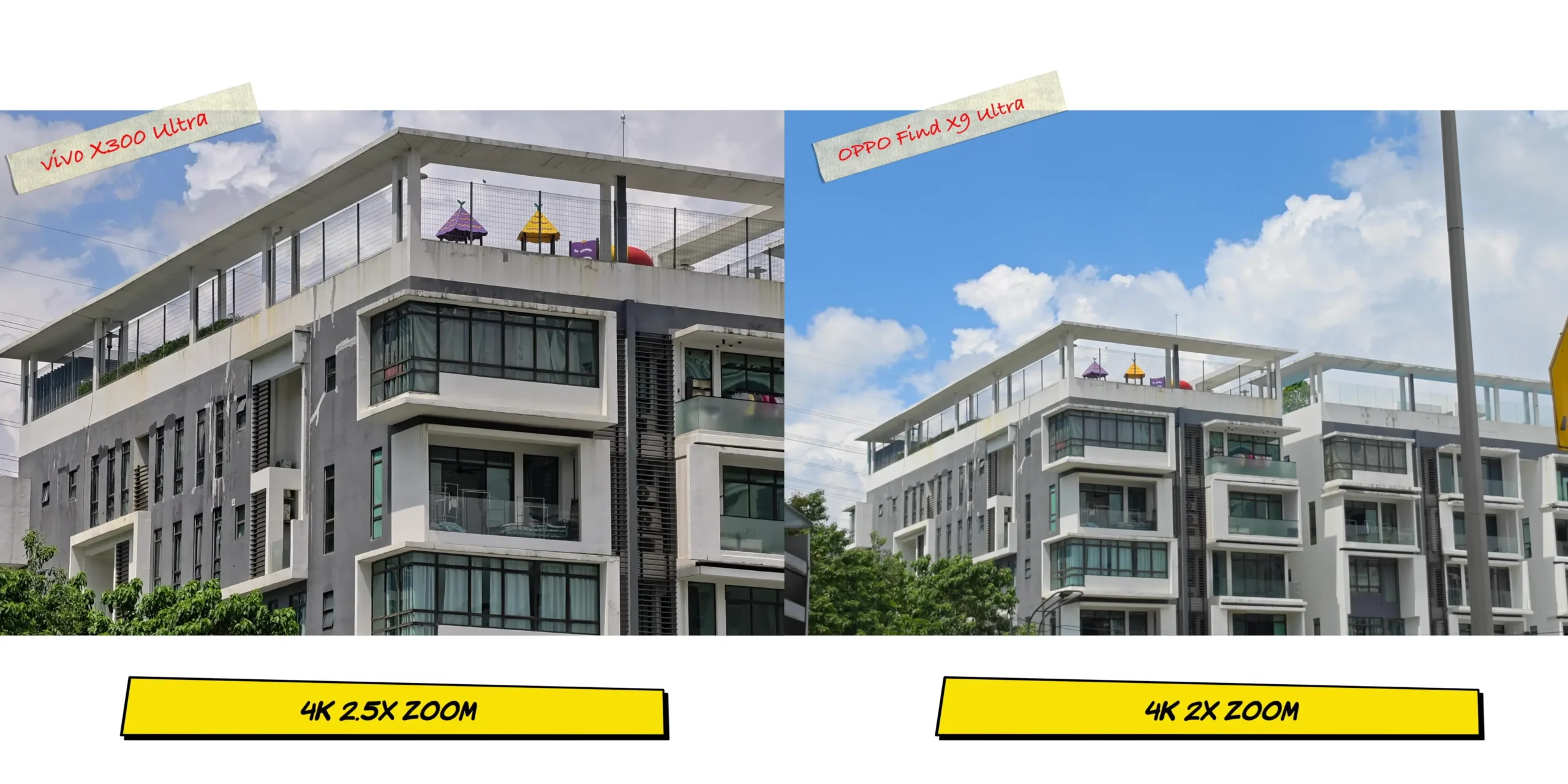
Now, by default, in the camera app, it is at 2x on the OPPO and 2.5x on the vivo. Again, same great results on both.
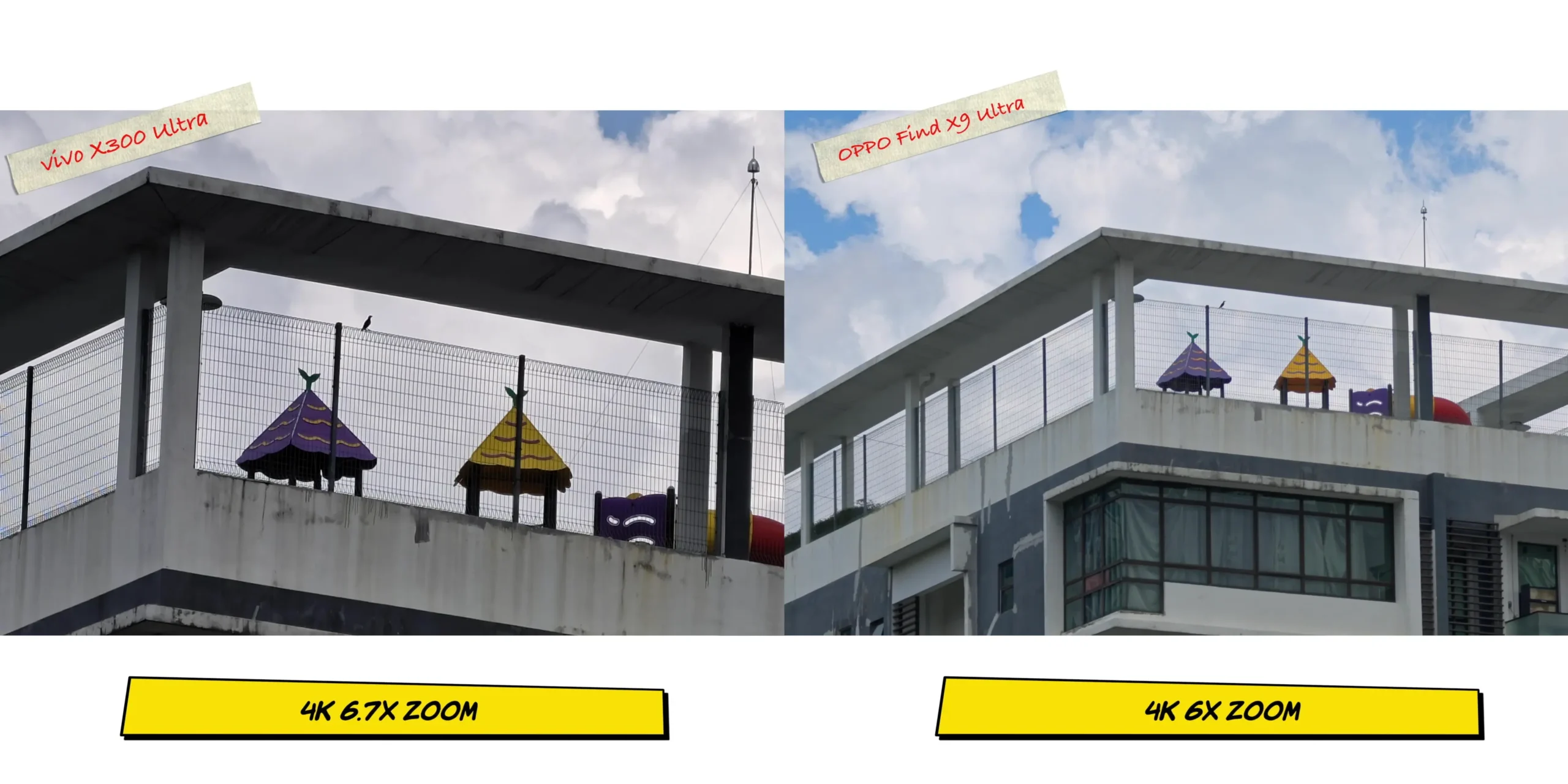
But beyond that, you will be introducing some extra sharpening on both phones, as seen in this 6x footage on the OPPO and 6.7x on the vivo. So I would recommend just sticking to the 2x if you want the utmost best quality video.
Stabilization
Stabilization-wise, it was very nice and gimbal-like on the ultrawide lenses on both. So it was at 1x. And yes, there are different focal lengths again, because vivo’s 1x is 35mm compared to OPPO’s, which was at 23mm.
The Stabilization was STILL good at 2x on the OPPO and 2.5x on vivo. But where it starts to fall a bit on the stabilization is on OPPO’s 6x compared to vivo still doing well at 5x.
And if you REALLY need to go up to 10x, you will find the vivo doing a bit better. But yeah, why even bother going that much of a zoom, my friend.
LOG
Now, there is LOG recording on both phones, and both did do very well, whether or not it’s from the Ultrawide lens, the 35mm, and the 85mm.
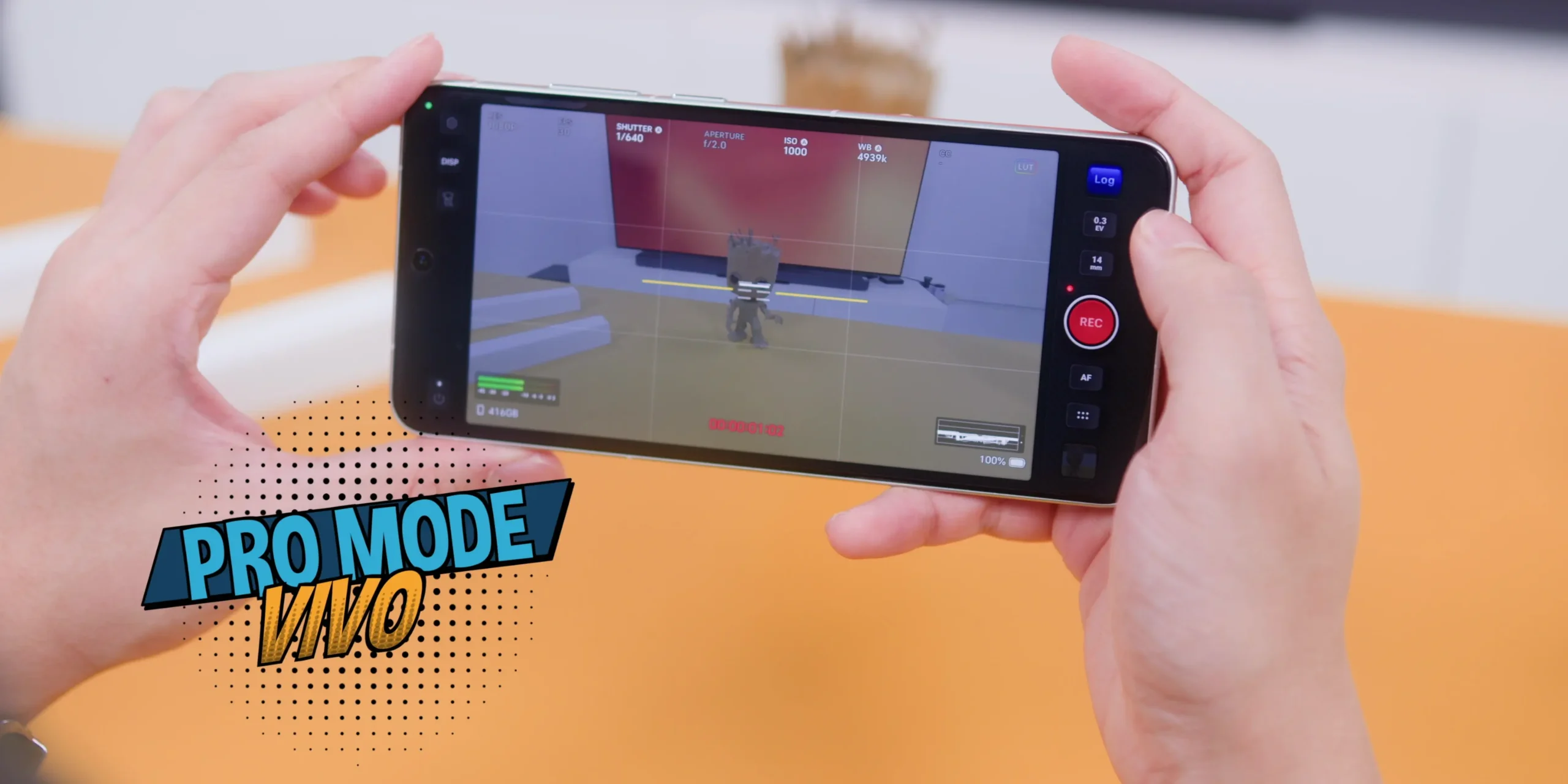
But I have to give extra credit for vivo’s dedicated Pro video app, because it looked so much better, almost like the Blackmagic Camera App.
And we also need to appreciate that it was so much easier to switch to the Pro mode from the video mode on the vivo compared to OPPO, where you need to go to the More tab FIRST and then select Pro Video from there.
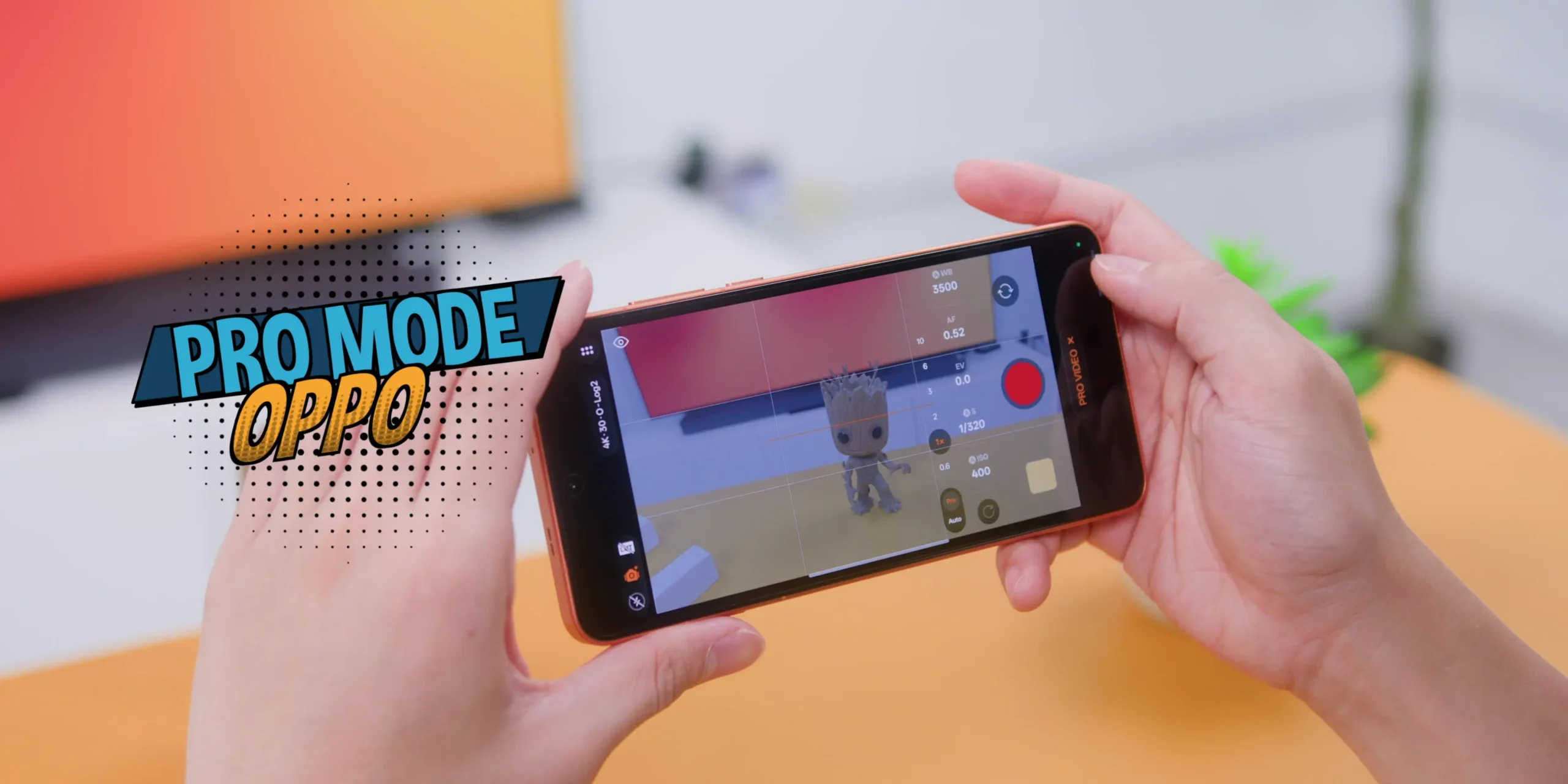
So yeah, those tiny little software tweaks help people like you and me to improve our overall experience of the phone.
Portrait Video
As for the portrait video, the versatility of OPPO in its portrait capabilities is back again, because it has up to 5 focal lengths to choose from: 1x, 2x, 3x, 6x, and 10x. But the vivo has 3, of 0.4x, 1x, and 2.5x.
And while both looked really great for capturing Mo here in the studio, the vivo captures the footage in 4K 60fps instead of just 4K 30fps on the OPPO.

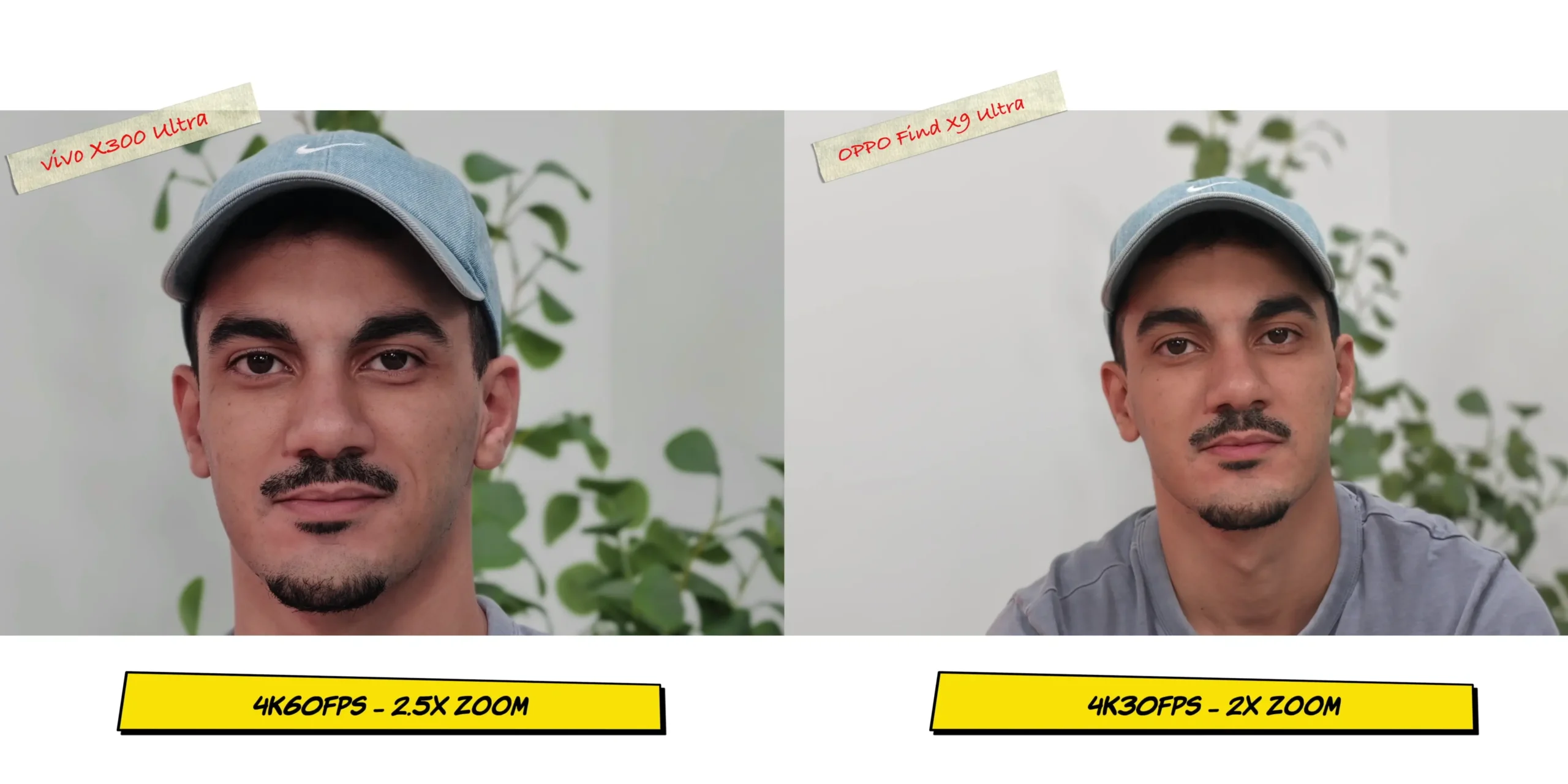
So it comes down to which do you need? A more focal-length option? Or the ability to slow down in post? Well, if you know me, you know my answer to that.
Selfie Video
Then, to wrap the daytime shots for the front cameras, quality was good, 4K 60fps recording on both for the wider focal length on both.
But OPPO tries to always make the face bright consistently, even when I was facing under the shade too, which, depending on how you look at it, could be good, because again, it’s more of the natural, accurate look, or you want the best-looking footage, and it was the same for the 1x mode.

Stabilization-wise, both were good, but in this particular footage, I did prefer the footage coming out from the OPPO a bit more since the dynamic range was also overall better.
Video – Night
Ok! It’s nighttime! So the video quality was very consistent and good on all of the focal lengths that I recommended earlier, specifically for the ultrawide, the main, and the 2x zoom.
Ultrawide, Main + Zoom
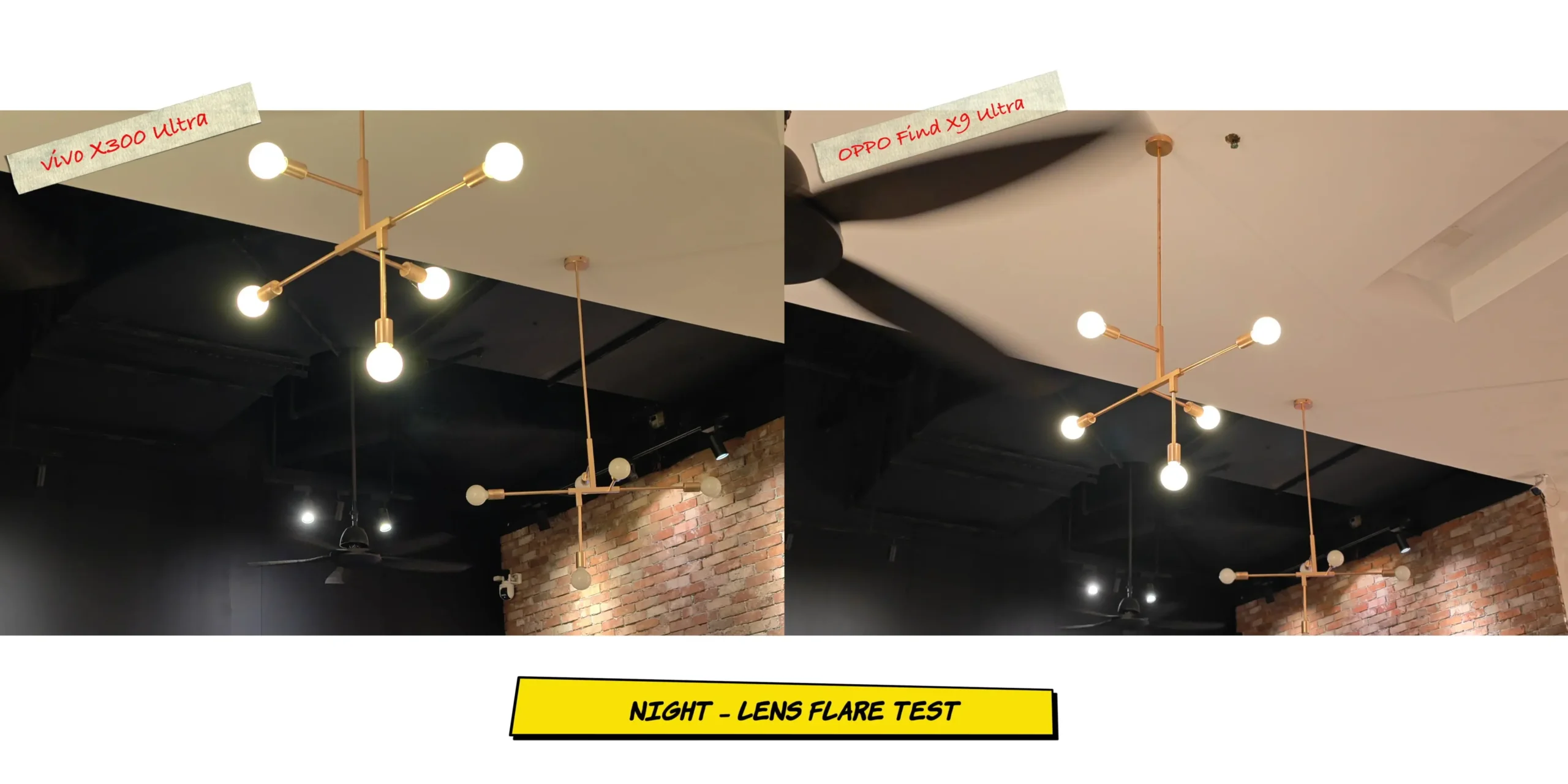
But the area I wanted to compare is the lens flare, which is very common on smartphones, because take a look at this iPhone footage. Yeap! It’s “Lens Flare City” baby, haha.
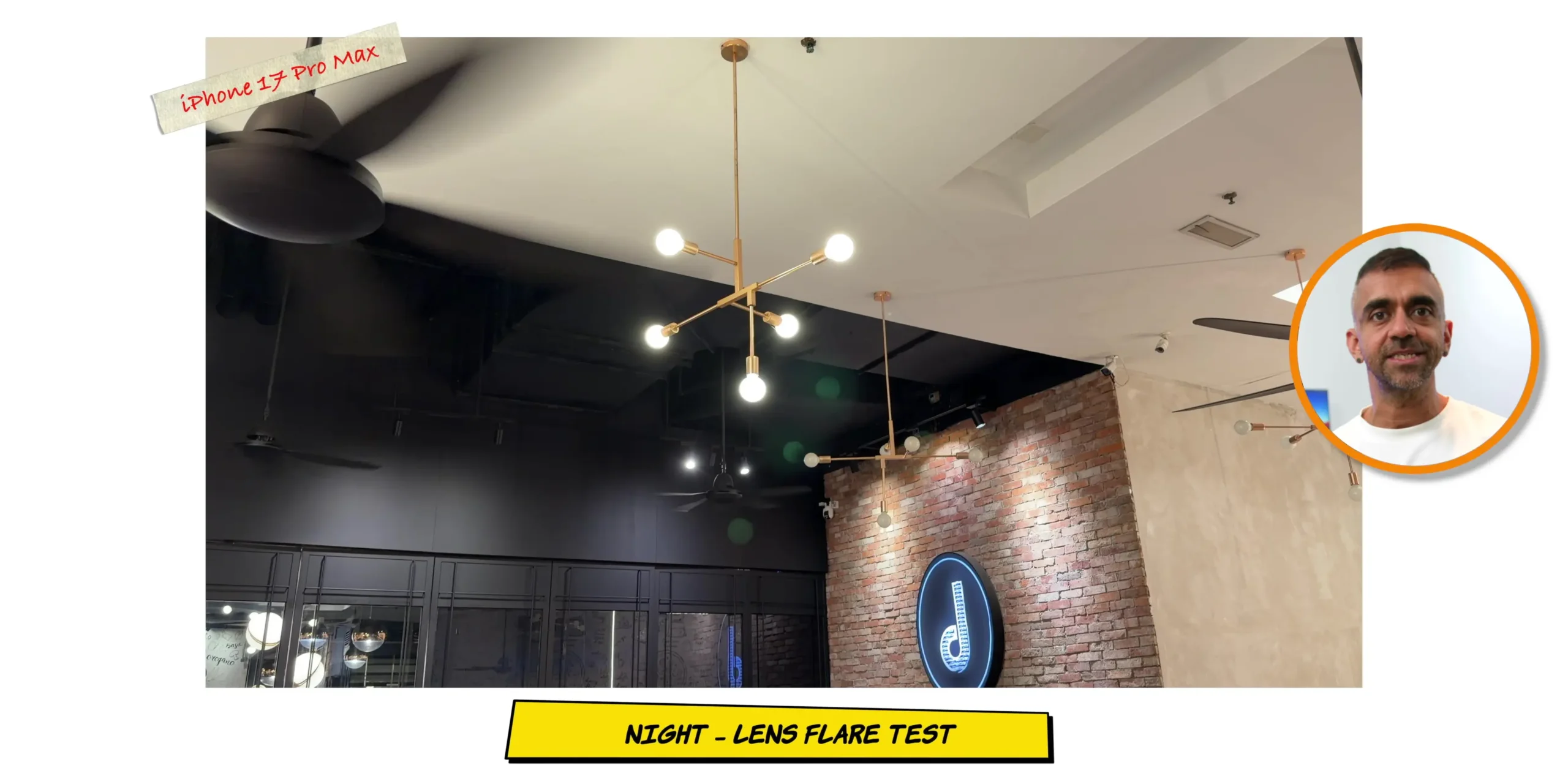
And yes, as you can see, BOTH the vivo and the OPPO did an excellent job managing that!
Stabilization
The stabilization on both phones for the ultrawide lens was good, just like the day, so it was for the main lens too.
But try not to go beyond 6x on the OPPO or even on vivo’s 5x, because the stabilization at night stops being great over here.
LOG
Then, if you really need to use LOG recording at night, here is how it looks at different focal lengths on both.
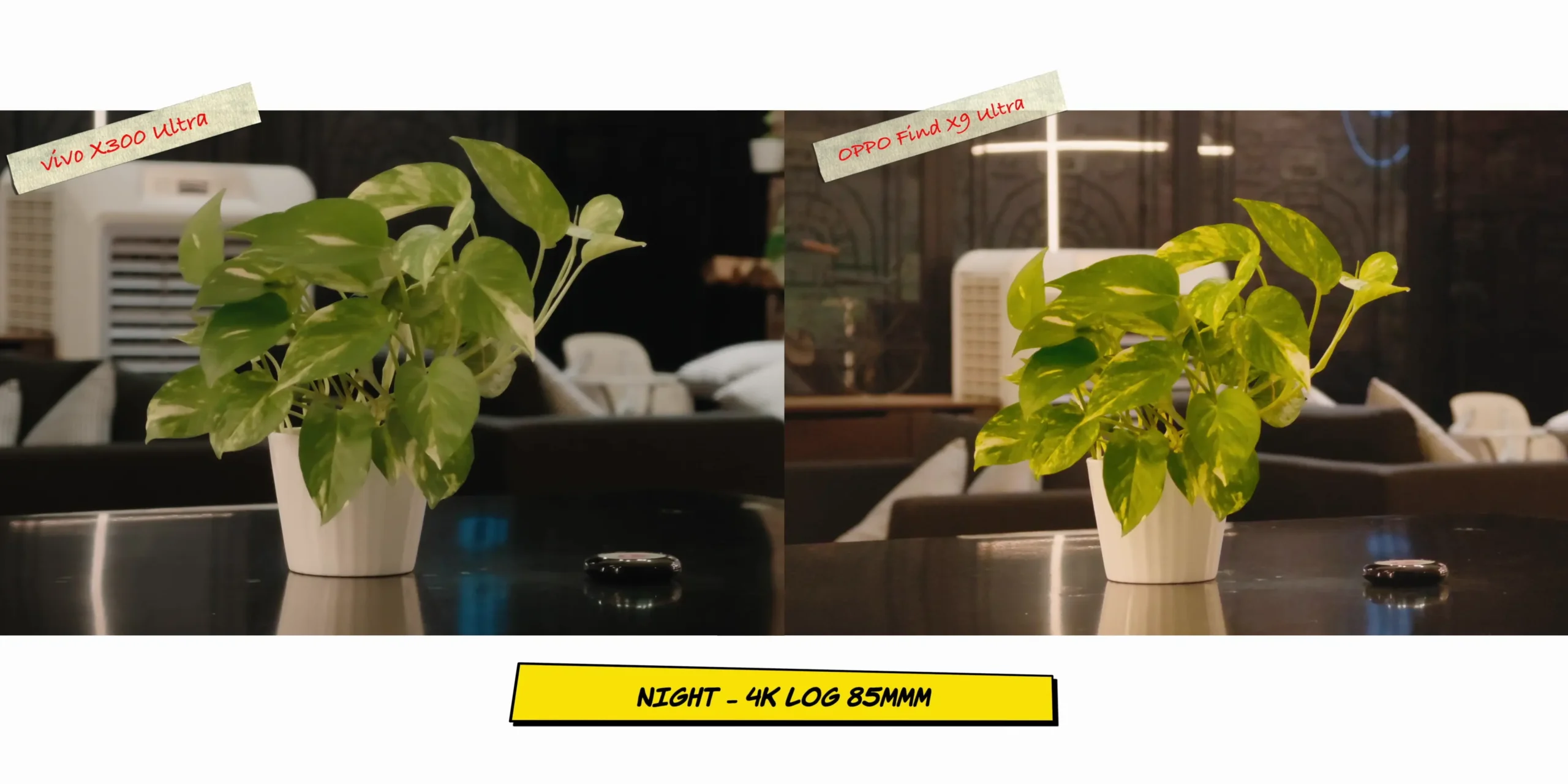
And if there is any noise that you notice in the footage, the good news is that you can always clean them up since this recording data is in a LOG format.
Front Video
Then, when it comes to the front video footage at night, here is where I find that this is surely one of the biggest Achilles heels for both phones.
Because the overall footage was decent, not “mind-blowingly” good, as you saw during the day. So use this wisely, under some light shining towards your face.

And I would not recommend using the 2x selfie video at all, too, as seen in these two footage of each phone. So just use the 1x mode if you really need to, because the overall stabilization was great.
Conclusion
So which one should you get?
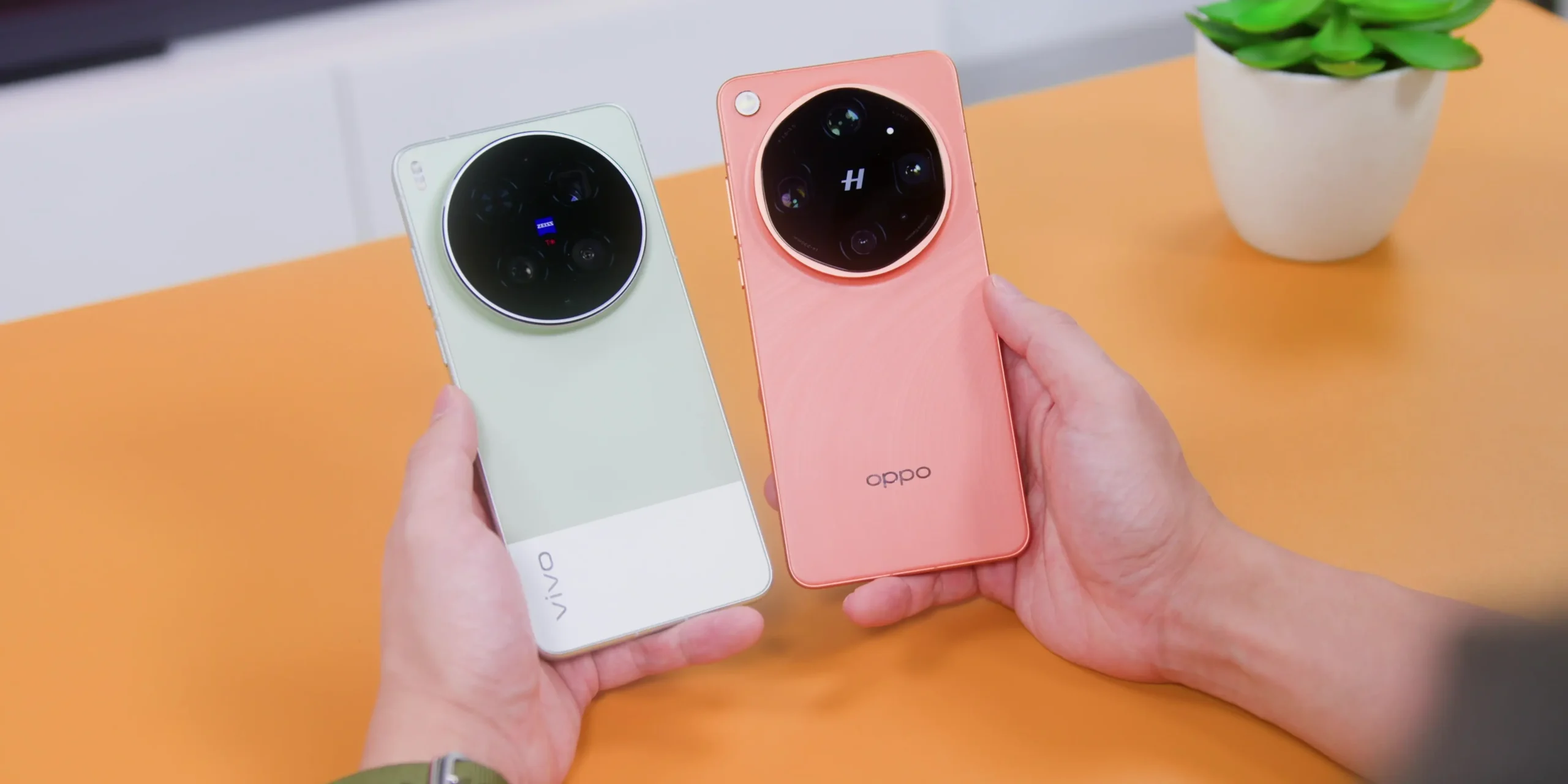
If consistent and natural color across every single focal length matters to you and video quality is something you take very seriously, get the vivo X300 Ultra.
But if zoom reach is your whole world and you need the flexibility of more focal lengths for both portrait and video, the OPPO Find X9 Ultra is your phone.
Both are genuinely class-leading. But one is built to make you look good consistently, and the other is built to reach further and figure out the rest later.
My pick is the vivo X300 Ultra because of how well it suits the type of shooter I am.
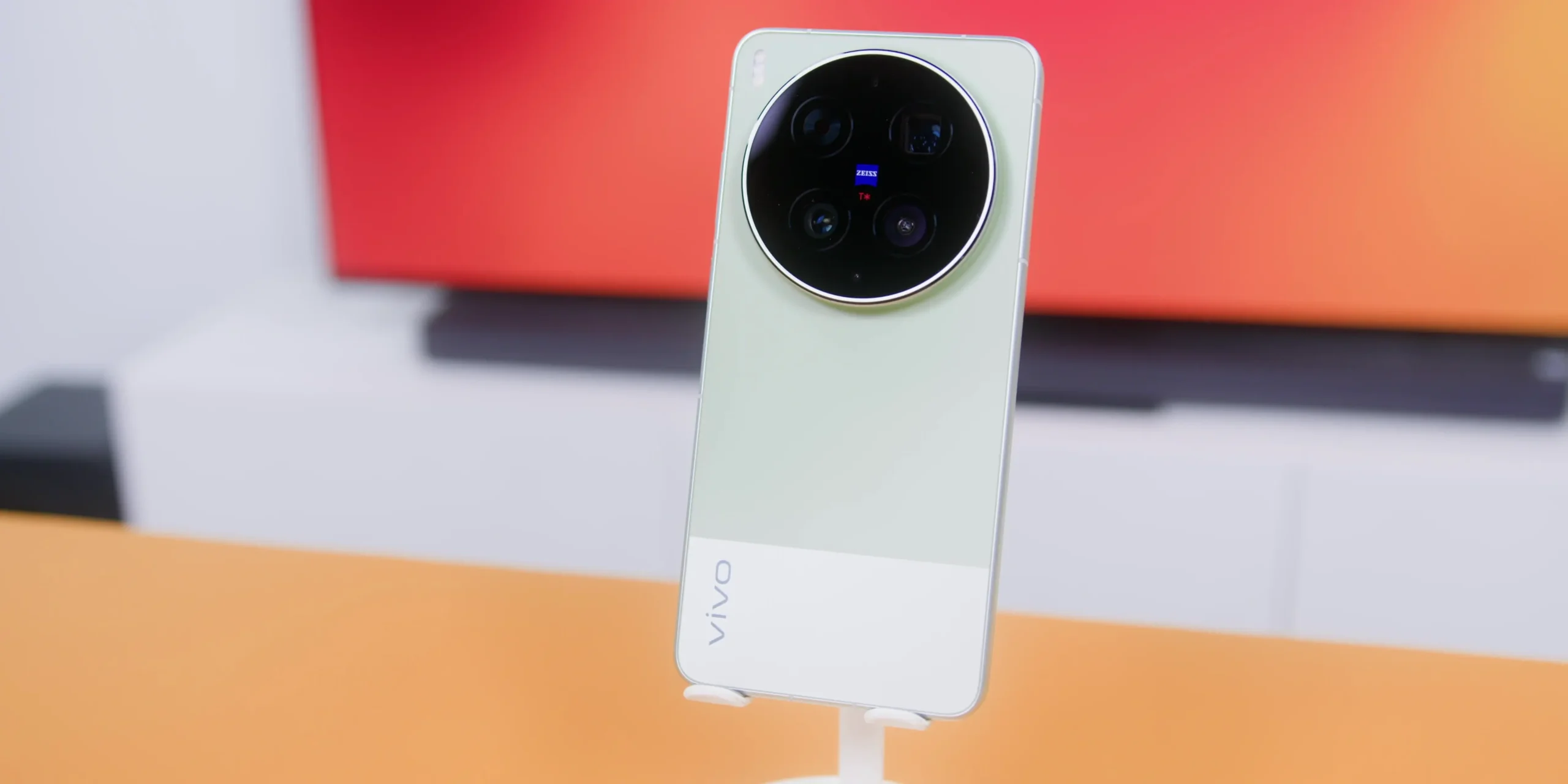
But honestly… who cares what I think? What matters more is what YOU think. Let me know – which one you would choose and why?
.
Watch the full review video on YouTube.
Frequently Asked Questions (FAQ)
Which phone has better color consistency across lenses?
The vivo X300 Ultra provides significantly better color consistency and natural tones when shifting from the ultrawide lens up to its maximum zoom. The OPPO Find X9 Ultra tends to introduce sudden color shifts and variations in saturation at longer focal lengths.
What is the maximum video resolution supported by both devices?
Both the vivo X300 Ultra and the OPPO Find X9 Ultra can record video up to 8K resolution, though shooting in 4K 60fps remains the recommended setting for daily social media use.
How do the portrait modes differ on these two flagships?
OPPO offers greater versatility with seven distinct focal lengths ranging from 23mm up to 230mm. Vivo features five focal lengths from a unique 14mm ultrawide portrait up to 135mm, allowing users to capture a full range of portrait shots with minimal physical movement.
Which device handles lens flare better during night recording?
Both smartphones do an exceptional job managing lens flare at night, completely outperforming competitors like the iPhone and keeping nighttime footage clean and clear.
Does vivo or OPPO offer a better professional video workflow?
The vivo X300 Ultra offers a superior professional experience due to its dedicated Pro video app interface, which mimics the layout of the Blackmagic Camera App and allows for quick access directly from the main video tab.
Related:
- vivo X300 Ultra In-Depth Camera Review: After 1 Month
- OPPO Find X9 Pro vs vivo X300 Pro: In-Depth Camera Comparison
- vivo X300 Pro vs iPhone 17 Pro: In-Depth Camera Comparison