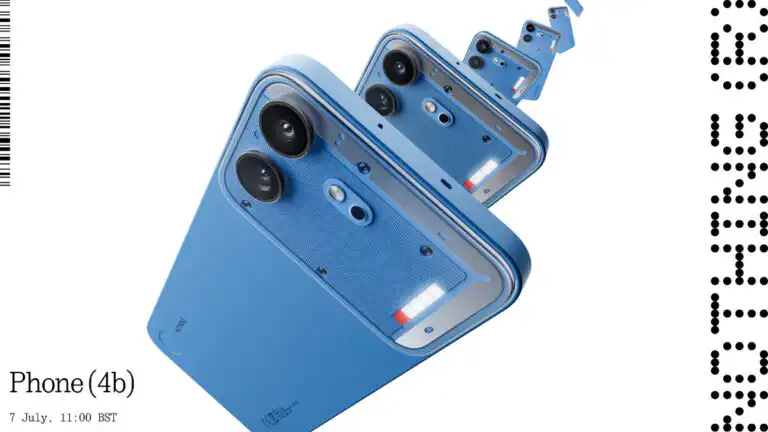
Tl;DR / At a Glance: Following the cancellation of the CMF Phone 3 Pro due to soaring global component costs, a Nothing Phone 4b leak has revealed a bold single rear camera layout. The upcoming entry-level device eliminates cheap, secondary decorative lenses to focus its production budget on a single 50MP Sony LYTIA sensor with OIS. This strategic move keeps retail pricing highly competitive while relying on advanced computational sensor-cropping to manage close-up macro portraits.

The One Big Thing: The Single-Lens Tradeoff
The mid-range smartphone landscape is hitting a major reality check. Following an unexpected supply chain development on 19 June 2026, Nothing co-founder Akis Evangelidis confirmed that the highly anticipated CMF Phone 3 Pro has been completely shelved for the year. Skyrocketing global flash memory and RAM prices made it mathematically impossible to build a modular device under the RM1,200 mark that felt like a true generational step forward.
But as one door closes, Carl Pei’s marketing team shifts focus. Within hours of the cancellation notice, official Nothing social channels dropped a cryptic design teaser labeled simply: (b).
Subsequent schematic leaks and CAD renders confirming a single rear-facing camera module have pushed tech forums into intense debate loops. While casual observers are scratching their heads over why a tech brand in 2026 would launch a phone with only one camera lens, this structural pivot is a masterclass in mid-range macroeconomic optimisation. Nothing is aggressively rewriting the value-tier blueprint, and the useless 2MP decorative macro sensor is the first casualty.
The Value-Tier Grid: Phone (4b) vs. Segment Competitors
| Technical Metric / Node | Nothing Phone (4b) (Leaked) | Poco X8 Pro | Samsung Galaxy A57 5G |
| Projected Malaysia Price | ~RM1,299 (Target Entry) | RM1,699.00 | RM1,899.00 |
| Primary System Silicon | MediaTek Dimensity 7300 Max | MediaTek Dimensity 8300 Ultra | Samsung Exynos 1680 AI |
| Rear Camera Architecture | 1x 50MP Sony LYTIA (OIS) | 50MP Main + 8MP Wide + 2MP Macro | 50MP Main + 12MP Wide + 5MP Macro |
| Secondary Lens Function | None | Ultra-Wide / Low-Grade Macro | Ultra-Wide / Low-Grade Macro |
| Native Storage Standard | 256GB UFS 3.1 | 512GB UFS 4.0 | 256GB UFS 3.1 |
| Chassis Construction | Semi-Transparent Polycarbonate | Polycarbonate Blend | Aluminum Frame with Glass Back |
For the past five years, mid-range phone manufacturers have engaged in a deceptive marketing arms race. To convince everyday consumers that a budget handset offers pro-grade flexibility, brands have systematically stuffed rear arrays with cheap, low-tier secondary and tertiary sensors.
Almost every sub-RM2,000 phone on the market carries a variation of the infamous 2MP macro lens or a generic 2MP depth sensor. These components cost manufacturers less than $1.50 per unit to source, yet they allow marketing teams to plaster terms like Triple-Camera System across retail banners at Low Yat Plaza. In real-world shooting conditions, these low-resolution sensors produce noisy, colour-shifted images that are completely unusable for content creators.
READ ALSO: Best Smartphones Under RM2,000
Nothing’s Phone (4b) architecture acts as a direct correction to this trend. By completely eliminating decorative auxiliary sensors, the bill-of-materials budget is entirely re-allocated into a singular, high-grade 50MP Sony LYTIA primary sensor backed by physical Optical Image Stabilisation (OIS).
Instead of switching to inferior, standalone macro glass, the Phone (4b) relies on native sensor-cropping algorithms and multi-frame computational pixel fusion. When you hit the 2x toggle inside the Nothing OS camera terminal, the system pulls a high-density crop from the centre of the primary sensor, delivering a sharper portrait or close-up macro exposure than a dedicated 2MP junk sensor ever could. Nothing unusual or uncommon, something we’ve seen on devices such as the iPhone Air.
As public statements from international semiconductor foundries confirm, global hardware logistics are facing an intense price squeeze. The growth of data-centre AI clusters has prioritised global silicon wafers for server architectures, causing consumer-level mobile RAM and flash memory component prices to skyrocket.
If Nothing had attempted to maintain a multi-lens camera layout on the Phone (4b) while preserving their iconic semi-transparent design and Glyph lighting array, the retail price would have bloated past the critical RM1,600 baseline. By dropping the decorative lenses, Nothing successfully protects the highly competitive sub-RM1,300 price slot, offering cash-strapped tech users a clean, stock Android operating system environment running on a modern 4nm Dimensity platform without compromising baseline day-to-day computing velocity.
Adam Lobo’s Take
The Nothing Phone (4b) is shaping up to be one of the most logically sound mid-range smartphones of 2026. It strips away the marketing fluff of the past decade to deliver exactly what users actually care about: fluid interface speeds, a unique physical aesthetic, clean software design, and a primary camera that captures clear exposures without requiring manual colour corrections. This approach cuts out standard industry churnalism to highlight real value.
If you are a high-volume spec sheet purist who judges a device solely by the number of circles cut into its rear plastic case, the single-lens layout of the Phone (4b) will feel like a step backward. Take a look at our past first-person coverage of Nothing’s camera performance arrays to see how their computational imaging algorithms handle tricky urban lighting setups.
READ ALSO: This Phone Is NOT Boring: Nothing Phone (4a) Review After 2 Weeks
Let the secondary macro lenses die. Nothing’s lean approach proves that in a congested economic landscape, doing one thing exceptionally well is vastly superior to doing three things poorly.
You guys tell me what you think in the comments below. Are you ready to embrace the single-lens layout to keep your budget under RM1,300, or do you still prefer having dedicated ultra-wide lenses on your device? Let’s find out what you prefer!