TL;DR / At a Glance: Is OxygenOS still being used on OnePlus phones in 2026? While the OxygenOS name persists on global OnePlus devices like the OnePlus 15, it has effectively merged with OPPO’s ColorOS codebase. As of the April 2026 OnePlus x realme merger, both brands are moving toward a Universal ColorOS framework to streamline AI features and security updates.
If you ask any OG OnePlus fan why they bought the phone, they won’t talk about the camera or the screen first. They will talk about OxygenOS.
For a decade, OxygenOS was the benchmark for what Android should be: fast, bloat-free, and respectful of the user. But as of the April 2026 merger, the “Oxygen” we knew has officially been depleted.

The Origin: Born from Necessity (2015)
OnePlus didn’t start with its own OS. The original OnePlus One famously ran CyanogenOS. But after a messy licensing fallout in India, OnePlus had to pivot—and they had to do it fast.
In March 2015, OxygenOS 1.0 was born. It was a love letter to stock Android, adding only the features users actually wanted, like off-screen gestures and a dark mode. It was the antithesis of the “heavy” skins like Samsung’s TouchWiz or Huawei’s EMUI.
READ ALSO: The rise and fall of the “Flagship Killer.”
The Golden Era: Fast and Smooth (2016–2020)
From OxygenOS 3.0 to 10.0, the brand reigned supreme. It introduced features that defined the OnePlus experience:
- Zen Mode: Forcing you to put your phone down.
- The Shelf: A clean dashboard for your most-used widgets.
- Parallel Apps: Letting you run two WhatsApp accounts at once.
- Gaming Mode: Before Gaming Phones were a thing, OnePlus had the best optimisation in the business.
The “Oppo-fication” Begins (2021–2024)
The cracks began to show in 2021 when OnePlus announced the codebase merger with OPPO’s ColorOS. They promised a “fast and smooth” experience, but fans noticed the changes immediately.
- Shared DNA: OxygenOS 12 and 13 became “ColorOS with a skin.” The settings menus, the camera app, and the animations were identical to OPPO’s.
- The “OnePlus 2.0” Transition: Pete Lau called it a “new era,” but for many, it felt like the loss of identity.
- Bloatware Creep: For the first time, we started seeing pre-installed apps and system suggestions that used to be strictly forbidden in the Never Settle philosophy.
While purists still long for the lightweight days of pure stock Android, the unified codebase is preparing for its most visually ambitious evolution yet. To see how Apple’s design philosophy has forced an absolute rendering revolution on modern BBK hardware, skip ahead to our exclusive look at the ColorOS 17 and OxygenOS 17 Liquid Acrylic redesign.
2026: The Final Breath
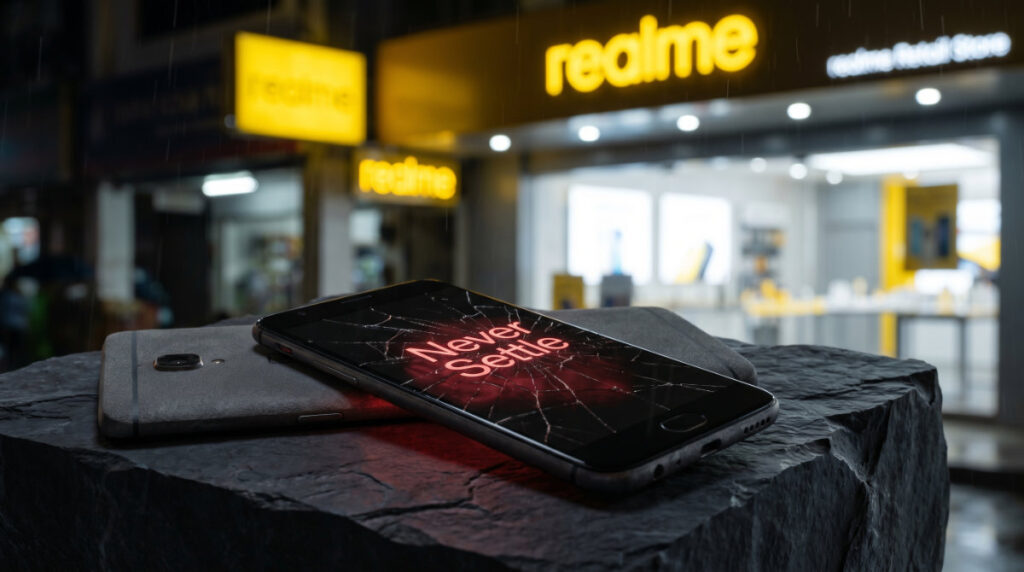
The April 2026 merger between OnePlus and realme is the final nail in the coffin.
With the brands unified, there is no longer a reason to maintain two distinct software development teams. The upcoming Universal ColorOS will power all devices. While OnePlus phones may still have a “Red Accent” theme and unique icons, the underlying engine is now a corporate standard designed for mass efficiency and AI integration.
READ ALSO: ColorOS vs. OxygenOS 16: The 2026 Technical Deep Dive
What This Means for the “Buy Smart” Consumer
Is it all bad news? Not necessarily.
- The Pro: You get access to OPPO’s massive AI R&D. Features like AI Eraser 3.0 and Real-time Live Translation are world-class.
- The Con: That unique “hand-tuned” feel of a OnePlus phone is gone. It now feels like a high-end appliance rather than a community-driven tool.
The OnePlus x realme Merger Series:
- The Big Picture: Everything You Need to Know About the OnePlus x realme Merger
- The Legacy: The Rise and Fall of the Flagship Killer
- The Challenger: The Meteoric Rise of the realme
- The Software: Goodybe, OxygenOS
- The Deep Dive: Universal ColorOS vs OxygenOS 16
- The Economics: The AI Tax: Why brands are disappearing