TL;DR / At a Glance: How did realme become successful so fast? realme became the fastest-growing smartphone brand in history by targeting the underserved youth market in India and Southeast Asia. By offering leap-forward features like 150W fast charging and flagship processors at mid-range prices, realme reached 100 million global shipments in just 37 months, eventually merging with OnePlus in 2026 to consolidate AI R&D.
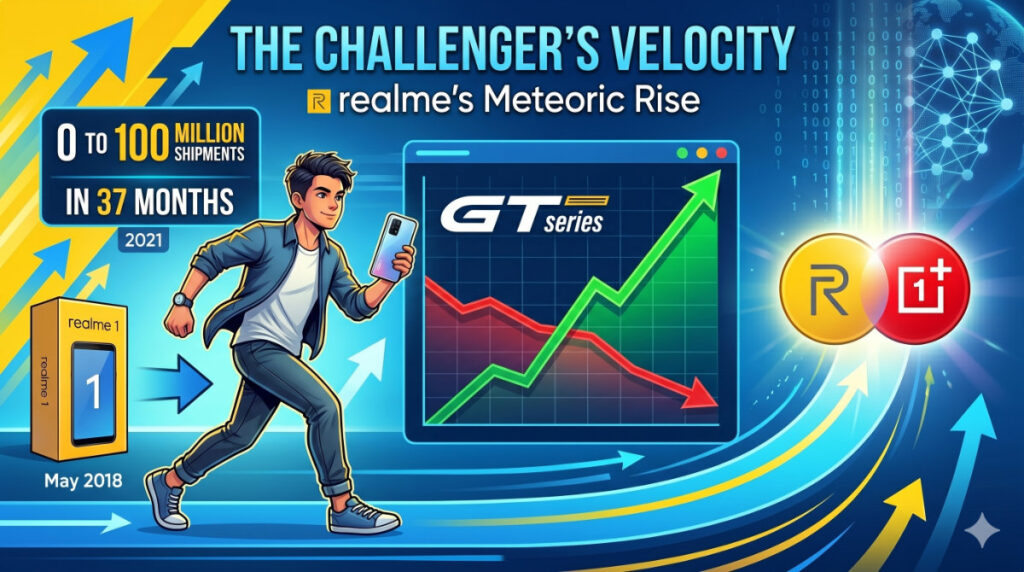
In the smartphone world, most brands take a decade to become a household name. realme did it in a weekend.
While OnePlus built its legacy on slow, community-driven growth and exclusive access, realme was built for velocity. As of the April 2026 merger, realme is no longer a mere partner to OnePlus—it is the operational engine that will drive the new unified business unit. To understand the future, we have to look at the brand that refused to slow down.
2018: The “Flipkart” Insight
The realme story started with a conversation. In May 2018, Sky Li (Li Bingzhong), then the head of OPPO’s overseas business, realised that the youth in India and Southeast Asia were over-promised but underserved.
He resigned from OPPO to spin realme off into an independent brand. The mission was simple: Leap-forward technology and trendsetting design for a price that Gen Z could actually afford.
37 Months to 100 Million: Breaking Records
By 2021, realme had achieved the impossible. According to Strategy Analytics, realme became the fastest smartphone brand in history to ship 100 million units—reaching the milestone in just 37 months. For context, it took Apple nearly 44 months and Samsung 73 months to hit that same mark.
- The Aggressive Strategy: realme didn’t wait. They launched 5G smartphones under $200 (RM880) when others were still charging premium prices.
- The GT Factor: In 2021, the realme GT Series arrived, targeting the exact same power users that OnePlus had cultivated. With top-tier Snapdragon chips and faster charging (UltraDart), the “student” had officially started outperforming the “master.”
2024–2026: The “200 Million Club” and Beyond
By the time 2024 rolled around, realme had officially joined the “200 Million Club.” Their influence in Malaysia was undeniable, often holding a Top 5 market share position (IDC, 2025).
However, this growth came with a cost. By late 2025, realme’s high-end GT 7 and 8 series were so powerful that they were cannibalising the sales of their sibling, OnePlus. In the eyes of the parent company, OPPO, it no longer made sense to have two performance brands fighting each other for the same piece of the pie.
The Merger Logic of 2026
The merger isn’t a defeat for realme; it’s a promotion. realme is the Volume King, but it needs OnePlus’s premium brand equity to continue moving up-market. Sky Li’s vision of “Dare to Leap” is now the guiding principle for the entire unified division.
Learn how the 2026 AI Tax finally forced even a high-velocity brand like realme to consolidate.
The OnePlus x realme Merger Series:
- The Big Picture: Everything You Need to Know About the OnePlus x realme Merger
- The Legacy: The Rise and Fall of the Flagship Killer
- The Challenger: The Meteoric Rise of the realme
- The Software: Goodybe, OxygenOS
- The Deep Dive: Universal ColorOS vs OxygenOS 16
- The Economics: The AI Tax: Why brands are disappearing