TL;DR / At a Glance: Why did OnePlus and realme merge in 2026? The merger is a response to the “AI Tax”—a combination of rising R&D costs for Generative AI and a global memory shortage. According to IDC, smartphone shipments are down 13% in 2026 as 70% of memory chips are diverted to AI data centers. Merging allows OnePlus and realme to share OPPO’s multi-billion dollar AI R&D and gain better bargaining power for expensive hardware components.
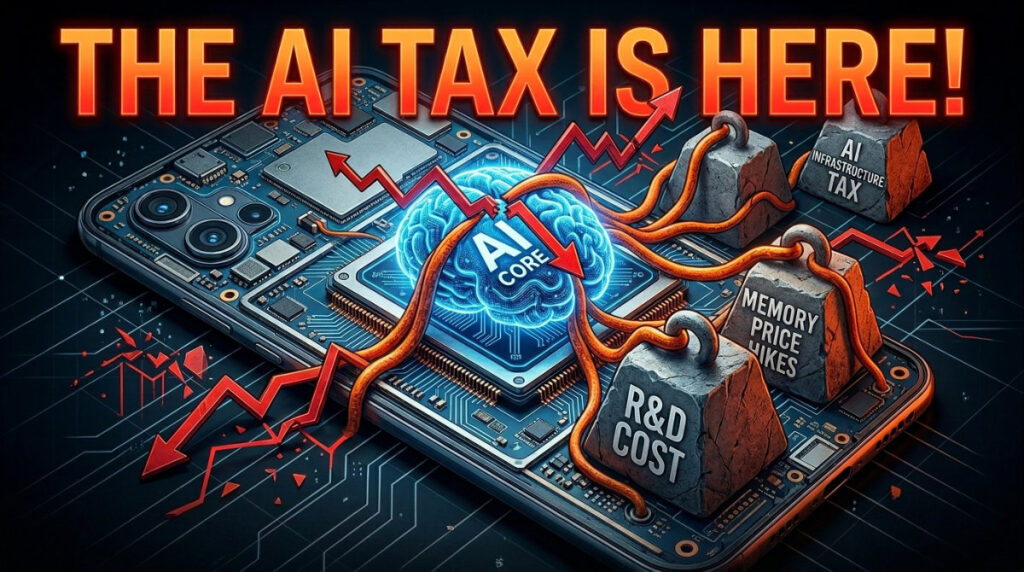
Building a high-end smartphone in 2026 is no longer just about sourcing the best 144Hz OLED panels. Today, the real cost of entry is intelligence. We are witnessing the era of the AI Tax, an economic reality that is forcing the most beloved names in tech to choose between consolidation or extinction.
The recent merger of OnePlus and realme isn’t just a marketing shift; it is a calculated retreat to safety backed by brutal industry data. Trace the history of the OnePlus flagship killer to see how we reached this consolidation.
The IDC “Cliff-Like Plunge”
According to the IDC Worldwide Quarterly Mobile Phone Tracker (April 2026), the global smartphone market is facing its sharpest decline on record.
- The 13% Drop: Global shipments are projected to plummet by 13% this year, dropping to roughly 1.1 billion units—the lowest since 2013.
- The Cause: IDC reports a supply drought. High-margin AI data centers are now consuming 70% of all global memory chip production, leaving smartphone manufacturers fighting for the scraps.
The Counterpoint “RAM Crunch”
Counterpoint Research (March 2026) issued a warning that explains why brands can no longer “Never Settle” on price.
- Bill of Materials (BoM): The cost to produce a mid-range smartphone has spiked by 15% in twelve months. For budget phones, that spike is a massive 25%.
- The OnePlus Struggle: With OnePlus India shipments reportedly dipping by 32% in 2025, the brand lost the “bargaining power” needed to secure components at a discount. Merging with realme to form a unified Sub-product Center under OPPO was the only way to keep the OnePlus 15 from hitting a prohibitive RM6,000 price point.
The $393 Billion AI Bet
Industry intelligence from Gartner (2026) shows that the bar for entry has been raised.
- GenAI Dominance: Global spending on GenAI Smartphones is forecast to top $393 billion this year.
- R&D Consolidation: Developing proprietary models like OPPO’s “Omni” (the industry’s first on-device full-modal AI) requires multi-billion dollar investments. A smaller, independent OnePlus simply could not fund the software engineers needed to compete with Galaxy AI or Apple Intelligence.
READ ALSO: Universal ColorOS vs OxygenOS 16 comparison
The 2026 Industry Crisis at a Glance
| Data Point | 2026 Impact | Source |
| Global Shipment Trend | -13% YoY (Sharpest decline in a decade) | IDC |
| Memory Chip Allocation | 70% diverted to AI Data Centers | IDC |
| Production Costs | +25% BoM for budget segments | Counterpoint |
| GenAI Market Value | $393 Billion | Gartner |
The Buy Smart Verdict
For the consumer, the AI Tax means we lose the variety of unique software skins and experimental rebel brands. However, we gain survival. A unified brand has the R&D muscle to provide 7 years of security updates and consistent AI performance.
OnePlus and realme didn’t merge because they wanted to—they merged because in 2026, you either have a seat at the giant’s table, or you aren’t on the menu at all.
The OnePlus x realme Merger Series:
- The Big Picture: Everything You Need to Know About the OnePlus x realme Merger
- The Legacy: The Rise and Fall of the Flagship Killer
- The Challenger: The Meteoric Rise of the realme
- The Software: Goodybe, OxygenOS
- The Deep Dive: Universal ColorOS vs OxygenOS 16
- The Economics: The AI Tax: Why brands are disappearing